
Nagoya’s serious yakitori culture rewards small rooms, tight pacing, and repeat trust rather than spectacle. Yakitori Kanda sits in that disciplined tier: a grilled-chicken specialist in Aichi selected for Tabelog’s Yakitori EAST 100 in 2024 and 2025, with a dinner spend that places it firmly in the city’s premium counter-dining bracket.
 Request Booking on Pearl
Pearl is the En Primeur Club membership app — saves, bookings, and concierge access live there. Same editors, same standards.
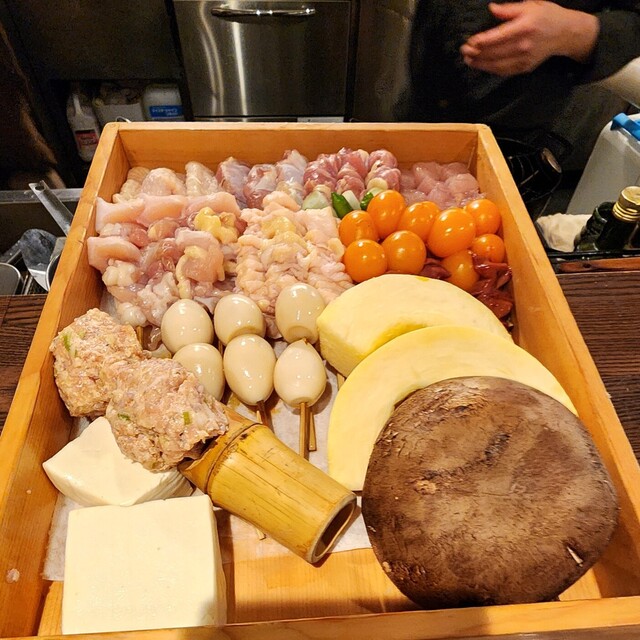
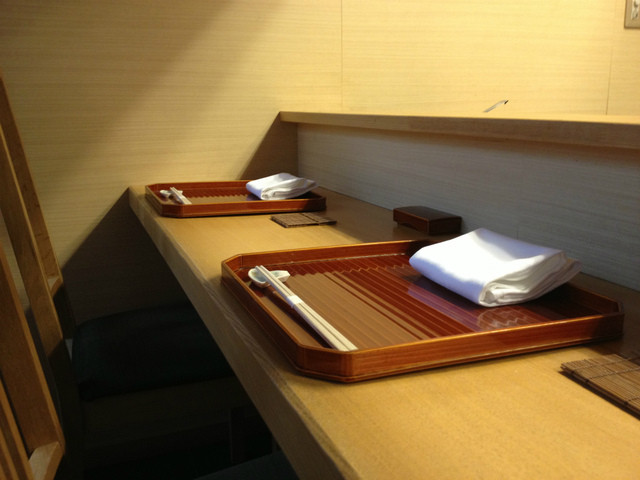
The first read here is spatial rather than decorative: yakitori at this level depends on proximity. The grill is not background equipment; it sets the rhythm of the room, compressing service into a sequence of heat, timing, smoke control, and handoff. In Nagoya, where high-end dining often runs quieter than Tokyo’s heavily exported restaurant culture, that intimacy matters. A serious yakitori counter is built around attention rather than theatre, and the physical container has to support that: limited movement, short lines of sight, and a pace that lets each skewer arrive as a discrete decision rather than part of a procession.
Yakitori Kanda belongs to the premium end of that tradition. Its category is direct, grilled chicken skewers, but the format carries more implication than the English translation suggests. At this level, yakitori is less about variety for its own sake than about calibration: different cuts, different fat levels, different tolerances for heat. The room has to make that visible without turning it into performance. Selection for Tabelog’s Yakitori EAST 100 in both 2024 and 2025 gives it a clear external signal in a field where local reputation often travels through regulars faster than through international guidebooks.
A counter format where the grill defines the room
Design in a yakitori restaurant is functional before it is aesthetic. The counter, the grill position, the route from fire to guest, and the distance between staff and diners determine the experience more than decorative materials do. That is why the strongest rooms in the genre tend to feel controlled rather than lavish. The guest is close enough to understand pacing, but not asked to treat cooking as spectacle. Smoke, heat, and silence become part of the architecture.
Nagoya’s dining culture gives this kind of format a different charge from Tokyo or Kyoto. The city has a deep appetite for strong-flavoured local cooking, from miso-led dishes to tebasaki, but its premium counters often run on restraint: fewer grand gestures, more emphasis on regular-client confidence and execution. Yakitori Kanda fits that pattern. Its appeal is not a long narrative about personality; it is the promise of a narrow craft handled within a compact, controlled setting.
The Tabelog score of 3.98 places it in a serious band for a specialist restaurant, especially in a category where small capacity and regular-client systems can limit casual review volume. The recognition matters because yakitori does not always translate cleanly for visitors. Sushi and kaiseki have easier international shorthand. Yakitori requires understanding why a chicken skewer can command premium pricing when the technique is stripped down to fire, salt, sauce, and timing. Awards and repeat selection help signal that the room belongs to the more selective side of the category.
Premium yakitori without the usual visitor-facing machinery
The practical reality is part of the editorial story. This is not the kind of Nagoya restaurant built around broad inbound access, multilingual branding, or a polished official website presence. It is recorded as accepting reservations from regular customers, and not as an introduction-only or membership system. That distinction matters: access is constrained, but the constraint comes from regular-patron dynamics rather than a formal club model. For travellers, that means expectations should be set before planning an evening around it.
Spend sits in the JPY 15,000 to JPY 19,999 dinner range, which puts it above casual yakitori and into the bracket where diners are paying for sequencing, ingredient selection, and grill control rather than volume. Payment is listed with credit cards accepted, while electronic money and QR code payments are not. The room is non-smoking, with no private rooms, no private-use option, and no parking listed, reinforcing the sense of a compact specialist address rather than a flexible group venue.
This is where Nagoya rewards careful planning. Visitors building a food-focused trip should treat Yakitori Kanda as a specialist possibility, not the anchor for a first-night itinerary unless access is already settled. For broader context across the city, Our full Nagoya restaurants guide is the natural starting point, with Our full Nagoya hotels guide, Our full Nagoya bars guide, Our full Nagoya wineries guide, and Our full Nagoya experiences guide useful for shaping the wider stay.
How to read it within Japan's specialist dining culture
Japan’s premium dining scene is often misunderstood as a hierarchy of luxury signals. In practice, many serious rooms operate through narrower cues: category focus, seating discipline, reservation culture, and external recognition from domestic platforms. The restaurant is best read through that lens. It does not need an expansive concept to make sense. Its position is defined by grilled-chicken specialization, a high dinner spend for the category, Tabelog Yakitori EAST 100 selection, and a room model that appears designed around regulars rather than open discovery.
That makes it a sharp example of a broader Japanese pattern: the smaller and more specialized the format, the more the physical room becomes part of the cuisine. Counter height, grill placement, ventilation, pacing, and the absence of private-room flexibility all shape how the meal is understood. For travellers used to restaurants that explain themselves through websites, menus, and booking platforms, this can feel opaque. In Nagoya, opacity is often not affectation; it is a byproduct of restaurants built first for repeat local use.
Readers comparing dining styles across Japan can widen the frame through other EP Club restaurant pages, from 1022, 451, Aaron, Alan., and All Day Dining Montmartre to Japanese and Japanese-adjacent addresses such as -Grilled beef Sukiyaki- KAMAKURA TANUKIAN 鎌倉 たぬき庵 in Kamakura. 鮪と炭火焼き うお炭 秋葉原店 in Tokyo.cafe in Osaka.know in Kumamoto, (Shoku) Vietnam in Kawasaki, [Curry Senmon Ten] Maruyama Kyoju. in Sapporo, Jōdo Saké Bar in Los Angeles, and Onigiri Time in Pasadena. The useful lesson is not sameness; it is how format changes the way a meal asks to be read.
Comparable venues nearby, for context on price, style, and recognition.
| Venue | Cuisine | Price | Notes |
|---|---|---|---|
| Yakitori Kanda | High-end Yakitori | $$$$ | Nagoya Castle Area |
| Shunzen Wada | Seasonal Japanese Counter Dining | $$$$ | .null |
| Tempura Niitome (天風良 にい留) | Modern Tempura Omakase | $$$ | Naka |
| Nagano Meijitei | Nagano Sauce Katsudon | $$ | Nagano Station |
| ビストロ ダイア | Neo French Bistro | $$$ | Shinei |
| Atsuta Horaiken (あつた蓬莱軒 本店) | Traditional Nagoya Hitsumabushi (Grilled Eel) | $$ | Atsuta-ku |
Recognition history
Dated appearances from independent guides and award organizations, with the underlying list record or original source where available.
Tabelog 100 #42 · No. 42
Tabelog · Tabelog 100 - Yakitori - EAST - 2025
Continue exploring
More in Nagoya
Restaurants in Nagoya
Browse all →
At a Glance
- Intimate
- Cozy
- Date Night
- Special Occasion
- After Work
- Solo
- Chefs Counter
- Standalone
- Sake Program