
Tabelog 100 #18
Our verdict
Sake Dokoro Terayama sits in Kyoto’s compact izakaya tradition rather than the city’s kaiseki theatre. Its Tabelog 100 Izakaya WEST selections in 2024 and 2025 place it in a serious drinking-and-eating category where counter discipline, Japanese cooking, and a small-room rhythm matter more than ceremony.

Pearl is the En Primeur Club membership app — saves, bookings, and concierge access live there. Same editors, same standards.
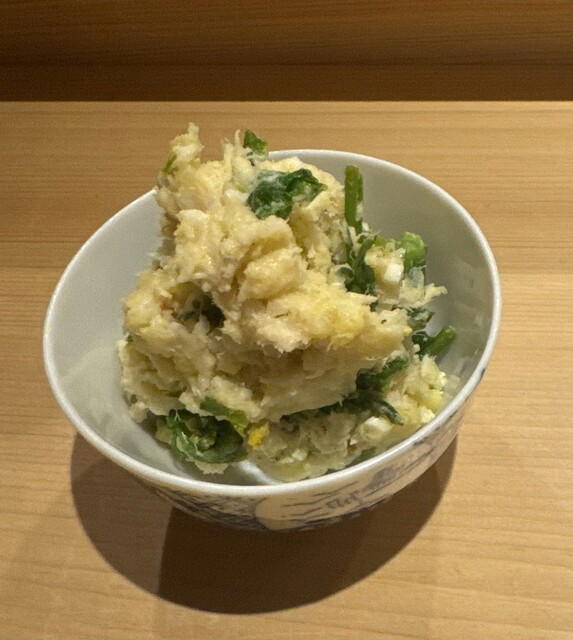
Kyoto’s better izakaya rooms announce themselves quietly: low voices, an easy rhythm, a dining format that makes hesitation visible, and food paced to sit beside sake rather than dominate. In Kyoto, Sake Dokoro Terayama fits that register. This is not Kyoto performing courtly cuisine for visitors; it is the city’s practical after-hours grammar, where Japanese cooking, drinking, and proximity share the table.
The distinction matters because Kyoto dining is often flattened into temples, kaiseki, and tea-house formality. Izakaya tradition works by sequence rather than ceremony: first drink, small plates, second decision, a shift from food focus to conversation. At stronger addresses, the cooking rewards attention without turning dinner into a tasting-menu contract. Sake Dokoro Terayama’s inclusion in Tabelog 100 Izakaya WEST in 2025 gives it a public credential within that category, not as a luxury signal but as evidence of local relevance.
A Kyoto izakaya category judged by rhythm, not spectacle
Kyoto has many polished dining rooms where the reservation is the story before the food arrives. Izakaya culture is less forgiving differently: the room must hold several styles of eating at once. Some diners may watch the meal closely, others may move socially, and drink orders can reset the meal’s tempo. A strong izakaya manages that without feeling loose. The category rewards timing, proportion, and restraint, qualities that rarely photograph like a lacquered kaiseki course but often define the better night out.
Sake Dokoro Terayama operates in the izakaya and Japanese cuisine lane, closer to Kyoto’s serious drinking tables than destination-only fine dining. That sets expectations. The point is not a chef’s autobiographical menu or parade of named signatures; it is the interaction between sake-friendly cooking and a room scaled for deliberate choices. In Kyoto, that focus can be an advantage. Stronger casual rooms often work because they resist becoming too broad, preserving the friction that makes the experience feel chosen rather than automatic.
The Tabelog 100 recognition identifies the restaurant within a regional izakaya field rather than a generalized restaurant hierarchy. A 2025 WEST selection suggests credibility inside a crowded category spanning neighborhood taverns, specialist counters, and polished Japanese kitchens. For travellers used to Michelin-led sorting, this is another map of credibility. Tabelog’s izakaya lists tend to reflect a Japanese dining public that values repeatability, atmosphere, and category fluency alongside cooking.
Where the meal fits in a Kyoto itinerary
For visitors building a Kyoto food schedule, this address sits between the city’s formal and casual poles. A kaiseki meal asks for attention and often advance planning; a ramen or sweets stop can be spontaneous. A serious izakaya sits between them, useful on nights when the aim is Japanese cooking with drinks, not long-form ceremony. The genre is a strong counterweight to more scripted meals across Kyoto.
Kyoto’s dining area rewards mixing formats rather than chasing one prestige track. A beef-focused dinner such as Nikuryori Shibuya occupies another register, while Bar Rocking chair points to the city’s cocktail side and sushi imagine to counter sushi culture. Even focused institutions such as Amaguri no Shinise Hayashi Mansho Do Honten or Ikiteiru Coffee show Kyoto’s appeal comes from sharply defined niches, not a single dining identity. Sake Dokoro Terayama fits that pattern: narrow format, clear category, and a room for diners who understand that drinking food is a discipline of its own.
That comparison clarifies the decision. Choose this izakaya style when dinner should feel rooted in Kyoto without becoming formal. It suits diners who like ordering across categories, drinking with the meal, and accepting the cadence of a Japanese room. It is less suited to anyone seeking a fully translated, highly staged luxury experience. Kyoto has those in abundance; the value here is a more local rhythm.
For broader planning, EP Club’s Kyoto coverage can build the trip around the same logic: restaurants for the main dining spine, bars for the second stop, hotels for positioning, wineries for regional drinking context, and experiences for cultural pacing. Start with Our full Kyoto restaurants guide, then cross-check Our full Kyoto bars guide, Our full Kyoto hotels guide, Our full Kyoto wineries guide, and Our full Kyoto experiences guide. Nearby and citywide restaurant references can be chosen generically around the same principle: mix one serious anchor meal with smaller stops, casual counters, and Kyoto-specific specialist rooms.
The planning reality: focused rooms reward decisive diners
The practical lesson of Kyoto izakaya dining is that format shapes experience. Focused rooms create intimacy, but leave little room for indecision. Diners who treat an izakaya as a flexible walk-in fallback often misunderstand the category at this level. Better to anchor the evening around it, then keep the before-and-after loose: coffee earlier, a bar later, or a second stop only if the night naturally moves that way.
Sake Dokoro Terayama is especially relevant for travellers who want Kyoto without excessive choreography. Recognition from Tabelog 100 Izakaya WEST in 2025 gives enough confidence to plan around it, while the format keeps the evening closer to tavern culture than occasion dining. That tension is the appeal. Kyoto’s dining scene is not only preserved cuisine and polished counters; it is also places where the city’s drinking habits and Japanese cooking overlap in compact, legible form.
Readers comparing Japan itineraries beyond Kyoto can use this as a benchmark for category fit. Sake-led rooms abroad translate part of the drinking culture in another setting, while casual Japanese formats show how narrow concepts travel. Within Japan, the range runs from formal counters to specialist taverns, from tightly focused casual rooms to polished Japanese kitchens. Terayama’s role in that larger map is precise: a Kyoto izakaya for diners who care about the drinking table as much as the cooking.
Frequently asked questions
What are the opening hours for Sake Dokoro Terayama?
Opening hours for Sake Dokoro Terayama should be confirmed directly with the restaurant before visiting.
How do I find Sake Dokoro Terayama?
Sake Dokoro Terayama is located in Kyoto.
What price level is Sake Dokoro Terayama?
Pricing at Sake Dokoro Terayama is listed as JPY 6,000 - JPY 7,999.
What's Sake Dokoro Terayama best at?
Its strongest case is the compact izakaya format in Kyoto. The Tabelog 100 Izakaya - WEST - 2025 selection signals recognition within the izakaya category.
Is Sake Dokoro Terayama good for vegetarians?
It can work for vegetarians who are comfortable with an izakaya setting, but the venue is listed as Izakaya (Japanese style tavern) and Japanese Cuisine rather than a vegetarian-specific restaurant. Kyoto diners with strict dietary needs should plan carefully around that format.
Category Peers
Comparable venues by cuisine and price in the same metro.
| Venue | Cuisine | Price | Awards | Notes |
|---|---|---|---|---|
| Sake Dokoro TerayamaThis venue (the venue you are viewing) | Kyoto Izakaya & Sake Bar | $50–100 | Tabelog 100 #18 | Not listed |
| とんかつ山本 | Traditional Tonkatsu | $30–50 | Tabelog 100 #66 | Nakagyo-ku |
| Kichi Kichi Omurice | Japanese Omurice | $20–30 | Not listed | Gion |
| Tachinomi Sharp | Kyoto standing bar for seafood and sake | $20–30 | Tabelog 100 #7 | Shimogyō |
| Akagakiya | Classic Kyoto Izakaya | $30–50 | Tabelog 100 #70 | Sakyō |
| Shinme | Traditional Kyoto Izakaya | $30–50 | Tabelog 100 #37 | Kamigyō |
Recognition history
Dated appearances from independent guides and award organizations, with the underlying list record or original source where available.
Tabelog 100 #18 · No. 18
Tabelog · Tabelog 100 - Izakaya - WEST - 2025
Continue exploring
More in Kyoto
Restaurants in Kyoto
All restaurants in Kyoto →


Bars in Kyoto
All bars in Kyoto →


Hotels in Kyoto
All hotels in Kyoto →


Wineries in Kyoto
Browse all →
Details
- Lively
- Cozy
- Intimate
- After Work
- Casual Hangout
- Date Night
- Group Dining
- Solo
- Late Night
- Standalone
- Chefs Counter
- Sake Program
- Beer Program
- A La Carte
- Small Plates
- Counter Dining
- Sake
- Beer
- Shochu
Current opening hours
- Monday
- 4–10 PM
- Tuesday
- 4–10 PM
- Wednesday
- 4–10 PM
- Thursday
- Closed
- Friday
- 4–10 PM
- Saturday
- 1–9 PM
- Sunday
- 1–9 PM
Hours can change for holidays and private events. Last verified .
A cozy, hideout-style izakaya with a lively but relaxed atmosphere, centered around an 8-seat counter and a couple of upstairs tables, suited to intimate groups rather than large crowds.