
saint M puts Miyazaki produce into a French bistro frame, with natural wine as part of the argument rather than decoration. Its Tabelog French WEST 100 selections in 2023 and 2025 place it among western Japan’s notable French addresses, while the small room and counter seating keep the experience closer to a focused local table than a formal grand restaurant.
Pearl is the En Primeur Club membership app — saves, bookings, and concierge access live there. Same editors, same standards.
- Address
- 宮崎県宮崎市橘通東3-7-6 中馬ビル 2F
- Phone
- +81985778370
- Website
- part065.oops.jp
 Saves & bookings on Pearl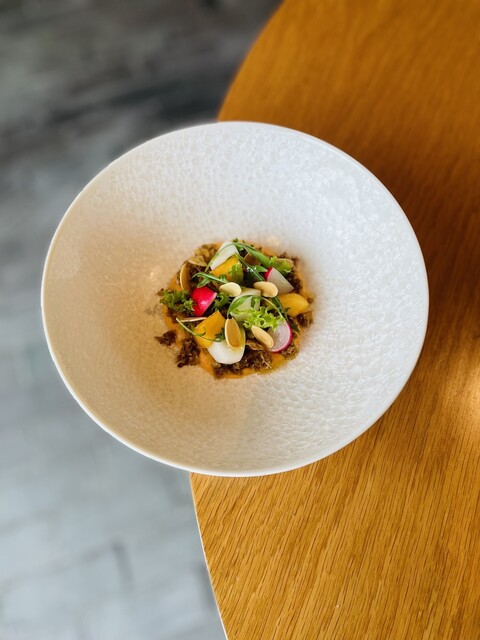
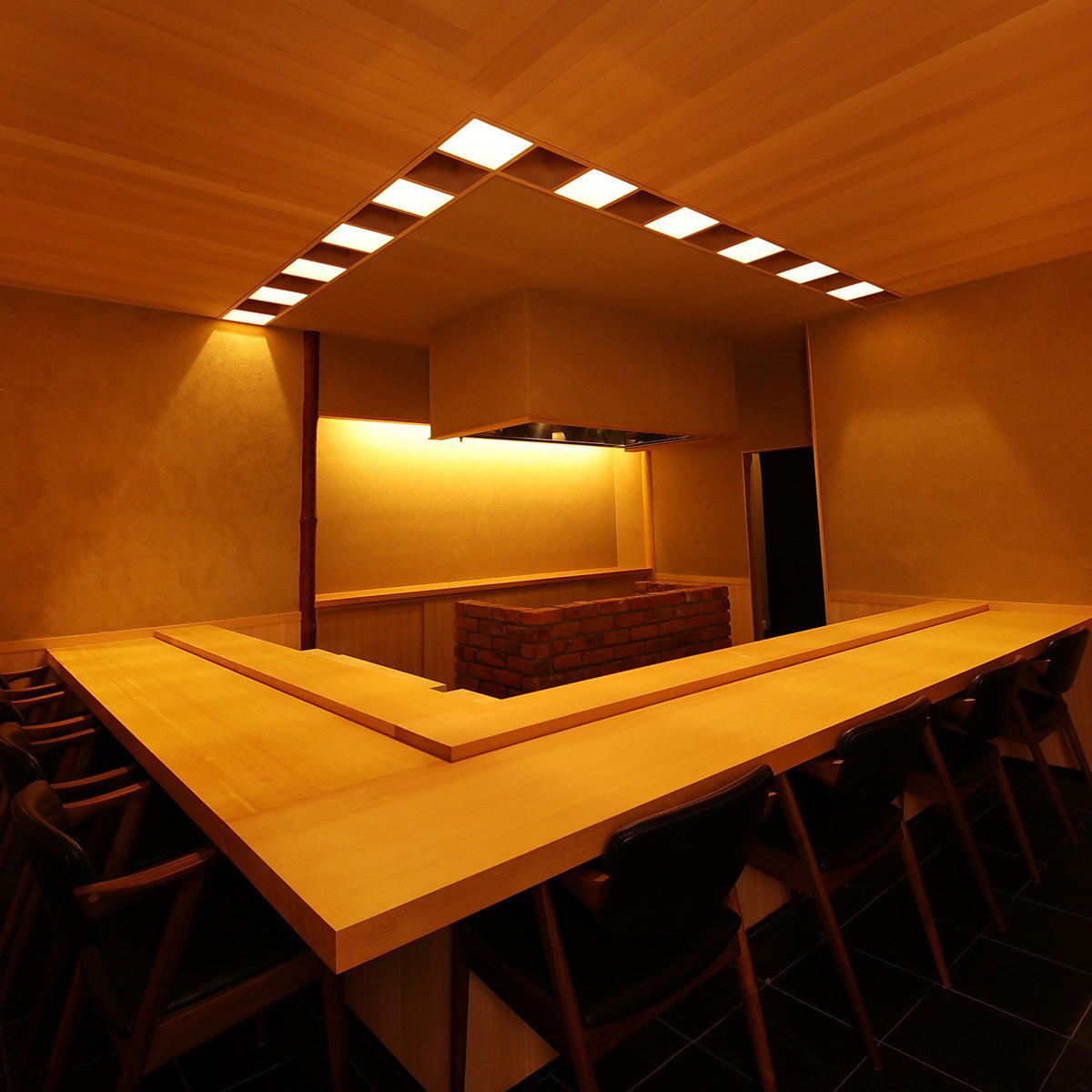
Upstairs on Tachibana-dori East, the room reads as a compact Miyazaki dining address rather than a destination built for ceremony. Counter seats, tables, a non-smoking setting and a wine-forward brief create the useful tension here: French technique is present, but the meal is framed through local ingredients and the scale of a 20-seat bistro. In a city better known nationally for chicken nanban, charcoal-grilled jidori and fruit, that matters. The French format is not imported as a costume; it becomes a way to organize what the prefecture already has in reach.
Miyazaki’s dining identity is often discussed through comfort food and agricultural abundance, not through French dining lists. That is why saint M’s selection for Tabelog French WEST 100 in both 2023 and 2025 carries weight. The recognition places a small Miyazaki room in a western Japan category where larger urban markets usually dominate attention. It also signals a broader shift in regional Japanese dining: prefectural produce no longer needs Tokyo mediation to be treated with technical seriousness.
Local produce, French sauces and the Miyazaki argument
The restaurant’s stated emphasis is local ingredients, French cuisine and natural wine. That combination can sound familiar across Japan, but in Miyazaki it has a sharper point. The prefecture has a strong agricultural and livestock economy, and the coastline, mountains and warm climate give chefs a wide pantry without having to lean on imported luxury markers. French sauces, when handled with restraint, become a structure for local vegetables, seafood and meat rather than a way to mask origin.
The kitchen’s training reference runs through Miyazaki, Osaka, Tokyo and Paris, a useful credential only because it explains the format: regional sourcing filtered through a French grammar learned both inside and outside Japan. This is where the restaurant sits apart from casual bistro shorthand. The issue is not Frenchness for its own sake; it is whether the plate can make Miyazaki taste more specific. A natural-wine orientation reinforces that reading, especially in smaller Japanese rooms where lower-intervention bottles often pair better with acidity, vegetables and lighter sauces than heavily extracted international labels.
For a Miyazaki itinerary, this is a different proposition from local-specialist addresses such as Aji no Ogura Honten, where the city’s comfort-food canon is the point, or Aji Kawa, which belongs to another register of local dining. The comparison is useful because it clarifies the reader decision. Choose saint M when the question is how Miyazaki ingredients behave under French technique, not when the aim is a single famous local dish.
A small-room format in a city with a broad table
Small capacity changes the pace of a meal. Four counter seats and table seating make the room better suited to diners who want to watch a kitchen-led format unfold without the distance of a hotel dining room. The listing also notes solo dining as a common use case, which fits the scale: counter seating in Japan often gives independent diners a more natural experience than a table-for-one in a larger restaurant. Private use is possible for a group up to the room’s full capacity, which makes the address relevant for visitors planning a tightly controlled dinner around wine and courses.
The city’s dining range is broader than first-time visitors expect. Chinese Sen (Chinese) operates in a comparable spend bracket but through a Chinese lens, while GIGLI and Fujiyama Pudding Miyazaki show how casual, dessert-led and European-leaning formats sit beside regional Japanese staples. For a wider read on the city, use Our full Miyazaki restaurants guide; for the rest of a trip, the parallel guides to Our full Miyazaki hotels guide, Our full Miyazaki bars guide, Our full Miyazaki wineries guide and Our full Miyazaki experiences guide help place dinner inside a fuller Kyushu plan.
Within the supplied Miyazaki comparison set, Mango Ya and Taban Kusano Ya sit in lower spend brackets, while Chinese Sen shares the higher dining tier. That spread is the point: Miyazaki is not a one-note food stop, and saint M belongs to the smaller category of restaurants asking visitors to spend a full evening with local ingredients rather than graze through a checklist.
How to read the room before committing an evening
This is a bistro and French address, not a luxury dining room built around grand gestures. The practical signals point to a controlled, adult room: non-smoking, no private rooms, counter seating, card and cashless payment options, and reservations available. Lunch is course-based and requires advance planning; dinner has a defined service window. Those details matter because the restaurant is better approached as a scheduled meal than a spontaneous walk-in between sightseeing stops.
The strongest case for visiting is the combination of sourcing angle and recognition. A Tabelog score of 3.66 and French WEST 100 selection do not make a meal immune from personal preference, but they do identify a serious regional address in a category where Miyazaki has fewer internationally visible names than Osaka, Kyoto or Fukuoka. The editorial call is clear: for travelers already eating the local canon, this is the meal that reframes the same region through French technique and wine.
Readers building a broader Japan dining map may find useful contrast in other city formats, from -Grilled beef Sukiyaki- KAMAKURA TANUKIAN 鎌倉 たぬき庵 in Kamakura and. 鮪と炭火焼き うお炭 秋葉原店 in Tokyo to.cafe in Osaka,.know in Kumamoto, (Shoku) Vietnam in Kawasaki and [Curry Senmon Ten] Maruyama Kyoju. in Sapporo. For North American counterpoints, Jōdo Saké Bar in Los Angeles and Onigiri Time in Pasadena show how Japanese dining categories travel and change context abroad.
Comparable Spots, Quickly
Comparable venues by cuisine and price in the same metro.
| Venue | Cuisine | Price | Awards | Notes |
|---|---|---|---|---|
| saint MThis venue — the venue you are viewing | Miyazaki Local French Bistronomy with Natural Wine | $$$ | , | |
| ベル・エポック | Classic Miyazaki French | $$$ | , | Kirishima |
| ä¸å¿é®¨ å æ´ | Kaiseki Seafood | $$$ | , | Miyazaki |
| GIGLI | Seasonal Italian Fine Dining | $$$ | , | Chuo-dori / Miyazaki City Center |
| Teppanyaki Steak Hitotsuba Miyachiku | Teppanyaki Steakhouse | $$$ | , | Shinbeppu-cho |
| Il Sorriso | Regional Japanese-Italian Fusion with Handmade Pasta | $$$ | , | Tachibanadori Higashi |
Continue exploring
More in Miyazaki
At a Glance
- Modern
- Cozy
- Lively
- Trendy
- Intimate
- Date Night
- Business Dinner
- Group Dining
- Celebration
- Special Occasion
- Private Event
- Wine Cellar
- Design Destination
- Standalone
- Terrace
- Private Dining
- Natural Wine
- Extensive Wine List
- Farm To Table
- Natural Wine
- Local Sourcing
- Sustainable Seafood
- Street Scene
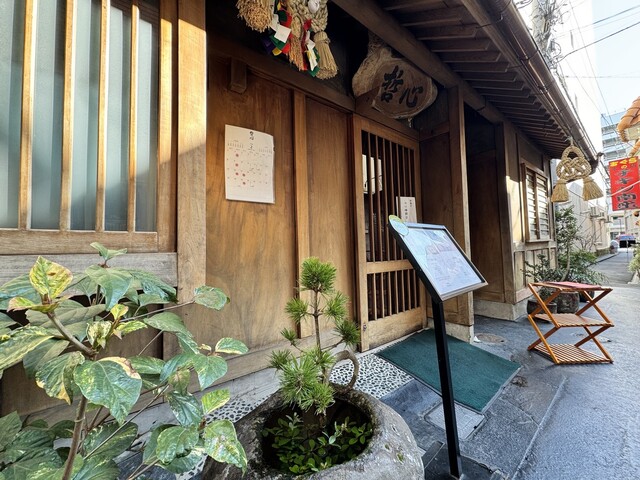
The atmosphere is designed as a free and original space using timeless materials, with terrace-like tables and an easygoing counter; by day it feels like a bright Parisian terrace, and by night it shifts into a relaxed, bustling bistronomy-style setting.