Sahadi's

Open on Atlantic Avenue since 1948, Sahadi's is one of Brooklyn's most enduring Middle Eastern grocers, stocking hundreds of bulk goods, spices, olives, and prepared foods at prices that sit well below Manhattan's specialty food market tier. The format is counter service and self-selection rather than a dining destination, making it a practical stop for serious home cooks and anyone assembling a table from the Borough's best pantry ingredients.
Pearl is the En Primeur Club membership app — saves, bookings, and concierge access live there. Same editors, same standards.
- Address
- 187 Atlantic Ave, Brooklyn, NY 11201
- Phone
- +1 718 624 4550
- Website
- sahadis.com
- Directions
- Get directions
 Saves & bookings on Pearl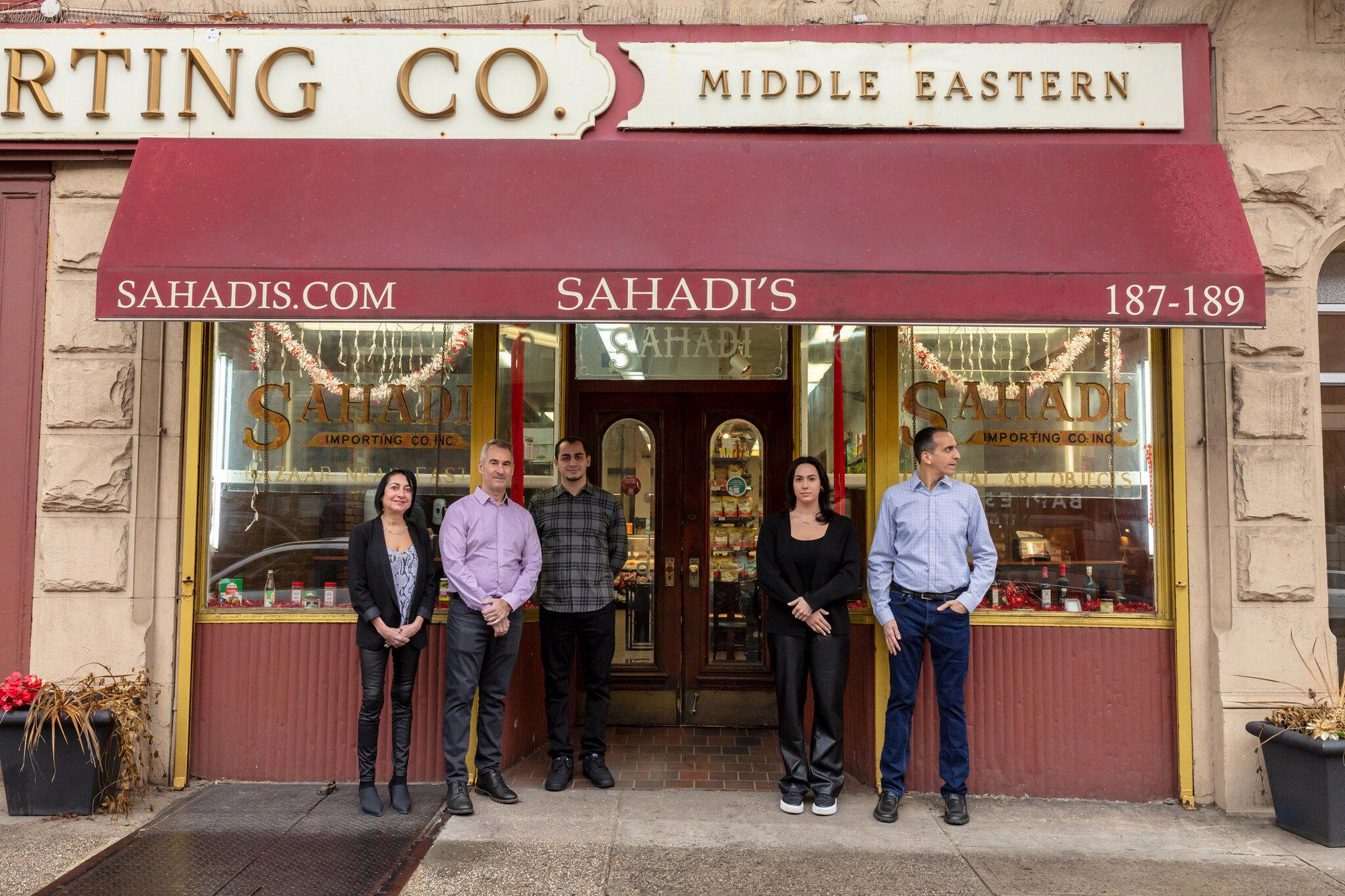
Atlantic Avenue's Long Game: How Sahadi's Became a Brooklyn Institution
Atlantic Avenue in Brooklyn has functioned as a corridor for Middle Eastern commerce since Lebanese and Syrian merchants settled the blocks between Court Street and Fourth Avenue in the early twentieth century. Sahadi's opened at 187 Atlantic Avenue in 1948, and it remains a Brooklyn fixture for Lebanese Mediterranean deli goods and prepared foods. In a borough that has cycled through multiple waves of culinary identity, from Italian-American strongholds to farm-to-table restaurant rows to the current period of dense, globally influenced dining, the store's staying power is itself an editorial point: bulk goods, generous portions, and honest pricing have proven more durable than many of the trends that have come and gone around them.
That longevity matters when you consider how the specialty food retail category in New York has shifted. The last fifteen years produced a proliferation of artisan grocery formats, curated cheese counters, and imported-pantry boutiques, most of which price for the aspirational shopper. Sahadi's operates on a different model. Large barrels of grains, legumes, nuts, and dried fruit sit on the shop floor; prepared foods line a counter that runs deep into the store; and the olive selection alone occupies a range that most specialty importers would struggle to match. This is not a destination for the shopper who wants a single jar of preserved lemons wrapped in tissue; it is a working grocer with depth.
What the Format Actually Demands From You
The editorial angle worth applying to the restaurant is not "what to order" but "how to approach it", because the format rewards preparation and penalises aimlessness. Atlantic Avenue on a weekend morning draws a dense crowd, and the store's layout, a long narrow floor plan with perpendicular counter service at the rear, creates genuine congestion. If you arrive without a list, you will spend time in the middle of foot traffic working one out. If you arrive knowing what you want, the operation moves efficiently.
Counter service at the prepared foods section works on a first-come basis rather than a ticketing or reservation system. Weekday mornings, particularly before noon, represent the cleaner visit: shorter queues, fuller stock, and staff with more time to field questions about provenance or preparation. Saturday afternoons are the highest-traffic window and should be treated accordingly. This is practical intelligence rather than insider access, the kind of logistical awareness that separates a productive visit from a frustrating one.
There is no booking mechanism because none is needed for retail. But "planning" here means something slightly different: knowing that certain prepared items sell out, that the bulk bins require you to bag and tag your own selections, and that the store's value proposition compounds when you buy across categories rather than treating it as a single-item stop. A visit that includes olives, bulk grains, a selection from the prepared counter, and imported pantry goods produces a coherent table; a visit for a single item is an underuse of what the format offers.
Where Sahadi's Sits in New York's Food Retail Tier
New York's premium dining tier, represented by counters like Masa or tasting-menu rooms like Eleven Madison Park, Le Bernardin, Atomix, and Per Se, operates on a reservation logic that can require months of advance planning and commitments of several hundred dollars per head. The restaurant occupies a structurally different position in the city's food ecosystem: it is a source rather than a destination, a place that supplies the ingredients other people cook with, or provides prepared food at a price point that has no meaningful equivalent in Manhattan specialty retail.
That positioning is not a compromise. Specialty food retail at this depth and this price efficiency is genuinely difficult to find in a city where real estate economics have squeezed out many of the old-school importers and bulk-goods operators. The stores that survive in this tier, the restaurant included, tend to do so because they built loyal customer bases before the economics made new entrants impractical. For anyone assembling a serious pantry or catering a table from Brooklyn's best-stocked shelves, the store sits closer to Blue Hill at Stone Barns in its sourcing seriousness than it does to a supermarket with a "global foods" aisle, even though the format and price are entirely different.
For context on how American food destinations at different ends of the spectrum approach their categories, coverage spans The French Laundry in Napa, Lazy Bear in San Francisco, Emeril's in New Orleans, Smyth in Chicago, Single Thread Farm in Healdsburg, Providence in Los Angeles, Addison in San Diego, The Inn at Little Washington, Frasca Food and Wine in Boulder, Atelier Moessmer Norbert Niederkofler in Brunico, and Dal Pescatore in Runate.
Getting There and Practical Timing
187 Atlantic Avenue sits within walking distance of multiple subway lines serving the Borough Hall and Atlantic Avenue-Barclays Center hubs, making it accessible from most of Manhattan and the surrounding Brooklyn neighbourhoods without a car. Street parking on Atlantic Avenue is limited during peak hours, and the foot traffic profile of the store means that driving adds friction rather than convenience for most visitors. One efficient approach: transit in, carry out on foot or by car arranged after your shop.
Just the Basics
Comparable venues nearby, for context on price, style, and recognition.
| Venue | Cuisine | Price | Notes |
|---|---|---|---|
| Sahadi'sThis venue — the venue you are viewing | Not listed | $$ | Not listed |
| Ariana Afghan Kebab | Hell's Kitchen, Afghan Kebabs | $$ | Not listed |
| Moustache Pitza | West Village, Lebanese Pita Pizzas | $$ | Not listed |
| Salam | Not listed | $$ | Chelsea-Hudson Yards, Authentic Syrian & Lebanese |
| Nasrin's Kitchen | Not listed | $$ | Midtown-Times Square, Authentic Homestyle Persian |
| Bedouin Tent | Not listed | $ | Downtown Brooklyn-DUMBO-Boerum Hill, Middle Eastern |
Recognition history
Dated appearances from independent guides and award organizations, with the underlying list record or original source where available.
James Beard Award America's Classics
James Beard Award
Continue exploring
More in New York City
Restaurants in New York City
Browse all →
Bars in New York City
Browse all →
Hotels in New York City
Browse all →








At a Glance
- Lively
- Cozy
- Classic
- Casual Hangout
- Brunch
- Open Kitchen
Current opening hours
- Monday
- 10 AM–7 PM
- Tuesday
- 10 AM–7 PM
- Wednesday
- 10 AM–7 PM
- Thursday
- 10 AM–7 PM
- Friday
- 10 AM–7 PM
- Saturday
- 10 AM–7 PM
- Sunday
- 10 AM–7 PM
Hours can change for holidays and private events. Last verified .
Warm lighting, communal tables, and lively atmosphere filled with aromas of spices and freshly baked pita.