Sachi
Our verdict
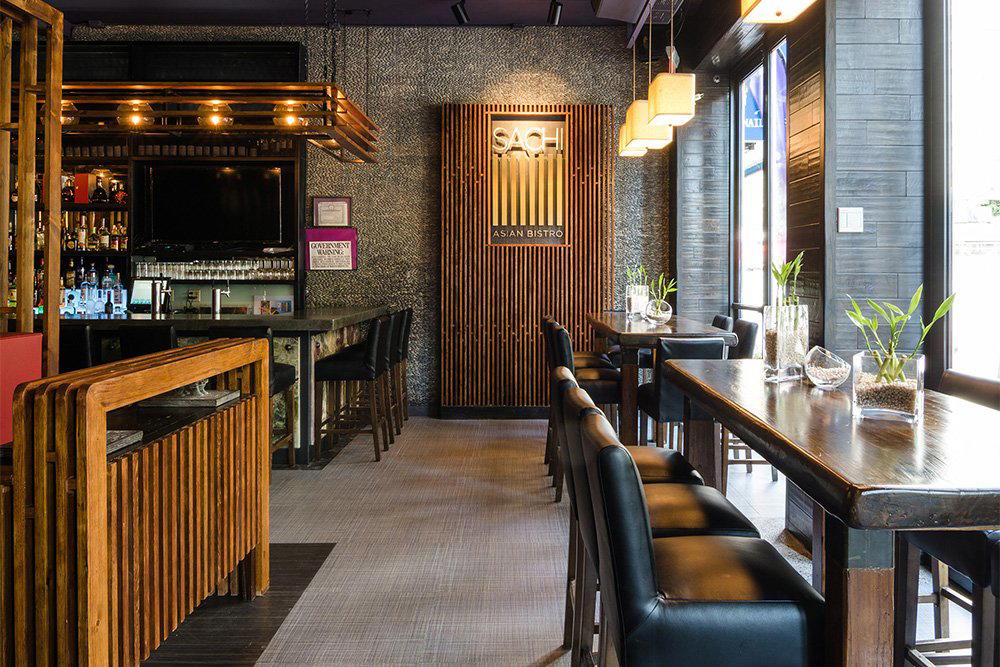
On Second Avenue in Murray Hill, Sachi occupies a corner of New York's mid-range dining scene where Japanese-inflected cooking meets a considered drinks program. The room positions itself against a city where every price tier now demands a defined editorial identity, and Sachi's address, 713 2nd Ave, puts it in reach of a neighborhood underserved by serious wine-forward dining.

Pearl is the En Primeur Club membership app, where members save venues, book tables and use the concierge.
The menu
What to order
- Pork Belly Ramen
- Tuna Tartare Guacamole
- Peking Duck Spring Roll
Second Avenue and the Question of Wine in Murray Hill
Murray Hill has long sat in an awkward position on New York's dining map: close enough to Midtown's expense-account corridors to attract foot traffic, far enough from the prestige zip codes of the West Village or the Upper East Side to be overlooked by serious wine programs. That gap is precisely the context in which a venue like Sachi, at 713 Second Avenue, becomes worth examining. In a city where the argument about wine-forward dining tends to collapse into the same handful of names Le Bernardin, Per Se, the upper bracket of tasting-menu rooms, the relevant question for a mid-tier neighborhood address is not whether it can compete with those programs, but whether it brings enough curation to matter to the diner who does not want to cross town.
New York's dining culture has bifurcated sharply in the post-pandemic years. At the leading end, rooms like Atomix and Jungsik New York have built wine programs that treat the cellar as a co-equal to the kitchen, pairing Korean-inflected progressive cooking with natural and low-intervention bottles that a decade ago would have been difficult to source in any American restaurant. Below that tier, the field thins quickly. The neighborhood restaurant that takes its wine list seriously, beyond a perfunctory by-the-glass rotation and a handful of recognizable appellations, remains rarer than the density of New York's restaurant population would suggest.
The Editorial Case for a Wine-Led Lens
This is not a secondary consideration. Across American fine dining, the quality of a cellar tends to correlate with the kitchen's willingness to take sourcing and technique seriously. Look at how Blue Hill at Stone Barns in Tarrytown built its wine identity around the same farm-driven ethos as its menu, or how Single Thread Farm in Healdsburg structured its cellar to mirror the Japanese-Californian precision of its kitchen. The wine list, in each case, is not decoration, it is an argument about the restaurant's values.
For Sachi, that argument remains to be made publicly. What is clear is its address: 713 Second Avenue places it in a corridor where the competition is largely informal, and where a thoughtfully assembled list, even a short, tightly edited one, would distinguish it from the neighborhood's prevailing sports-bar and casual-Thai baseline. The relevant peer comparison is not Masa or the omakase tier, but the growing cohort of mid-sized New York restaurants that have recognized wine curation as a differentiator at the $60–$120 per-person spend level.
Where Murray Hill Fits in New York's Dining Geography
Understanding Sachi requires understanding the neighborhood. Murray Hill is not a dining destination in the way that the West Village, Tribeca, or the Lower East Side are. It is a residential and young-professional neighborhood where restaurants succeed primarily on reliability and accessibility rather than on editorial cachet. That dynamic creates a specific opportunity: the restaurant that punches above the neighborhood's ambient level of ambition tends to accumulate a loyal local following faster than it would in a more competitive zip code.
This pattern repeats across American cities. Bacchanalia in Atlanta built its reputation partly because it occupied a tier of seriousness that the surrounding market had not yet developed. Emeril's in New Orleans succeeded in a city with strong dining culture by offering a format, the chef-driven, produce-focused restaurant with a real wine program, that the neighborhood had not yet institutionalized. The geographic logic is direct: in a less contested market, a restaurant's signal-to-noise ratio improves.
For a venue on Second Avenue, the implication is that Sachi need not compete with The French Laundry or Alinea to occupy a meaningful position. It needs to be the most considered option within a 10-minute walk for a diner who cares about what is in the glass as much as what is on the plate.
Drinking Well at This Address
The broader trend in American restaurant wine lists over the past decade has moved away from the encyclopedic, heavily French-weighted cellar toward tighter, more opinionated lists that reflect a specific point of view. The model favored by the current generation of sommelier-led programs, at places like Providence in Los Angeles or Addison in San Diego, is one of depth over breadth: fewer producers, more verticals, a by-the-glass selection treated as an audition for the full list rather than an afterthought.
Whether Sachi's program operates in that mode is not documented in a way that allows confident characterization here. What can be said is that the address and neighborhood context create pressure toward a specific style of list: approachable in price, legible without a sommelier's guidance, and precise enough to hold the attention of a diner who has already worked through the standard Burgundy and Barolo defaults. The restaurants that have succeeded in comparable New York neighborhoods, mid-density residential, slightly removed from the prestige corridors, tend to be those that treat the wine list as a conversation rather than a catalog.
For international reference points, the model of a tightly curated, food-driven cellar at a mid-sized address is well established at venues like 8½ Otto e Mezzo Bombana in Hong Kong and Alain Ducasse's Louis XV in Monte Carlo, where the cellar is treated as a long-term investment rather than a quarterly refresh. The ambition level differs, but the editorial logic, that the wine program carries as much of the restaurant's identity as the kitchen, applies regardless of price tier.
For a fuller picture of where Sachi sits within New York's current dining moment, see our full New York City restaurants guide. The city's mid-tier wine-forward dining scene also has relevant comparisons in the chef-driven format at Lazy Bear in San Francisco and the farm-to-table wine discipline at The Inn at Little Washington.
Know Before You Go
- Address: 713 2nd Ave, New York, NY 10016
- Neighborhood: Murray Hill, Manhattan
- Phone: Not publicly listed
- Price range:, check current menus
- Dress code: Not specified
Frequently asked questions
What part of town is Sachi in?
Sachi is located at 713 2nd Ave, New York, NY 10016, New York City.
Is Sachi a good option for a wine-focused dinner near Midtown East?
Sachi sits at 713 2nd Ave in the Murray Hill stretch of New York City, positioning it within easy reach of Midtown East without the expense-account pricing pressure of restaurants closer to Park Avenue. Murray Hill has a thinner concentration of wine-led dining compared to the West Village or Tribeca, which means venues that do lean in that direction draw a consistent local following. Confirming the current wine program directly with the restaurant will clarify what's on offer.
What should I eat at Sachi?
Dish-level recommendations require confirmed menu data, which isn't independently verified for Sachi at 713 2nd Ave. Given the restaurant's Murray Hill location, a neighborhood that leans toward full-service dinner formats over tasting menus, expect a structured menu built around shareable courses. Calling ahead or checking the venue directly will give you the clearest read on current offerings.
Do they take walk-ins at Sachi?
Walk-in availability at Sachi isn't confirmed through publicly verifiable sources. Murray Hill draws a largely residential dinner crowd rather than tourist foot traffic, which often means tables turn on a more predictable rhythm than in higher-profile neighborhoods. Contacting the venue directly at 713 2nd Ave, New York, NY 10016 is the reliable way to check same-day availability.
The Quick Read
Comparable venues nearby, for context on price, style, and recognition.
| Venue | Cuisine | Price | Notes |
|---|---|---|---|
| SachiThis venue (the venue you are viewing) | Modern Asian Fusion Bistro | $30–50 | Not listed |
| Kelley & Ping | Pan-Asian Noodle Shop | Not listed | Greenwich Village, Pan-Asian Noodle Shop |
| Spring Cafe | Vegan Asian-American Comfort | $20–30 | Tribeca-Civic Center, Vegan Asian-American Comfort |
| Jollibee | Woodside, Filipino Fast Food | Not listed | Not listed |
| Ivan Ramen Slurp Shop | Authentic Japanese Ramen | Not listed | Hell's Kitchen, Authentic Japanese Ramen |
| Chococo Café (Upper East Side location) | Not listed | $10–20 | Upper East Side, Artisan Chocolate Café & British Chocolatier |
Continue exploring
More in New York City
Restaurants in New York City
All restaurants in New York City →
Bars in New York City
All bars in New York City →




Details
- Trendy
- Modern
- Lively
- Group Dining
- Casual Hangout
- Date Night
- Open Kitchen
- Sake Program
- Craft Cocktails
- Small Plates
- A La Carte
- Sake
- Cocktails
- Vegetarian Friendly
- Vegan Options
Current opening hours
- Monday
- 11:30 AM–10 PM
- Tuesday
- 11:30 AM–10 PM
- Wednesday
- 11:30 AM–10 PM
- Thursday
- 11:30 AM–10 PM
- Friday
- 11:30 AM–10:15 PM
- Saturday
- 12–10:15 PM
- Sunday
- 12–10 PM
Hours can change for holidays and private events. Hours as of .
Modern and visually appealing bistro atmosphere that is easy on the eyes with a fun, shareable dining experience.