Our verdict
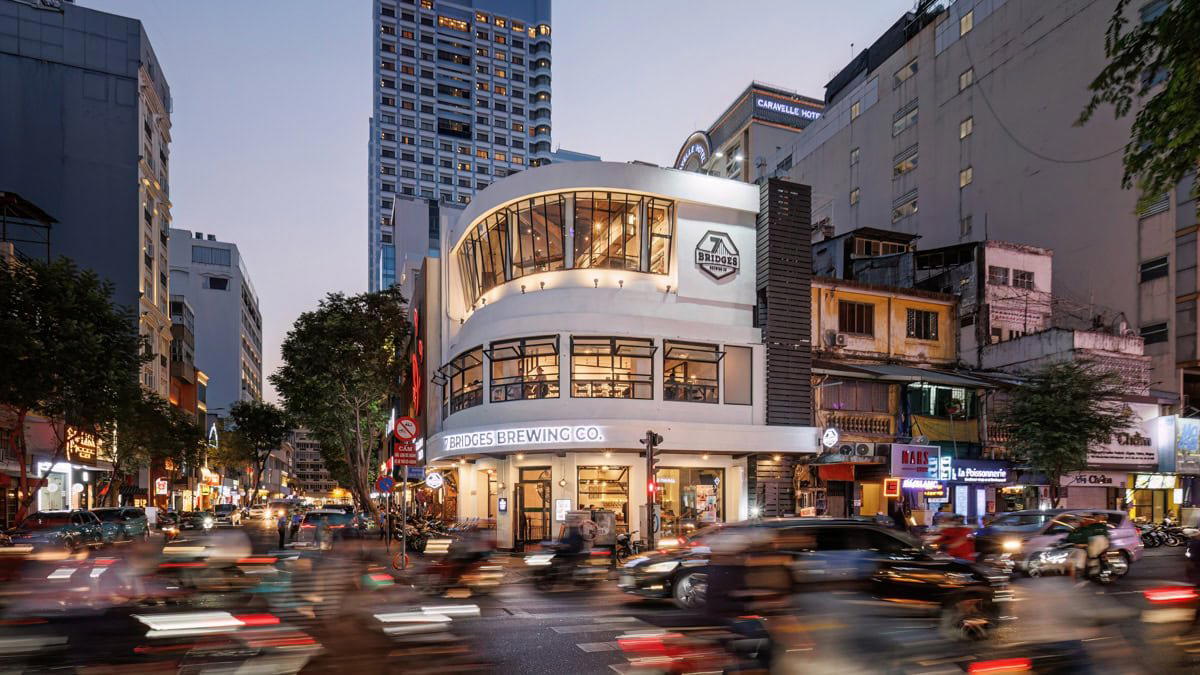
On Đồng Khởi, District 1's most commercially saturated strip, Ryu occupies a position where the surrounding competition tells you almost as much as the venue itself. Ho Chi Minh City's fine-dining tier has grown considerably in recent years, and addresses on this street now signal serious intent. Ryu sits inside that conversation, at 71C, within walking distance of the city's benchmark innovative restaurants.

Đồng Khởi and the District 1 Fine-Dining Axis
Ho Chi Minh City's most consequential restaurant addresses cluster around District 1, and Đồng Khởi functions as the spine of that cluster. The street runs from the riverfront toward Ben Thanh, and the blocks between have accumulated a concentration of serious restaurants over the past decade that would have been difficult to predict when the area was primarily retail and colonial-era hotels. Ryu, at 71C Đồng Khởi, sits within this axis, where the competition operates at a high pitch and the audience arriving at your door tends to know what it expects.
That context matters when reading any restaurant on this strip. Venues here are not competing for walk-in curiosity traffic in the way that a side-street spot in Bình Thạnh might. The address itself acts as a pre-filter, drawing guests who have already made some evaluation of the offering before they arrive. For neighboring comparisons, Akuna and CieL both operate in the innovative tier at the upper end of District 1 pricing, while Anan Saigon has shown that Vietnamese street food references can anchor a serious contemporary program on similar ground. Ryu's positioning within this peer group is what a visit is ultimately measuring.
What the Address Implies About the Menu Architecture
In Ho Chi Minh City's current fine-dining moment, menu architecture is one of the more revealing signals of a restaurant's intent. The split is roughly between venues that build around a tasting format with fixed progression, the model closest to what Atomix in New York or Le Bernardin represent at their respective price points, and those that retain an à la carte spine with optional supplement structures. Both approaches are defensible; what separates them is the kind of dining experience they produce and the degree of control they vest in the kitchen versus the guest.
A Đồng Khởi address with the name Ryu, a Japanese term, loosely translated as dragon or flow depending on the character used, suggests a menu with Japanese influence or at minimum a kitchen that has absorbed Japanese technique into its thinking. Ho Chi Minh City has seen a notable expansion of Japan-influenced dining across the premium tier, from omakase counters in the Phú Nhuận area to fusion programs that deploy Japanese knife work and curing techniques against Vietnamese produce. Where Ryu sits within that spectrum is the operative question for a first visit. Comparable innovative programs in the city, such as Coco Dining, have demonstrated that a structured menu with clear culinary lineage reads more coherently than a broad fusion offering without a defined point of view.
The city's Cantonese end of the spectrum, represented by venues like Long Trieu, operates with a different logic: classic technique, recognizable reference points, and an audience that reads quality through ingredient provenance and execution fidelity. Whether Ryu draws from that tradition, the Japanese-influenced tier, or a genuinely hybrid program is something the menu structure, the sequence of courses, the ratio of composed dishes to single-protein preparations, the presence or absence of a tasting format, would immediately communicate.
Ho Chi Minh City's Premium Tier in 2024
Ho Chi Minh City has moved from being a city where fine dining meant either a hotel restaurant or a handful of French-influenced rooms into something considerably more varied and self-confident. The emergence of chefs trained abroad returning to cook with Vietnamese produce on their own terms, and the arrival of concepts from other Asian cities testing the local appetite, have both accelerated. Gia in Hanoi demonstrated what Vietnamese-led contemporary cooking could achieve with international recognition, and that moment created visible momentum in Ho Chi Minh City as well.
La Maison 1888 in Da Nang showed that international partnerships in Vietnam's premium dining tier could carry genuine credibility rather than pure branding. The market has matured enough that guests in the premium tier now read credentials more carefully, and venues that cannot substantiate their positioning, whether through clear culinary lineage, awards recognition, or a sufficiently distinct menu architecture, tend to lose ground to those that can. For an overview of where Ryu sits within the city's full offering, the EP Club Ho Chi Minh City restaurants guide maps the competitive set in detail.
Across Vietnam more broadly, the range of serious dining options now extends well beyond the major cities: White Rose (Bông Hồng Trắng) in Hoi An has built a reputation around a single dish with genuine discipline, while options further afield, from Bien 14 Seafood Buffet Restaurant in Ha Long to Big Bowl in Cam Ranh, speak to how widely the appetite for considered eating has spread. Within the capital itself, formats range from international chains like Jollibee in Kon Tum and King BBQ in Rach Gia to Korean formats like Dookki in Minh Xuan and Vietnamese barbecue chains such as GoGi House in Bac Lieu. The Big Chill International Food Court in Phan Thiết represents another strand of how varied the country's dining infrastructure has become at every price point.
Planning a Visit
Ryu is located at 71C Đồng Khởi, District 1, Ho Chi Minh City, a central address reachable on foot from most hotel accommodation in the Ben Thành and Phạm Ngũ Lão areas. Given the density of serious competition on and around Đồng Khởi, booking in advance rather than arriving without a reservation is the standard approach for the tier; walk-in availability at dinner on weekends is limited across the peer group as a whole.
Frequently asked questions
How do I find Ryu?
Ryu is located at 71C Đồng Khởi, Ward, Quận 1, Thành phố Hồ Chí Minh 70000, Vietnam, Ho Chi Minh City.
Is Ryu suitable for a business dinner in Ho Chi Minh City?
Ryu's position at 71C Đồng Khởi, District 1 places it in the corridor that Ho Chi Minh City's corporate dining circuit uses most consistently, the street runs through the heart of the CBD and is walkable from the major business hotels in the Bến Thành area. For a formal client dinner, the address alone signals intent. Confirming private room availability or table configuration directly with the venue is advisable for groups requiring discretion.
What dish is Ryu famous for?
Given its address at 71C Đồng Khởi, District 1's primary fine-dining corridor, the kitchen is likely operating within the precision-focused, tasting-menu format that defines this tier of Ho Chi Minh City dining. Visiting and asking the front-of-house team directly will give you the most accurate read on current highlights.
Do they take walk-ins at Ryu?
Restaurants at this address level on Đồng Khởi, District 1 tend to operate on reservations, particularly at peak dinner hours. Arriving without a booking on a Friday or Saturday evening is a risk not worth taking at this end of the Ho Chi Minh City market.
What's the signature at Ryu?
No specific menu signatures are documented for Ryu in current editorial sources. The restaurant sits at 71C Đồng Khởi, placing it within Ho Chi Minh City's most competitive fine-dining block, where kitchens in this tier typically build identity around either Japanese-influenced precision, contemporary Vietnamese technique, or French-rooted tasting formats. Confirmation from the venue directly is the only reliable route to current menu intelligence.
Do they accommodate allergies at Ryu?
Any restaurant operating at the fine-dining level on Đồng Khởi, District 1 is expected to handle dietary requirements as standard practice, but guests with serious allergies should contact the venue in advance to confirm. The address at 71C Đồng Khởi provides a reference point for reaching out directly before your visit.
| Venue | Cuisine | Price | Awards | Notes |
|---|---|---|---|---|
| RyuThis venue (the venue you are viewing) | Japanese Ramen | Not listed | Not listed | Not listed |
| Anan Saigon | Modern Vietnamese Street Food Fine Dining | $50–100 | 1 Michelin Star · World's 50 Best #86 | Vietnamese Street Food, ₫₫ |
| Akuna | Modern Australian-Vietnamese Fine Dining | $150–200 | 1 Michelin Star · La Liste Top Restaurants | Innovative, ₫₫₫₫ |
| Coco Dining | Progressive Vietnamese Fine Dining | $150–200 | 1 Michelin Star | Innovative, ₫₫₫ |
| Long Trieu | Michelin-Starred Cantonese | $50–100 | 1 Michelin Star · La Liste Top Restaurants | Cantonese, ₫₫₫₫ |
| Bánh Xèo 46A | Traditional Vietnamese Bánh Xèo | $10–20 | Michelin Bib Gourmand | Vietnamese, ₫ |