GoGi House Go Bạc Liêu sits inside the Go! shopping complex on 23 Tháng 8, placing Korean-style barbecue inside a provincial Mekong Delta city better known for seafood and rice paddies than tabletop grills. The format draws families and groups who want a structured, communal eating experience in a part of Vietnam where that model remains relatively uncommon. It reads as a useful reference point for understanding how Korean BBQ chains are reshaping mid-range dining across secondary Vietnamese cities.
Pearl is the En Primeur Club membership app — saves, bookings, and concierge access live there. Same editors, same standards.
- Address
- TTTM Go, 23 Tháng 8, Phường 7, Bạc Liêu, 260000, Vietnam
- Phone
- +842917300338
- Website
- gogi.com.vn
- Directions
- Get directions
 Saves & bookings on Pearl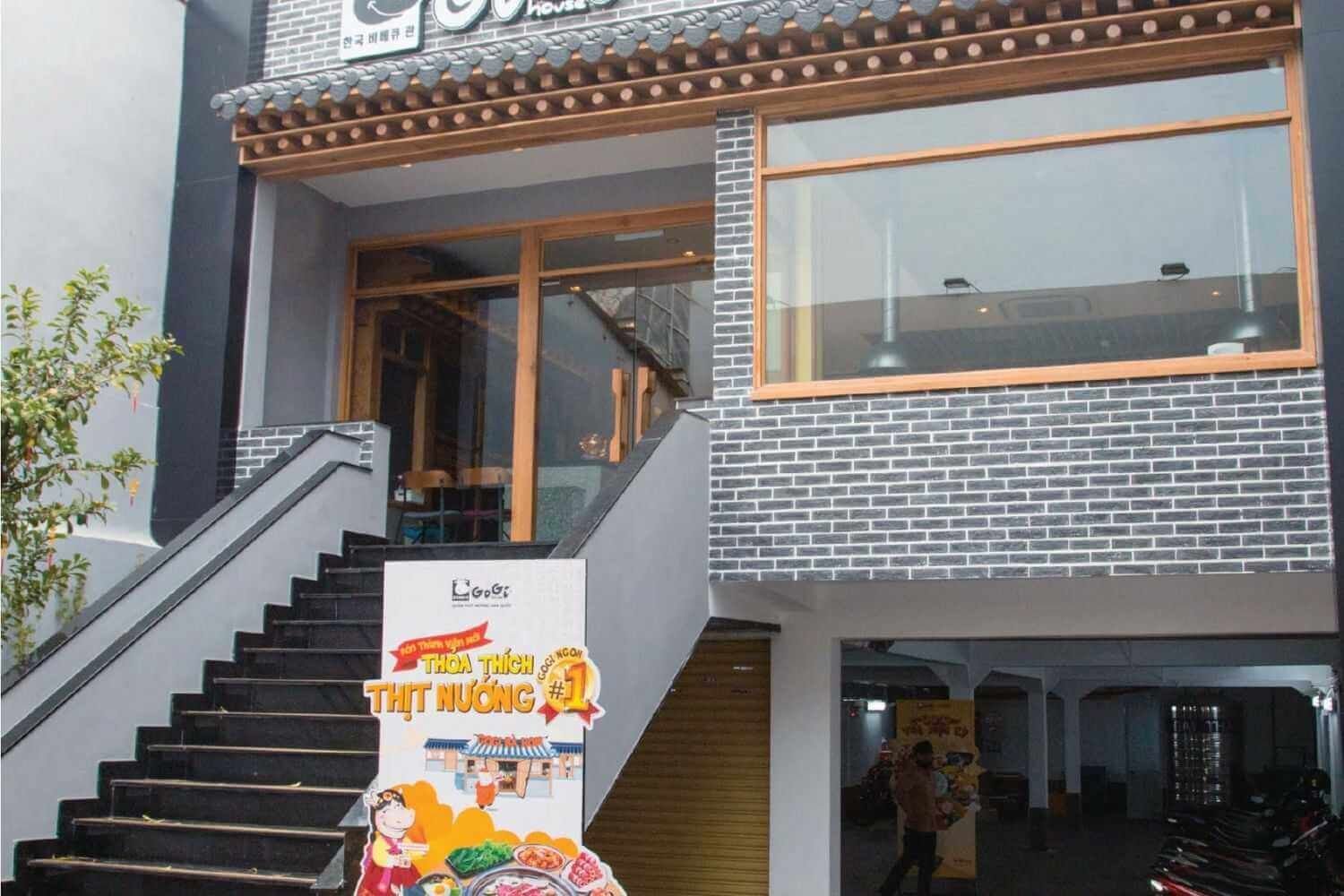
Korean Barbecue Arrives in the Mekong Delta
Bạc Liêu sits at the southern tip of the Mekong Delta, a province whose dining identity has long been built around freshwater fish, crab, and the particular shrimp farming culture that defines its coastline. The arrival of a GoGi House branch inside the Go! commercial centre on 23 Tháng 8 represents something worth pausing on: the northward and southward spread of Korean barbecue formats into Vietnamese provincial cities that, a decade ago, would have had no frame of reference for tabletop grilling in a restaurant setting. For context on how that shift compares to the more established urban Vietnamese dining scene, the Bac Lieu restaurants guide maps the wider picture.
The GoGi House model belongs to a category of Korean-origin chains that have found traction across Southeast Asia by adapting a communal, self-directed format to markets where shared eating is already culturally embedded. The proposition is simple: raw or marinated proteins arrive at the table, a grill sits at the centre, and the meal proceeds at whatever pace the group sets. In a city like Bạc Liêu, where most restaurant dining is either street-level casual or banquet-style for celebrations, that middle register, structured but informal, fills a gap that local formats have not historically occupied.
The Source Question: What Lands on the Grill
Korean barbecue's credibility in any market rests substantially on sourcing. The central tension for any Korean BBQ chain operating in provincial Vietnam is the distance between the protein supply chain and the plate. In cities like Ho Chi Minh City or Hanoi, venues such as Akuna in Ho Chi Minh City or Gia in Hanoi operate within reach of sophisticated cold-chain logistics and premium domestic producers. A provincial GoGi House branch operates in a different reality: it draws on the national supply network that the GoGi House group maintains across its Vietnamese footprint, which means the sourcing story is one of chain consistency rather than local provenance.
That distinction matters editorially. Bạc Liêu's own agricultural output, shrimp, rice, freshwater protein, is not what ends up on these grills. The meat on the table at GoGi House Go Bạc Liêu arrives through the same distribution logic that supplies other GoGi locations across the country, prioritising uniformity over regional specificity. For diners accustomed to the local seafood that defines Mekong Delta eating, the contrast is deliberate: this is a format that travels with its own identity rather than adapting to what the province produces. That is a structural observation about how chain Korean barbecue operates in Vietnam's secondary cities, and it separates this category sharply from the ingredient-led precision of venues like La Maison 1888 in Da Nang, where sourcing is a core editorial argument.
The Physical Setting and Who Uses It
The Go! shopping complex in Bạc Liêu follows the format that has become standard for Vietnamese provincial commercial development: a multi-floor retail and food-and-beverage anchor that draws foot traffic from across the surrounding district. Positioning a restaurant inside that structure changes how it is used. Diners arrive before or after shopping, families with children treat it as a destination within a larger outing, and the setting imposes a certain predictability on the experience, reliable air conditioning, visible queuing systems, and a noise level calibrated for group conversation rather than quiet meals.
That context shapes the vibe more than any individual design decision. Korean barbecue chains in this format tend toward open, well-lit interiors with ventilation hoods above each table, a functional arrangement that signals the format's priorities. The experience is participatory by design: the grill is the activity, and the meal is structured around engagement with it. Compare that social architecture to something like Cargo Club Cafe and Restaurant in Hoi An, where the setting carries independent weight, and the difference in how venue environment functions becomes clear.
Korean BBQ Chains in Provincial Vietnam: A Wider Pattern
GoGi House is not the only Korean barbecue brand to have moved into Vietnam's secondary cities, but it is among the more systematically distributed. The chain's expansion into provinces like Bạc Liêu reflects a broader reading of where the Vietnamese middle class is growing and where organised dining formats, with consistent quality floors and recognisable brand signals, find demand. In this respect, Bạc Liêu is not an outlier. Cities across the Mekong Delta have seen similar formats arrive inside commercial developments over the past several years, tracking the expansion of retail infrastructure more than any specific food trend.
The comparison set for GoGi House Go Bạc Liêu is not the fine dining operations that define Vietnam's premium restaurant conversation. Venues like Saffron in Hue City or the technically ambitious programmes at Le Pont Club in Hai Phong operate in a different register entirely. The relevant comparable set is other mid-range chain formats serving communal eating occasions in provincial Vietnamese cities, a category where Korean BBQ currently holds significant ground against Chinese hotpot and domestic buffet operators. For reference points on what sourcing-led dining looks like at the higher end of the global spectrum, Le Bernardin in New York City and Lazy Bear in San Francisco illustrate how differently ingredient provenance functions when it becomes the central editorial argument of a restaurant.
Planning Your Visit
GoGi House Go Bạc Liêu is located within the Go! commercial centre at 23 Tháng 8, Phường 7, Bạc Liêu. Access follows the centre's operating hours, and the format suits groups of three or more where the tabletop grill dynamic makes structural sense. For solo diners or couples, the communal logic of the format works less naturally. Weekend evenings, when the commercial complex draws its heaviest footfall from families and younger groups, are likely the busiest periods, and arriving earlier in the dining window avoids the peak wait. Reservations are recommended, and walking in and assessing the queue on arrival is the practical approach. For a broader read on where this venue sits within Bạc Liêu's dining options and what else the city offers, the Bac Lieu restaurants guide provides wider context. Readers exploring Vietnam's more locally-rooted dining options elsewhere in the country might also look at Mi Quang Ba Vi in Thanh Khe, Bau Troi Do in Son Tra, or Nhà hàng Madame Lân in Hai Chau for a sense of how regional Vietnamese formats differ from the chain Korean BBQ model.
How It Stacks Up
Comparable venues nearby, for context on price, style, and recognition.
| Venue | Cuisine | Price | Notes |
|---|---|---|---|
| GoGi House Go Bạc LiêuThis venue — the venue you are viewing | Korean BBQ | $$ | Not listed |
| ë§ì°¬ë¤ - Matchandeul BBQ Binh duong ë¹ì¦ì | Korean BBQ | $$ | Thảo Điền Ward, District 2 |
| King BBQ Vincom Kiên Giang | Korean BBQ Buffet | $$ | Vĩnh Bảo |
| Victoria Sapa Resort & Spa | Vietnamese and International | $$$ | Sa Pa |
| Madam Khanh The Banh Mi Queen | Traditional Vietnamese Banh Mi | $ | Minh An Ward |
| Madam Khanh The Banh Mi Queen | Hoi An Banh Mi | $ | Tran Cao Van Street |
At a Glance
- Lively
- Trendy
- Group Dining
- Casual Hangout
- Open Kitchen
Current opening hours
- Monday
- 10 AM–9 PM
- Tuesday
- 10 AM–9 PM
- Wednesday
- 10 AM–9 PM
- Thursday
- 10 AM–9 PM
- Friday
- 10 AM–9 PM
- Saturday
- 10 AM–9 PM
- Sunday
- 10 AM–9 PM
Hours can change for holidays and private events. Last verified .
Energetic barbecue atmosphere with grill smoke and lively dining.