Roti Indian Bistro
Our verdict
Roti Indian Bistro occupies a quietly residential stretch of West Portal, where San Francisco's Indian dining scene shifts from the downtown corridor toward something more neighbourhood-rooted. The menu architecture here reflects how contemporary Indian restaurants in California position subcontinental cooking: structured around region-specific traditions rather than a generic curry-house format, at a price point well below the city's tasting-menu tier.

Pearl is the En Primeur Club membership app, where members save venues, book tables and use the concierge.

The menu
What to order
- Tandoori Salmon
- Chicken Tikka Masala
- Boti Kebab
- Dal Makhni
West Portal and the Geography of Indian Dining in San Francisco
San Francisco's Indian restaurant map has long concentrated around the Tenderloin and parts of the Mission, where lunch-counter economics and high foot traffic define the format. West Portal operates differently. The neighbourhood runs quieter, drawing a residential crowd that tends to eat locally and return regularly. A bistro format planted here is making a different kind of argument than a downtown curry house: it is betting on repeat custom over tourist volume, and that bet shapes everything from portion logic to menu length.
Roti Indian Bistro, at 53 West Portal Avenue, sits within that residential calculus. For readers mapping San Francisco's dining options across price tiers, the context matters: the city's upper bracket is occupied by tasting-menu destinations like Lazy Bear, Atelier Crenn, Benu, Quince, and Saison, all operating at $$$$ price points with formal booking and extended formats. Roti occupies a different register entirely, one where the dining proposition is neighbourhood-scaled Indian cooking rather than destination fine dining.
What the Menu Architecture Reveals
The word "bistro" in an Indian restaurant's name is a deliberate signal. Across American cities, Indian restaurants that adopt bistro framing are typically positioning themselves between the lunch-buffet tier and the white-tablecloth modernist format. The menu structure that tends to follow from that positioning prioritises a selective list over an exhaustive one: fewer dishes executed with more care, a legible regional logic, and pricing that reflects the neighbourhood rather than the zip code of a fine-dining corridor.
In practical terms, bistro-format Indian menus in cities like San Francisco often organise themselves around a core of North Indian preparations, with occasional Southern or coastal additions that signal a broader literacy. The roti itself, as a named anchor, points toward bread-centered eating traditions rather than the rice-dominant South, suggesting a menu weighted toward the subcontinent's wheat belt: Punjab, Rajasthan, Delhi. That structural choice tells a reader something before they sit down. It implies tandoor work, slow-cooked dals, and protein preparations that carry sauce as architecture rather than afterthought.
This kind of menu logic differs meaningfully from what you find at the modernist end of the Korean-American continuum, where venues like Atomix in New York City build tasting formats around a single tradition's fine-dining potential. It also differs from the California-inflected sourcing narratives of places like Single Thread Farm in Healdsburg or The French Laundry in Napa. Roti's register is more direct: it is not trying to reframe Indian cooking as fine dining, nor is it presenting a buffet economy. The bistro format is the proposition.
Indian Dining in California: A Broader Pattern
California's Indian restaurant scene has matured considerably over the past decade. The Bay Area, with one of the largest South Asian populations in the United States, supports a wide range of formats: from the intensely regional (Hyderabadi biryani specialists, Gujarati thali houses, Udupi vegetarian counters) to the broadly pan-Indian casual. What has been slower to develop, relative to cities like London or Toronto, is a confident mid-market bistro tier that takes the food seriously without formalising it into a tasting experience.
West Portal's residential character makes it a plausible home for that mid-market proposition. Diners in the neighbourhood are not typically cross-referencing Michelin guides before choosing dinner; they are looking for reliable cooking at a fair price within walking distance. That dynamic tends to reward restaurants that build a coherent regular clientele rather than chasing one-time visitors, and it is a dynamic that suits a bistro format with a focused menu and consistent execution.
For comparison, the bistro tier in American Indian dining finds parallels in what neighbourhood French restaurants do in cities like New York or Chicago. The format communicates informality without sacrificing craft, and the menu length signals confidence: a shorter list suggests the kitchen knows what it does well and has edited accordingly, rather than attempting to cover every regional base to satisfy the broadest possible audience.
Placing Roti in the City's Wider Dining Map
For visitors already planning a San Francisco trip around its more celebrated dining rooms, Roti represents a different kind of evening. The city's fine-dining tier requires advance planning, formal booking, and a significant per-head spend. Restaurants like Providence in Los Angeles, Addison in San Diego, or Blue Hill at Stone Barns in Tarrytown operate in a register where the meal is itself the occasion. West Portal's bistro format is a different proposition: lower friction, shorter lead time, and a format built around the pleasure of a good dinner rather than a structured tasting event.
That distinction is worth making explicit for EP Club readers who are mapping a multi-day San Francisco visit. A city's dining life is not composed entirely of its tasting-menu addresses. The mid-tier, neighbourhood-rooted restaurants often capture something about local eating culture that the destination rooms, by their very ambition, cannot. Indian cooking at the bistro tier in a residential neighbourhood is as much a part of San Francisco's dining character as Benu's French-Chinese tasting menu or the modernist Americana of Lazy Bear. Our full San Francisco restaurants guide maps the full range of the city's dining options across price tiers, neighbourhoods, and cuisine types.
It is also worth noting that Indian cuisine's global reach makes local comparison useful. The bistro format has been refined in London over decades; in New York, restaurants like Le Bernardin and Alinea in Chicago define one end of a long spectrum that runs all the way to neighbourhood bistros. San Francisco's version of that spectrum is still developing its mid-tier, and West Portal is a neighbourhood where that development makes geographic sense.
Planning Your Visit
Roti Indian Bistro is located at 53 West Portal Avenue, San Francisco, CA 94127, in the West Portal neighbourhood. The area is accessible via the Muni Metro's West Portal station, making it direct to reach from downtown without a car. Given the bistro format and neighbourhood setting, booking ahead is advisable for weekend evenings, though the residential character of the street means the dining room operates at a different pace than the city's busier corridors.
Address: 53 West Portal Ave, San Francisco, CA 94127. Accessible via Muni Metro West Portal station.
Frequently asked questions
What's Roti Indian Bistro's location?
Roti Indian Bistro is located at 53 W Portal Ave, San Francisco, CA 94127, San Francisco.
Is Roti Indian Bistro a good option for vegetarians visiting San Francisco?
North Indian culinary traditions have a deep vegetarian infrastructure, paneer preparations, lentil dishes, and vegetable curries are structural menu components rather than afterthoughts, which makes a roti-anchored kitchen a natural fit for non-meat eaters. San Francisco's Bay Area has one of the largest South Asian populations in the United States, which sustains a higher baseline expectation for vegetarian Indian cooking than most American cities. For visitors staying on the western side of the city, Roti at West Portal fills a gap: there is no comparable Indian restaurant within that immediate neighbourhood.
What dish is Roti Indian Bistro famous for?
The restaurant's name points directly to roti, anchoring the menu in North Indian bread traditions and tandoor cooking. In bistro-format Indian kitchens across American cities, that framing typically means house-made breads, naan, paratha, and leavened roti, feature prominently alongside layered dals and slow-cooked proteins. Roti's West Portal address puts it in a neighbourhood with no competing Indian counter, which means it functions as the area's primary destination for this style of cooking.
Do they take walk-ins at Roti Indian Bistro?
West Portal is a residential neighbourhood rather than a high-footfall dining district, and the bistro format typically operates with a more relaxed booking dynamic than the city's tasting-menu rooms. Walk-in availability at 53 West Portal Avenue is likely more accessible than at destination restaurants in Soma or the Financial District, though contacting the venue directly before arrival on weekend evenings is a reasonable precaution. No reservation policy is publicly confirmed in available data.
What's the signature at Roti Indian Bistro?
The bistro framing and the roti-anchored name together point toward a kitchen built around North Indian preparations: tandoor-baked breads, lentil-based dals, and protein curries with dairy-forward sauces. That combination, bread as centrepiece rather than side, is a deliberate positioning choice that separates Roti from the lunch-counter Indian restaurants concentrated in San Francisco's Tenderloin. The West Portal setting reinforces a slower, sit-down register rather than a fast-turnover format.
How does Roti Indian Bistro handle allergies?
North Indian cooking, which the roti-centred menu draws from, routinely incorporates dairy (ghee, paneer, yoghurt-based marinades), gluten (in breads and some sauces), and tree nuts, all common allergens. Guests with specific dietary requirements should contact Roti Indian Bistro at 53 West Portal Ave, San Francisco directly ahead of their visit to confirm ingredient details for individual dishes. Indian cuisine's regional depth does offer genuine options across many dietary restrictions, but verification with the kitchen is the only reliable approach.
A Credentials Check
Comparable venues nearby, for context on price, style, and recognition.
| Venue | Cuisine | Price | Notes |
|---|---|---|---|
| Roti Indian BistroThis venue (the venue you are viewing) | Modern Indian | $20–30 | Not listed |
| Pakwan | Authentic Pakistani-Indian | $20–30 | Mission |
| Dosa | Modern South Indian | Not listed | Fillmore |
| Bombay Brasserie | Indian with French Twist | Not listed | Financial District/South Beach |
| Chaat Corner | Indian Street Food and Chaat | $10–20 | Financial District/South Beach |
| India Clay Oven | Authentic Northern Indian Tandoori | $20–30 | Outer Richmond |
Continue exploring
More in San Francisco
Restaurants in San Francisco
All restaurants in San Francisco →
Bars in San Francisco
All bars in San Francisco →

Details
- Modern
- Cozy
- Casual Hangout
- Family
- Group Dining
- Open Kitchen
- Craft Cocktails
- A La Carte
- Vegetarian Friendly
- Vegan Options
- Gluten Free Options
Current opening hours
- Monday
- 5–9 PM
- Tuesday
- 11:30 AM–9 PM
- Wednesday
- 11:30 AM–9 PM
- Thursday
- 11:30 AM–9 PM
- Friday
- 11:30 AM–9 PM
- Saturday
- 11:30 AM–9 PM
- Sunday
- 11:30 AM–9 PM
Hours can change for holidays and private events. Hours as of .
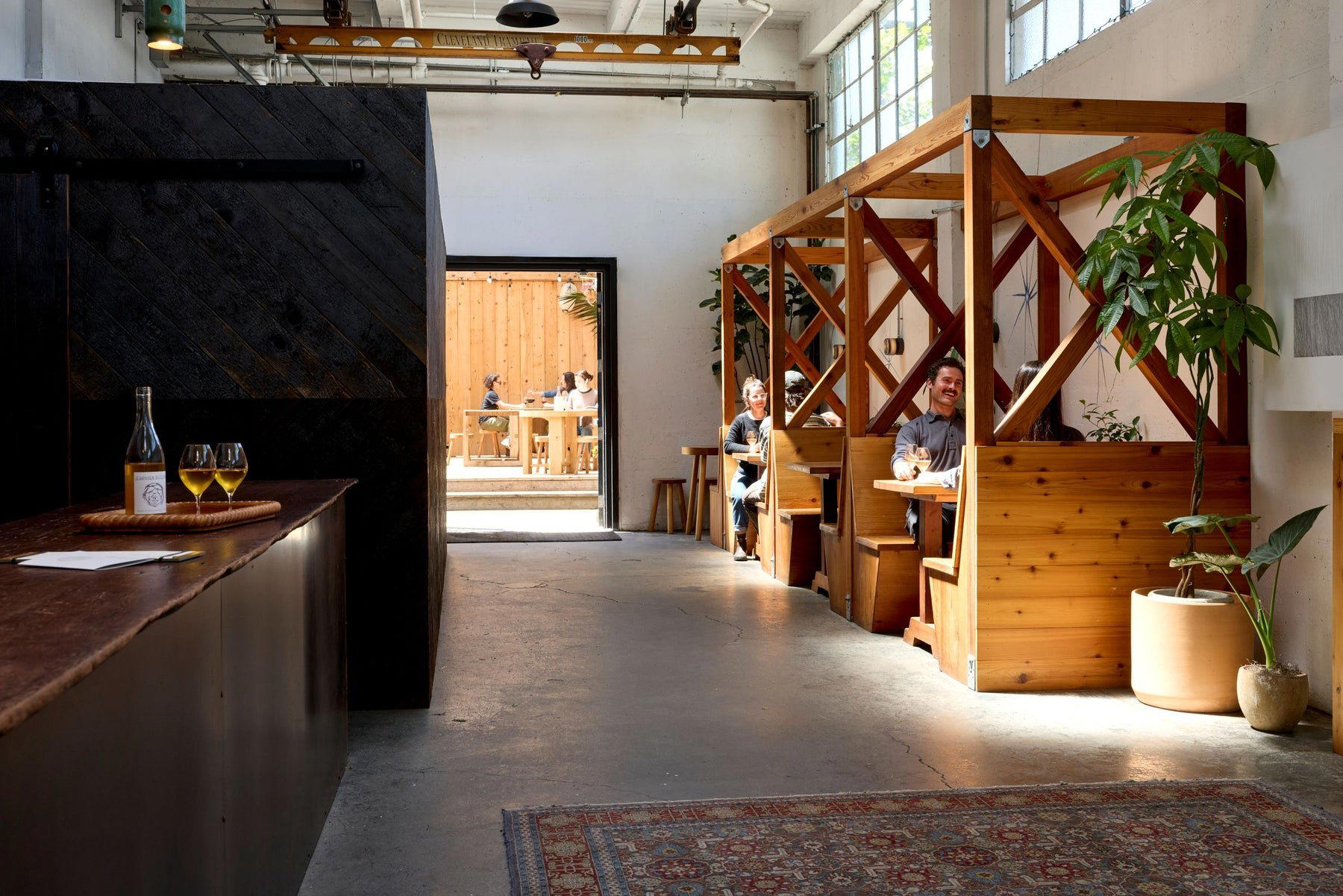
Casual contemporary styling with refined attentive service and moderate noise levels.