Our verdict
Rotana City occupies a prominent address on Parnell Street in Dublin's Rotunda quarter, positioning it within one of the city's most culturally layered northern corridors. The area has historically sat outside the main tourist circuit, giving venues here a neighbourhood character that central Dublin dining rarely carries. It represents a strand of the city's dining scene worth tracking for those willing to cross the Liffey.

Pearl is the En Primeur Club membership app — saves, bookings, and concierge access live there. Same editors, same standards.
- Address
- Rotana City, 195-196 Parnell St, Rotunda, Dublin, D01 CC67, Ireland
- Phone
- +35318148751
- Hours
- Mon–Tue 11:30 AM–11:30 PMWed–Thu 11:30 AM–11 PMFri–Sat 11:30 AM–11:30 PMSun 11:30 AM–11 PM
- Website
- rotanacity.ie
- Directions
- Get directions
- Booking
- Book on the venue's website
The menu
What to order
- Charcoal BBQ kebab
- Falafel
- Homemade baklava
Parnell Street and the North Side's Shifting Weight
For decades, Dublin's restaurant conversation defaulted to the south side: Merrion Street, Stephen's Green, the cobbles of Temple Bar. The north side of the Liffey, and Parnell Street in particular, has operated on a different register — denser, less curated, more commercially varied, and considerably less covered in the press. That is changing. The Rotunda quarter, running from the Garden of Remembrance down toward O'Connell Street, has accumulated enough hospitality investment in recent years to function as a genuine dining corridor rather than a collection of isolated addresses. Rotana City, at 195–196 Parnell Street, sits within that corridor, in a stretch that draws from the area's multicultural residential base as much as from any tourist or corporate circuit.
Parnell Street's character has long been shaped by the communities living along it rather than by the pull of destination dining. That distinction matters for how you read a venue here. Restaurants on this stretch tend to operate closer to the neighbourhood model: they serve the people who live and work nearby, they price for regulars, and they develop a local rhythm that purpose-built destination venues rarely achieve. Whether Rotana City fits precisely that profile is worth understanding before you book.
What the Address Tells You
The Rotunda end of Parnell Street sits at the northern edge of Dublin city centre, a short walk from the Ambassador Theatre and the Gate Theatre, and within reasonable distance of the IFSC. That geography means the dinner crowd is likely to be mixed: some pre-theatre, some post-work, some genuinely local. Venues in this bracket across Dublin tend to operate with less ceremony than their counterparts in the Georgian south side, and that can work in their favour. The room is often the draw as much as the menu, and the pace of service follows the neighbourhood rather than a fine-dining script.
For context on what the broader Dublin scene looks like from this address, it helps to understand the competitive field. At the upper end of the city's restaurant spectrum, Patrick Guilbaud and Chapter One by Mickael Viljanen occupy the Michelin two-star tier, operating in heavily formal environments with price points that reflect that positioning. One step below, venues like Glovers Alley and D'Olier Street represent the city's confident modern-cooking middle register. Bastible on Leonard's Corner has shown how a neighbourhood-anchored address with serious cooking can build a loyal following without leaning on the city-centre infrastructure. Rotana City on Parnell Street operates within a different geography but with a comparable premise: the neighbourhood as context, not obstacle.
Dublin's Multicultural Dining Corridor
Parnell Street is one of the few streets in Dublin where you can move between Chinese, Vietnamese, African, and Middle Eastern kitchens within a single block. That diversity is not incidental — it reflects the residential demographics of the area and the entrepreneurial patterns of the communities that settled along this corridor from the late 1990s onward. For a city that still relies heavily on European fine-dining references for its prestige restaurant culture, the north inner city offers a counterpoint: cooking driven by diaspora knowledge rather than culinary school credentials, with technique rooted in domestic tradition rather than staged kitchen hierarchies.
Across Ireland, the same pattern plays out in different forms. In Galway, Aniar has built its identity around hyper-local Irish ingredients and fermentation. On the Cork coast, dede in Baltimore brings Turkish technique to Irish seafood. In Kinsale, Bastion demonstrates how a small-town address can sustain ambitious cooking. These venues all make a version of the same argument: that where you are shapes what ends up on the plate, and that identity rooted in place is more durable than identity constructed around trend. Parnell Street's dining ecosystem makes a version of that same argument, in its own register.
Further afield in the Irish dining scene, venues like Campagne in Kilkenny, Chestnut in Ballydehob, Homestead Cottage in Doolin, House in Ardmore, Lady Helen in Thomastown, Liath in Blackrock, and Terre in Castlemartyr each demonstrate how Irish hospitality has diversified its reference points beyond the capital. The dining quality concentrated outside Dublin in recent years makes the city's own neighbourhood venues more interesting by comparison, they are competing in an increasingly sophisticated national conversation.
Internationally, the neighbourhood-anchored model has strong precedents. In New York, Atomix operates from a Midtown address but draws its identity entirely from Korean culinary tradition rather than its location. Le Bernardin demonstrates how sustained technical commitment in a fixed format builds authority over decades. Both cases show what a venue earns when it stops trying to be the room and starts being defined by what it consistently does well.
Booking and Visiting Rotana City
Parnell Street venues of this type typically operate without the extended booking lead times that apply to the city's destination-dining tier. The north inner city's restaurant rhythm runs closer to walk-in and same-week availability than the six-to-eight-week waits that apply at Michelin-level addresses. That accessibility is part of the proposition: you do not need to plan a visit to Rotana City the way you plan a visit to a two-star counter. For visitors staying in Dublin's north city hotels or attending events at the Gate or Ambassador, the address is convenient without being engineered for tourism.
For a broader mapping of Dublin's restaurant scene across neighbourhoods and price points, the EP Club Dublin restaurants guide covers the full range from the Michelin-starred south side to the more varied north inner city corridor that Parnell Street represents.
Know Before You Go
- Address: 195–196 Parnell Street, Rotunda, Dublin, D01 CC67, Ireland
- Neighbourhood: Rotunda quarter, north inner city, adjacent to the Garden of Remembrance and Gate Theatre
- Getting there: Within walking distance of O'Connell Street; well-served by Dublin Bus routes along Parnell Street and Dorset Street
- Hours: Not confirmed; verify directly before visiting
Frequently asked questions
What's the must-try dish at Rotana City?
Parnell Street's dining corridor is anchored in diverse culinary traditions, and venues in this stretch tend to reflect the cuisines of the communities that built them. Visiting and asking the kitchen directly what they are cooking well that day is, on this street, usually the most reliable approach. For confirmed dish-level detail at Dublin's top-documented tables, see our coverage of Chapter One by Mickael Viljanen and Glovers Alley.
Can I walk in to Rotana City?
Venues at this price point and address type in Dublin's north inner city generally operate with more flexibility on walk-ins than the city's award-decorated destination restaurants. That said, specific seating policies for Rotana City have not been confirmed in available data. If you are visiting the Rotunda area for theatre or an evening out, the street's overall character suggests that showing up without a reservation is a reasonable approach, though calling ahead is always advisable. For context, comparable neighbourhood venues across the city tend to be more accommodating on short notice than the Patrick Guilbaud tier, which books weeks out.
What do critics highlight about Rotana City?
The venue's Parnell Street address places it within a corridor that receives less national press attention than the Georgian south side, which is partly a function of geography and partly a reflection of how Dublin's food media has historically allocated column space. Venues on this stretch that do attract coverage tend to earn it through consistent neighbourhood reputation rather than awards-season visibility. For critically documented Dublin cooking, Bastible and D'Olier Street offer useful reference points.
What type of dining experience does Rotana City offer compared to other Parnell Street venues?
Parnell Street hosts one of Dublin's most varied dining corridors, with a range of formats from casual canteen-style service to sit-down restaurants with table service. For a full picture of what the north inner city's restaurant scene offers relative to Dublin's other neighbourhoods, the EP Club Dublin guide maps venues across the city with confirmed detail on format, price, and cuisine type.
Credentials Lens
Comparable venues nearby, for context on price, style, and recognition.
| Venue | Cuisine | Price | Notes |
|---|---|---|---|
| Rotana CityThis venue — the venue you are viewing | Authentic Lebanese | $20–30 | Not listed |
| Alfies | Modern European & International | $20–30 | Royal Exchange A |
| Boeuf & Coq | French-Inspired Irish Steakhouse | $20–30 | Royal Exchange A |
| The Washerwoman | Modern Irish Gastropub | $30–50 | Botanic A |
| Brother Hubbard (North) | Modern Middle Eastern Brunch | $20–30 | North City |
| Aleena Indian Restaurant | Traditional Indian Curry House | $20–30 | Royal Exchange A |
Continue exploring
More in Dublin
Restaurants in Dublin
Browse all →
Bars in Dublin
Browse all →
Hotels in Dublin
Browse all →
Wineries in Dublin
Browse all →
Details
- Modern
- Cozy
- Casual
- Casual Hangout
- Group Dining
- Family
- Standalone
- Byob
- A La Carte
- Set Menu
- Vegetarian Friendly
- Halal
Current opening hours
- Monday
- 11:30 AM–11:30 PM
- Tuesday
- 11:30 AM–11:30 PM
- Wednesday
- 11:30 AM–11 PM
- Thursday
- 11:30 AM–11 PM
- Friday
- 11:30 AM–11:30 PM
- Saturday
- 11:30 AM–11:30 PM
- Sunday
- 11:30 AM–11 PM
Hours can change for holidays and private events. Last verified .
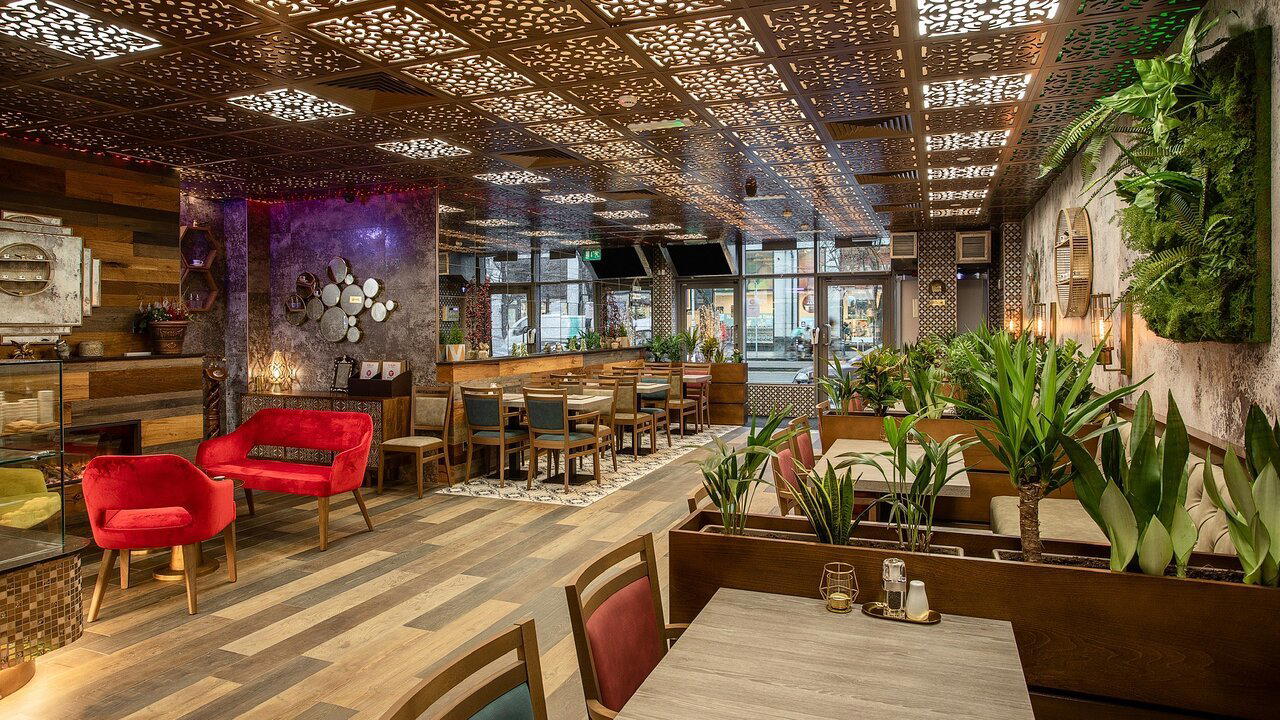
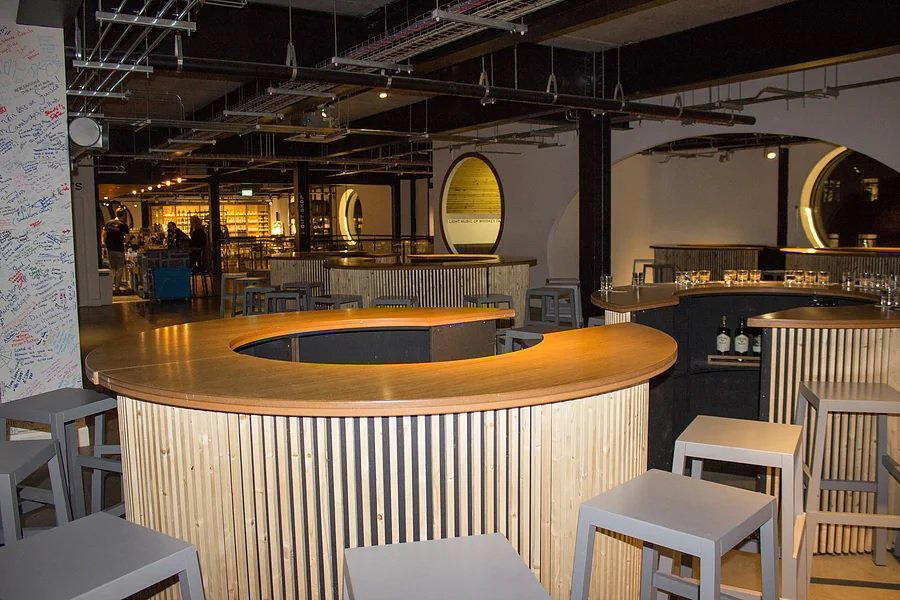
Warm and inviting with dramatic decor blending modern aesthetics and authentic Middle Eastern charm, creating a casual and friendly atmosphere.