Alpine Sourcing at Altitude: The Ennstal Table In the Ennstal valley of Styria, the distance between a kitchen and its raw ingredients can be measured in minutes rather than supply chains. This is the operative logic behind the better mountain...
Pearl is the En Primeur Club membership app — saves, bookings, and concierge access live there. Same editors, same standards.
- Address
- Stoder 15, 8962 Gröbming, Austria
- Phone
- +43368630960
- Website
- rosemialm.at
- Directions
- Get directions
 Saves & bookings on Pearl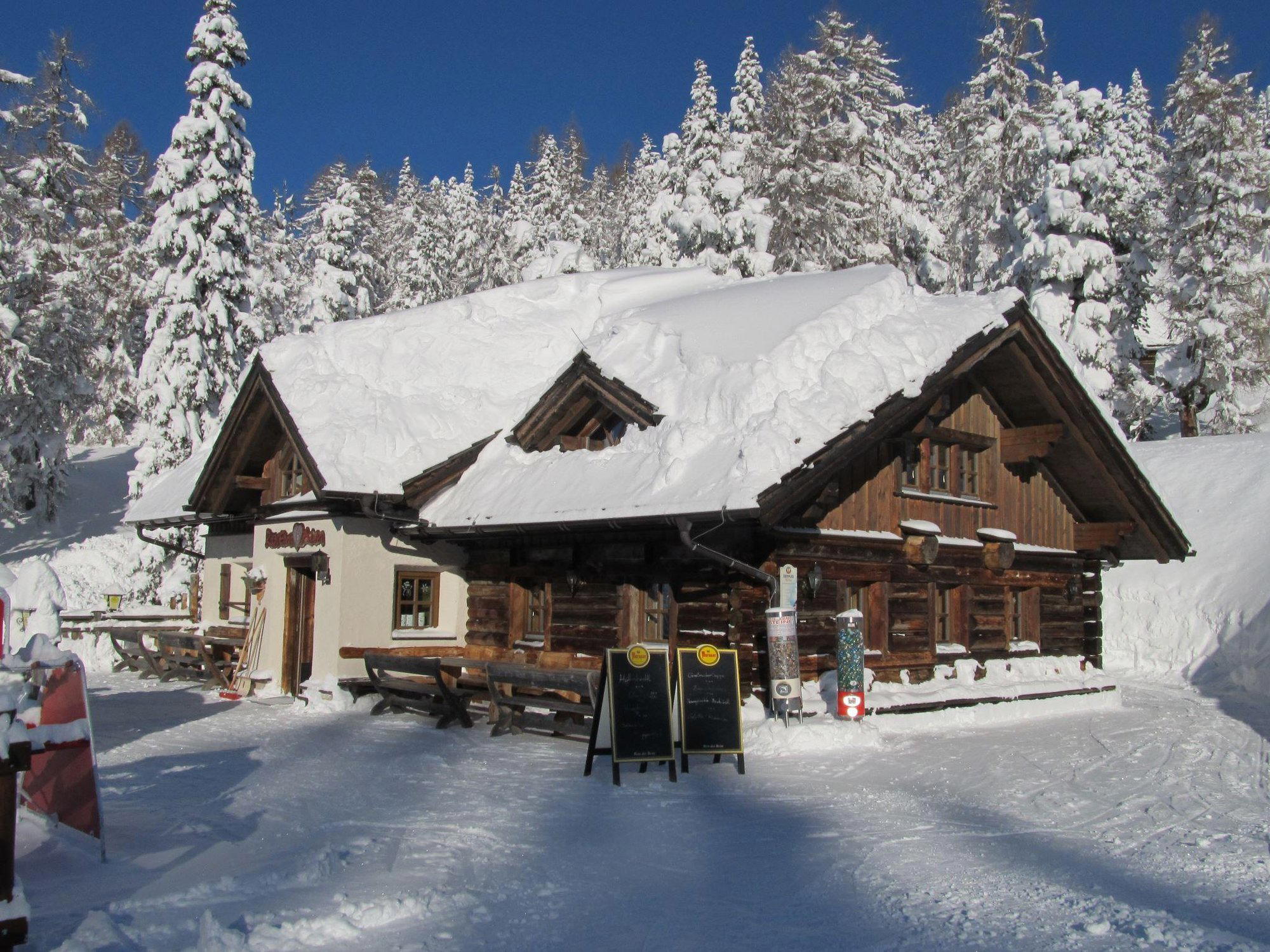
Alpine Sourcing at Altitude: The Ennstal Table
In the Ennstal valley of Styria, the distance between a kitchen and its raw ingredients can be measured in minutes rather than supply chains. This is the operative logic behind the better mountain restaurants in the region around Gröbming and Aich, where the Dachstein massif and the surrounding upland meadows define what ends up on the plate as much as any chef decision does. Rosemialm, at Stoder 15 in Gröbming, is a restaurant serving Austrian Alpine cuisine in Styria.
Styria has long operated as one of Austria's most ingredient-conscious regions. The Ennstal is beef and dairy country, its meadows grazed at elevations that concentrate flavour in ways that lowland farming cannot replicate. Wild herbs, game, and foraged produce from the surrounding slopes round out a pantry that the region's kitchens have drawn on for generations. Restaurants that work within this framework, rather than importing against it, tend to read differently on the plate: the dairy is richer, the meat shorter-fibred and more pronounced, the seasonal arc more abrupt and legible. It is a style of eating defined by geography rather than ideology.
The Physical Setting and What It Signals
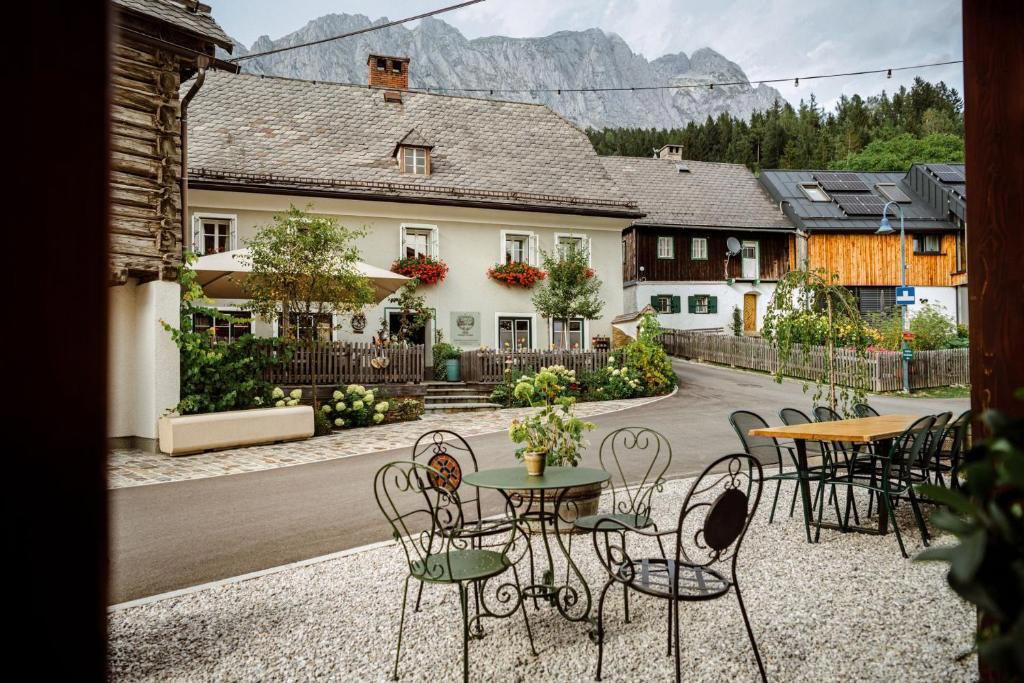
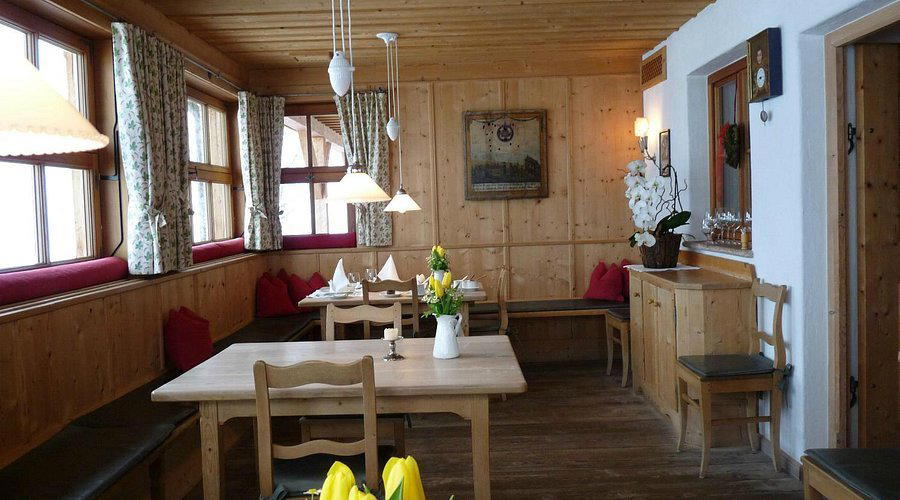
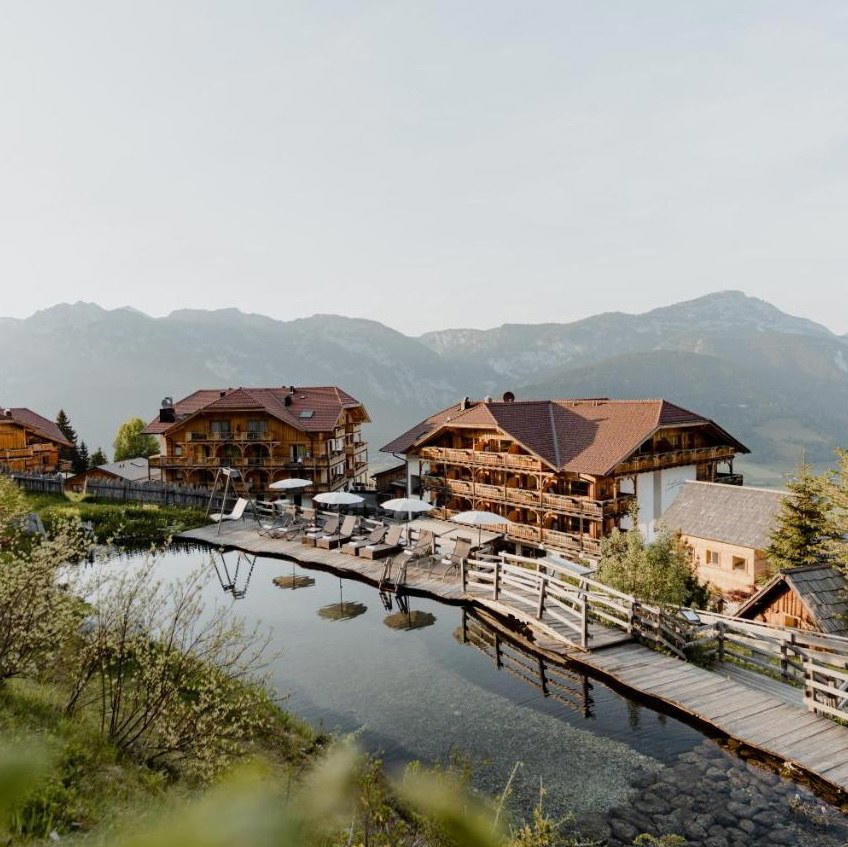
Approaching a Stoderhütte-area property in this part of Styria, the architecture tends toward the functional-vernacular: timber, pitched roofs, terraces oriented toward the valley below. These are not design objects in the way that certain Alpine resort restaurants have become, but they are not incidental either. The building is the first signal about what the kitchen prioritises. A mountain establishment at this altitude in the Ennstal is working within a logic that places locality above trend, and the physical environment reinforces that positioning before a single dish arrives.
This places Rosemialm in a different competitive conversation than, say, the high-altitude restaurant annexes of ski resorts in Vorarlberg or Tyrol, where dining has increasingly become a designed experience in its own right. Properties like Griggeler Stuba in Lech or Stüva in Ischgl operate within a luxury ski-resort economy that shapes both menu ambition and price point. The Ennstal model is quieter and more rooted: the draw is the valley itself, and the kitchen exists in service of that geography rather than in competition with it.
Where Rosemialm Sits in the Austrian Mountain Dining Conversation
Austrian mountain gastronomy has split across two distinct tracks over the past decade. One track runs through the destination-restaurant model, where Michelin recognition and tasting menus anchor venues that draw visitors from beyond the immediate region. Obauer in Werfen and Döllerer in Golling an der Salzach exemplify this: their kitchens sit in Alpine proximity but operate within a national and international reference frame, competing in the same comparable set as Steirereck im Stadtpark in Vienna or Ikarus in Salzburg. The other track, less documented but no less coherent, runs through establishments whose primary audience is regional and whose sourcing logic is hyperlocal by necessity rather than by marketing.
Rosemialm, based on its address and setting, sits closer to the second track. That is not a limitation; it is a specific kind of value. For a visitor willing to move away from the marquee addresses and spend time in the Ennstal proper, this category of restaurant offers access to a sourcing chain that the destination-model venues approximate but rarely replicate with the same directness. The herbs and dairy come from slopes visible from the terrace. That compression of distance between source and plate is what the Styrian highlands, at their leading, can offer that no urban kitchen can.
For broader context on what the Styrian tradition looks like at its most refined urban expression, Artis in Graz provides a useful counterpoint, and Taubenkobel in Schützen am Gebirge shows how the ingredient-led model translates to Austria's eastern wine country. Neither comparison diminishes the Ennstal proposition; they simply map different nodes of the same broader network of regionally anchored Austrian cooking.
The Ingredient Logic of the Ennstal
The argument for eating in this part of Styria rests on altitude-specific produce. Ennstal beef, in particular, has a regional identity recognised within Austrian gastronomy: the grazing conditions above 700 metres produce animals with a different fat profile than valley-floor or lowland equivalents. Game from the surrounding Gesäuse area, wild mushrooms from the forest belt below the treeline, and dairy from small-scale Alm operations form the core pantry of the leading kitchens here. This is not a niche or a trend; it is the structural reality of what grows and lives at this elevation, and it has defined the regional table long before ingredient sourcing became a selling point.
Establishments in the Ennstal that source honestly from this geography occupy a position analogous to what Kräuterreich by Vitus Winkler in Sankt Veit im Pongau has formalised further west in Salzburgerland: a kitchen built around proximity to its raw materials, where the sourcing is the technique. Ois in Neufelden pursues a comparable logic in Upper Austria. At the other end of the ambition spectrum, venues like Gourmetrestaurant Tannenhof in Sankt Anton am Arlberg and Restaurant 141 by Joachim Jaud in Mieming demonstrate how the Alpine-sourcing premise can be extended into more structured, award-tracked formats. Rosemialm operates without that formal apparatus, which gives it a different kind of credibility: no tasting menu infrastructure, no Michelin pressure, just the direct relationship between the valley and the table.
Planning a Visit
The Ennstal is most accessible by car; Gröbming sits approximately 80 kilometres east of Salzburg along the B320, and the valley corridor is well-served in both summer and winter seasons. For visitors travelling from Vienna, the route via Liezen places Gröbming roughly two and a half hours from the city centre. Summer in the Ennstal brings the full range of foraged and dairy produce, while autumn shifts the table toward game and root vegetables; either window makes sense for a food-motivated visit. Rosemialm takes reservations and is best planned in advance. Berggasthof Steinerhaus in the same immediate area provides a useful point of comparison for the local standard, and
For readers calibrating expectations against global reference points: the Ennstal mountain-table experience occupies a completely different register from, say, the hyper-technical sourcing narratives of Le Bernardin in New York City or the produce-as-concept approach of Atomix in New York City. And that distance is the point. The draw here is the un-mediated relationship between a specific upland geography and the food it produces, which is harder to find as that relationship becomes more fashionable and therefore more curated. Landhaus Bacher in Mautern an der Donau and Schwarzer Adler in Hall in Tirol each show how Austrian regional kitchens can build long reputations on exactly this kind of rooted clarity. Rosemialm, in its Ennstal setting, operates within that same tradition.
Side-by-Side Snapshot
Comparable venues nearby, for context on price, style, and recognition.
| Venue | Cuisine | Price | Notes |
|---|---|---|---|
| RosemialmThis venue — the venue you are viewing | Austrian Alpine | $$ | Not listed |
| Berggasthof Steinerhaus | Traditional Austrian Mountain Cuisine | $$ | Stoderzinken |
| Johnsleitnerhütte | Traditional Austrian Alpine Cuisine | $$ | Stainach Pürgg |
| Schöni-Alm | Traditional Austrian Mountain Hut | $$ | Bad Mitterndorf |
| sGerstl | Austrian Brew Pub | $$ | Wels city center |
| Krummholzhütte | Styrian Gourmet Hut | $$ | Haus im Ennstal |


At a Glance
- Rustic
- Scenic
- Cozy
- Casual Hangout
- Family
- Group Dining
- Terrace
- Panoramic View
- Garden
- Mountain
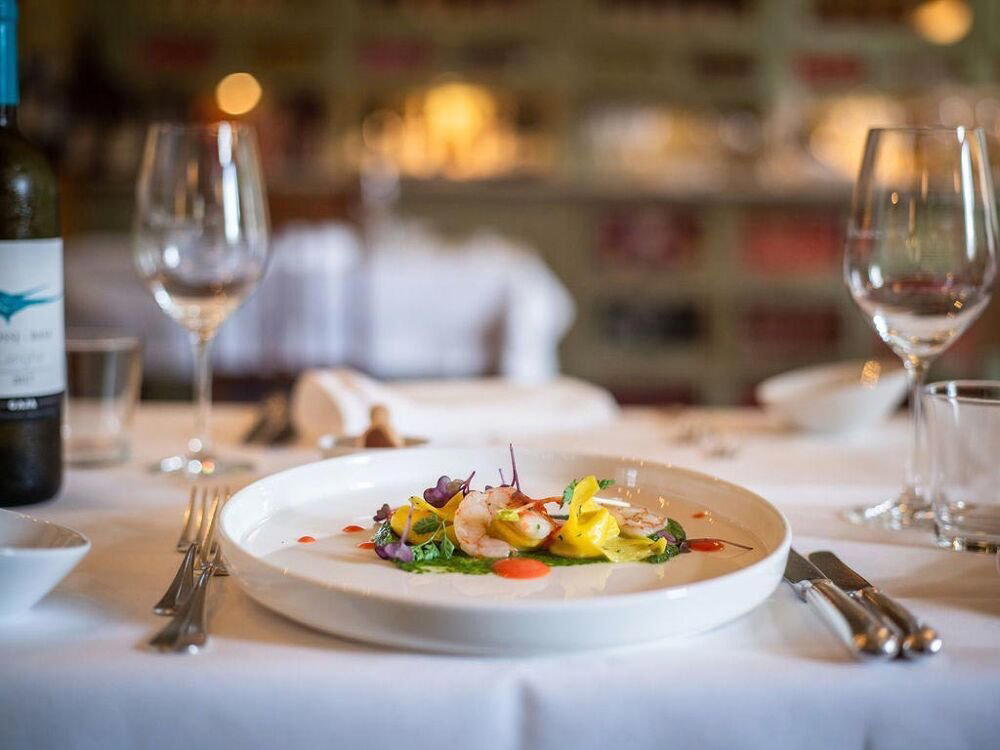
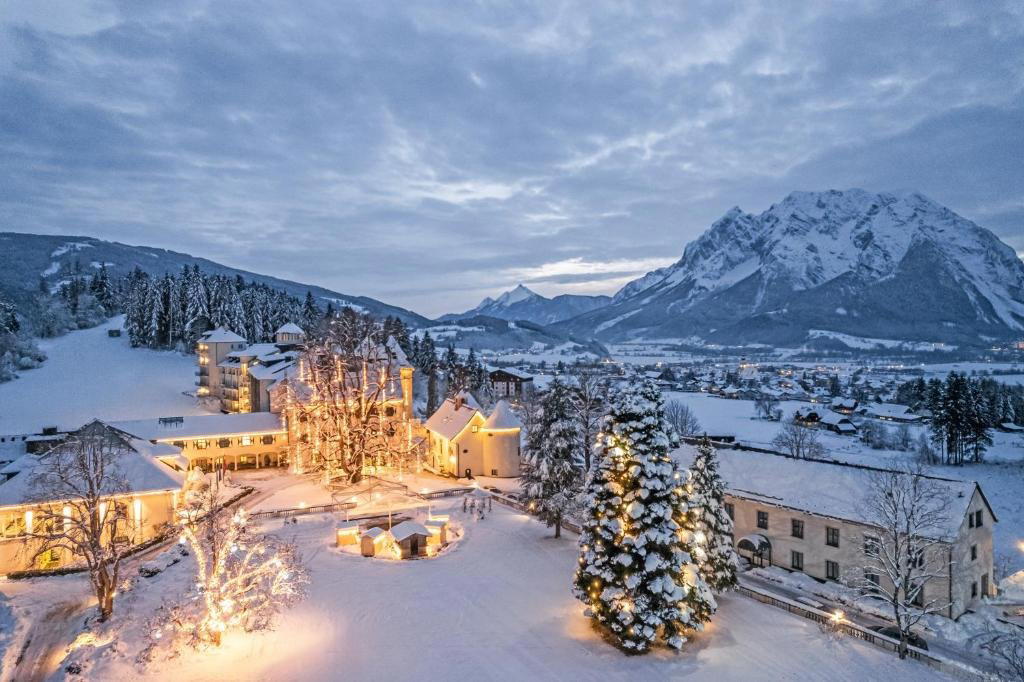
Rustic alpine farmhouse setting with warm, inviting atmosphere designed to encourage lingering and relaxation in both summer and winter seasons.