Roman's

Our verdict
Roman's on DeKalb Avenue in Fort Greene has spent years operating as one of Brooklyn's most quietly influential neighborhood restaurants, earning a loyal following through seasonal Italian-leaning cooking and an unpretentious room that resists the theatrics of Manhattan dining. The kitchen's sourcing ethic and commitment to local producers place it in a category alongside farm-driven destinations rather than borough bistros.

Pearl is the En Primeur Club membership app, where members save venues, book tables and use the concierge.
Fort Greene and the Quiet Case for Neighborhood Restaurants
There is a particular kind of restaurant that Manhattan dining culture consistently undervalues: the neighborhood room that operates on discipline rather than spectacle. Fort Greene has one in Roman's, the low-key Italian-influenced address at 243 DeKalb Avenue that has held its corner of Brooklyn with a consistency that the city's more theatrical openings rarely sustain. The approach here belongs to a tradition that runs through places like Blue Hill at Stone Barns in Tarrytown and Single Thread Farm in Healdsburg: the kitchen's sourcing decisions and the menu's seasonal honesty carry more weight than the room's visual statement.
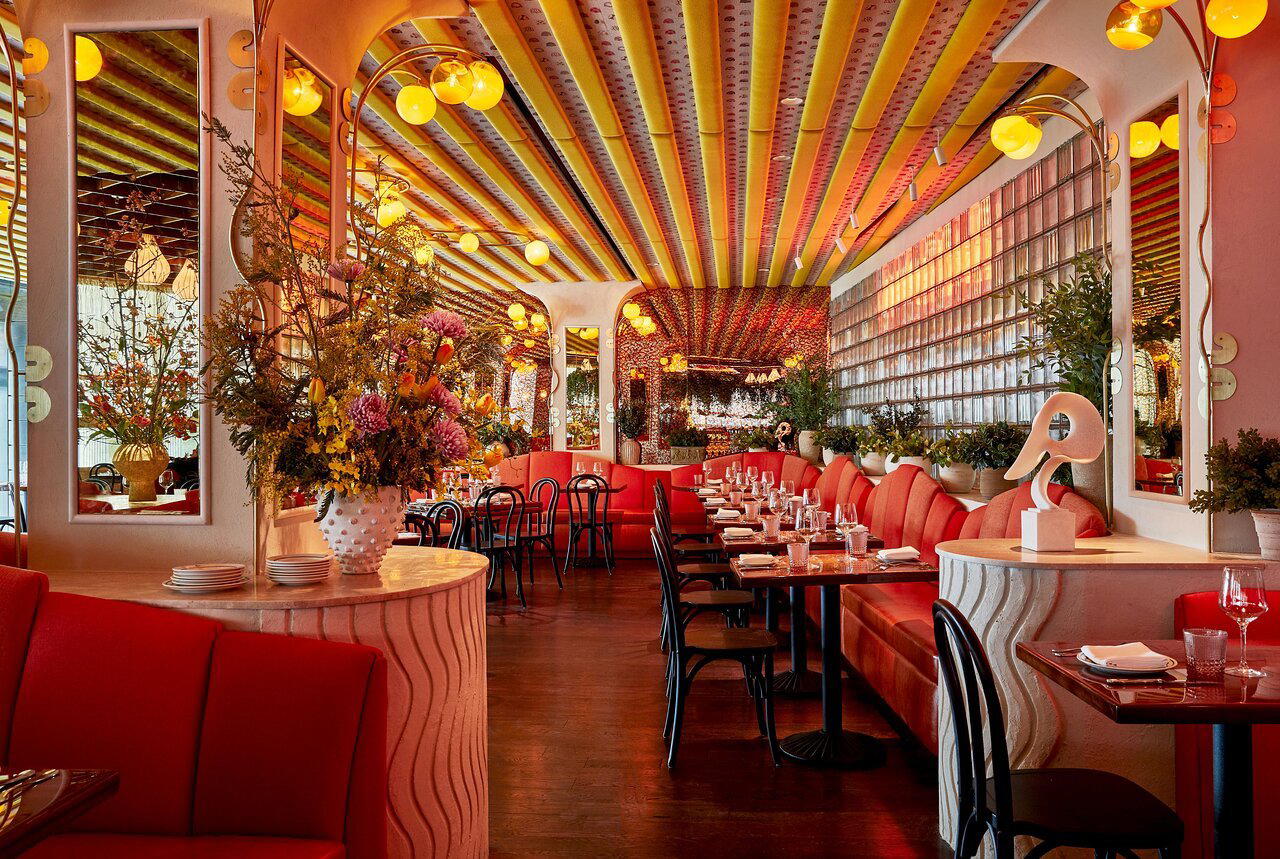
Fort Greene itself sits at a productive intersection of Brooklyn communities, close enough to the cultural infrastructure of BAM to pull a crowd that crosses borough lines, but rooted enough in its residential character that restaurants here are built to last rather than launch. Roman's reads that environment correctly. The room is spare and warm in the way that Italian osterie have always been spare and warm: wood, low light, and the sense that the space exists to frame dinner rather than compete with it.
Sourcing as Editorial Position
Across American fine dining, the sustainability conversation has fractured into two camps. The first is institutional: multi-starred restaurants with documented supply chains, carbon offset programs, and sustainability reports. The second is quieter and arguably more consequential at street level: the neighborhood kitchen that builds its menu around what the regional agricultural network can actually deliver, week by week, without fanfare. Roman's operates in the second tradition.
This distinction matters because it changes how a menu is written. When sourcing is treated as a marketing layer applied after the menu is conceived, the result is a list of dishes with producer footnotes. When sourcing is the starting point, the menu is inherently seasonal and inherently limited, because availability dictates it. The Italian culinary framework maps onto this approach naturally. Italian regional cooking has always been structured around what is local and what is in season, not as an ethical position but as a practical one. A kitchen working in that tradition doesn't need to announce its commitments; the menu announces them by what it includes and, just as importantly, by what it doesn't.
This places Roman's in a peer conversation with restaurants like Smyth in Chicago, Lazy Bear in San Francisco, and Frasca Food and Wine in Boulder, all of which have built their identities around a similar proposition: that the most honest cooking is the cooking most tightly tied to place and season. The price tier and format differ across these addresses, but the underlying philosophy does not.
Where Roman's Sits in the Brooklyn and New York Context
New York City's restaurant culture has developed two largely separate tracks. The first runs through Manhattan's high-ticket tasting-menu circuit, where Le Bernardin, Atomix, Eleven Madison Park, Per Se, and Masa operate in a globally competitive bracket with booking windows measured in months and price points that position them against international peers. The second track runs through Brooklyn and parts of lower Manhattan, where a different set of restaurants has been building credibility through repetition, regularity, and community trust rather than institutional recognition.
Roman's has always lived on the second track, and that positioning is a choice, not a limitation. The restaurant's longevity in a neighborhood that has seen significant change is itself a signal. Restaurants that survive in Brooklyn for an extended period do so because they serve their immediate community consistently, not because they cycle through trends. This is a more demanding test than it appears: neighborhood loyalty is earned visit by visit, and it is lost the moment a kitchen starts optimizing for external attention over local quality.
The Italian-leaning format gives Roman's a clear point of orientation in a city crowded with Italian restaurants at every price point. Italy's culinary traditions have always been regional and seasonal by definition, which means a kitchen working in that tradition with genuine seriousness is working within a framework that was sustainable before sustainability became a conversation. Pasta made with flour milled nearby, proteins sourced from regional farms, vegetables pulled from the market rather than a distribution catalog: these are not innovations, they are the original model, recovered and applied with care. For a wider view of where Roman's fits in the city's dining culture, the EP Club New York City restaurants guide maps the full range of the borough and beyond.
The Broader Farm-to-Table Argument, Made Without Argument
Restaurants that make their sourcing a primary talking point often create a category problem: the ethics overshadow the food. The more effective approach, and the one Roman's appears to take, is to let the sourcing show up in the cooking rather than in the copy. The cue here is international. In Italy, the equivalent of a farm-to-table declaration would be considered redundant; the expectation that a trattoria uses what is local and seasonal is foundational, not exceptional. Restaurants like Atelier Moessmer Norbert Niederkofler in Brunico and Dal Pescatore in Runate operate within regional Italian traditions where the connection between kitchen and land is structural, not aspirational.
American restaurants that genuinely absorb this lesson tend to produce cooking that reads as more confident and less effortful than those that wear their ethics on the menu. The commitment to seasonal sourcing stops being a constraint and becomes a creative framework. What you can get right now, from this region, in this condition, is your palette. The discipline that imposes tends to produce more focused, more honest cooking than a kitchen with access to everything.
This is the strongest case for Roman's in the context of New York's neighborhood dining culture. It has operated within a framework of local sourcing and seasonal honesty long enough that the framework is no longer visible as a framework. It is just the way the restaurant cooks. Comparable commitments are visible at Providence in Los Angeles, Addison in San Diego, and The French Laundry in Napa, though each operates at a different scale and price tier, and with a different relationship to institutional recognition.
Planning Your Visit
Roman's is at 243 DeKalb Avenue in Fort Greene, Brooklyn. The restaurant is reachable by subway on the C line at Lafayette Avenue or the G line at Fulton Street. Given the kitchen's seasonal approach, the menu shifts with regularity, which means the experience of a visit in early spring differs materially from one in late autumn. Booking ahead is advisable, particularly on weekends, as the room's size limits available covers. For current hours, reservations, and any dietary accommodation inquiries, checking directly with the restaurant before your visit is the practical approach, as operational details are subject to change.
Quick reference: 243 DeKalb Ave, Fort Greene, Brooklyn. Italian-influenced seasonal cooking. Neighborhood format, accessible price tier relative to Manhattan comparators. Book ahead for weekends.
Frequently asked questions
What should I order at Roman's?
The menu at Roman's changes with the seasons, so any specific dish recommendation carries an expiry date. The kitchen's Italian-leaning approach means pasta and vegetable-driven plates tend to be central to any given menu iteration. Arriving with an open mind to what the kitchen is currently featuring, rather than arriving with a fixed target, is consistent with how the restaurant operates and how Italian cooking at this register is meant to be experienced. See the EP Club New York City guide for broader context on the city's Italian dining options at comparable price points.
How far ahead should I plan for Roman's?
Roman's is a neighborhood restaurant with a loyal local following, which means weekend covers fill faster than the room's informal character might suggest. Booking at least one to two weeks ahead for weekend dining is a reasonable baseline. Midweek visits are generally more accessible. Unlike the city's tasting-menu tier, where Per Se or Atomix require planning months in advance, Roman's operates on a shorter horizon, but it is not a walk-in guarantee on busy nights.
What has Roman's built its reputation on?
Roman's reputation in Brooklyn rests on consistency and sourcing integrity rather than awards or media cycles. The Italian-influenced seasonal format has remained legible across years of operation in a neighborhood that has changed considerably around it. That longevity, in a city where restaurant closures outpace openings in most years, is the primary credential. It positions Roman's in a category alongside Emeril's in New Orleans and The Inn at Little Washington as places whose reputations were built through repeated visits, not single-moment recognition.
Can Roman's accommodate dietary restrictions?
Italian-influenced seasonal kitchens tend to offer flexibility around plant-forward eating by default, given the vegetable and grain emphasis inherent to the culinary tradition. For specific dietary needs, contacting the restaurant directly before booking is the appropriate step. As phone and website details are subject to change, checking current contact information through a reservation platform or the restaurant's own channels will give you the most current route to that conversation. The EP Club New York City guide also covers comparable options for diners with specific requirements.
Is Roman's worth it?
Against the backdrop of New York's neighborhood Italian dining, Roman's occupies a position that justifies its following on merit rather than hype. The seasonal sourcing ethic, the longevity of operation, and the consistency of the kitchen's approach are all measurable qualities that hold up over time. It does not compete with the tasting-menu tier occupied by Eleven Madison Park or Le Bernardin on price or format, but it also does not ask you to. For what it offers, the value is real.
Is Roman's part of a wider farm-to-table movement in Brooklyn, or is it operating independently?
Roman's predates the period when farm-to-table became a Brooklyn marketing shorthand, which is part of what separates it from restaurants that adopted the language without the practice. Its Italian culinary framework provides a structural reason to source locally and cook seasonally that exists independently of trend cycles. This places it in conversation with restaurants like Blue Hill at Stone Barns on a philosophical level, even though the format and scale differ considerably. The commitment, in Roman's case, reads as inherited from the culinary tradition rather than imposed on top of it.
Cost and Credentials
Comparable venues nearby, for context on price, style, and recognition.
| Venue | Cuisine | Price | Notes |
|---|---|---|---|
| Roman'sThis venue (the venue you are viewing) | Italian Trattoria | $30–50 | Not listed |
| Da Gennaro | Authentic Italian | $30–50 | SoHo-Little Italy-Hudson Square, Authentic Italian |
| Piccola Cucina Osteria Siciliana | Sicilian Osteria | $30–50 | SoHo-Little Italy-Hudson Square, Sicilian Osteria |
| La Lanterna di Vittorio | Classic Italian Pizza and Lasagna | $20–30 | Greenwich Village, Classic Italian Pizza and Lasagna |
| Elia's Casa Bianca | Classic Italian | $30–50 | East Midtown-Turtle Bay, Classic Italian |
| Il Forno | Modern Italian Trattoria | $30–50 | Hell's Kitchen, Modern Italian Trattoria |
Recognition history
Dated appearances from independent guides and award organizations, with the underlying list record or original source where available.
New York Times Best Restaurants in New York City #53
New York Times
Continue exploring
More in New York City
Restaurants in New York City
All restaurants in New York City →

Bars in New York City
All bars in New York City →





Details
- Cozy
- Rustic
- Minimalist
- Casual Hangout
- Group Dining
- Standalone
- Farm To Table
- Local Sourcing
- Organic
- A La Carte
- Small Plates
- Vegetarian Friendly
- Organic Focus
Current opening hours
- Monday
- 5–10:30 PM
- Tuesday
- 5–10:30 PM
- Wednesday
- 5–10:30 PM
- Thursday
- 5–10:30 PM
- Friday
- 5–10:30 PM
- Saturday
- 11 AM–10:30 PM
- Sunday
- 11 AM–10:30 PM
Hours can change for holidays and private events. Hours as of .
Aloof, punk-adjacent aesthetic that has mellowed into a welcoming neighborhood spot with understated elegance and intimate dining room.