Il Forno
Il Forno occupies a well-traveled stretch of 8th Avenue in Midtown Manhattan, sitting in a neighborhood defined by high-traffic dining and pre-theater crowds. The Italian-inflected name and central location place it within a dense competitive corridor where proximity to Hell's Kitchen's independent restaurant scene shapes both the clientele and the context.
Pearl is the En Primeur Club membership app — saves, bookings, and concierge access live there. Same editors, same standards.
- Address
- 711 8th Ave, New York, NY 10036
- Phone
- +12122471978
- Website
- ilfornonyc.com
- Directions
- Get directions
 Saves & bookings on Pearl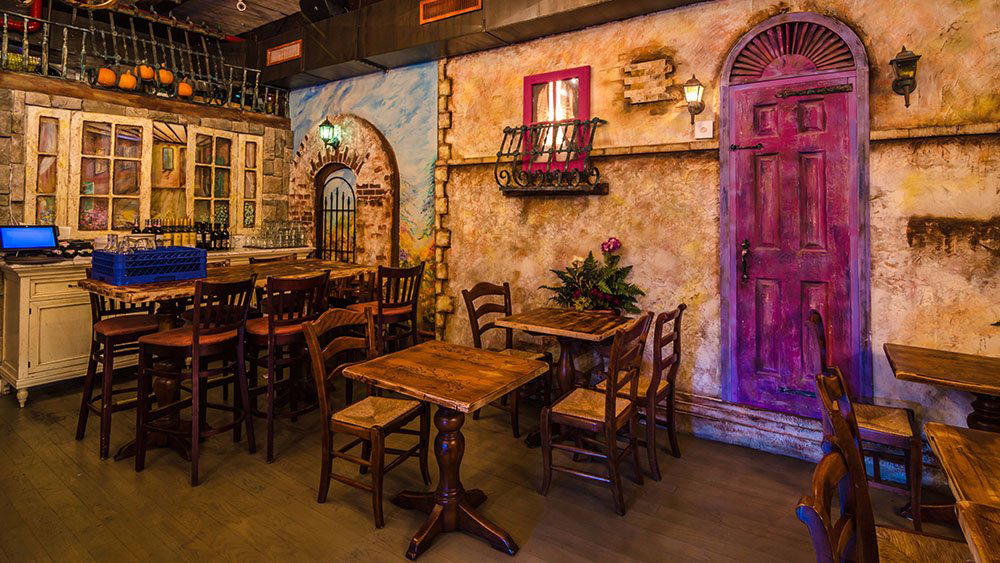
8th Avenue and the Midtown Dining Corridor
The block between 40th and 55th Streets on 8th Avenue sits in one of New York City's busiest dining corridors, shaped by theater schedules, convention arrivals, and commuter patterns. Il Forno at 711 8th Avenue sits inside this ecosystem, where the smell of fresh bread or wood smoke can cut through the street noise and pull in a diner. In this part of Midtown, atmosphere matters as much as word of mouth.
Italian cooking has long held a dominant position on this stretch, partly because the format translates well to the pre-curtain window: pasta courses move quickly, wood-fired preparations arrive with minimal wait, and the bread-and-olive-oil opening ritual doubles as a comfortable stall while theatergoers consult their schedules. The name Il Forno, Italian for "the oven," signals exactly where the kitchen's focus lies. Across Italian-American dining in New York, the wood-fired oven functions as both a culinary tool and an atmospheric anchor, radiating heat and a faint char into the dining room in a way that gas ranges cannot replicate. Whether the oven in question produces pizza, roasted vegetables, or a whole fish determines the tier of the restaurant; the oven itself is the organizing principle.
The Sensory Register of a Wood-Fired Room
Restaurants built around live-fire cooking operate on a different sensory register than tasting-menu formats. The sound arrives first: the low, continuous breath of combustion, punctuated by the scrape of a peel on stone. Then the smell, which in a properly maintained wood-fired kitchen carries dried wood, char, and rendered fat in a combination that registers as appetite before the eye catches the menu. By the time a diner is seated, the room has already communicated something about what kind of meal is coming.
This sensory front-loading is a deliberate feature of Italian trattoria and pizzeria culture, one that high-end Italian rooms in New York sometimes suppress in favor of a quieter, more controlled environment. At the summit of the Manhattan Italian tier, some venues prioritize acoustic dampening and neutral air; the kitchen stays invisible. The wood-fired format at the other end of that spectrum makes the kitchen presence part of the experience, which changes how long diners linger and how much they order. It is a format that rewards the casual return visit over the single-occasion splurge.
Hell's Kitchen as Culinary Context
Il Forno's address places it at the southern edge of Hell's Kitchen, a neighborhood whose dining character has shifted significantly over the past two decades. The area now holds a dense collection of independent restaurants that compete on value and specificity rather than prestige, making it structurally different from the Michelin-tracked corridors of the Upper East Side or Tribeca. Venues in this zone draw neighborhood regulars, industry workers, and visitors seeking meals at lower price points than the tourist-facing options on Broadway.
That context shapes what a restaurant like Il Forno needs to do well: consistent execution across a high-turnover service, a room that absorbs noise without feeling cold, and a menu with enough range that a party of three with different intentions can all find a clear reason to order. For comparison, the Italian-American table in New York spans from red-sauce institutions of Arthur Avenue to the tasting formats at the city's Michelin-starred Italian rooms. The 8th Avenue tier sits in the middle of that range, where price-to-portion ratio matters and where the oven-driven presentation earns its place by delivering something the kitchen couldn't produce without it.
New York's Italian Restaurant Spectrum
Italian cuisine in New York operates across more distinct registers than almost any other tradition in the city. At one end, the Michelin-starred and James Beard-recognized formats draw on regional Italian technique and fine-dining structure, placing them in a competitive set alongside Per Se or Atomix for occasion dining. At the other, the red-sauce trattoria format operates on volume and consistency. The wood-fired category occupies a particular niche in the middle: accessible enough for a Tuesday dinner, specific enough in its technique to reward attention.
Across the United States, the Italian wood-fired format has produced some of the country's most durable independent restaurants. Destinations like Lazy Bear in San Francisco and Alinea in Chicago represent the premium end of American cooking at a national level; the Italian-American trattoria tier represents something different: a format with daily-use velocity, neighborhood anchoring, and a reliance on the physical environment of the kitchen to do editorial work that a printed menu alone cannot. The oven is not a gimmick in this context. It is infrastructure.
For those building a longer itinerary around New York's dining scene, the wood-fired Italian category provides a reliable off-night option between higher-commitment reservations at venues like Masa or Jungsik New York. Internationally, the Italian wood-fired tradition has parallel expressions at 8 1/2 Otto e Mezzo Bombana in Hong Kong and, at the formal end, Alain Ducasse at Louis XV in Monte Carlo, though those operate at entirely different price and prestige tiers. Closer to home, American restaurants anchored by fire and seasonal sourcing, including Blue Hill at Stone Barns in Tarrytown, Single Thread Farm in Healdsburg, and The French Laundry in Napa, represent where the live-fire format can go when it is pushed into the premium tier. The restaurant operates below that register, in a zone where the format's accessibility is its primary asset.
The wood-fired category offers a reliable off-night option between higher-commitment reservations at venues like Masa or Jungsik New York.
Price Lens
Comparable venues nearby, for context on price, style, and recognition.
| Venue | Cuisine | Price | Notes |
|---|---|---|---|
| Il FornoThis venue — the venue you are viewing | Hell's Kitchen, Modern Italian Trattoria | $$ | Not listed |
| Cibo | Not listed | $$ | Murray Hill-Kips Bay, Northern Italian Pizza & Pasta |
| Brodo - East Village | East Village, Bone Broth Bar | $$ | Not listed |
| Nick's | Not listed | $$ | Upper East Side-Yorkville, American-Italian Pizza |
| Adrienne's Pizzabar | Not listed | $$ | Financial District-Battery Park City, Authentic New York Square Pizza |
| biricchino | Not listed | $$ | Chelsea-Hudson Yards, Authentic Northern Italian Trattoria |
Continue exploring
More in New York City
Restaurants in New York City
Browse all →
Bars in New York City
Browse all →

Hotels in New York City
Browse all →




At a Glance
- Cozy
- Rustic
- Classic
- Date Night
- Group Dining
- Pre Theater
- Open Kitchen
- Extensive Wine List
Current opening hours
- Monday
- 4 PM–12 AM
- Tuesday
- 4 PM–12 AM
- Wednesday
- 12 PM–12 AM
- Thursday
- 4 PM–12 AM
- Friday
- 4 PM–12 AM
- Saturday
- 12 PM–12 AM
- Sunday
- 12 PM–12 AM
Hours can change for holidays and private events. Last verified .
Warm and welcoming old Tuscany streetscape with wine barrels and natural stone walls.