Elia's Casa Bianca
On a quiet Midtown East block, Elia's Casa Bianca occupies a specific niche in New York's Italian dining scene: a neighborhood-scale address that operates closer to the sourcing-led trattoria tradition than the white-tablecloth Italian-American mainstream. For diners comparing it against the city's $$$$ tier, Le Bernardin, Per Se, Eleven Madison Park, it reads as a more intimate, ingredient-forward alternative with a deliberately local character.
Pearl is the En Primeur Club membership app — saves, bookings, and concierge access live there. Same editors, same standards.
- Address
- 398 E 52nd St, New York, NY 10022
- Phone
- +12124709541
- Website
- eliascasabianca.com
- Directions
- Get directions
 Saves & bookings on Pearl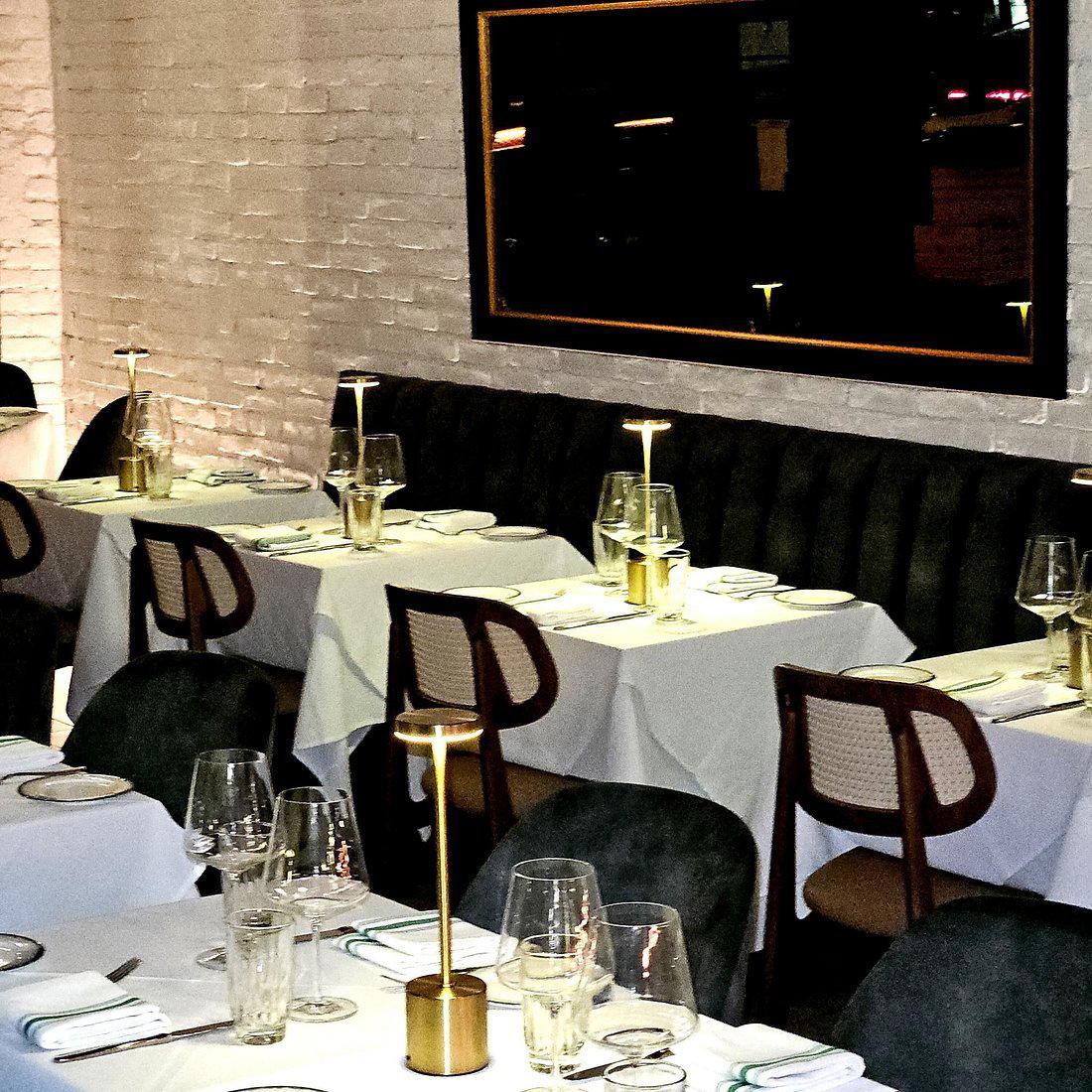
Where Midtown East's Italian Dining Lands in 2024
New York's Italian restaurant scene divides along a fault line that has widened considerably over the past decade. On one side sit the cathedral-scale Italian-Americans, long menus, theatrical service, prices that track the tourist-facing Midtown corridor. On the other, a smaller cohort of addresses that orient themselves around sourcing discipline and a tighter, more seasonal repertoire. Elia's Casa Bianca, at 398 East 52nd Street, belongs to the second group. The address is residential in character, one of the quieter blocks between First and Second Avenues in a stretch of Midtown East that rarely draws dining attention. That positioning is not incidental: restaurants that open here are not chasing foot traffic.
Le Bernardin operates a French seafood program with decades of Michelin recognition. Per Se and Eleven Madison Park anchor the tasting-menu tier at $$$$ pricing. Atomix and Masa represent the counter-format end of that bracket. Elia's Casa Bianca does not compete in that tier on format or price, but it does compete on intention.
The Sourcing Question at the Heart of the Menu
Across American fine dining, ingredient provenance has shifted from marketing language to operational differentiator. Kitchens that built supply relationships with specific farms, fishers, and producers over years now have a measurable advantage over those that rediscovered locality after it became a trend. This is visible at properties like Blue Hill at Stone Barns in Tarrytown, where the farm is the kitchen, or Single Thread Farm in Healdsburg, where a farm-inn-restaurant model integrates supply at the property level. For a smaller urban address like Elia's Casa Bianca, the sourcing challenge is different in a city where ingredient quality varies by supplier relationship and borough access.
Italian cuisine, specifically, makes sourcing legible in ways that other traditions may not. The flavor of a San Marzano tomato sauce, the texture of fresh pasta made with specific flour, the salinity of anchovies from a named producer: these are not details that disappear under technique. They arrive at the table intact or they do not. An Italian kitchen that invests in ingredient quality signals it through the food itself, which is one reason the Italian trattoria tradition has remained a reliable format for sourcing-led operators who do not want the overhead of a full tasting-menu infrastructure. Comparable commitments are visible at Frasca Food & Wine in Boulder, where regional Italian sourcing discipline extends to the wine program, and at Dal Pescatore in Runate, where the kitchen has maintained generational sourcing relationships in the Po Valley.
The Midtown East Context
Midtown East as a dining zone has undergone a slow redistribution of serious restaurant energy over the past fifteen years. The corridor that once relied on expense-account steakhouses and legacy French rooms has gradually attracted smaller, more specific operations, partly because rents in the far east blocks are lower than in Midtown proper, and partly because the residential density around the 50s provides a repeat-customer base that is harder to cultivate in a pure tourist corridor. A restaurant at East 52nd Street and First Avenue is, in practical terms, positioned for the neighborhood as much as for destination dining. That dual audience shapes format: a menu that works for a Tuesday dinner for local regulars as well as a Friday booking from across the city.
This contrasts with how Midtown's most visible Italian addresses have historically operated. The larger, hotel-adjacent Italian restaurants in the 50s have typically calibrated for visiting diners who want a legible, generous version of the cuisine, which means broader menus, larger rooms, and less dependence on seasonal or sourcing-specific variation. A smaller address like Elia's Casa Bianca occupies a different social contract with its customer base.
How It Compares Regionally
Across American cities, the sourcing-led Italian format has found different expressions depending on local ingredient access. Smyth in Chicago operates a more ambitious tasting program that uses Italian structural logic alongside Midwestern ingredients. Providence in Los Angeles applies similar sourcing discipline to California seafood within a French-inflected framework. Emeril's in New Orleans has historically integrated regional sourcing into a broadly American idiom. In each case, the kitchen's relationship to its supply chain defines what the food can be. In New York, access to the Greenmarket, to Hudson Valley producers, and to the Fulton Fish Market provides a sourcing infrastructure that smaller restaurants can tap if they invest in the relationships.
The broader question for any urban Italian address is whether the kitchen is using that infrastructure or bypassing it. At the level of cuisine where Italian technique is relatively legible, where the quality of olive oil, the freshness of herbs, and the provenance of cured meats are not hidden by elaborate preparation, the sourcing answer is usually visible in the food. Properties like Atelier Moessmer Norbert Niederkofler in Brunico and The Inn at Little Washington represent different ends of the sourcing-led spectrum at larger scale. At the neighborhood trattoria scale, the same logic applies with less ceremony.
For those calibrating across the broader American fine-dining map, Lazy Bear in San Francisco and Addison in San Diego illustrate how sourcing commitments translate into format and price tier. The French Laundry in Napa remains the benchmark for garden-to-table integration at the summit of the American market.
Visit Notes
The restaurant is located at 398 East 52nd Street, New York, NY 10022, on the residential eastern edge of Midtown East. The nearest subway access is the Lexington Avenue lines at 51st Street (6 train) or 53rd Street (E, M trains), both within a short walk. Dress: Consistent with the neighborhood character, smart casual is appropriate. Budget: Expect a neighborhood Italian range.
A Minimal comparable set
Comparable venues nearby, for context on price, style, and recognition.
| Venue | Cuisine | Price | Notes |
|---|---|---|---|
| Elia's Casa BiancaThis venue — the venue you are viewing | East Midtown-Turtle Bay, Classic Italian | $$ | Not listed |
| Italianissimo Ristorante | Not listed | $$ | Upper East Side-Yorkville, Classic Italian Trattoria |
| Gennaro | Not listed | $$ | Upper West Side (Central), Authentic Southern Italian Trattoria |
| Lella Alimentari | Not listed | $$ | East Williamsburg, Authentic Italian Piadina Cafe |
| Song' E Napule | Not listed | $$ | Greenwich Village, Authentic Neapolitan Pizza |
| La Bella Vita | Not listed | $$ | SoHo-Little Italy-Hudson Square, Authentic Italian |
Continue exploring
More in New York City
Restaurants in New York City
Browse all →
Bars in New York City
Browse all →

Hotels in New York City
Browse all →







At a Glance
- Cozy
- Classic
- Intimate
- Date Night
- Business Dinner
- Wine Cellar
- Extensive Wine List
Current opening hours
- Monday
- 12–4 PM, 5–10 PM
- Tuesday
- 12–4 PM, 5–10 PM
- Wednesday
- 12–4 PM, 5–10 PM
- Thursday
- 12–4 PM, 5–10 PM
- Friday
- 12–4 PM, 5–10 PM
- Saturday
- 12–4 PM, 5–10 PM
- Sunday
- 12–4 PM, 5–10 PM
Hours can change for holidays and private events. Last verified .
Cozy with romantic lighting and warm, inviting atmosphere.