
Tabelog 100
Our verdict
Rokuyosha Chika ten belongs to Kyoto’s kissaten culture rather than its temple-side dining circuit: a basement coffee shop, cafe, and evening bar in Nakagyo with 15 seats, no reservations, and cash-only payment. Its Tabelog 100 Kissaten 2022 selection places it inside a small, recognition-led tier of Japanese coffee shops where regular use matters as much as tourism value.

Pearl is the En Primeur Club membership app — saves, bookings, and concierge access live there. Same editors, same standards.
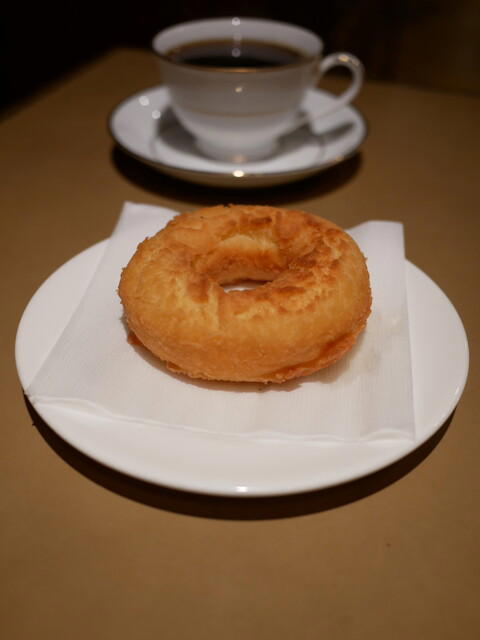
Within Kyoto’s everyday dining rhythm, the pace changes when the destination is a kissaten rather than a formal meal. Kyoto’s coffee-shop tradition rewards repetition: the same kind of stop, the same pause between errands, trains, shopping, and late-afternoon appointments. Rokuyosha Chika ten fits that grammar. It is not built around spectacle or a chef narrative; it belongs to the older urban habit of coffee shops as daily infrastructure, where the regular’s advantage is knowing how little needs to be negotiated.
That matters in Kyoto, where food attention often tilts toward formal meals, sweets, noodle counters, and reservation dining. Kissaten occupy a different lane. They are less about progression and more about cadence: coffee, conversation, solo time, a short stop before the next part of the city. The category can look modest from the outside, but Tabelog’s Kissaten 100 selection in 2022 gives Rokuyosha Chika ten a clear recognition marker within a format that rarely behaves like destination dining.
A Kyoto kissaten where routine is the real format
The stronger reading here is not “cafe” in the contemporary international sense. Kyoto’s kissaten are closer to civic rooms: habitual, often better understood through who returns than through what gets photographed. Rokuyosha Chika ten works at that scale, keeping the experience tied to timing and habit rather than elaborate advance planning. That puts it closer to everyday Kyoto than to the appointment-only logic governing much of the city’s premium dining.
The spending band reinforces the point. Lunch is listed up to JPY 999, while dinner is listed at JPY 1,000 to JPY 1,999, which keeps the venue in a narrow price tier for a Kyoto stop. Compared with Kissa Ashijima and Umezono Kawaramachi ten, this is a low-commitment format with a higher-than-casual recognition signal. Rokuyosha Coffee Ten, another Kyoto coffee reference point, also helps place Rokuyosha Chika ten within a broader local coffee context rather than as an isolated dining address.
Regulars’ knowledge tends to be practical, not performative. The appeal is less about decoding a long menu or chasing a staged service arc than about understanding the rhythm of a kissaten. Solo diners and pairs naturally fit the idea better than large-group planning, and the format supports short stays as well as longer pauses. In a city where the wrong venue choice can turn a simple coffee into a queue or a formal meal into a time block, this address is valuable precisely because its proposition is contained.
How the cafe-to-bar rhythm changes the room
The venue’s second identity is part of the appeal. It is listed as a kissa, cafe, and bar. That range suggests a familiar Japanese urban pattern: daytime coffee culture does not have to disappear after dark; it can shift into a looser drinking register. The point is not novelty, but continuity. A place that works for coffee can also support a compact stop after the main meal elsewhere.
This is where Kyoto’s city rhythm matters. The setting produces demand for places that do not require the choreography of a formal restaurant. Rokuyosha Chika ten belongs to that useful layer of Kyoto dining: recognized, modest in budget, and easier to understand as part of the city’s daily circulation than as a ceremonial address.
The Tabelog score of 3.65 is useful but should be read in category context. Kissaten are not assessed like fine-dining restaurants; value lies in reliability, atmosphere discipline, and local attachment. Selection for Tabelog 100 Kissaten 2022 is the stronger signal because it identifies the venue within a list for Japanese coffee shops rather than a generic cafe search. In Kyoto’s dining hierarchy, that places it in a respected small-format tier: not luxury, not destination tasting-menu culture, but culturally legible and hard to replace if the aim is to understand how residents actually use the city.
Where it fits in a Kyoto eating day
The clearest use case is as a hinge between larger plans. Pair it with a casual lunch, an errand, or an evening elsewhere in Kyoto rather than treating it as the full meal of the day. For visitors calibrating Kyoto beyond the temple-and-tasting-menu circuit, it works as a corrective: an inexpensive, recognized kissaten where the value is time spent without ceremony.
For a broader Kyoto map, compare it with other city entries such as Kissa Ashijima, Umezono Kawaramachi ten, Rokuyosha Coffee Ten, Istanbul Saray, and Kiharu Brasserie. The wider planning grid sits in Our full Kyoto restaurants guide, with adjacent city context in Our full Kyoto hotels guide, Our full Kyoto bars guide, Our full Kyoto wineries guide, and Our full Kyoto experiences guide.
Readers tracking Japanese casual dining beyond Kyoto can also place this kissaten against other city-specific formats in general terms: local coffee rooms, compact counters, sweets shops, and other informal stops that work through repetition rather than ceremony. The useful takeaway is category discipline: Rokuyosha Chika ten should be judged as a Kyoto kissaten with recognition and a day-to-night rhythm, not as a restaurant trying to compete with the city’s formal dining rooms.
Frequently asked questions
Where is Rokuyosha Chika ten located?
Kyoto.
What's the price range at Rokuyosha Chika ten?
Pricing at Rokuyosha Chika ten is listed as dinner JPY 1,000 - JPY 1,999 and lunch up to JPY 999.
What is Rokuyosha Chika ten known for?
Rokuyosha Chika ten is known as a Kyoto kissa, cafe, and bar, with Tabelog Kissaten 100 recognition in 2022.
Recognition, Side-by-Side
Comparable venues by cuisine and category.
| Venue | Cuisine | Price | Awards | Notes |
|---|---|---|---|---|
| Rokuyosha Chika tenThis venue (the venue you are viewing) | Traditional Kyoto kissaten & coffee bar | $1–10 | Tabelog 100 | Not listed |
| Maruki Sei Pan Sho | Classic Kyoto bakery & sandwich shop | $1–10 | Tabelog 100 #69 | Shimogyō |
| Saruya | Traditional Japanese sweets & tea | $1–10 | Tabelog 100 #100 | Sakyō |
| Okashi Tsukasa Nakamura Ken | Traditional Kyoto Wagashi & Cafe | $10–20 | Tabelog 100 #61 | Nishikyō |
| Keihan Uji Ekimae Surugaya | Japanese Sweets / Matcha Confectionery | $1–10 | Tabelog 100 #6 | Uji |
| Ajari Mochi Honpo Kyogashi Tsukasa Mangetsu Honten | Traditional Japanese Wagashi & Mochi Shop | $1–10 | Tabelog 100 #21 | Sakyō |
Recognition history
Dated appearances from independent guides and award organizations, with the underlying list record or original source where available.
Tabelog 100
Tabelog · Tabelog 100 - Kissaten - 2026
Full recognition history (2 entries)
Tabelog 100 #34 · No. 34
Tabelog · Tabelog 100 - Kissaten - 2022
Continue exploring
More in Kyoto
Restaurants in Kyoto
All restaurants in Kyoto →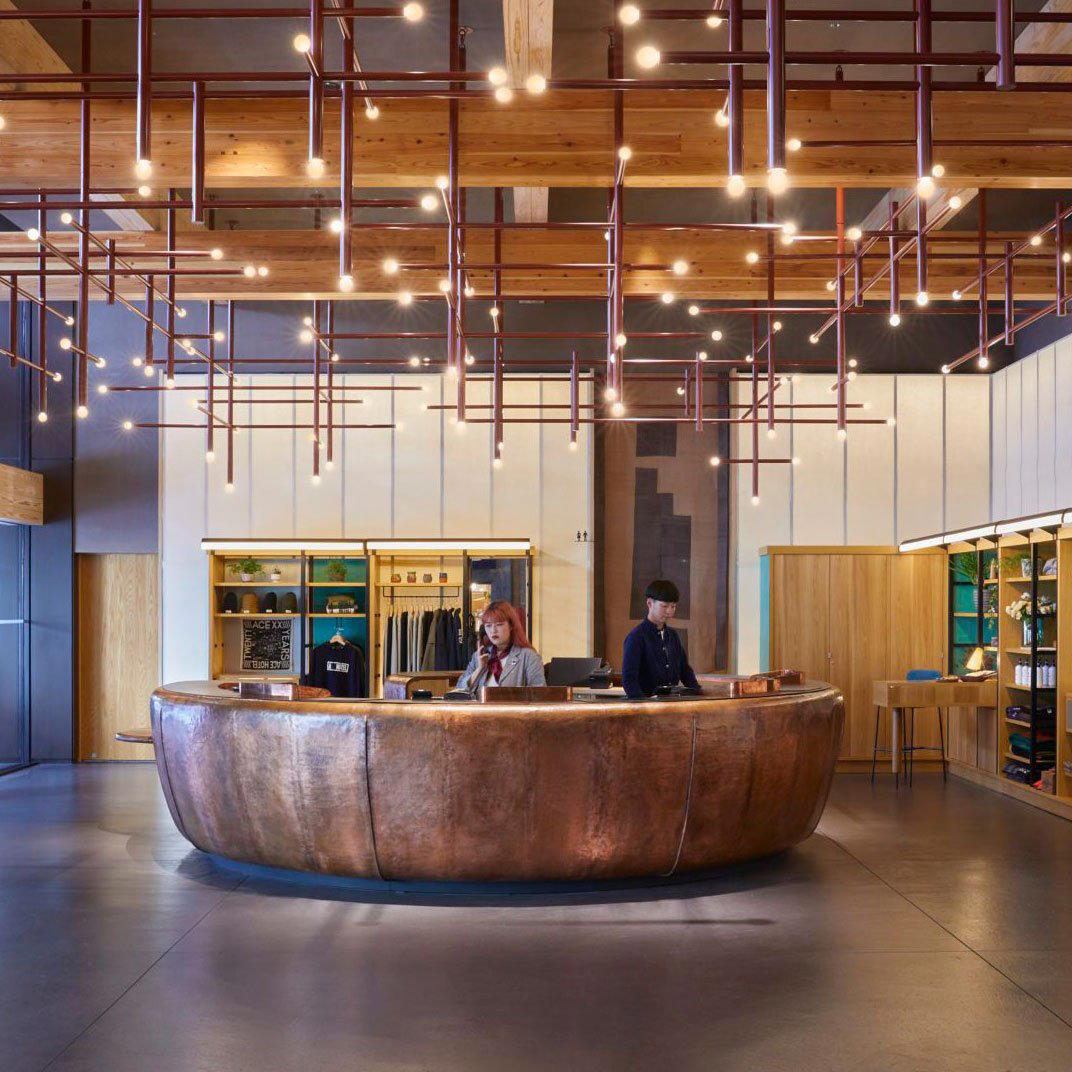
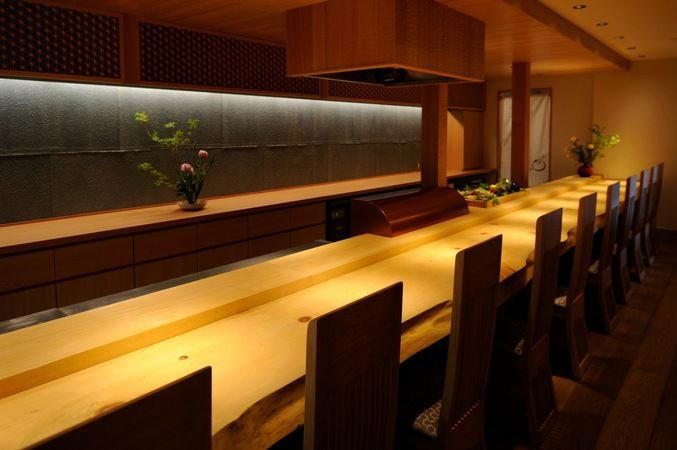
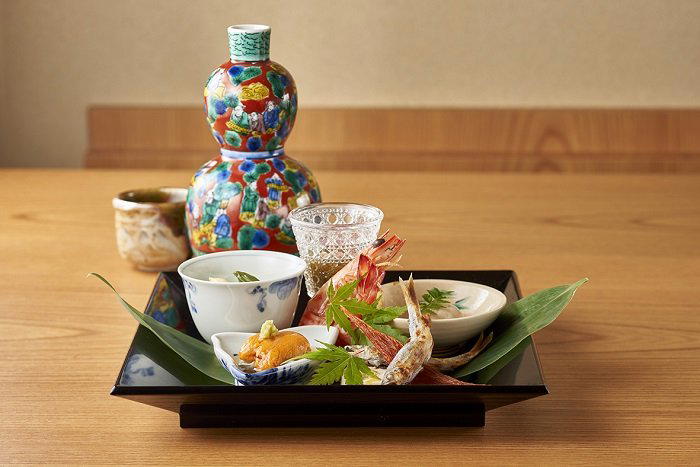
Bars in Kyoto
All bars in Kyoto →
Hotels in Kyoto
All hotels in Kyoto →
Wineries in Kyoto
Browse all →
Details
- Classic
- Cozy
- Quiet
- Solo
- Casual Hangout
- After Work
- Standalone
- Historic Building
- A La Carte
- Counter Dining
- Coffee
- Tea
- Beer
- Sake
Current opening hours
- Monday
- 8:30 AM–10 PM
- Tuesday
- 8:30 AM–10 PM
- Wednesday
- Closed
- Thursday
- 8:30 AM–10 PM
- Friday
- 8:30 AM–10 PM
- Saturday
- 8:30 AM–10 PM
- Sunday
- 8:30 AM–10 PM
Hours can change for holidays and private events. Last verified .
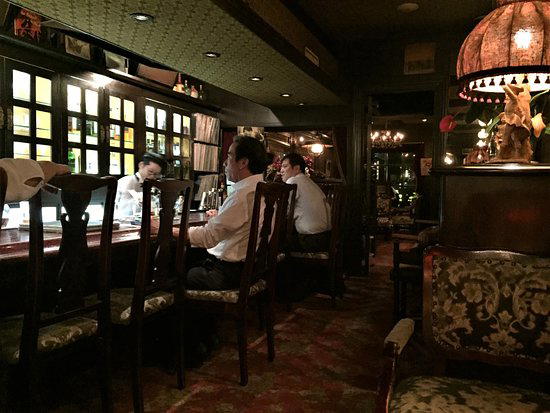
Traditional kissaten atmosphere in a small basement room with counter and sofa seating, softly lit and smoke‑free, creating a calm, nostalgic space suited to quiet solo visits or conversation over coffee.