Roki's-Plisko Polje sits in the agricultural interior of Vis island, where the Dalmatian konoba tradition operates at its most concentrated. The setting, open fields, stone walls, long communal tables, frames a meal built on island-grown ingredients and wood-fire technique. For visitors making the ferry crossing from Split, this is the address that reorients expectations about Croatian coastal dining.
Pearl is the En Primeur Club membership app — saves, bookings, and concierge access live there. Same editors, same standards.
- Address
- Vis
- Website
- rokis.hr
- Directions
- Get directions
 Saves & bookings on Pearl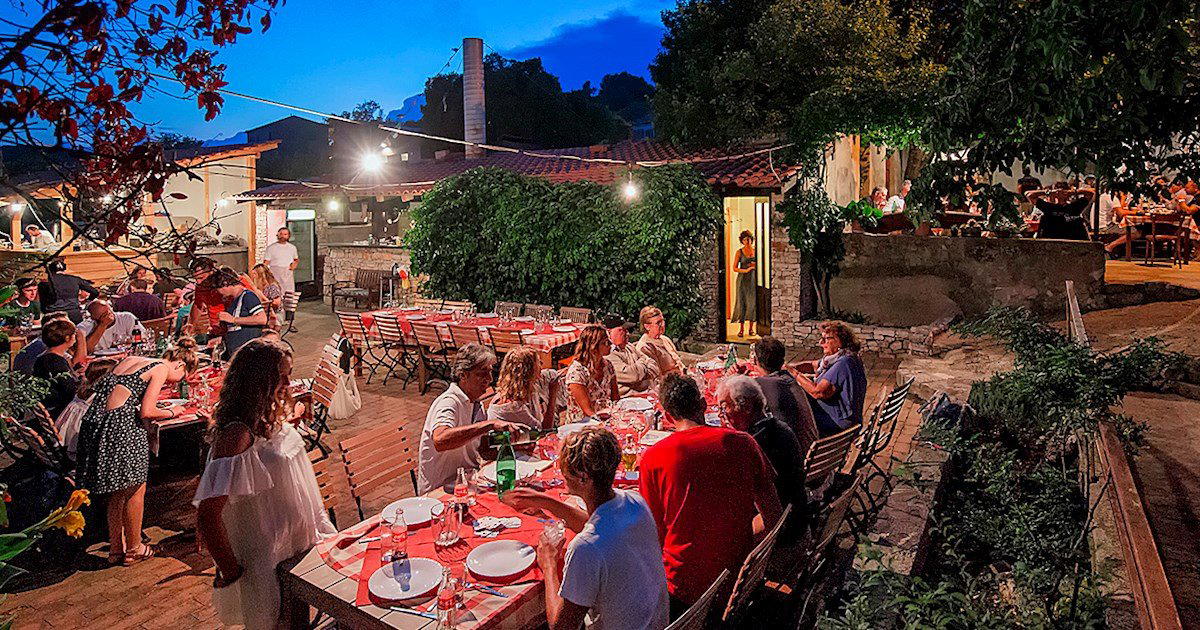
The Interior of Vis, Where Dalmatian Cooking Has Fewer Places to Hide
Most visitors to Vis arrive by ferry and head directly for the harbourside tables of Vis town or Komiža, ordering grilled fish with a view of the Adriatic. The island's interior is a different proposition. Plisko Polje, the flat agricultural valley that cuts through the centre of the island, operates on a slower register: dry-stone walls, vineyards, fig trees, and a quiet that the coastal settlements rarely achieve even in shoulder season. Roki's sits in this landscape as a natural extension of it, where the setting and the food are closely linked.
That relationship between place and plate is central to the Dalmatian konoba tradition. In the coastal towns, the form has been diluted by tourist volume and supply-chain convenience. In the island interior, the pressure is lower and the expectations of the local clientele are higher. Vis has a relatively small permanent population that has eaten this food for generations, and establishments that serve it badly do not last. Roki's longevity in this context speaks for itself.
What the Setting Does to a Meal
Approach matters at Roki's in a way it rarely does at a restaurant built into a town street. The drive inland from Vis town takes you through a valley that looks more like the Dalmatian hinterland than any postcard version of the Croatian coast. By the time you arrive, the absence of marina noise and tour-group chatter has already done something to your attention span. You are, in a literal sense, somewhere else.
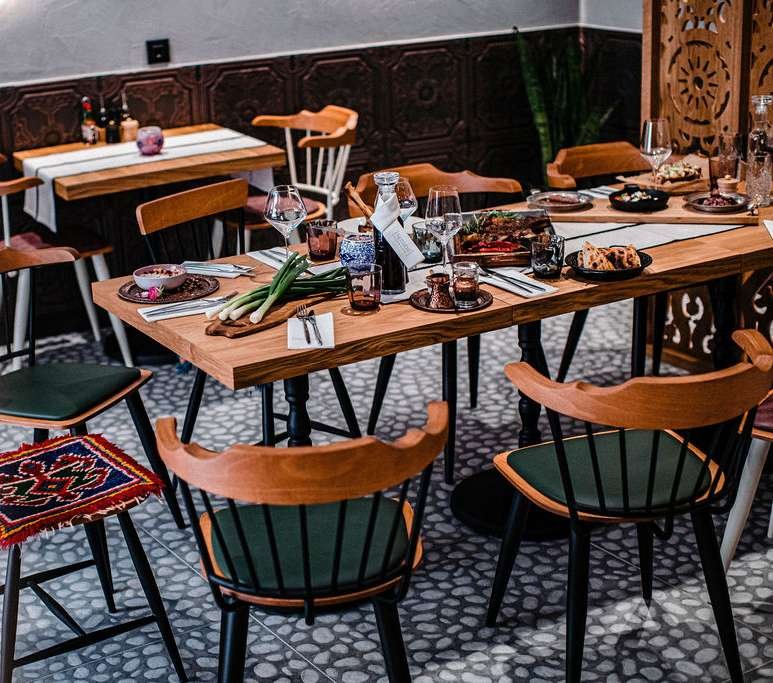
Outdoor seating under pergolas or shade structures is standard for the konoba format in this part of Dalmatia, and Roki's follows that logic. The physical environment at a place like this functions as a first course: the smell of wood smoke before food arrives, the sound of nothing much happening in the surrounding fields. These are not decorative details. They are the conditions under which food of this kind was originally eaten, and they shape what you taste. A peka-cooked lamb or octopus that arrives in an urban restaurant carries different weight from the same dish cooked a few hundred metres from where the ingredients were raised or caught.
The Peka Tradition and Why It Requires Advance Notice
Peka is the technique most closely associated with Dalmatian interior cooking: meat or seafood slow-cooked under a bell-shaped iron lid buried in embers, a method that concentrates rather than reduces, producing textures and depths of flavour that grilling cannot replicate. The process takes several hours, which means peka dishes at any serious konoba require advance ordering, often by at least a day. This is not a quirk of a particular restaurant, it is a structural feature of the cooking method itself. Visitors who arrive at Roki's without pre-ordering peka will miss the dish most closely associated with the restaurant.
The broader Croatian culinary conversation increasingly positions Dalmatian island cooking as a distinct regional category, separate from the coastal fish restaurants that dominate perception. Establishments like Boskinac in Novalja on Pag island have demonstrated that island-interior ingredients and traditions can carry serious critical weight. On the mainland, addresses like Pelegrini in Sibenik and Dubravkin Put in Zagreb represent Croatian cooking operating at a more formally refined register. Roki's is not in that competition. Its peers are the small number of konobe across the Dalmatian islands that treat sourcing and traditional technique with care.
Vis in Context: An Island That Earns Its Reputation Slowly
Vis was closed to foreign visitors until 1989 because of its role as a Yugoslav military base. That late opening to tourism shaped the island's development in ways that remain visible. The built environment is less modified by resort infrastructure than comparable Adriatic islands. The agricultural interior, including Plisko Polje, retained its character precisely because there was no development pressure during the decades when other Croatian islands were being reshaped for mass tourism. For food specifically, this history meant that traditional producers and konoba operators were insulated from the competitive pressure to simplify menus for international palates.
On the island itself, the konoba scene is active enough to offer genuine choice. Konoba Golub, Konoba Kantun, and Konoba Magić each represent different points on the traditional-to-contemporary spectrum. Fort George operates from a dramatically different setting and register. Fields of Grace Vineyards adds a wine-estate dimension to the island's food-and-drink offer. Roki's sits apart from most of these by virtue of its location in the agricultural valley rather than a town or harbour, which concentrates the experience in a way that a streetside terrace cannot. For a broader orientation to what Vis offers across categories, the full Vis restaurants guide maps the range.
Comparisons to well-resourced Croatian coastal restaurants are often made, but they miss the point. Agli Amici Rovinj in Rovinj, LD Restaurant in Korčula, or Restaurant 360 in Dubrovnik are chasing different criteria entirely. Roki's is not competing on plating precision or wine list depth in the way those addresses are. It is competing on the quality and provenance of a narrow set of traditional preparations, which is a harder standard to fake and, for many travellers, a more honest one.
Planning the Visit
Vis is accessible by ferry from Split, with crossings taking approximately two to two-and-a-half hours depending on the service. Catamaran options run faster in season but carry no vehicles. Reaching Plisko Polje from Vis town requires a car, scooter, or pre-arranged transport; the valley is not walkable from the harbour in any practical sense. The summer months bring the island's highest visitor volume, and peka dishes should be reserved at least one day in advance regardless of when you travel. Late spring and early autumn offer particularly manageable conditions: enough warmth for outdoor eating, significantly lower crowd density than July and August, and local produce at its most varied. For travellers planning a wider Croatian itinerary that includes fine dining at the level of Nebo by Deni Srdoč in Rijeka or Krug in Split, Roki's occupies a complementary rather than competing position: it answers a different question about what Croatian cooking can be.
Similar Picks
Comparable venues nearby, for context on price, style, and recognition.
| Venue | Cuisine | Price | Notes |
|---|---|---|---|
| Roki's-Plisko Polje VISThis venue — the venue you are viewing | Traditional Croatian Peka | $$ | Not listed |
| Corto Magarese | Mediterranean | $$ | Vis |
| Konoba Golub | Traditional Dalmatian Grill | $$ | Podselje |
| Konoba Kantun | Traditional Croatian Seafood Grill | $$ | Vis waterfront |
| Val | Modern Mediterranean Seafood | $$$ | Vis |
| Fields of Grace Vineyards | Asian Fusion with European Influences | $$$ | Zlopolje |
Continue exploring
More in Vis
Restaurants in Vis
Browse all →
Bars in Vis
Browse all →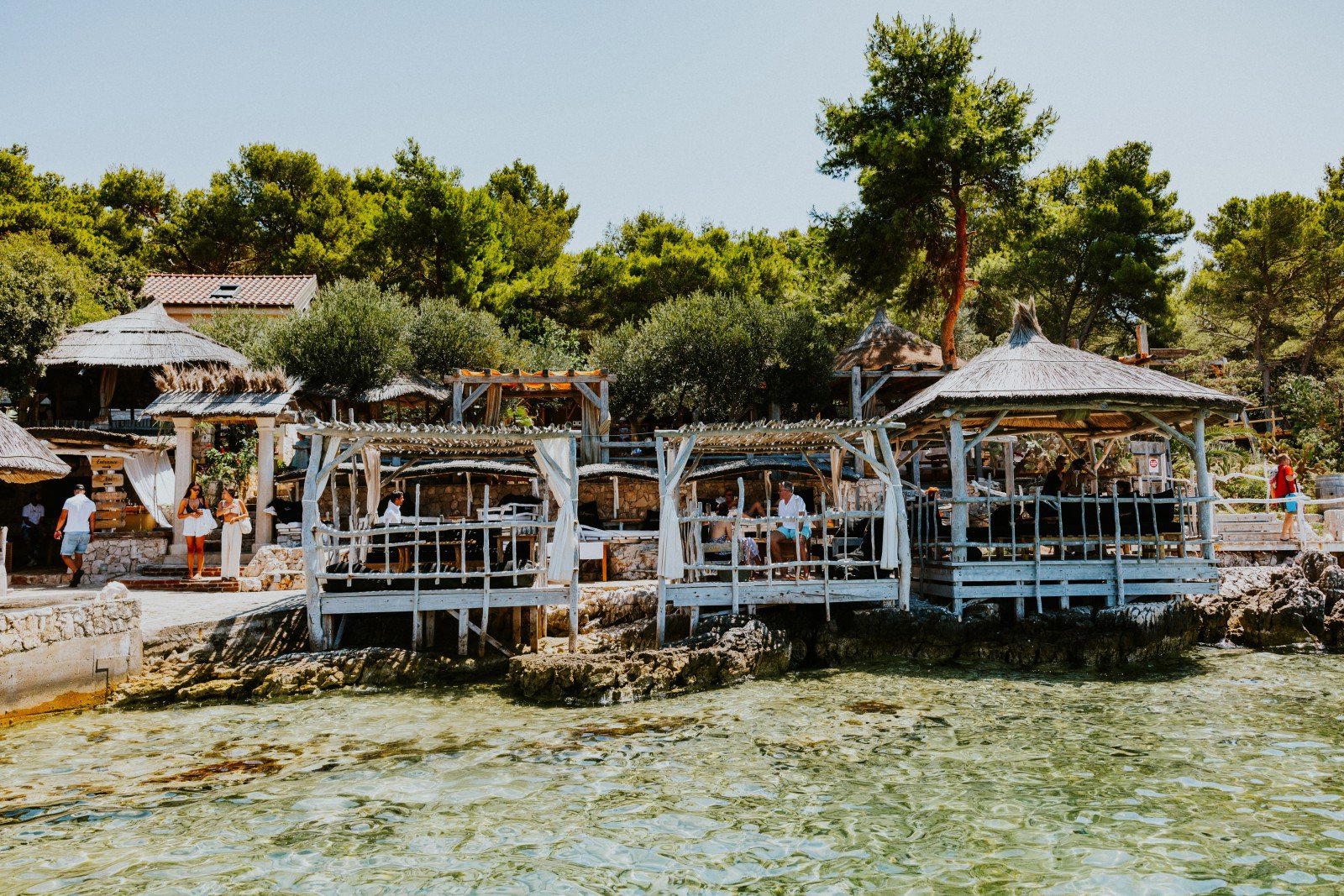
Hotels in Vis
Browse all →

At a Glance
- Rustic
- Cozy
- Scenic
- Special Occasion
- Celebration
- Garden
- Natural Wine
- Local Sourcing
- Vineyard
- Garden
Candlelit garden dining in a rustic countryside setting surrounded by olive groves and vineyards.