Roketsu


Roketsu runs Kyoto-style kaiseki as a formal, quiet dinner focused on an extended pace, with a chef’s counter and open kitchen for a composed evening.
Pearl is the En Primeur Club membership app — saves, bookings, and concierge access live there. Same editors, same standards.
- Address
- 12 New Quebec St, London W1H 7RW, United Kingdom
- Phone
- +44 20 3149 1227
- Website
- roketsu.co.uk
- Directions
- Get directions
 Saves & bookings on Pearl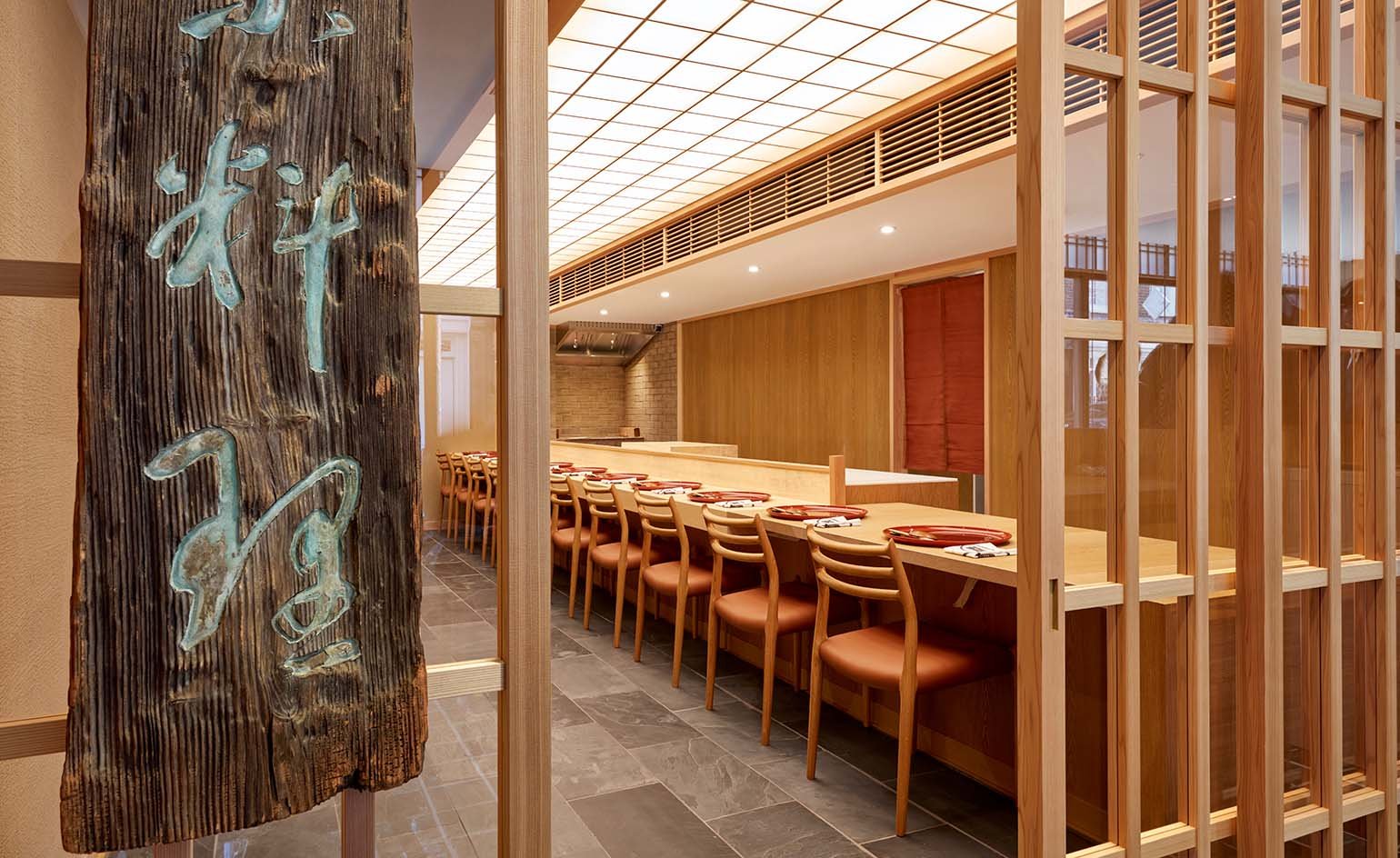
Kaiseki in Marylebone: Where London's Japanese Fine Dining Sits in 2025
London's premium Japanese dining scene has developed in two broad directions over the past decade. One strand runs toward the theatrical, wagyu-heavy omakase counters in Mayfair that price against the city's most expensive European tables. The other holds closer to the restrained Kyoto tradition, where the point is not abundance but precision: seasonal ingredients, a counter format that invites conversation, and technique that refuses to announce itself. Roketsu is a Kyoto-style kaiseki restaurant in Marylebone, London, priced at about $250 per person. Chef-patron Daisuke Hayashi has built a kaiseki programme that sits in the upper tier of London's Japanese offer, rated 4.5 on Google from 138 reviews, while keeping its reference point clearly in kappo-style Kyoto dining rather than in the louder West End competition.
For context on where this places Roketsu in the city's wider Japanese field: venues like Umu in Mayfair and Ginza St James's operate in the same price bracket but with different format emphases, while Humble Chicken and Chisou occupy lower price points and serve different aspects of the Japanese repertoire. Akira represents another node in the capital's high-end Japanese offer. Roketsu's specific niche, kaiseki menus with kappo interaction in a room that physically references Kyoto craft, gives it a distinct position within that competitive set.
The Counter Format and What It Demands
Kaiseki is often described in terms of its course count or its seasonal sensitivity, but the format's real discipline is simplicity under pressure. A bowl of dashi, a piece of grilled fish, a single vegetable preparation, each component must justify itself without the cover of complexity. This is the same logic that governs a bowl of carefully made soba or a clean, clear ramen broth: the fewer the elements, the more visible the skill (or its absence). Roketsu's counter format makes this dynamic explicit. Guests sit directly facing the kitchen, watching preparations unfold at close range, and the menu changes in response to what the day's market delivered. That interaction between availability and execution is the engine of the kaiseki tradition, and it is also the thing that separates a genuine counter experience from a tasting menu that merely takes place at a bar.
The counter itself is fashioned from 100-year-old hinoki wood, a detail that carries more than aesthetic weight. Hinoki (Japanese cypress) has been used in formal Japanese interiors, including bath houses and tea rooms, for centuries, valued for its grain, its faint cedar-adjacent scent, and its association with ceremonial spaces. In London, where most Japanese restaurant design operates on borrowed imagery, a counter of this material and provenance signals a different level of commitment to the source tradition. Comparable reference points in the kaiseki world exist in Tokyo at venues like Myojaku and Azabu Kadowaki, where material choices and spatial restraint carry the same communicative function as the food itself.
The Menu Structure: Kaiseki Courses and À La Carte
The kaiseki menus run to seven courses at £160 per person or nine courses at £190 per person, prices that position Roketsu squarely in London's top tier for Japanese dining, though not outside the range set by peers in the same neighbourhood and format category. The technique range across the menu is broad: raw preparations, tempura, charcoal-grilled items, and straw-smoked meats are all documented in the kitchen's output, with the common thread being what reviewers have described as deep, aromatic flavours drawn from traditional method rather than modern augmentation.
For guests who find the multi-course format either too structured or too expensive, the à la carte offers an entry point, with most main dishes priced at approximately £50. This is not a concession to the casual diner so much as an acknowledgement that kappo-style dining historically allowed individual ordering alongside the chef's progression, the kaiseki format grew from simpler kappo roots, and the coexistence of both options here reflects that lineage. For price-bracket comparison in London's wider fine dining field, tables like The Fat Duck in Bray, L'Enclume in Cartmel, and Moor Hall in Aughton operate in a comparable spend range within the UK's tasting-menu tier, as do London-based options including Gidleigh Park in Chagford, Hand and Flowers in Marlow, and Le Manoir aux Quat' Saisons in Great Milton. Roketsu's per-head spend is consistent with that cohort, though the format is categorically different.
2026 Update: Reopened After Renovation
Marylebone as a Setting for This Kind of Dining
Marylebone's dining character differs from Mayfair's in ways that matter for a venue of this type. The neighbourhood accommodates a higher density of specialist, format-led restaurants, places where the point is the cooking tradition rather than the room or the celebrity association. New Quebec Street in particular sits on the western edge of Marylebone's main dining corridor, close enough to the Portman Square end of the district to feel removed from the more conspicuous West End traffic. For a kaiseki counter that depends on a certain quietness of atmosphere, this is a more coherent location than, say, Dover Street or St James's.
Planning a Visit
Address: 12 New Quebec St, London W1H 7RW, United Kingdom. Reservations are essential. Budget: about $250 per person. Cuisine: Kyoto-Style Kaiseki. Hours: Mon: 6–10:30 PM; Tue: 6–10:30 PM; Wed: 6–10:30 PM; Thu: 12–2 PM, 6–10:30 PM; Fri: 12–2 PM, 6–10:30 PM; Sat: 12–2 PM, 6–10:30 PM; Sun: 6–9:30 PM.
Comparison Snapshot
Comparable venues nearby, for context on price, style, and recognition.
| Venue | Cuisine | Price | Awards | Notes |
|---|---|---|---|---|
| RoketsuThis venue — the venue you are viewing | Kyoto-Style Kaiseki | $$$$ | Michelin Plate | Not listed |
| NIJŪ | Japanese Katei Ryori with Sushi and Wagyu | $$$$ | Michelin Plate | Mayfair |
| Takahashi | Modern Japanese Omakase | $$$$ | Michelin Plate | Wimbledon |
| Mayha | Modern Japanese Omakase | $$$$ | Michelin Plate | Marylebone |
| Sumi | Modern Japanese Sushi & Robata | $$$ | Michelin Plate | Notting Hill |
| The Fuji Grill | Modern Japanese Omakase and Sushi | $$$$ | Michelin Plate | Knightsbridge |
Recognition history
Dated appearances from independent guides and award organizations, with the underlying list record or original source where available.
Harden's Top 100 UK Restaurants #19
Harden's
Michelin Plate
Michelin
Michelin Plate
Michelin
Michelin Plate
Michelin
Continue exploring
More in London
Restaurants in London
Browse all →
Bars in London
Browse all →
Hotels in London
Browse all →

At a Glance
- Elegant
- Intimate
- Sophisticated
- Quiet
- Date Night
- Special Occasion
- Celebration
- Chefs Counter
- Open Kitchen
- Standalone
- Sake Program
- Sommelier Led
- Farm To Table
- Sustainable Seafood
- Local Sourcing
Current opening hours
- Monday
- 6–10:30 PM
- Tuesday
- 6–10:30 PM
- Wednesday
- 6–10:30 PM
- Thursday
- 12–2 PM, 6–10:30 PM
- Friday
- 12–2 PM, 6–10:30 PM
- Saturday
- 12–2 PM, 6–10:30 PM
- Sunday
- 6–9:30 PM
Hours can change for holidays and private events. Last verified .
Intimate and serene with warm, refined lighting; the interior was imported from Kyoto and features traditional Japanese craftsmanship. The open kitchen counter allows guests to observe the chef's meticulous work, creating a meditative and immersive dining atmosphere.