On the car-free island of Lopud, Restoran Dubrovnik occupies a position on the waterfront promenade where Adriatic ingredients arrive by boat rather than truck. The restaurant represents the kind of Dalmatian dining that the Elafiti Islands do quietly and without ceremony: fresh catch, local produce, and the unhurried pace that comes when an island has no roads for delivery vehicles to rush down.
Pearl is the En Primeur Club membership app — saves, bookings, and concierge access live there. Same editors, same standards.
- Address
- Obala Iva Kuljevana 40, 20222, Lopud, Croatia
- Phone
- +385951966312
- Directions
- Get directions
 Saves & bookings on Pearl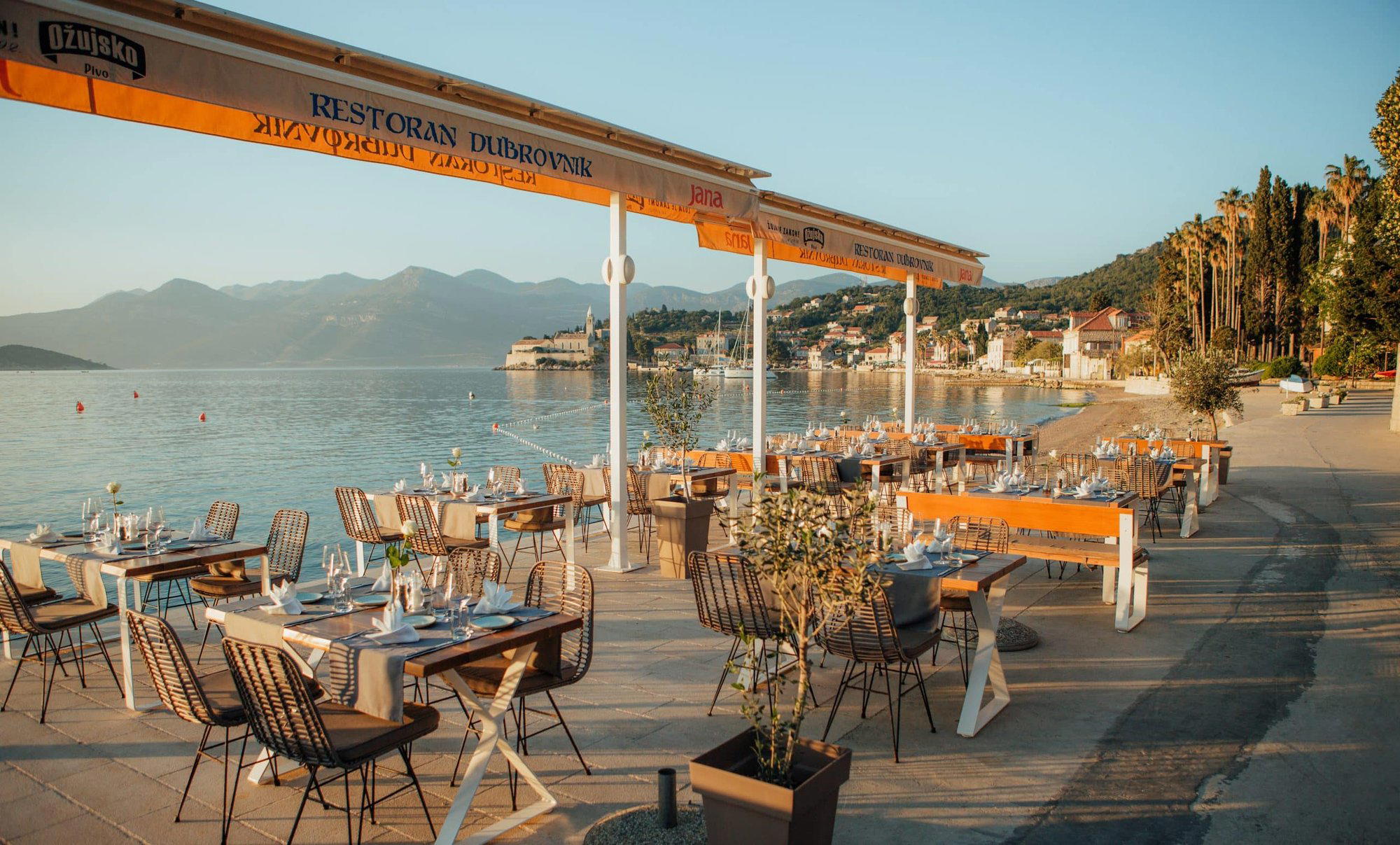
Arriving on a Car-Free Island
Lopud is one of the few places in Croatia where the absence of motor traffic is not a marketing angle but a practical fact. The island, sitting in the Elafiti archipelago roughly thirty minutes by ferry from Dubrovnik's Gruž harbour, has no cars. What arrives on the island arrives by boat: supplies, visitors, and crucially, the ingredients that kitchens like Restoran Dubrovnik depend on. The restaurant sits on Obala Iva Kuljevana, the main waterfront promenade that faces the sheltered bay, and the approach on foot from the ferry landing is itself a primer in how different this pocket of Dalmatia feels from the cruise-ship density of the Old City across the water.
Lopud operates at a different register entirely, and the dining that happens here reflects that.
What Island Sourcing Actually Means Here
The ingredient-sourcing question matters more on islands than it does on the mainland, and Lopud makes it especially pointed. Croatia's Dalmatian coast has a well-established tradition of letting geography determine the menu: whatever the sea and the surrounding land produce shapes what appears on the plate. On an island without road access, that relationship is not a philosophical stance but a logistical reality. Fish comes from local waters. Seasonal vegetables come from the island's own gardens or arrive by the same ferry passengers use. The supply chain is short by necessity, not by trend.
This places Lopud dining in a distinct category relative to the Dalmatian coast's more developed restaurant destinations. At Pelegrini in Sibenik, the sourcing story is told through a sophisticated tasting menu format with the kind of provenance narrative that earned it Michelin recognition. At Restaurant 360 in Dubrovnik, international technique and premium local ingredients are layered into a high-production dining experience aimed squarely at the city's affluent visitor market. Restoran Dubrovnik on Lopud operates in neither of those registers. The sourcing story here is quieter, embedded in the daily rhythms of a small island community rather than announced through menu language.
Across the Croatian Adriatic, this kind of place is becoming harder to find. As destinations like Korčula and the Dubrovnik Riviera have attracted increasingly polished restaurant investment, the straightforwardly local waterfront restaurant has ceded ground to venues with more elaborate identities. Lopud's car-free status has slowed that process here in ways worth understanding before you book the ferry.
Where Lopud Fits in Croatia's Dining Conversation
Croatia's food scene has diversified considerably over the past decade. The country now has representation across format types: modernist kitchens like Nebo by Deni Srdoč in Rijeka, farm-anchored destinations like Boskinac in Novalja, and urban fine dining in Zagreb at places like Dubravkin Put. What connects the more ambitious end of this spectrum is an explicit relationship with Croatian ingredients, producers, and culinary tradition, even when the technique is international in reference.
Restoran Dubrovnik sits further down that formality spectrum, aligned more with the tradition of honest Dalmatian cooking than with the newer wave of destination restaurants. That is not a criticism. The Dalmatian waterfront restaurant, serving grilled fish, shellfish, and local vegetables dressed simply with olive oil, represents one of the region's most durable culinary forms. It also happens to be the format that travels least well to mainland settings, because it depends on ingredients that lose meaning when they travel far. On Lopud, the format holds.
For comparison, the island dining dynamic along the Croatian coast varies considerably. BioMania Bistro Bol in Bol on Brač takes a health-conscious angle on island ingredients, while Bodulo in Pag channels Pag's specific lamb and cheese traditions. Each island has its own sourcing logic. Lopud's version is shaped by its position within easy ferry range of Dubrovnik, giving it access to the city's supply networks while retaining the quieter pace that the car-free environment enforces.
Planning the Trip
The practical considerations for dining on Lopud are inseparable from the logistics of getting there.
Lopud's wider dining scene, though compact, rewards exploration beyond a single meal. The waterfront promenade concentrates most of the options, making it easy to assess the day's offer before sitting down.
That contrast is useful context: the Elafiti Islands sit in a different bracket, and Lopud's appeal is tied directly to that difference.
Comparison Snapshot
Comparable venues nearby, for context on price, style, and recognition.
| Venue | Cuisine | Price | Notes |
|---|---|---|---|
| Restoran DubrovnikThis venue — the venue you are viewing | Mediterranean Seafood | $$ | Not listed |
| Galija | Croatian Seafood Grill | $$ | Cavtat |
| Barba | Dalmatian Seafood Street Food | $$ | Old Town |
| Taverna Bota Sare | Traditional Dalmatian Seafood & Oysters | $$$ | Mali Ston |
| Orsan Gverović | Traditional Dalmatian Seafood | $$ | Zaton Mali |
| Seosko domaćinstvo Ficović | Dalmatian Seafood | $$ | Hodilje |
Continue exploring
More in Lopud
Restaurants in Lopud
Browse all →
Bars in Lopud
Browse all →
Hotels in Lopud
Browse all →

At a Glance
- Scenic
- Rustic
- Intimate
- Date Night
- Family
- Casual Hangout
- Waterfront
- Terrace
- Local Sourcing
- Waterfront
Current opening hours
- Monday
- 9 AM–1 AM
- Tuesday
- 9 AM–1 AM
- Wednesday
- 9 AM–1 AM
- Thursday
- 9 AM–1 AM
- Friday
- 9 AM–1 AM
- Saturday
- 9 AM–1 AM
- Sunday
- 9 AM–1 AM
Hours can change for holidays and private events. Last verified .
Beautiful natural ambiance enhanced by the seafront terrace overlooking the sea.