On Truderinger Strasse in Munich's Bogenhausen district, Restaurant Zirbelstube occupies a register that the city's fine dining circuit doesn't always foreground: rooted, interior-facing, and built around the kind of atmosphere that takes years to accumulate. As Munich's upper-tier dining scene continues to sharpen around tasting menus and international formats, Zirbelstube holds a distinct position worth understanding before you book.
Pearl is the En Primeur Club membership app — saves, bookings, and concierge access live there. Same editors, same standards.
- Address
- Truderinger Str. 13, 81677 München, Germany
- Phone
- +4949894110900
- Website
- h-hotels.com
- Directions
- Get directions
 Saves & bookings on Pearl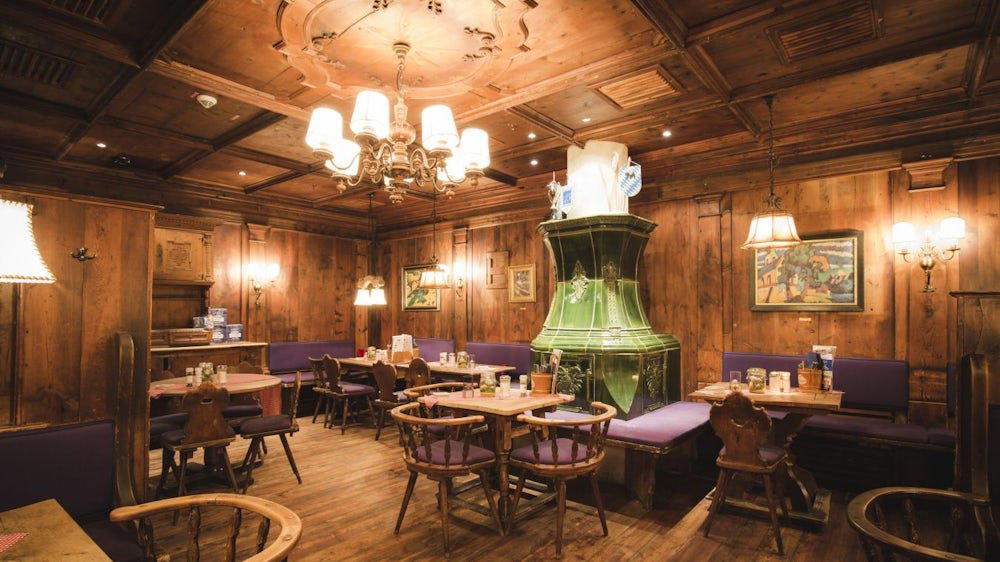
What the Room Tells You Before the Menu Arrives
Restaurant Zirbelstube is a Traditional Bavarian restaurant in Munich, Germany. Munich's premium dining scene has split, over the past decade, into two recognisable camps. One group, represented by addresses like Tantris and Atelier, operates inside the international tasting-menu format: long, structured, technique-forward, with service rhythms and room design calibrated for focused attention. The other camp is harder to categorise and, for that reason, often harder to find. Restaurant Zirbelstube, on Truderinger Strasse 13 in Bogenhausen, belongs to the second group. The address sits east of the Englischer Garten, in a residential stretch of the city that doesn't attract the usual fine dining foot traffic. That geography is part of the proposition. You arrive because you've decided to, not because you've wandered past.
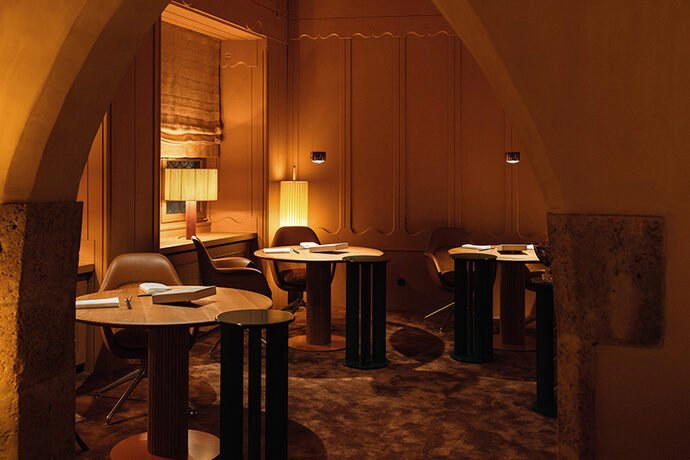
The name itself carries meaning. Zirbelstube refers to a room panelled in Arolla pine, the Zirbelkiefer of the Alpine tradition, a material with a warm, resinous quality that has been used in Bavarian and Austrian interiors for centuries precisely because of the atmosphere it creates. Pine-panelled rooms absorb light differently from lacquered or plastered surfaces. They carry a faint scent. They age in ways that feel accumulative rather than dated. In the broader German-speaking dining tradition, the Stube format signals a room meant for extended occupation, not rapid turnover. That tradition puts Zirbelstube in conversation with a category of Central European restaurant that values the conditions of eating as much as the food itself.
Bogenhausen and What It Means to Dine Here
The Bogenhausen neighbourhood frames the Zirbelstube experience in ways that matter. Munich's most-discussed fine dining addresses cluster in the centre and Schwabing: Alois - Dallmayr Fine Dining sits above the Dallmayr delicatessen in the Altstadt, JAN operates in Maxvorstadt, and Tohru in der Schreiberei anchors a heritage building near the Residenz. Bogenhausen is quieter, more residential, and historically associated with Munich's arts and professional classes rather than with its tourist or corporate dining circuits. A restaurant that has established itself here does so on the basis of a local following rather than passing trade, which typically produces a different kind of guest relationship and a different kind of room energy.
That distinction matters when you're choosing between Munich's upper-tier options. At Atelier or Tantris, the room is often a mix of business diners, international visitors, and occasion groups. At an address like Zirbelstube, the room skews toward regulars and locals who have made a considered choice. The atmosphere that results is less performative and, in the leading cases, more genuinely convivial. For visitors to Munich, that local texture is part of the value.
The Sensory Register of the Zirbelstube Tradition
Across Germany's fine dining circuit, a category of room exists that prioritises atmosphere over spectacle. Schwarzwaldstube in Baiersbronn built its reputation inside a Black Forest hotel setting. Waldhotel Sonnora in Dreis operates from a country-house format in the Eifel. ES:SENZ in Grassau occupies an Alpine hotel in Upper Bavaria. These are rooms where the physical conditions of eating, the materials, the acoustics, the pace of service, are understood as part of the dining proposition, not separate from it. Restaurant Zirbelstube's name places it explicitly in that lineage.
The Arolla pine panelling tradition has specific sensory properties that are worth understanding. The wood is soft-grained and pale when fresh, deepening to amber over decades. It has a mild aromatic quality associated, in Alpine folk tradition, with restfulness. Rooms built in this material tend toward warmth rather than coolness, intimacy rather than grandeur. The acoustic signature is different from hard-surfaced modern rooms: sound diffuses rather than bounces, which affects the perceived noise level and, consequently, the ease of conversation. These are not incidental details. They are the design logic of the Stube format, and they produce a dining environment that operates at a different register from the glass-and-concrete rooms that have dominated European fine dining aesthetics for the past two decades.
How Zirbelstube Sits Within Munich's Fine Dining Tier
Munich's upper-tier dining addresses cluster at the €€€€ price point, and the formats across that tier vary considerably. Tohru in der Schreiberei works a Modern German-Japanese format. Alois runs a creative tasting format within the Dallmayr institution. Atelier sits inside the Bayerischer Hof. The common thread is structural: all operate multi-course formats with kitchen-led progression. For visitors who want to map Munich's fine dining circuit against comparable German addresses, the comparable set extends well beyond the city. Aqua in Wolfsburg, Vendôme in Bergisch Gladbach, and Victor's Fine Dining by Christian Bau in Perl represent the upper register of the national circuit. Against that context, Munich's overall offering, and Zirbelstube's position within it, reads as part of a city that has invested consistently in serious dining across multiple formats. See our full Munich restaurants guide for a mapped view of the city's dining options by neighbourhood and price tier.
Planning Your Visit
The restaurant is recommended for reservations and is open daily from 12-2 PM and 6-10:30 PM. The address is Truderinger Strasse 13, 81677 München.
Logistics at a Glance: Munich Fine Dining Comparison
| Restaurant | Neighbourhood | Format | Price Tier |
|---|---|---|---|
| The restaurant | Bogenhausen | Traditional Stube |
Comparable Options
Comparable venues nearby, for context on price, style, and recognition.
| Venue | Cuisine | Price | Notes |
|---|---|---|---|
| Restaurant ZirbelstubeThis venue — the venue you are viewing | Traditional Bavarian | $$ | Not listed |
| Wirtshaus in der Au | Traditional Bavarian with Innovative Dumplings | $$ | Au |
| Löwenbräukeller | Traditional Bavarian Beer Hall | $$ | Neuhausen |
| Hofbräukeller | Traditional Bavarian Beer Garden | $$ | Haidhausen |
| Schinken-Peter | Traditional Bavarian | $$ | Au |
| Wirtshaus zur Rennbahn | Bavarian-Modern German | $$ | Riem |
At a Glance
- Cozy
- Classic
- Rustic
- Business Dinner
- Group Dining
- Casual Hangout
- Hotel Restaurant
- Historic Building
- Beer Program
- Local Sourcing
Current opening hours
- Monday
- 12–2 PM, 6–10:30 PM
- Tuesday
- 12–2 PM, 6–10:30 PM
- Wednesday
- 12–2 PM, 6–10:30 PM
- Thursday
- 12–2 PM, 6–10:30 PM
- Friday
- 12–2 PM, 6–10:30 PM
- Saturday
- 12–2 PM, 6–10:30 PM
- Sunday
- 12–2 PM, 6–10:30 PM
Hours can change for holidays and private events. Last verified .