One of Munich's most storied beer halls, Hofbräukeller on Innere Wiener Straße occupies a different register from the Altstadt tourist circuit, quieter, neighbourhood-rooted, and more firmly tied to the city's working Bavarian tradition. Where the Hofbräuhaus draws visitors by the coachload, Hofbräukeller has long been the choice of locals who want the same brewing heritage without the spectacle. The distinction matters in a city that treats its beer-hall culture as a living institution, not a theme park.
Pearl is the En Primeur Club membership app — saves, bookings, and concierge access live there. Same editors, same standards.
- Address
- Innere Wiener Straße 19, 81667 München, Germany
- Phone
- +49 89 4599250
- Website
- hofbraeukeller.de
- Directions
- Get directions
 Saves & bookings on Pearl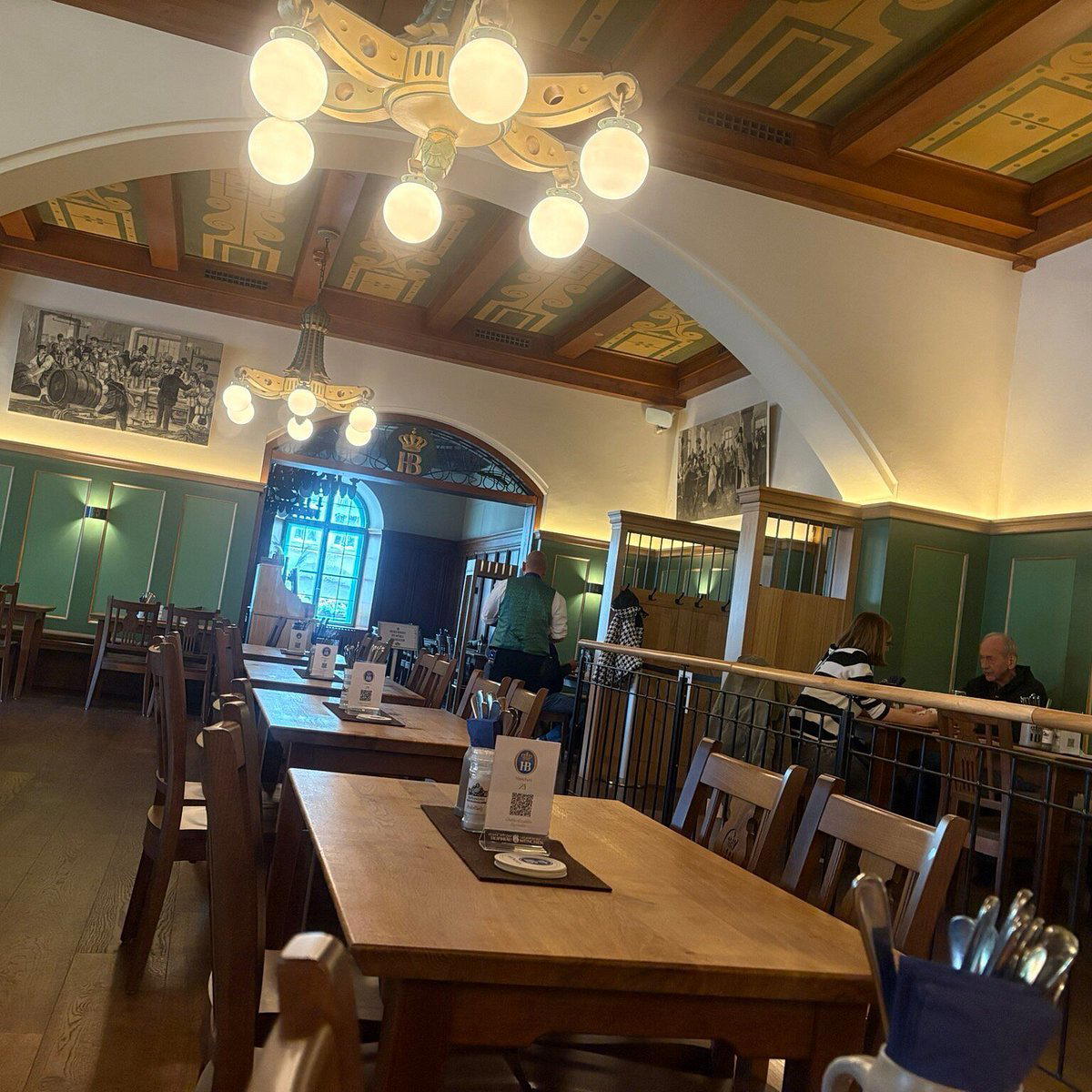
The Beer Hall That Stayed Put
Hofbräukeller is a Traditional Bavarian Beer Garden in Munich's Au-Haidhausen district. On one side: the grand tourist operations of the Altstadt, performing Bavarian culture for international audiences with an efficiency that borders on choreography. On the other: a scatter of Keller and Wirtschaft venues in residential districts, where the primary audience is still the neighbourhood and the format has evolved on its own slower clock. Hofbräukeller, sitting on Innere Wiener Straße in the Au-Haidhausen district, belongs firmly to the second category, and understanding that distinction is the whole point of visiting.
Au-Haidhausen is one of Munich's more characterful inner-city districts, close enough to the Isar and the Deutsches Museum to see visitors, but residential enough to filter out the bulk of organised tourism. The beer hall here is not a destination in the glossy sense; it is a fixture of local life in the way that only institutions with genuine neighbourhood roots manage to be. That rootedness has shaped every phase of what Hofbräukeller has become.
From Brewing Annex to Neighbourhood Anchor
The evolution of Munich's secondary beer halls, the Keller venues that historically served as storage and dispensing points for the major breweries, tracks closely with the city's own demographic and cultural shifts across the twentieth century. Many of these venues consolidated, reinvented themselves as event spaces, or closed entirely as Munich's post-war urban fabric changed. Hofbräukeller followed a different arc. Rather than pivoting toward events or tourism formats to survive, it held its position as a sit-down, come-as-you-are Wirtschaft, the kind of place where the format itself is the offering.
That continuity is now a form of differentiation. In a city where fine dining has moved decisively toward international frameworks, venues like Tantris for Modern French, Tohru in der Schreiberei for Modern German-Japanese, or Alois - Dallmayr Fine Dining and Atelier for creative contemporary work, the traditional beer hall occupies a cultural space that no tasting menu can replicate. The question for any Keller venue in 2024 is not how to compete with that tier, but how to remain genuinely useful to the city it serves. Hofbräukeller's answer has been consistency over reinvention.
What the Space Communicates
The physical character of a Bavarian Keller is architectural argument. High ceilings, long communal tables, the particular acoustic quality of a room designed for large groups eating and drinking together, these are not aesthetic choices so much as functional inheritances. The garden attached to many Munich Keller venues is where the format becomes most legible in warm months: tiered seating under chestnut trees, the social geometry of a long table forcing conversation between strangers, the unhurried pace that distinguishes this from a restaurant meal in any conventional sense.
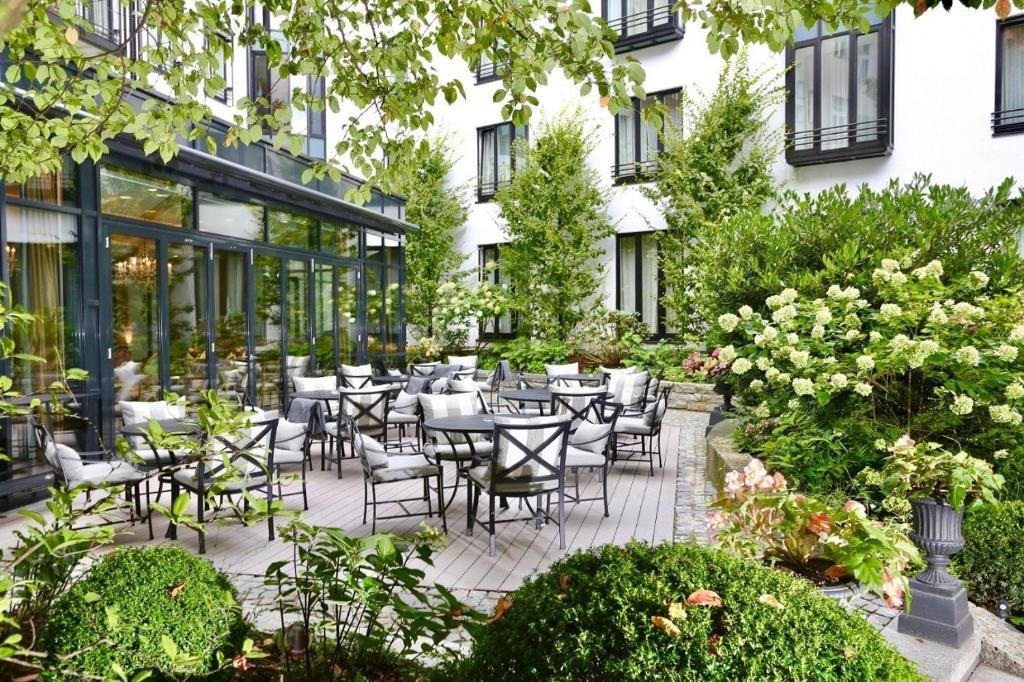
Hofbräukeller's garden has been one of the more consistent draws in the Au-Haidhausen area, operating as a genuinely local gathering point rather than a photographed attraction. That distinction between a place that is used and a place that is visited is harder to manufacture than it looks, and it is what separates the surviving neighbourhood Keller from the tourist-facing operations of the centre.
Bavarian Food in Context
The food served at a traditional Munich Keller follows conventions that have changed less in the last century than almost any other European dining format. Roast pork with crackling, white sausage with sweet mustard, pretzels, Obatzda, potato preparations in various forms, these are not simplifications of a more complex tradition but the tradition itself, developed around the specific social function of accompanying beer over long sittings. The logic is different from restaurant logic, and the kitchen at a Keller venue like Hofbräukeller is best understood through that lens.
This places it at the opposite end of the spectrum from the intricate tasting formats that define Munich's starred tier. Venues like JAN and the German fine dining establishments worth knowing about nationally, from Schwarzwaldstube in Baiersbronn to Aqua in Wolfsburg, Vendôme in Bergisch Gladbach, or Victor's Fine Dining by Christian Bau in Perl, operate in a framework where each dish is a considered statement. Hofbräukeller operates in a framework where the dish is a supporting player and the social occasion is the main event. Neither is superior; they are simply answering different questions.
Germany's broader dining scene has produced formats that complicate the tradition-versus-innovation binary. CODA Dessert Dining in Berlin and ES:SENZ in Grassau represent genuine conceptual departures from convention. Schanz in Piesport, Waldhotel Sonnora in Dreis, and Restaurant Haerlin in Hamburg each demonstrate how German fine dining has absorbed French classical technique and made it something regionally specific. Bagatelle in Trier adds another point of comparison at the French-German border. Internationally, the communal dining instinct that defines a Keller has closer relatives in formats like Lazy Bear in San Francisco, where the social structure of the meal is as deliberate as the menu, or in the precision seafood work of Le Bernardin in New York City, where a different kind of tradition is maintained with equal rigour.
Planning a Visit
Hofbräukeller is located at Innere Wiener Straße 19 in Au-Haidhausen, a short tram or S-Bahn ride from the city centre. The venue sits comfortably within walking distance of the Isar riverbanks and the Deutsches Museum, making it a natural endpoint to an afternoon in that part of the city. As with most Munich beer gardens and Keller venues, the summer garden operates on a weather-dependent basis, and arrival time matters more than reservation status for securing a good seat during peak hours. Evenings and weekends draw local traffic; a weekday afternoon in the garden offers a different, quieter version of the same experience.
Recognition, Side-by-Side
Comparable venues nearby, for context on price, style, and recognition.
| Venue | Cuisine | Price | Notes |
|---|---|---|---|
| HofbräukellerThis venue — the venue you are viewing | Traditional Bavarian Beer Garden | $$ | Not listed |
| Deutsche Eiche | Modern Bavarian | $$ | Isarvorstadt |
| Rischart Café am Marienplatz | Traditional Bavarian Bakery Cafe | $$ | Altstadt |
| bodhi | Vegan Bavarian Comfort Food | $$ | Neuhausen |
| Hofbräuhaus München | Traditional Bavarian Beer Hall | $$ | Altstadt |
| Restaurant Central Café | Traditional Bavarian | $$ | Theresienwiese |
At a Glance
- Lively
- Rustic
- Well Known
- Energetic
- Group Dining
- Casual Hangout
- Celebration
- Beer Garden
- Historic Building
- Beer Program
Current opening hours
- Monday
- 11 AM–11 PM
- Tuesday
- 11 AM–11 PM
- Wednesday
- 11 AM–11 PM
- Thursday
- 11 AM–11 PM
- Friday
- 11 AM–11 PM
- Saturday
- 11 AM–11 PM
- Sunday
- 11 AM–11 PM
Hours can change for holidays and private events. Last verified .
Gemütlich traditional beer garden atmosphere with lively Biergarten flair during warm weather.