
Restaurant KAM puts Kawaguchi’s small-format French dining into sharper focus: six seats, a vegetable-forward category, and selection for Tabelog French EAST “Tabelog 100” in 2023 and 2025. The appeal is less about metropolitan theatre than precision at suburban scale, where sourcing, restraint, and a compact room define the experience.
Pearl is the En Primeur Club membership app — saves, bookings, and concierge access live there. Same editors, same standards.
- Address
- 3 Chome-1-13 Tozuka, Kawaguchi, Saitama 333-0811, Japan
- Phone
- +81 80-4623-0829
- Website
- restaurant.ikyu.com
 Saves & bookings on Pearl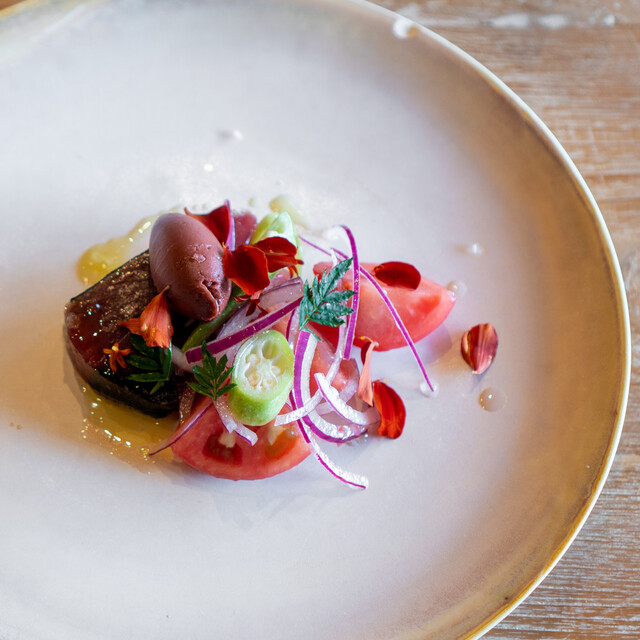
Approaching Higashi Kawaguchi’s quieter residential grid, the mood shifts from central Tokyo’s restaurant choreography. The streets around Tozuka do not announce a grand dining district; they reward smaller signals that matter in serious suburban restaurants: a compact room, narrow service rhythm, and cooking driven less by spectacle than by ingredients arriving in the right condition.
Restaurant KAM belongs to a Japanese category international visitors often under-read: destination French outside the capital’s hotel and Ginza circuits. In Saitama, French cooking is judged without the protective glamour of a major address; the room must carry itself through sourcing, technique, and repeat local confidence. Selection for Tabelog French EAST “Tabelog 100” in 2023 and 2025 gives a public benchmark within eastern Japan’s French field, but the stronger point is scale. A six-seat restaurant has little room for inconsistency; every service is exposed.
Vegetable-led French in a six-seat Saitama room
The listed categories, French and vegetable dishes, place the cooking in an increasingly important lane in Japan: French technique filtered through domestic produce rather than imported luxury cues. This is not the old French model built around sauces as status and European ingredients as proof. In contemporary Japan, especially outside central Tokyo, the more interesting French kitchens treat vegetables as structure, not garnish. That suits a small counter or intimate dining room because produce forces immediacy; texture, temperature, and sequencing are harder to hide.
That vegetable emphasis changes how the meal should be read. Diners expecting a parade of named luxury ingredients may miss the point. The value lies in handling progression when the category asks for restraint: acidity, bitterness, sweetness, and stock work carrying as much weight as protein. Japan’s regional French restaurants have long borrowed from kaiseki’s sensitivity to season, but the better versions avoid mimicry, using French grammar while local markets set the tempo.
Within Kawaguchi, that puts Restaurant KAM in a different bracket from casual neighborhood addresses such as Archaique or pastry-driven stops such as Chandoiseau Glacier Chocolatier. The comparison is useful because Kawaguchi’s dining map is broad: ramen counters, patisserie, set-meal restaurants, and small French rooms sit close together but answer different dining decisions. For a wider view, Our full Kawaguchi restaurants guide gives cleaner context.
Why the suburbs matter for serious French cooking
Tokyo still absorbs much international attention around French dining in Japan, but the commuter belt has its own logic. Rents, room size, and local loyalty can support restaurants that would be structurally different in central wards. Kawaguchi, north of Tokyo with practical rail access into the metropolis, is exactly where a small restaurant can serve regulars while drawing diners willing to travel for a specific format.
That matters because French cooking in Japan has split into visible tiers: grand hotel dining rooms, chef-led urban tasting counters, casual bistros, and low-seat regional rooms where procurement and pacing carry the argument. Restaurant KAM fits the last. Tabelog recognition gives external validation, but the seat count tells the more useful story: a controlled format, not a high-volume dining room trying to satisfy every occasion.
The 2021 opening places it in a post-pandemic generation of Japanese restaurants that had to define themselves under difficult operating conditions. Many small dining rooms that survived did so by sharpening their audience rather than broadening it. Across Japan, the result has been a more focused middle-to-premium tier, with restaurants leaning into narrow identities: vegetable-led French, regional Italian, counter kappo, or specialist yakitori rather than general-purpose fine dining.
Kawaguchi’s broader hospitality scene remains practical and local, so planning around the meal matters. Travelers building a short stay can pair dining research with Our full Kawaguchi hotels guide, while drink-focused itineraries should check Our full Kawaguchi bars guide. The city is not framed internationally as a nightlife capital, and that is part of the point: the reward is specificity, not density.
How to read the recognition without overplaying it
Tabelog’s Hyakumeiten lists function differently from Michelin stars. They are category and area-based selections highlighting depth within a cuisine field, not a single universal hierarchy. For French EAST, inclusion signals enough local and specialist traction to be visible among eastern Japan’s French addresses. Treat it as a useful filter, especially for travelers looking beyond Tokyo’s globally familiar names.
The listed score, 3.75, also needs Japanese context. On Tabelog, ratings above the mid-threes can indicate meaningful enthusiasm, particularly in categories where reviewers are experienced and the restaurant is small. It is not a Western-style five-point enthusiasm scale. A compact restaurant with repeat recognition and a score in that range deserves attention from diners already interested in Japan’s French subculture.
For Kawaguchi, the restaurant complicates the city’s image. Nearby names such as Chandoiseau and Eikichi point to a dining ecosystem built from specialists rather than one dominant strip. Travelers comparing broader Japanese dining styles can also look outward to FuFu Kawaguchiko (Kaiseki), -Grilled beef Sukiyaki- KAMAKURA TANUKIAN 鎌倉 たぬき庵 in Kamakura. 鮪と炭火焼き うお炭 秋葉原店 in Tokyo.cafe in Osaka.know in Kumamoto, (Shoku) Vietnam in Kawasaki, and [Curry Senmon Ten] Maruyama Kyoju. in Sapporo.
The practical reading is simple: this is a small, reservation-led French restaurant for diners who care about ingredient handling more than ceremony. It suits a focused meal better than a casual drop-in, and its vegetable category should be taken seriously, not treated as a side note. For adjacent planning, Our full Kawaguchi wineries guide and Our full Kawaguchi experiences guide round out the city view; for trans-Pacific Japanese drinking and casual formats, see Jōdo Saké Bar in Los Angeles and Onigiri Time in Pasadena.
In Context: Similar Options
Comparable venues by cuisine and price in the same metro.
| Venue | Cuisine | Price | Notes |
|---|---|---|---|
| Restaurant KAMThis venue — the venue you are viewing | Vegetable-driven French-Japanese fine dining | $$$ | Not listed |
| レストラン カム | Vegetable-focused French in Japanese House | $$$ | Higashikawaguchi |
| Chandoiseau Glacier Chocolatier | French Patisserie & Chocolate | $$ | Kawaguchi |
| Chandoiseau | French Pâtisserie & Chocolaterie | $$ | Kawaguchi |
| 樋山 | Japanese Beef Bowl | $$ | Kawaguchi |
| Eikichi | Spicy Tantanmen & Chinese Noodles | $ | Nishi-Kawaguchi |
Recognition history
Dated appearances from independent guides and award organizations, with the underlying list record or original source where available.
Tabelog 100 #96 · No. 96
Tabelog · Tabelog 100 - French - EAST - 2025
Continue exploring
More in Kawaguchi
Restaurants in Kawaguchi
Browse all →



Bars in Kawaguchi
Browse all →

At a Glance
- Cozy
- Intimate
- Rustic
- Romantic
- Sophisticated
- Date Night
- Special Occasion
- Celebration
- Business Dinner
- Solo
- Design Destination
- Standalone
- Garden
- Private Dining
- Extensive Wine List
- Farm To Table
- Local Sourcing
- Sustainable Seafood
- Garden
Current opening hours
- Monday
- Closed
- Tuesday
- Closed
- Wednesday
- 12–3 PM, 6–10 PM
- Thursday
- 12–3 PM, 6–10 PM
- Friday
- 12–3 PM, 6–10 PM
- Saturday
- 12–3 PM, 6–10 PM
- Sunday
- 12–3 PM, 6–10 PM
Hours can change for holidays and private events. Last verified .
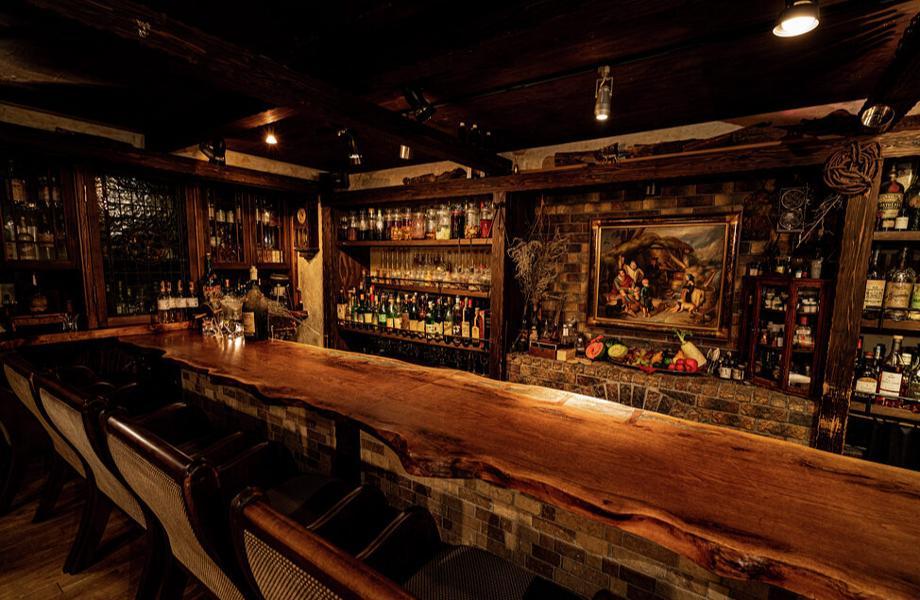
The restaurant has a warm, intimate atmosphere inside a renovated traditional kominka farmhouse, with soft, natural lighting, wooden beams, and views onto the surrounding kitchen garden, creating a tranquil, rustic yet refined setting suited to quiet, lingering meals.