Our verdict
Restaurant Erber sits in Ismaning, a compact municipality on Munich's northeastern fringe, where a quieter dining culture runs parallel to the city's more high-profile restaurant scene. The address places it firmly in small-town Bavaria, a setting that shapes expectations around both hospitality and format. Visitors arriving from Munich will find the journey short and the register noticeably different from the capital's louder dining rooms.

Pearl is the En Primeur Club membership app — saves, bookings, and concierge access live there. Same editors, same standards.
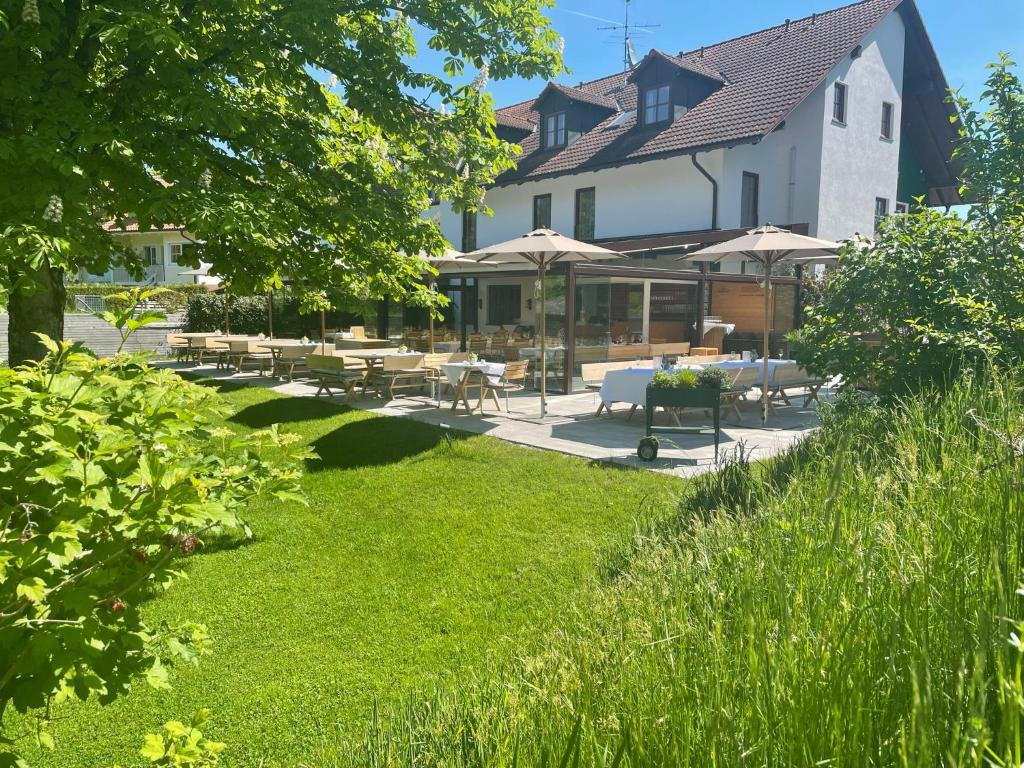
The menu
What to order
- Ochsenlendensteak „Strindberg“
- Gekochter Ochsentafelspitz
A Bavarian Address with Distance from the Capital
Ismaning sits roughly 15 kilometres northeast of Munich's city centre, close enough to draw a professional lunch crowd from the surrounding business parks and engineering firms, yet far enough to operate with its own pace. The municipality is not a dining destination in the way that central Munich is, and that distinction matters. Restaurants here are not competing for tourist footfall or press cycles in the same way as their counterparts along the Isar. They tend to serve a local community first, and that orientation tends to produce a different kind of room: one oriented around return visits, regularity, and familiarity rather than the single-occasion high-stakes dinner.
That context applies directly to Restaurant Erber, located at Freisinger Strasse 83. The address is residential-commercial in character, a street that connects Ismaning toward Freising to the north, and it situates the restaurant within the ordinary fabric of the town rather than a pedestrianised old quarter or a revamped industrial block. First impressions here are shaped by the neighbourhood rather than any deliberate stagecraft at the entrance.
Bavarian Dining Culture and What It Asks of a Restaurant
Southern Bavaria's restaurant culture operates along lines that differ meaningfully from Germany's more internationally recognised fine-dining corridors. The Rhine and Moselle regions have produced some of the country's most decorated tables: Waldhotel Sonnora in Dreis, Schanz in Piesport, and Bagatelle in Trier all operate in that western arc where French proximity has historically influenced both technique and ambition. Bavaria by contrast has its own culinary inheritance: pork-centred, bread-rich, rooted in seasonality driven by Alpine proximity and a long tradition of Catholic feast days structuring the kitchen calendar.
The great question for any Bavarian restaurant that occupies a middle register is how it negotiates between that local inheritance and the broader European fine-dining vocabulary. At the nationally recognised end, venues like JAN in Munich and ES:SENZ in Grassau have resolved that tension in favour of technically ambitious modern European cooking built on regional ingredients. A smaller-town restaurant like Erber likely operates at a register where the local tradition is not a problem to be solved but simply the baseline from which the menu speaks.
For comparison, Germany's most decorated creative restaurants, from Aqua in Wolfsburg to Vendôme in Bergisch Gladbach and CODA Dessert Dining in Berlin, operate in large urban or resort contexts where the audience is already self-selecting for experimentation. A restaurant in Ismaning draws from a narrower and more mixed catchment, which tends to require a broader menu range and less reliance on fixed tasting formats.
The Role of the Neighbourhood Restaurant in a Small Bavarian Town
There is an under-examined dining category in Germany that sits between the Gasthaus and the Michelin-starred destination: the mid-range neighbourhood restaurant that functions as the social dining anchor for a community. These places, common across suburban Bavaria and the smaller towns of Baden-Württemberg, hold a different kind of cultural weight than their profile might suggest. They are where local professionals mark promotions, where families gather for Sunday lunch, and where regulars sustain a kitchen through weeks when passing trade is thin.
That category demands specific competencies. A kitchen serving this function needs range across the menu rather than depth along a single tasting line. It needs a wine list that works for the table ordering a bottle over lunch rather than a sommelier-led flight. And it needs a hospitality register that accommodates both the couple marking an anniversary and the solo diner who comes in twice a week. Osteria Malandra, also in Ismaning, operates in a parallel role but within the Italian trattoria tradition, which gives some sense of the local dining plurality even within a small municipality.
For a fuller picture of how Ismaning's dining culture fits together, our full Ismaning restaurants guide maps the range of options in the area.
Placing Erber in a German Regional Context
Germany's restaurant sector has become more geographically diverse at the leading end in recent years. Major recognitions have arrived at addresses in mid-sized cities and rural settings that would have been overlooked a decade ago: ATAMA by Martin Stopp in Sankt Ingbert and AUGUST in Augsburg are examples of this geographic spread, while Victor's Fine Dining by Christian Bau in Perl and ammolite in Rust demonstrate that the country's culinary ambition is no longer concentrated exclusively in the major cities.
Restaurant Erber does not sit in this decorated tier, at least not based on available public record. Its value proposition, if one reads the address and format correctly, is likely one of reliability and locality rather than destination-driven prestige. There is a genuine market for that, and arguably an underserved one, particularly in suburban contexts where the alternative is either a corporate hotel dining room or a supermarket-chain restaurant.
The international comparison is instructive here too. In cities like New York, the equivalent role is played by neighbourhood anchors that operate below the headline tier: not Le Bernardin or Atomix, but the competent, consistent rooms that carry a block's social life. Germany has its own version of this tier, and it matters for understanding what a restaurant in a place like Ismaning is actually doing. Similarly, Schwarzwaldstube in Baiersbronn and Restaurant Haerlin in Hamburg represent the end of the German restaurant spectrum most visible internationally, but the mid-range suburban room is the actual dining reality for the majority of the country's residents.
Planning a Visit
Restaurant Erber is located at Freisinger Strasse 83, 85737 Ismaning, Germany. The most direct approach from Munich is by S-Bahn on the S8 line toward Flughafen, alighting at Ismaning station, from which the restaurant is reachable on foot or by a short taxi ride. The drive from central Munich via the A9 or B471 takes approximately 20 to 25 minutes depending on traffic, and parking in this part of Ismaning is generally available on street.
Frequently asked questions
Is Restaurant Erber suitable for children?
Ismaning is a residential town rather than a tourist-heavy destination, and neighbourhood restaurants in small Bavarian towns typically accommodate families as part of their regular clientele. That said, contacting the restaurant directly at Freisinger Strasse 83 before visiting with young children is advisable, as service style and seating configurations vary.
What kind of setting is Restaurant Erber?
Erber occupies the mid-range category that sits between an informal Gasthaus and a destination-dining address — a format that functions as a community anchor in small Bavarian towns like Ismaning. Located on Freisinger Strasse in a town of roughly 15,000 residents northeast of Munich, the setting reads as locally embedded rather than tourist-oriented. Expect a dining room that serves both weekday lunch trade from nearby business addresses and local regulars in the evening.
Is Restaurant Erber a good option for a business lunch from Munich?
Ismaning sits approximately 15 kilometres northeast of Munich's city centre and is directly accessible via the S8 S-Bahn line, making Erber a practical option for professionals working in or visiting the surrounding business cluster. The neighbourhood restaurant format it occupies is well suited to a midday meal that does not require the formality or lead time of a city-centre reservation. Confirming current lunch hours directly with the restaurant at Freisinger Strasse 83 is recommended before making the trip.
What's the must-try dish at Restaurant Erber?
For current seasonal offerings, reaching out to the restaurant at Freisinger Strasse 83, Ismaning is the most reliable approach. Bavarian regional cuisine in this tier typically centres on locally sourced proteins and produce that shift by season.
What's Restaurant Erber's location?
Restaurant Erber is located at Freisinger Str. 83, 85737 Ismaning, Germany, Ismaning.
Price and Positioning
| Venue | Cuisine | Price | Awards | Notes |
|---|---|---|---|---|
| Restaurant ErberThis venue — the venue you are viewing | Bavarian Regional Cuisine | $20–30 | Not listed | Not listed |
| Aqua | Modern European Fine Dining | Not listed | 3 Michelin Stars · World's 50 Best #33 | Contemporary German, Italian/Japanese, Creative |
| Schwarzwaldstube | Modern French Fine Dining | $150–200 | 3 Michelin Stars · World's 50 Best #47 | French, Classic French |
| CODA Dessert Dining | Dessert-Inspired Fine Dining | $200–300 | 2 Michelin Stars · World's 50 Best #79 | Creative |
| Vendôme | Modern German Haute Cuisine | $200–300 | 2 Michelin Stars · World's 50 Best #47 | Modern European, Creative |
| Tantris | Modern French Fine Dining | $300–500 | 2 Michelin Stars · World's 50 Best #73 | Modern French, French Contemporary |
Continue exploring
More in Ismaning
Restaurants in Ismaning
All restaurants in Ismaning →
Bars in Ismaning
Browse all →

Details
- Cozy
- Rustic
- Classic
- Quiet
- Family
- Group Dining
- Celebration
- Casual Hangout
- Terrace
- Garden
- Standalone
- Local Sourcing
- Garden
- A La Carte
Cosily furnished with a rustic, rural atmosphere and Bavarian charm.