Restaurant Die Hexn-Stubn
In the Feistritztal valley of Styria, Restaurant Die Hexn-Stubn occupies a quietly compelling position within Austria's rural dining tradition, a setting where Styrian agricultural identity shapes what arrives at the table. The address alone, a working farming hamlet in Blaindorf, signals an orientation toward local provenance over urban polish. For travellers willing to leave the main tourist circuits, it represents the kind of rooted country cooking that defines eastern Styria's culinary character.
 Discover on Pearl
Pearl is the En Primeur Club membership app — saves, bookings, and concierge access live there. Same editors, same standards.
- Address
- Blaindorf 18, 8265 Blaindorf, Austria
- Phone
- +434333868210
- Website
- hexn-stubn.at
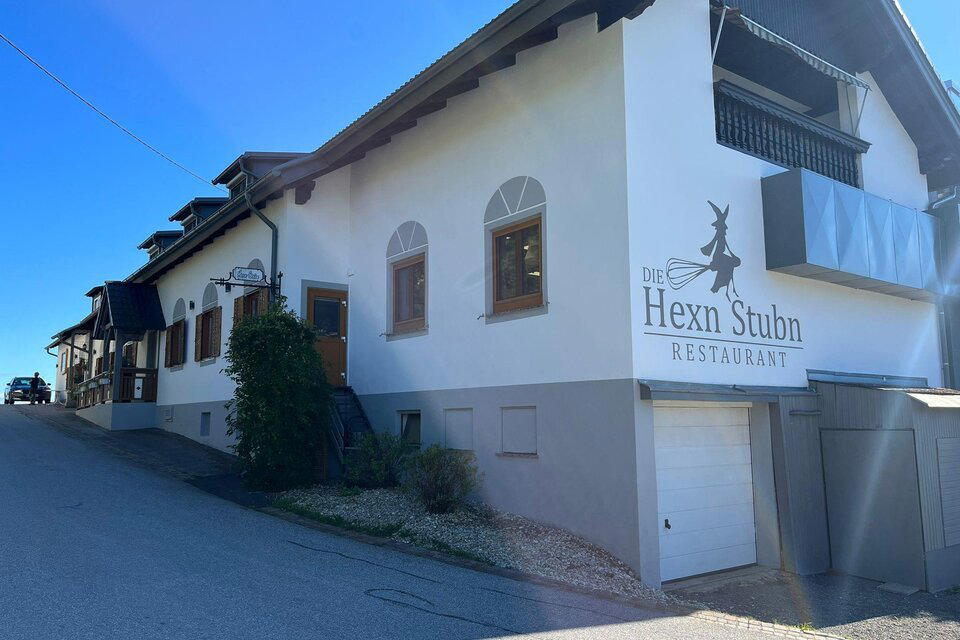
Where Styrian Countryside Cooking Finds Its Footing
Eastern Styria has never fully entered the international fine-dining conversation the way Vienna or Salzburg have. That absence is, in part, the point. The Feistritztal valley sits in a stretch of agricultural Styria where the cooking tradition draws its authority not from Michelin recognition but from proximity to the land itself, meadow-grazed livestock, foraged herbs, farmhouse preserving methods, and the kind of seasonal rhythm that urban restaurants spend considerable money simulating. Restaurant Die Hexn-Stubn is a Traditional Styrian Austrian restaurant at Blaindorf 18, 8265 Blaindorf, Austria, with a 4.9 Google rating and recommended reservations. It operates within that tradition. The name itself, roughly translatable as the Witch's Parlour, carries the regional folklore character that marks authentic Styrian country houses, a category distinct from the polished Landhaus operations that dominate Austria's higher-profile rural dining scene.
Austria's rural restaurant tier has quietly diversified over the past decade. At one end sit the recognised country estates: Landhaus Bacher in Mautern an der Donau and Taubenkobel in Schützen am Gebirge hold Michelin recognition and draw destination diners across Austria and beyond. Further along the spectrum, addresses like Obauer in Werfen and Döllerer in Golling an der Salzach have built reputations on contemporary Austrian cuisine with clear regional sourcing commitments. Die Hexn-Stubn operates at a different register, the village Gasthaus tradition, where the measure of quality is consistency, seasonal honesty, and the kind of cooking that reflects exactly what the surrounding farms produce, rather than what a tasting menu format demands.
The Sourcing Logic of Styrian Farm Country
Styria's agricultural identity is among the most pronounced of any Austrian province. Pumpkin oil from the southern Styrian plains, beef from the Murtal, wild mushrooms from the forested hillsides of the eastern valleys, and the apple orchards that line the Feistritztal itself, these are not marketing points in this part of Austria; they are the functional supply chain for any kitchen that pays attention. Restaurants embedded in working villages like Blaindorf have structural sourcing advantages that city restaurants must engineer through supplier relationships: the ingredients exist next door, in season, without the logistics overhead that urban fine dining absorbs into its pricing.
This sourcing proximity is the defining characteristic of eastern Styrian cooking at its most direct. The approach contrasts sharply with the creative kitchen model seen at Steirereck im Stadtpark in Vienna, where sourcing is equally rigorous but the culinary output is transformed through technical ambition, or the rotating international format at Ikarus in Salzburg. In the Feistritztal, the cooking is less interested in transformation and more committed to fidelity: to what the season provides, to what the local larder holds, and to the cooking methods that have structured Styrian rural hospitality for generations. Herb-forward preparations, slow-braised meats, and preserving techniques that carry summer produce through the winter months remain central to this tradition.
For context on what ingredient-led mountain and valley cooking can achieve at the high end, Kräuterreich by Vitus Winkler in Sankt Veit im Pongau offers the most instructive comparison, a kitchen that has built a recognised fine-dining reputation almost entirely on hyper-local herb and garden sourcing from a similarly rural Salzburg province setting.
The Physical Setting and Its Context
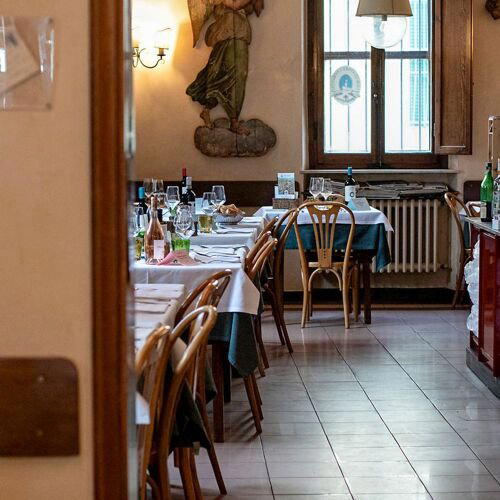
Country restaurants in the Feistritztal operate in farmhouse architecture, low-ceilinged rooms, heavy timber, ceramic tile stoves in the older buildings, that is not a design choice so much as a material fact. The structural environment of a Styrian Stubn communicates something that a city restaurant has to construct deliberately: that the food comes from here, that the cooking is tied to this specific geography, and that the pace of the meal is governed by that relationship rather than by table-turn economics. The name Hexn-Stubn adds a layer of Styrian folk character that places it within a long regional tradition of rural inn names drawn from local mythology and landscape legend.
This is a different kind of destination from the alpine resort dining addressed at Griggeler Stuba in Lech or Stüva in Ischgl, both of which pair mountain sourcing with the production standards and pricing of premium ski hospitality. Die Hexn-Stubn's context is agricultural rather than resort-oriented, which shapes both the cooking register and the type of traveller it draws. Visitors who seek it out tend to do so because they are moving through the Feistritztal with deliberate intent, not because they have arrived via airport and ski lift.
Placing Die Hexn-Stubn Within a Broader Feistritztal Visit
The Feistritztal has its own modest dining circuit, and Die Hexn-Stubn sits alongside Restaurant Schrott as one of the addresses worth tracking in this valley. Neither operates at the critical mass of recognition that brings diners from Vienna or Graz on the strength of a review alone, but both represent the kind of quality that rewards visitors who arrive with regional curiosity rather than star-chart checklists.
At the higher end of the Austrian provincial scene, comparable sourcing-led ambition can be tracked at Restaurant 141 by Joachim Jaud in Mieming and Schwarzer Adler in Hall in Tirol, both of which demonstrate how Tyrolean and alpine regional cooking has formalised what Styrian village restaurants often keep informal. The gap between formal and informal is itself meaningful: it reflects different relationships to the hospitality market, and different answers to the question of what a regional kitchen owes its guests. For a contrast from outside Austria entirely, the precision sourcing at Le Bernardin in New York City or the hyper-local Korean produce logic at Atomix in New York City shows how sourcing identity operates across entirely different culinary systems, a useful frame for understanding why the Feistritztal approach is neither naive nor under-ambitious, simply different in its terms of reference. Closer to home, Artis in Graz and Ois in Neufelden represent the urban and small-town Austrian interpretations of the same regional sourcing commitment.
Planning a Visit
Die Hexn-Stubn is located at Blaindorf 18, 8265 Blaindorf, in the Feistritztal valley of eastern Styria. The address is Blaindorf 18, 8265 Blaindorf, Austria. Reservations are recommended, especially on weekends. The restaurant is closed Monday through Wednesday, opens Thursday and Friday from 4:30 to 10:30 PM, Saturday from 11 AM to 10:30 PM, and Sunday from 9 AM to 3 PM. Reservations are recommended.
In Context: Similar Options
Comparable venues nearby, for context on price, style, and recognition.
| Venue | Cuisine | Price | Awards | Notes |
|---|---|---|---|---|
| Restaurant Die Hexn-StubnThis venue — the venue you are viewing | Traditional Styrian Austrian | $$ | , | |
| Restaurant Schrott | Austrian Gastropub | $$ | , | Hirnsdorf |
| DIE PFERDEFLEISCHEREI Gumprecht Filiale Friedensbrücke | Austrian Horse Meat Butchery | $$ | , | Franz Josefs Bahnhof |
| Lokalaugenschein | Austrian & International | $$ | , | Podersdorf am See |
| Emmy im Schloss Gamlitz | Styrian Austrian Regional | $$ | , | Gamlitz |
| Gwölb | Traditional Austrian Gastropub | $$ | , | Hauptplatz |
Continue exploring
More in Feistritztal
Restaurants in Feistritztal
Browse all →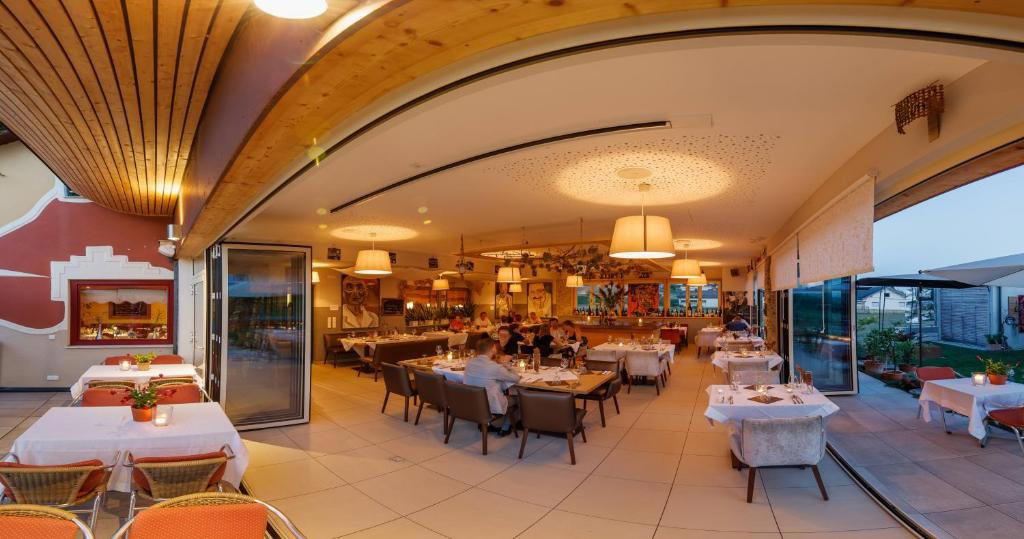
Bars in Feistritztal
Browse all →
Hotels in Feistritztal
Browse all →


At a Glance
- Rustic
- Cozy
- Classic
- Family
- Casual Hangout
- Group Dining
- Standalone
- Farm To Table
- Local Sourcing
- Organic
Warm and welcoming country inn atmosphere with friendly hosts, classically decorated in traditional Austrian style.