
RED PROJECT SUSHI MADRID serves modern Japanese sushi in Salamanca, with craft cocktails, an open kitchen, and a Macarfi 7.2 Food Rating.
Pearl is the En Primeur Club membership app — saves, bookings, and concierge access live there. Same editors, same standards.
- Address
- C/ de Villalar, 7, Salamanca, 28001 Madrid, Spain
- Phone
- +34619585012
- Website
- redprojectsushi.com
- Directions
- Get directions
 Saves & bookings on Pearl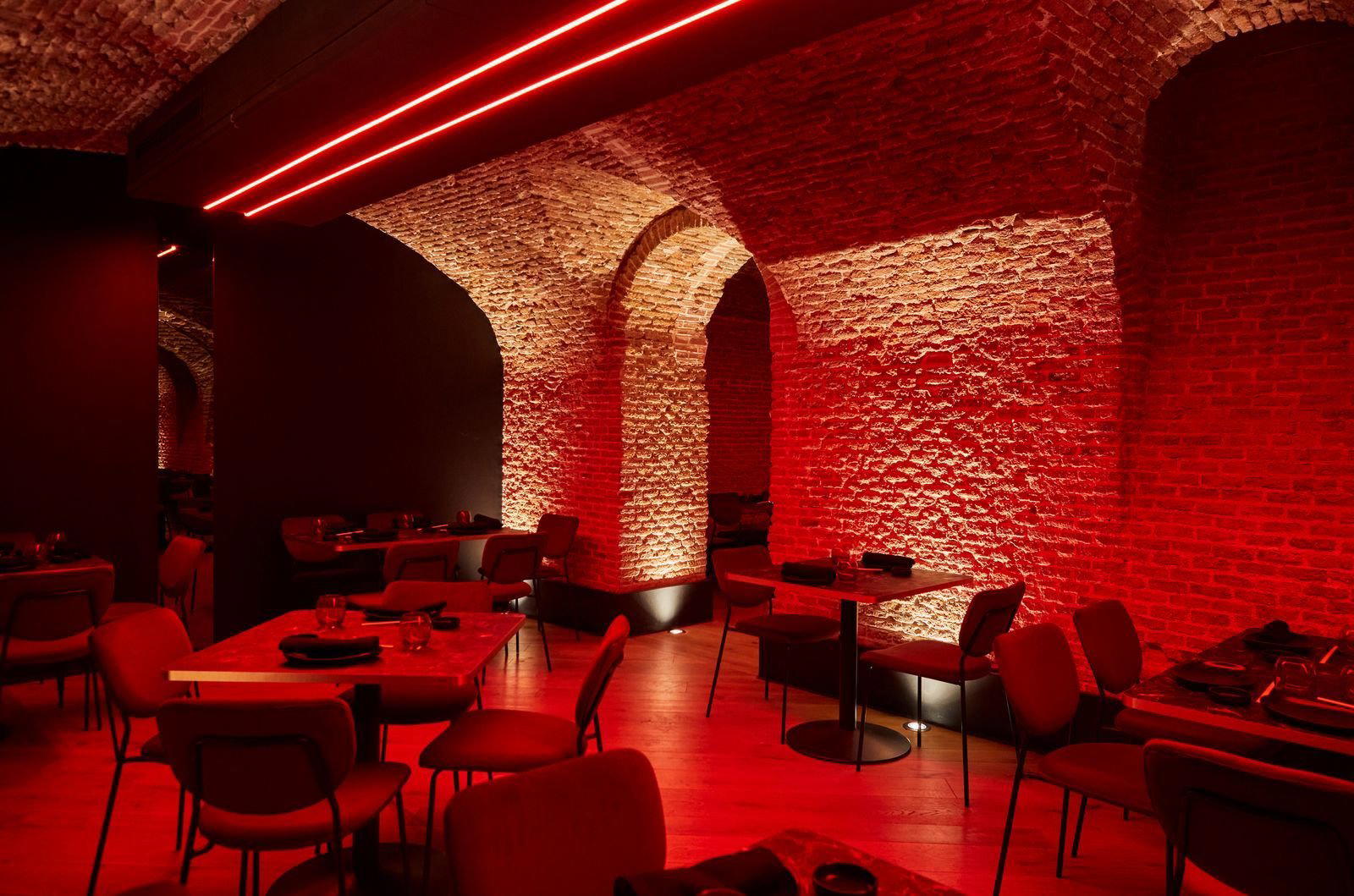
Where Salamanca Meets the Counter
Calle de Villalar is a short, composed street in Madrid's Salamanca district, the kind of address where marble lobbies and measured footsteps set the register before you reach the door. The neighbourhood has long housed the city's most formal dining rooms, where tablecloths are pressed and the wine list arrives before the menu. Against that backdrop, a sushi counter carries a particular charge: the format demands a different contract between kitchen and guest, one built on proximity, sequence, and the kind of silence that falls when something lands on the pass and speaks for itself.
Red Project Sushi Madrid occupies that address and that format. The counter model, imported from Japan and refined by a generation of Spanish chefs trained abroad, has taken hold across Madrid over the past decade. What was once a rarity in the capital is now a recognisable tier of the dining scene, with a handful of rooms operating at the upper register of omakase-style service. Red Project sits in that tier, on a street that reinforces the seriousness of the proposition.
The Counter Format in Madrid's Dining Scene
Madrid's relationship with Japanese cuisine has followed a trajectory common to European capitals with serious food cultures: early adoption through restaurant-format dining, followed by a slow, more considered shift toward counter-led, sequence-driven formats. The city now has a cluster of operations that price and present themselves against peer counters in Tokyo, Paris, and New York rather than against the broader Japanese restaurant category in Spain.
That shift matters for how you approach a booking. Counter dining in this mode is not about ordering from a menu; it is about a curated sequence where the kitchen controls pace, temperature, and the arc of the meal. Venues like DiverXO, at the progressive-creative end of Madrid's premium dining, and Coque, operating in a grand Spanish-creative register, define what the city's most ambitious kitchens look like at full scale. A focused sushi counter is a different proposition entirely: smaller, more repetitive in its technical demands, and more dependent on the quality of sourced fish and the discipline of the rice.
Spain's broader fine-dining infrastructure, which includes operations like El Celler de Can Roca in Girona, Mugaritz in Errenteria, and Arzak in San Sebastián, has normalised the idea of the tasting format as the primary vehicle for serious dining. A counter sushi room in Madrid draws on that culture of trust and sequence, while applying it to a tradition with its own codified logic.
The Sensory Register of Omakase-Style Dining
The appeal of counter dining is largely sensory in nature. You are close enough to the work to see it: the moment a piece of fish is pressed against vinegared rice, the way a blowtorch changes the surface of a fatty cut, the small decisions about seasoning that happen in real time in front of you. Sound is minimal and deliberate. The ambient noise of a full dining room is replaced by the closer register of knife on board, the quiet exchange between the counter and the guest, the occasional clink of a small ceramic cup.
Temperature plays a differently prominent role than it does in European tasting menus. Rice served too cold loses its texture and binding; fish held too long at room temperature loses its clean edge. The discipline of the counter format is that these variables are visible. You are not waiting for a dish to arrive from an unseen kitchen; you are watching the decision being made. That transparency is both the format's demand and its reward.
Comparable operations internationally, like Le Bernardin in New York City in the French seafood tradition or Atomix in New York City in the Korean tasting-menu format, demonstrate how counter proximity and careful sequencing have become markers of serious contemporary dining across multiple traditions. The common thread is the controlled sensory environment: fewer tables, more focus, and a pace set by the kitchen rather than the guest.
Salamanca as Context
The Salamanca district positions a sushi counter differently than the same format would read in Malasaña or Lavapiés. This is a neighbourhood with established expectations around service, presentation, and price. Diners arriving from nearby rooms like Deessa or Paco Roncero will be accustomed to the grammar of premium tasting formats. The counter sushi proposition asks them to trade the architectural drama of a full dining room for something more concentrated: a smaller space, a shorter guest list, and a meal that moves at the kitchen's tempo.
That trade is not for everyone, and the format tends to self-select. Guests who book counter sushi in a neighbourhood like Salamanca are generally not first-time tasting-menu visitors. They are looking for a specific kind of precision, and they are willing to pay for proximity to it. Madrid's premium dining scene, which also includes creative Spanish operations like DSTAgE, gives those guests a wide field of comparison. Red Project competes in a niche within that field.
For context on the broader Spanish fine-dining scene, the EP Club guide covers operations from Aponiente in El Puerto de Santa María and Quique Dacosta in Dénia to Azurmendi in Larrabetzu, Martin Berasategui in Lasarte-Oria, Ricard Camarena in València, Atrio in Cáceres, and Cocina Hermanos Torres in Barcelona. See the full Madrid restaurants guide for the complete picture of the capital's current dining tier.
Planning Your Visit
The address is C/ de Villalar, 7, Salamanca, 28001 Madrid. Dress: Salamanca's register is smart-casual at minimum; the counter format rewards understated presentation. Timing: If the kitchen operates a single or double seating structure, arriving on time is essential as the sequence is designed to run as a group.
How RED PROJECT SUSHI MADRID compares with similar nearby venues.
| Venue | Cuisine | Price |
|---|---|---|
| Pelotari | Basque | Not listed |
| Mudrá | Vegetarian | €€ |
| Noi | Italian-Japanese, Italian | €€€ |
| Taberna Pedraza | Spanish, Traditional Cuisine | €€ |
Recognition history
Dated appearances from independent guides and award organizations, with the underlying list record or original source where available.
Macarfi 7.2 Food Rating
Macarfi
Continue exploring
More in Madrid
Restaurants in Madrid
Browse all →
Bars in Madrid
Browse all →
Hotels in Madrid
Browse all →


At a Glance
- Modern
- Trendy
- Minimalist
- Sophisticated
- Date Night
- Group Dining
- Open Kitchen
- Craft Cocktails
Current opening hours
- Monday
- Closed
- Tuesday
- Closed
- Wednesday
- 1–4 PM, 8–11:30 PM
- Thursday
- 1–4 PM, 8–11:30 PM
- Friday
- 1–4 PM, 8–11:30 PM
- Saturday
- 1–4 PM, 8–11:30 PM
- Sunday
- 1–4 PM, 8–11:30 PM
Hours can change for holidays and private events. Last verified .
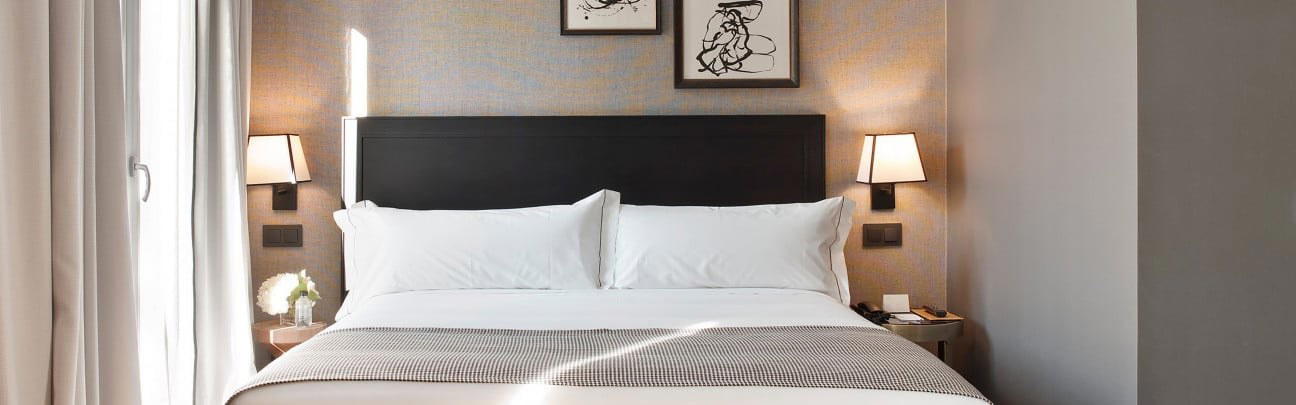
Chic and sophisticated with sleek minimalist design, outstanding decor, and a pleasant atmosphere enhanced by live music.
Know Before You Go
- Getting there
- C/ de Villalar, 7, Salamanca, 28001 Madrid, Spain