
Ramen Torikatsu puts Kuwana’s noodle culture in a precise, seafood-led register: niboshi and dashi define the appeal more than spectacle. Its selection for Tabelog Ramen WEST “Tabelog 100” in 2023, 2024, and 2025 places it among western Japan’s closely watched ramen addresses, while the compact format keeps the experience firmly in everyday local territory.
Pearl is the En Primeur Club membership app — saves, bookings, and concierge access live there. Same editors, same standards.
- Address
- 39 Kyomachi, Kuwana, Mie 511-0039, Japan
- Phone
- +81 594-22-1101
- Website
- ra-mentorikatsu.com
- Directions
- Get directions
 Saves & bookings on Pearl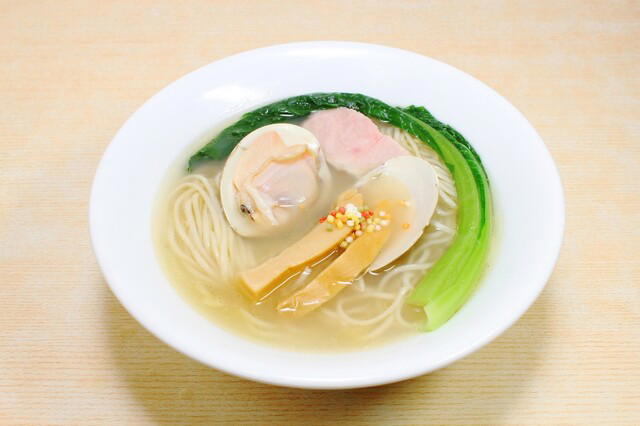
Kuwana is not the stage-set version of ramen Japan. The appeal here is quieter: a Kuwana dining room, a focused set of categories orbiting ramen and tsukemen, and the particular pull of a casual noodle stop in a city better known to many travelers for broader local eating than for noodle pilgrimage. Ramen Torikatsu belongs to the strand of Japanese ramen culture where a modest format can still carry serious local interest.
That matters because regional ramen has moved far beyond the old shorthand of tonkotsu in Kyushu, miso in Sapporo, shoyu in Tokyo. Japan’s stronger ramen rooms are often judged on balance, aroma, texture, and the way a bowl holds together from first sip to last. For travelers, the useful point is less about forcing a single style label onto the shop and more about recognizing it as a focused Kuwana address with ramen, tsukemen, and sushi listed among its categories.
Kuwana gives this ramen stop a sharper local logic
Kuwana sits in a part of Mie where river, sea, and land all shape the table, and the city’s food identity has long leaned toward those overlapping appetites. That setting makes a ramen shop with sushi also in its category mix feel less like an isolated trend and more like part of a local dining pattern. The point is not abundance. It is the way a compact meal can still speak clearly to place.
Ramen Torikatsu’s categories include ramen, tsukemen, and sushi, a combination that reads differently in Kuwana than it would in a nightlife district. In Japan’s smaller-city dining rooms, category borders can be more practical than doctrinaire. A shop may be judged by its noodles, but the presence of dipping noodles and sushi signals a broader relationship with casual Japanese eating rather than a single-format concept built for social media. The Tabelog score of 3.84 and selection for Tabelog Hyakumeiten in 2025 give that local pattern a measurable credential.
Within Kuwana, the comparison set is revealing. Kaki Yasu Ryoutei honten belongs to one lane of the city’s Japanese dining, while Yakiniku Sukkyanen occupies another evening option. 日の出 points back toward another side of the city’s appetite. Against those options, Ramen Torikatsu is not trying to behave like a formal meal. Its value is that it turns Kuwana dining into a short, direct, and unusually legible format for travelers who want a local meal without committing to a long sitting.
A casual noodle format, not a formal dining room
The informal format is part of the editorial story. This is the ramen-shop category where pacing is usually shaped by the bowl rather than by the choreography of a tasting menu. The ramen grammar that matters across Japan is simple: arrive with a clear order, eat while the noodles are at their intended texture, and do not treat the table as an all-afternoon base. That rhythm is often more revealing than luxury service because it shows how seriously the country treats casual food when the product is technically demanding.
Its Tabelog Hyakumeiten 2025 recognition also separates it from ordinary noodle stops. Tabelog’s Hyakumeiten lists are not Michelin-style stars, but in Japan they function as a useful public signal for category depth, especially for ramen, where enthusiasts often compare shops across prefectures and regions. For a Kuwana venue, selection indicates that the shop has held attention beyond a purely neighborhood audience.
The absence of a chef-centered public narrative is no loss here. Ramen criticism should not always default to biography. In this category, technique is often expressed through consistency, seasoning, and whether the noodle format suits the bowl. With only the published categories and recognition to rely on, the sharper reading is structural rather than speculative. This is a place to understand through format, reputation, and Kuwana context, not personality myth.
How it fits a Kuwana eating itinerary
For visitors building a Kuwana day around food, the city rewards contrast. A traditional meal at Kaki Yasu Ryoutei honten frames one side of local dining; Yakiniku Sukkyanen shifts the evening toward another lane; other Kuwana dining rooms show how non-ramen meals slot into local routines. Ramen Torikatsu gives that itinerary its casual counterpoint, a lower-formality meal with stronger regional relevance than its price tier suggests.
Travelers extending the comparison beyond Kuwana can use the same lens across Japan: other dining rooms show how single-format meals, casual counters, and city-specific specialties can define a stop without requiring a long formal sitting. Ramen belongs in that same Japanese category: narrow focus, high repeatability, and a readership that notices small differences.
The editorial reason to prioritize this address is not ceremony. It is the chance to read Kuwana through a modest ramen format that has earned category attention. For broader planning, start with Our full Kuwana restaurants guide, then use Our full Kuwana hotels guide, Our full Kuwana bars guide, Our full Kuwana wineries guide, and Our full Kuwana experiences guide to shape the rest of the stay. For wider reference points in Japan and beyond, other casual formats underline the same point: simple meals can carry serious culinary information when the execution is clear.
In Context: Similar Options
Comparable venues by cuisine and price in the same metro.
| Venue | Cuisine | Price | Notes |
|---|---|---|---|
| Ramen Torikatsu | Japanese Ramen | $ | Kyomachi |
| Yakiniku Sukkyanen | Traditional Yakiniku (Japanese BBQ) | $$$ | Nishi Kuwana |
| 日の出 | Traditional Hamaguri Kaiseki | $$$ | Nishi Kuwana |
| Kaki Yasu Ryoutei honten | Traditional Japanese ryotei for sukiyaki, shabu-shabu, teppanyaki and kaiseki | $$$$ | Edomachi |
| センプレ | Plant-Based Italian Fine Dining | $$$ | 長島町 |
| ヴィアッジーニ | Modern Italian with Mie Local Ingredients | $$$ | Anagi |
Recognition history
Dated appearances from independent guides and award organizations, with the underlying list record or original source where available.
Tabelog 100 #69 · No. 69
Tabelog · Tabelog 100 - Ramen - WEST - 2025



At a Glance
- Cozy
- Classic
- Solo
- Casual Hangout
- Family
- Standalone
- Beer Program
- Local Sourcing
Current opening hours
- Monday
- 11 AM–2 PM, 6–8:30 PM
- Tuesday
- 11 AM–2 PM
- Wednesday
- Closed
- Thursday
- 11 AM–2 PM, 6–8:30 PM
- Friday
- 11 AM–2 PM, 6–8:30 PM
- Saturday
- 11 AM–2 PM, 6–8:30 PM
- Sunday
- 11 AM–2 PM, 6–8:30 PM
Hours can change for holidays and private events. Last verified .
A cozy, understated ramen shop with a relaxed neighborhood feel and a focus on precise, Japanese-style broths.
Know Before You Go
- Reservations
- Walk in friendly
- Dress code
- Casual
- Getting there
- 39 Kyomachi, Kuwana, Mie 511-0039, Japan