
Ramen Tetsushi belongs to Osaka’s serious everyday ramen tier: modest spend, specialist format, and enough critical traction to earn selection in Tabelog’s Ramen OSAKA 100 for 2023, 2024, and 2025. Its Toyonaka setting shifts the meal away from central Osaka’s station-district churn and toward a more local, purpose-led ramen stop.
Pearl is the En Primeur Club membership app — saves, bookings, and concierge access live there. Same editors, same standards.
- Address
- 大阪府豊中市小曽根4-9-2
- Phone
- +81661519956
- Website
- tabelog.com
 Saves & bookings on Pearl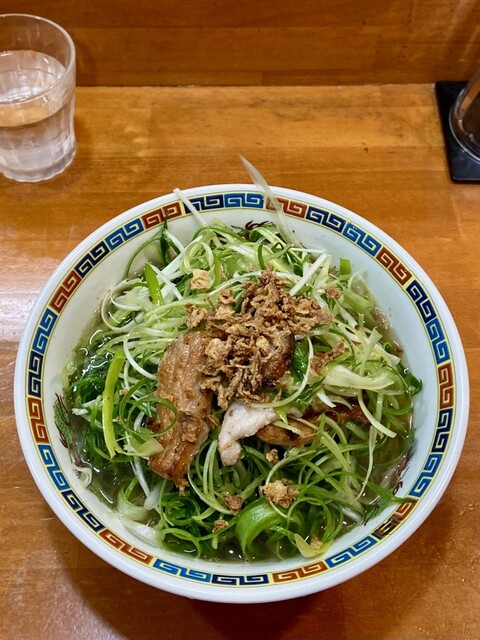
Approaching a suburban ramen shop in northern Osaka carries a different rhythm from eating around Umeda or Namba. The city’s central counters often trade on speed, commuter density, and late-night convenience; Toyonaka asks for a more deliberate trip. That change matters. Ramen is one of Japan’s great low-price precision formats, and the physical container often tells the story before the bowl does: compact rooms, counter-led pacing, quick turnover, and a narrow menu logic built around repetition rather than theatre.
Ramen Tetsushi sits inside that tradition with the signals that matter in Osaka’s ramen scene: selection for Tabelog’s Ramen OSAKA 100 in 2023, 2024, and 2025, a Tabelog score of 3.69, and a spend band that keeps it in the everyday ramen economy rather than the tasting-menu orbit. In a city where value can range from under-¥1,000 pastry counters to five-figure yakiniku dinners, that combination is part of the appeal. Recognition here does not turn ramen into luxury; it sharpens the case for a focused bowl in a city that has always treated eating well as a practical habit.
A compact ramen room in Osaka's northern orbit
Design in ramen is rarely about spectacle. The useful question is whether the room supports the craft: quick seating, minimal distraction, and a service rhythm that lets the kitchen repeat a small number of actions with consistency. Osaka’s better ramen rooms tend to work this way. The counter or tight dining room becomes a production line in the dignified sense, where the experience is shaped by proximity, steam, sound, and timing rather than by elaborate décor.
That makes Toyonaka an interesting setting. It is close enough to Osaka’s dining gravity to be part of the conversation, but removed from the tourist-heavy zones where ramen can become an itinerary checkbox. A shop here competes less on visual drama and more on whether regulars and dedicated ramen followers keep returning. Tabelog’s repeated Hyakumeiten selection places it in the same evaluative frame as Osaka’s more discussed ramen addresses, yet the location changes the mood: this is not a neon-district meal, but a northern-Osaka detour for diners who understand that the city’s food culture extends well beyond its central shopping arc.
Osaka’s ramen conversation also benefits from contrast. At the low-spend end, places such as Rekka Honten occupy a similar budget band, while the broader city map stretches from casual staples like 551 Horai (551蓬莱) to bakery stops such as 52CHO-ME BAKERY and .cafe. Higher-spend meals, including Yakiniku Kappa Kajioka and tempura at Shunsaiten Tsuchiya, belong to a different decision entirely. Ramen’s strength is that it can sit near the bottom of the price ladder while demanding just as much technical attention from the kitchen.
Recognition without the fine-dining costume
The strongest ramen shops in Japan rarely need the language of luxury. Their credibility comes from repeatable craft, local demand, and the severity of comparison within the category. Tabelog’s Ramen OSAKA 100 selection is useful because it evaluates the shop inside a ramen-specific field rather than against unrelated restaurants. For travellers, that distinction is practical: it separates a specialist ramen stop from the broader mass of casual noodle shops without pretending that the meal belongs to a formal dining category.
Ramen Tetsushi’s opening date in 2016 gives it enough operating history to read as more than a passing trend. That matters in Osaka, where food enthusiasm moves quickly and casual formats are tested daily by local customers, not just destination diners. The repeated 2023, 2024, and 2025 selections suggest sustained relevance within the city’s ramen bracket. The better interpretation is not that a single shop defines Osaka ramen, but that it belongs to the group serious ramen eaters use to measure the city’s current standard.
For a visitor building a day around food rather than monuments, this kind of stop pairs well with a wider Osaka itinerary. The same trip might include Italian cooking at a canto (Italian), pizza at 99 Pizza Napoletana Gourmet, or a broader scan through Our full Osaka restaurants guide. For the rest of the city’s planning frame, EP Club also maps Our full Osaka hotels guide, Our full Osaka bars guide, Our full Osaka wineries guide, and Our full Osaka experiences guide.
How to read this stop against the wider Japan food map
The reason to seek out a ramen address outside Osaka’s main hotel corridors is not novelty. It is calibration. Japan’s casual dining culture rewards specialization: curry shops, onigiri counters, Vietnamese kitchens, sushi bars, bakeries, and ramen rooms often operate with narrower focus than equivalent casual formats elsewhere. That focus creates a useful travel rule. A short menu and modest room can be as revealing as a long dinner when the format has been refined over years.
Seen that way, this Toyonaka ramen shop belongs to a national pattern rather than an isolated local curiosity. A traveller comparing regional casual formats might look from [Curry Senmon Ten] Maruyama Kyoju. in Sapporo to [ki:] in Kyoto, (Shoku) Vietnam in Kawasaki.know in Kumamoto, or. 鮪と炭火焼き うお炭 秋葉原店 in Tokyo. Outside Japan, parallel interest in Japanese casual forms appears at Jōdo Saké Bar in Los Angeles and Onigiri Time in Pasadena, while more formal regional traditions sit elsewhere, as at -Grilled beef Sukiyaki- KAMAKURA TANUKIAN 鎌倉 たぬき庵 in Kamakura.
The editorial read is simple: Ramen Tetsushi is for diners who value category-specific recognition, compact-room discipline, and the particular pleasure of going slightly out of the central flow for a meal that remains economically grounded. Osaka rewards that approach. Its food culture is not only in grand counters and famous districts; it is also in modest rooms where a narrow format is practiced with enough consistency to earn attention year after year.
Comparable Spots
Comparable venues at the same tier.
| Venue | Cuisine | Price | Notes |
|---|---|---|---|
| Ramen TetsushiThis venue — the venue you are viewing | Ramen shop | $ | Not listed |
| Toki Ya | Tsukemen ramen shop | $ | Yodogawa |
| Soratobu Udon Yamabuki Ya | Japanese Udon | $ | Toyonaka |
| NAKAGAWA Wazu | Niboshi-focused Ramen Counter | $ | Higashiyodogawa |
| Fu-n@ | Japanese Shokudo / Teishoku | $ | Kita |
| Kyu Yam Tei Nakanoshima youkan | Japanese spice curry house | $ | Kita |
Recognition history
Dated appearances from independent guides and award organizations, with the underlying list record or original source where available.
Tabelog 100 #38 · No. 38
Tabelog · Tabelog 100 - Ramen - OSAKA - 2025
Continue exploring
More in Osaka
Restaurants in Osaka
Browse all →




Bars in Osaka
Browse all →


Hotels in Osaka
Browse all →


Wineries in Osaka
Browse all →
At a Glance
- Cozy
- Lively
- Solo
- Casual Hangout
- After Work
- Standalone
Casual, non‑smoking ramen shop with a compact, cozy interior and a busy, lively atmosphere during lunch and dinner service.