
Tabelog 100 #3
Our verdict
Ramen Taiko places Yokohama ramen in a neighbourhood register rather than a destination-dining frame: compact, local, and recognised by Tabelog 100 Ramen Kanagawa 2025. Its Minamiota setting matters, because the experience reads less like a central Yokohama showcase and more like a station-area ramen stop with serious regional credibility.

Pearl is the En Primeur Club membership app, where members save venues, book tables and use the concierge.
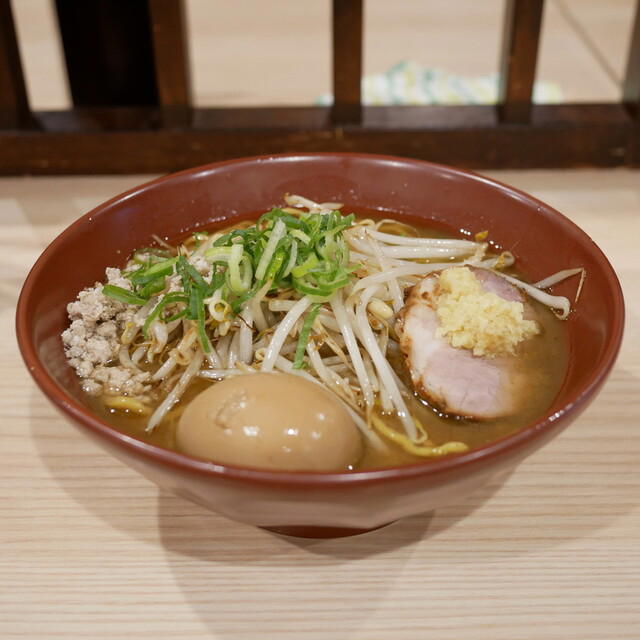
Yokohama is more than its postcard harbor views and hotel lobbies. It is also a city of everyday ramen shops competing on repetition, speed, and local return visits rather than spectacle. That context suits Ramen Taiko. The room is modest, the category is narrow, and the recognition is specific: selection for Tabelog 100 Ramen Kanagawa 2025, alongside a Tabelog score of 3.72. In a city often read through Chinatown, bayside dining, and Iekei ramen history, this is a different Yokohama signal: a local ramen address with enough consistency to sit inside a prefectural award list.
Yokohama ramen, away from Yokohama's harbour script
Yokohama’s dining identity can be misleading from a distance. Visitors tend to compress the city into Chinatown, waterfront dining, and the Iekei ramen lineage associated with pork-soy broth and rice on the side. Neighbourhood ramen shops complicate that picture. They make Yokohama feel less like a single culinary brand and more like a network of local micro-scenes, each shaped by commuter rhythms and repeat custom.
Ramen Taiko belongs to that second reading. Its Yokohama setting sits outside the image many first-time travellers build from the city’s most familiar dining areas, which changes the meal’s frame. The decision is not about chasing a view, a tasting menu, or a chef-led counter narrative. It is about reading the city through a modest-format ramen shop that has accumulated enough recognition to matter beyond a casual stop. That makes it useful for travellers who already understand central Yokohama and want a sharper sense of how Kanagawa ramen works at street level.
The comparison set is telling. Ryusei Ken, Suzukiya Akebono chou ten, Ramen Torikku, and Ganso Juhachiban all help sketch the everyday ramen field around Yokohama and Kanagawa, while Yokohama Iekei Ramen Kogane Ya points back toward the city’s better-known Iekei conversation. Ramen Taiko’s value is not that it replaces those categories; it gives the map another coordinate, one where award recognition and neighbourhood scale meet without drifting into destination-restaurant formality.
A compact shop with award-list credibility
Tabelog 100 recognition matters in Japan because ramen is a brutally crowded field. A prefectural list does not crown a single winner; it creates a shortlist of shops that have cleared a high local bar. For travellers, that kind of signal is more useful than broad praise. It says the shop has been judged within the grammar of ramen, against other ramen specialists, in Kanagawa’s own competitive field.
The format reinforces the point. A compact ramen room changes the social contract: turnover, timing, and focus tend to carry more weight than lingering. The meal sits in the Japanese ramen tradition of showing up, waiting if necessary, eating with attention, and moving on. The core experience remains functional rather than leisurely, which is part of the appeal for travellers who want the category on its own terms.
Pricing also places the shop firmly in everyday Japan rather than luxury travel. Published pricing sits in the - JPY 999 - JPY 999 range, with both dinner and lunch budget listed at - JPY 999. That single detail says plenty about the category: ramen can be recognised by a major Japanese restaurant-list system and still operate in the price language of a local shop.
There is no need to inflate the experience into grand theatre. The appeal is the discipline of the form. Ramen shops at this level are judged through narrow margins: broth balance, noodle handling, seasoning, service tempo, and repeatability. Without verified dish names, the sharper editorial point is the structure rather than an invented bowl-by-bowl script. Ramen Taiko is for travellers who are comfortable letting a small specialist shop explain itself through the category rather than through English-language storytelling.
How it fits into a Yokohama food itinerary
Ramen Taiko works better as a targeted detour than as a catch-all meal recommendation. It rewards travellers already moving through Kanagawa, or anyone willing to build a Yokohama day around a ramen stop with documented local recognition. Pairing it with other Yokohama dining gives a more complete picture of the city than staying only around the bay.
For a broader Yokohama eating map, EP Club’s restaurant coverage can be useful before narrowing the day around ramen. The city’s range runs from casual counters and specialist shops to established local dining rooms and other everyday addresses. The wider city pages help set the frame: Our full Yokohama restaurants guide, Our full Yokohama hotels guide, Our full Yokohama bars guide, Our full Yokohama wineries guide, and Our full Yokohama experiences guide.
It also sits neatly within a larger Japan food itinerary that values specificity over breadth. Nearby regional contrasts might include other casual dining in Kanagawa, Tokyo, Osaka, Kumamoto, Kawasaki, or Sapporo, each showing how tightly focused Japanese formats can shift by city and audience. For readers extending the Japanese casual-food thread abroad, similar specialist formats outside Japan show how narrow concepts can travel while still depending on local context.
The editorial case is clear: this is a Yokohama ramen stop for travellers who care about local ranking systems, city context, and compact specialist formats. It is not built around ceremony. It is built around a category where small differences matter and where recognition, accessible pricing, and Yokohama setting all point to the same conclusion: the city gives the bowl its frame.
Frequently asked questions
Where is Ramen Taiko in Yokohama?
Yokohama.
What does dinner at Ramen Taiko typically cost?
Pricing at Ramen Taiko is listed as - JPY 999 - JPY 999.
What are the opening hours for Ramen Taiko?
Opening hours for Ramen Taiko are not provided here.
What is Ramen Taiko known for?
Ramen Taiko is known as a ramen venue in Yokohama with Tabelog 100 Ramen Kanagawa 2025 recognition and a listed Tabelog score of 3.72.
Just the Basics
Comparable options at the same price tier.
| Venue | Cuisine | Price | Awards | Notes |
|---|---|---|---|---|
| Ramen TaikoThis venue (the venue you are viewing) | Specialty Miso Ramen Shop | $10–20 | Tabelog 100 #3 | Not listed |
| Ryusei Ken | Japanese Ramen | $10–20 | Tabelog 100 #88 | JPY 999 - JPY 999 |
| Ramen Torikku | Chicken-focused ramen | $10–20 | Tabelog 100 #75 | JPY 1,000 - JPY 1,999 JPY 1,000 - JPY 1,999 |
| Yokohama Iekei Ramen Kogane Ya | Yokohama iekei ramen | $10–20 | Tabelog 100 #87 | JPY 999 |
| Suzukiya Akebono chou ten | Yokohama iekei ramen | Not listed | Tabelog 100 #55 | JPY 999 - JPY 999 |
| Ganso Juhachiban | Casual Chinese Dumpling House | $10–20 | Tabelog 100 #99 | JPY 1,000 - JPY 1,999 |
Recognition history
Dated appearances from independent guides and award organizations, with the underlying list record or original source where available.
Tabelog 100 #3 · No. 3
Tabelog · Tabelog 100 - Ramen - KANAGAWA - 2025
Continue exploring
More in Yokohama
Restaurants in Yokohama
All restaurants in Yokohama →



Bars in Yokohama
Browse all →





Details
- Cozy
- Lively
- Solo
- Casual Hangout
- After Work
- Chefs Counter
- Standalone
- A La Carte
- Counter Dining
Current opening hours
- Monday
- Closed
- Tuesday
- 11:30 AM–2:45 PM, 6–9 PM
- Wednesday
- 11:30 AM–2:45 PM, 6–9 PM
- Thursday
- 11:30 AM–2:45 PM, 6–9 PM
- Friday
- 11:30 AM–2:45 PM, 6–9 PM
- Saturday
- 11:30 AM–2:45 PM, 6–9 PM
- Sunday
- 11:30 AM–2:45 PM, 6–9 PM
Hours can change for holidays and private events. Hours as of .
A compact, no-frills neighborhood ramen shop with counter-focused seating, a casual and energetic atmosphere, and the warm feel of a local favorite rather than a polished chain.