
Tabelog 100 #99
Our verdict
Ganso Juhachiban gives Yokohama’s Wakabacho Chinese dining scene a compact, low-friction counterpoint to the city’s formal heritage restaurants. Its 2026 Tabelog 100 Chinese EAST selection, table-only room, and Chinese-ramen-dumpling spread place it in the everyday end of a category that usually gets judged by ceremony and spend.

Pearl is the En Primeur Club membership app, where members save venues, book tables and use the concierge.
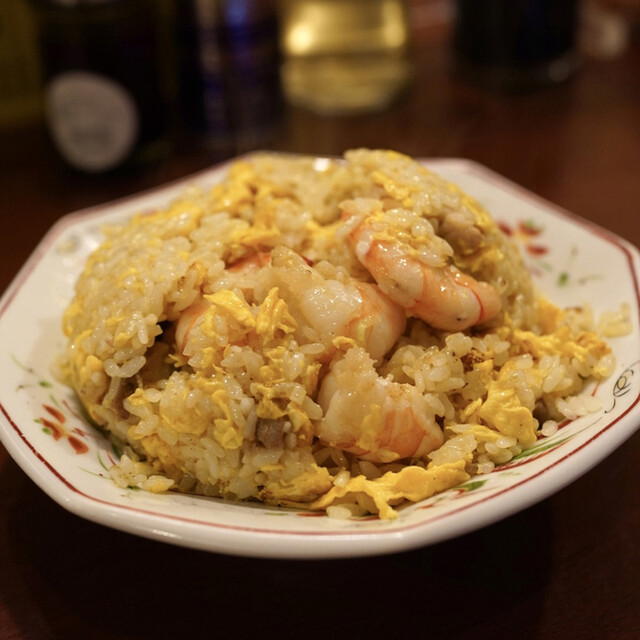
Yokohama does not need to announce itself only through polished visitor routes or waterfront choreography. In the city’s more lived-in dining streets, Yokohama feels denser and more practical: small restaurants, late-evening foot traffic, and a mixed urban grain suited to Chinese food in its informal Japanese register. Here, Ganso Juhachiban reads less as a destination dining room than as proof of how Yokohama eats when it is not performing for visitors.
That matters in a city whose Chinese dining identity is often pulled toward formal rooms, long-established names, and higher spend. Yokohama offers another frame too: Chinese, ramen, and dumpling cooking as everyday infrastructure, not ceremony. A 2026 Tabelog Hyakumeiten selection gives the room outside validation, but the format stays practical and local rather than theatrical.
Yokohama Chinese cooking without visitor-district pageantry
The useful way to read Ganso Juhachiban is through Yokohama’s split personality. On one side are legacy rooms and historic local restaurants where occasion, lineage, and planning define the evening. Ota Nawanoren and Arai Ya Honten sit in that more formal Yokohama register, suited to planned dinners rather than casual neighbourhood meals. On the other side are places where the city’s appetite is folded into ramen bowls, dumplings, and Chinese staples at street-level scale.
Ganso Juhachiban belongs to the second camp. Its listed categories, Chinese, ramen, and dumpling, point to a Japanese urban style of Chinese eating rather than a banquet taxonomy. This is the idiom of quick groups, repeat locals, and diners wanting range without a scripted tasting-menu feel. The Tabelog score of 3.62, paired with a 2026 Hyakumeiten listing, lifts it above mere convenience while keeping it anchored in a restaurant that can still function as part of a regular week.
For readers mapping Yokohama by food rather than postcard views, that distinction is useful. Our full Yokohama restaurants guide covers the city’s wider spread, from destination counters to everyday specialists, while comparable references such as everyday Yokohama dining rooms and Alpenjiro Honten show how Yokohama’s serious eating often sits outside a single luxury lane.
The value signal is the point, not a side note
Yokohama rewards diners who understand category as much as reputation. Alpenjiro Honten, Suzukiya Akebono chou ten, and Yokohama Iekei Ramen Kogane Ya all point to different ways the city supports focused, casual eating. Against that spread, Ganso Juhachiban occupies a narrow but telling position: recognised on an awards list, yet aligned with accessible neighbourhood eating rather than the city’s higher-ticket historic restaurants.
That combination is the editorial hook. Awards lists often skew toward rooms where dining becomes a project, but this selection shows how Japan’s rating ecosystem can also reward casual consistency. Chinese food in Japan has never been limited to regional authenticity debates; it also includes ramen-shop overlap, dumpling culture, and after-work meals built around flexible, familiar plates. Ganso Juhachiban’s category mix reinforces that local pattern without turning the room into a formal occasion restaurant.
The practical texture is direct. This is better understood as casual Yokohama dining than as a room built around ceremony, exclusivity, or grand presentation. Its stated dinner budget of JPY 1,000 - JPY 1,999 is central to the appeal, because it places the restaurant in an accessible bracket while its 2026 recognition and 3.62 Tabelog score keep the conversation from being only about price.
For visitors, expectations should be calibrated. This is not grand hotel dining or harbour-view cocktails. Those belong elsewhere, and the city has the infrastructure for them, as our full Yokohama hotels guide and full Yokohama bars guide make clear. Yokohama asks for attention to restaurants where dinner is chosen by category, budget, and appetite rather than spectacle.
Where it fits in a wider Yokohama itinerary
Ganso Juhachiban is strongest as a neighbourhood-style dinner for travellers already moving through Yokohama, especially those interested beyond the city’s most obvious dining narratives. Its Yokohama setting places it in a different register from polished destination dining, and that contrast gives the meal context. Pairing this dinner with a more formal Yokohama meal on another night produces a sharper understanding of the city than booking only heritage addresses.
The wider regional picture helps. Yokohama dining rewards specialization at every price tier, from ramen and dumpling rooms to long-running formal restaurants and everyday specialists. Yokohama’s own dining field already shows this range clearly, and other unnamed dining rooms around the city point to different versions of everyday seriousness. The point is not that every casual specialist is alike, but that Japan’s restaurant culture often treats modest formats with the same intensity that other cities reserve for luxury rooms.
International readers sometimes over-index on Michelin-style formality when planning Japan. Yokohama corrects that because its dining culture includes Chinese history, ramen intensity, long-running restaurants, and compact casual formats. A restaurant like this belongs in that mixed field. It is not trying to solve the city in one meal; it gives a precise read on one local appetite.
The decision is simple. Choose this for recognised, casual Chinese-ramen-dumpling cooking in Yokohama rather than a ceremonial evening. Choose a higher-spend historic Yokohama room when the point is occasion and continuity. For broader planning around the city’s non-restaurant layers, our full Yokohama wineries guide and full Yokohama experiences guide sit alongside the dining coverage; outside Japan, Japanese casual formats travel in many directions, but this version is rooted in Yokohama’s own street-level grammar.
Frequently asked questions
Is Ganso Juhachiban good for families?
It works better for straightforward family dinners than for long, formal occasions: the listed dinner budget is JPY 1,000 - JPY 1,999. The Tabelog Hyakumeiten 2026 selection also signals steady outside recognition.
Is Ganso Juhachiban better for a quiet night or a lively one?
It suits a low-key, casual dinner more than a high-energy night out. The restaurant is in Yokohama and is best understood through its Chinese, ramen, and dumpling categories rather than through occasion dining.
What does dinner at Ganso Juhachiban typically cost?
Pricing at Ganso Juhachiban is listed as JPY 1,000 - JPY 1,999.
Is Ganso Juhachiban open every day?
Specific opening-day and hours details are not provided here. Check directly with Ganso Juhachiban before making plans.
A Tight Comparison
Comparable options at the same price tier.
| Venue | Cuisine | Price | Awards | Notes |
|---|---|---|---|---|
| Ganso JuhachibanThis venue (the venue you are viewing) | Casual Chinese Dumpling House | $10–20 | Tabelog 100 #99 | Not listed |
| Ota Nawanoren | Historic Yokohama gyu‑nabe & sukiyaki house | $100–150 | Tabelog 100 #61 | JPY 15,000 - JPY 19,999 JPY 10,000 - JPY 14,999 View spending breakdown |
| Suzukiya Akebono chou ten | Yokohama iekei ramen | Not listed | Tabelog 100 #55 | JPY 999 - JPY 999 |
| Arai Ya Honten | Traditional Japanese Gyunabe / Sukiyaki | Not listed | Tabelog 100 #31 | JPY 10,000 - JPY 14,999 JPY 3,000 - JPY 3,999 |
| Alpenjiro Honten | Soup and steak curry house | $10–20 | Tabelog 100 #39 | JPY 2,000 - JPY 2,999 JPY 1,000 - JPY 1,999 |
| Yokohama Iekei Ramen Kogane Ya | Yokohama iekei ramen | $10–20 | Tabelog 100 #87 | JPY 999 |
Recognition history
Dated appearances from independent guides and award organizations, with the underlying list record or original source where available.
Tabelog 100 #99 · No. 99
Tabelog · Tabelog 100 - Chinese cuisine - EAST - 2026
Continue exploring
More in Yokohama
Restaurants in Yokohama
All restaurants in Yokohama →



Bars in Yokohama
Browse all →





Details
- Lively
- Classic
- Cozy
- Casual Hangout
- Group Dining
- Family
- After Work
- Late Night
- Solo
- Standalone
- Beer Program
- A La Carte
- Family Style
- Beer
Current opening hours
- Monday
- 5–11 PM
- Tuesday
- 5–11 PM
- Wednesday
- Closed
- Thursday
- 5–11 PM
- Friday
- 5–11 PM
- Saturday
- 5–11 PM
- Sunday
- 5–11 PM
Hours can change for holidays and private events. Hours as of .