Ramen Ron

Ramen Ron holds a Michelin Plate recognition (2026) and occupies the ground floor of Edades Tower in Rockwell Center, one of Makati's more considered mixed-use precincts. The format sits within a growing Metro Manila conversation about Japanese comfort food done with discipline rather than spectacle. For Rockwell regulars, it functions as a reliable anchor in a neighbourhood that rewards repeat visits.
Pearl is the En Primeur Club membership app — saves, bookings, and concierge access live there. Same editors, same standards.
- Address
- GF, RS-103, Edades Tower Rockwell Center Makati, Amorsolo Dr, Makati City, Metro Manila, Philippines
- Phone
- +63 917 628 7245
- Website
- afhospitality.com
- Directions
- Get directions
 Saves & bookings on Pearl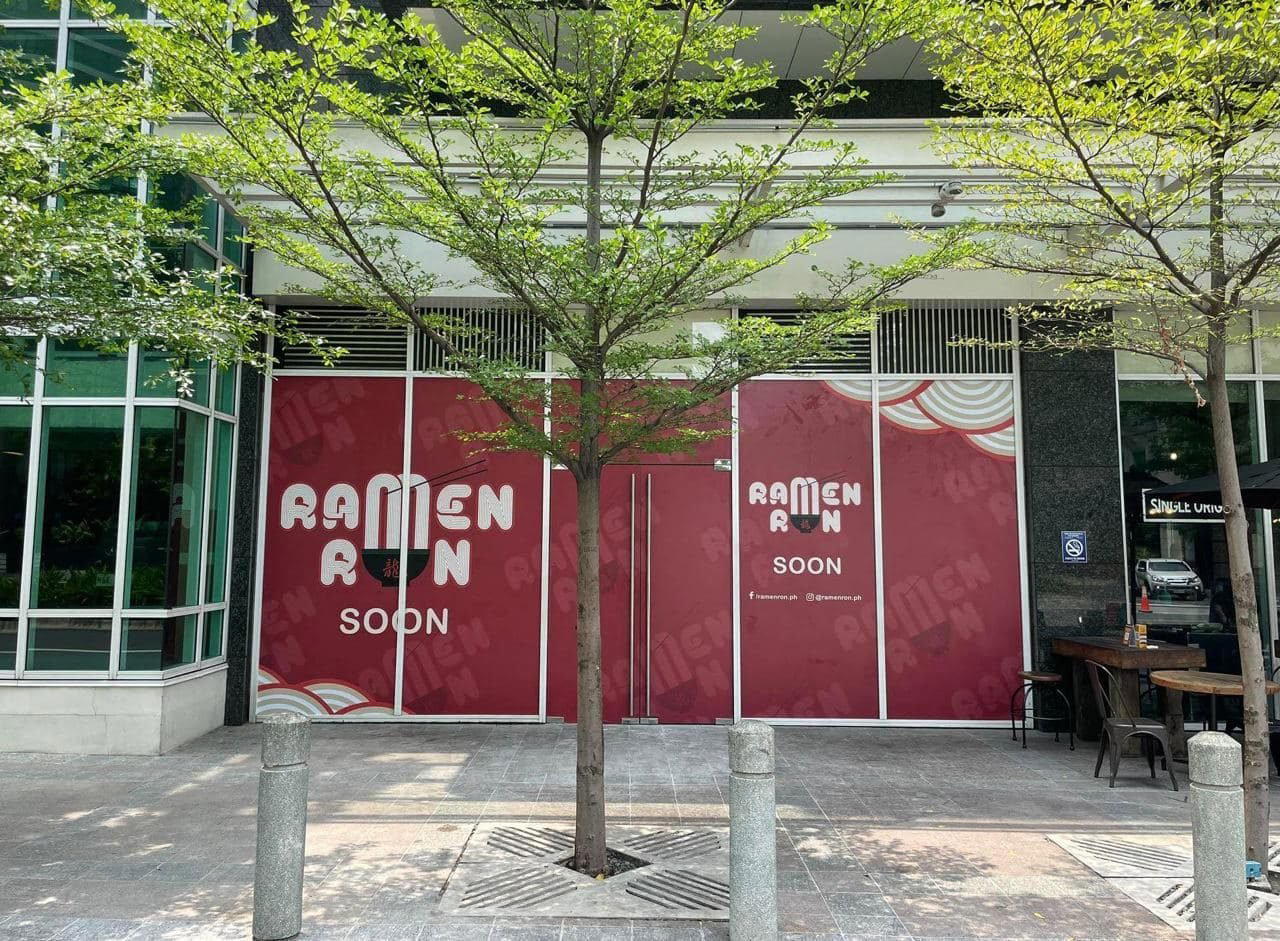
Rockwell's Ramen Standard
Rockwell Center has spent two decades consolidating its position as Makati's most controlled retail and dining enclave. Unlike the denser, more chaotic corridors of BGC or the legacy restaurant rows along Jupiter Street, Rockwell operates on a quieter frequency: fewer venues, higher floor space costs, and a resident and office population that gravitates toward reliability over novelty. Ramen Ron sits on the ground floor of Edades Tower along Amorsolo Drive, a low-traffic stretch that keeps the dining room removed from the weekend foot traffic that defines other parts of the precinct. The physical approach is unhurried, which sets the register before you reach the door.
That register matters in Manila's ramen context. The city's Japanese comfort food scene has fragmented considerably over the past decade, splitting between high-volume fast-casual chains, mid-tier casual bowls with minimal sourcing ambition, and a smaller tier of operators who treat broth construction and ingredient provenance as the central editorial argument of their menus. Ramen Ron's Michelin Plate recognition in 2026 places it in that smaller tier and signals that the kitchen is doing something reviewers considered worth noting, even if the distinction falls short of a starred recommendation. In a category where most competitors are measured by throughput and price efficiency, a Michelin acknowledgment shifts the conversation toward quality signals.
The Sourcing Question in Manila's Bowl Culture
Japanese ramen, at its structural core, is a study in whole-ingredient use. The broth is the argument: pork bones, chicken carcasses, kombu, dried fish pressed through hours of extraction until every soluble element of the raw material has transferred to liquid. Done properly, it is one of the more genuinely sustainable cooking formats in any cuisine, not because it markets itself as such, but because waste is architecturally impossible when the process works correctly. What might be discarded in a Western kitchen becomes the foundation here.
In Metro Manila, where supply chain transparency remains inconsistent across restaurant categories, the ramen format offers a structural advantage: the core product does not depend on rare or particularly fragile imported ingredients to function at a high level. Pork, chicken, aromatics, noodles. The differentiation happens in technique and sourcing discipline, not in ingredient exoticism. This is a meaningful distinction in a food city where the sustainability conversation has historically been led by tasting-menu restaurants rather than casual formats. Hapag (Filipino) and Helm have both made provenance a central editorial position at the higher end of Makati dining. Ramen Ron occupies a different register, but the Michelin acknowledgment suggests the kitchen's relationship with its ingredients clears a meaningful threshold.
Manila's broader dining conversation in 2025 and 2026 has been shaped by a tension between imported restaurant formats and locally rooted ones. Gallery By Chele in Manila operates in a tasting-menu format that draws heavily on Philippine biodiversity; Linamnam in Parañaque takes a different approach to Filipino ingredients entirely. Ramen Ron arrives from a Japanese tradition rather than a local one, but the ramen format's internal logic, low waste, high extraction, technique over spectacle, aligns with the operational values that thoughtful restaurant operators across the region have been moving toward regardless of cuisine type.
Where Ramen Ron Sits in the Makati Set
Rockwell Center's restaurant concentration is smaller than BGC's but more consistent in average quality per square meter. The precinct tends to support venues that serve repeat customers rather than destination diners arriving once. That dynamic rewards formats with depth: a ramen counter with a strong broth program will hold a regular better than a concept dining room that exhausts its novelty after two visits. Celera and Kása Palma occupy different positions in the Makati ecosystem, but the Rockwell dynamic applies across the precinct: operators who build loyal regulars rather than chasing new audiences tend to survive and accumulate recognition here.
The Michelin Plate distinction, introduced to the Philippines with the 2024 and 2025 guides, is credible external quality signal currently operating in the Manila dining market. It does not function identically to a starred recommendation, but it does represent a reviewer's affirmative judgment that a meal at a given address is worth the reader's time. In a ramen-specific context across Southeast Asia, that kind of recognition is rarer than the format's casualness might suggest. Inatô holds its own position in Makati's Japanese-leaning dining mix, and the accumulation of recognized venues in the city's premium residential precincts reinforces that the Philippines has moved past a developmental phase in its restaurant culture.
For comparison outside the Philippines, the standard against which Japanese-influenced precision dining is measured internationally involves venues like Atomix in New York City, where Korean technique meets rigorous sourcing and service structure, or at the highest end, Le Bernardin in New York City, which has long argued that produce quality and waste discipline are inseparable from the final plate. The restaurant occupies a far more casual bracket than either, but the underlying operational values that drive Michelin acknowledgment at any level share a common root: material respect, execution discipline, and a clear editorial position on what the kitchen is trying to say.
Planning Your Visit
The restaurant occupies the ground floor of Edades Tower at Rockwell Center, accessible from Amorsolo Drive in Makati City. Rockwell Center is a self-contained precinct with internal parking and pedestrian circulation, which makes it easier to reach by private vehicle than by commute during peak Makati traffic hours. The Michelin Plate recognition for 2026 has extended the venue's visibility beyond its immediate residential catchment, and weekday lunches and weekend evenings tend to run busier than the precinct's generally measured pace might suggest. Arriving slightly before a meal period rather than at peak service time is the practical approach for a venue at this recognition level. Blackbird Makati and Bolero in Taguig are within reasonable distance if you are building a broader Metro Manila dining itinerary around the southern BGC-Rockwell corridor.
For wider regional context, Asador Alfonso in Cavite and Abaseria Deli & Cafe in Cebu represent two different nodes of the Philippine dining conversation worth tracking if Manila is part of a longer trip.
Standing Among Peers
Comparable venues nearby, for context on price, style, and recognition.
| Venue | Cuisine | Price | Awards | Notes |
|---|---|---|---|---|
| Ramen RonThis venue — the venue you are viewing | Traditional Japanese Ramen | $$ | Michelin Plate | Not listed |
| The Underbelly | Modern Japanese Ramen | $$ | Bib Gourmand | Makati |
| Ayà | Dining | Not listed | Michelin Plate | Makati |
| Umu | Traditional Japanese Teppanyaki | $$$$ | Michelin Plate | Makati |
| Tsukiji | Authentic Japanese with Fresh Tsukiji Seafood | $$$ | Not listed | Makati |
| Papillon | Modern Southeast Asian | $$$ | Michelin Plate | Salcedo Village |
Recognition history
Dated appearances from independent guides and award organizations, with the underlying list record or original source where available.
Michelin Plate
Michelin

At a Glance
- Modern
- Trendy
- Casual Hangout
- Family
- Open Kitchen
- Sake Program
Current opening hours
- Monday
- 11 AM–10 PM
- Tuesday
- 11 AM–10 PM
- Wednesday
- 11 AM–10 PM
- Thursday
- 11 AM–10 PM
- Friday
- 11 AM–10 PM
- Saturday
- 11 AM–10 PM
- Sunday
- 11 AM–9 PM
Hours can change for holidays and private events. Last verified .
Modern and relaxed atmosphere with great service, popular among lunch crowds including Japanese customers.