
Ramen mellow brings Nagoya’s suburban ramen culture into sharp focus: counter seating, ramen and tsukemen, and a price band that keeps the meal in everyday territory rather than special-occasion dining. Its 2025 Tabelog 100 Ramen Aichi selection gives it a clear quality signal in a city where serious noodle shops often sit far from the central tourist circuit.
Pearl is the En Primeur Club membership app — saves, bookings, and concierge access live there. Same editors, same standards.
- Address
- 5 Chome-1301 Tokushige, Midori Ward, Nagoya, Aichi 458-0815, Japan
- Website
- instagram.com
 Saves & bookings on Pearl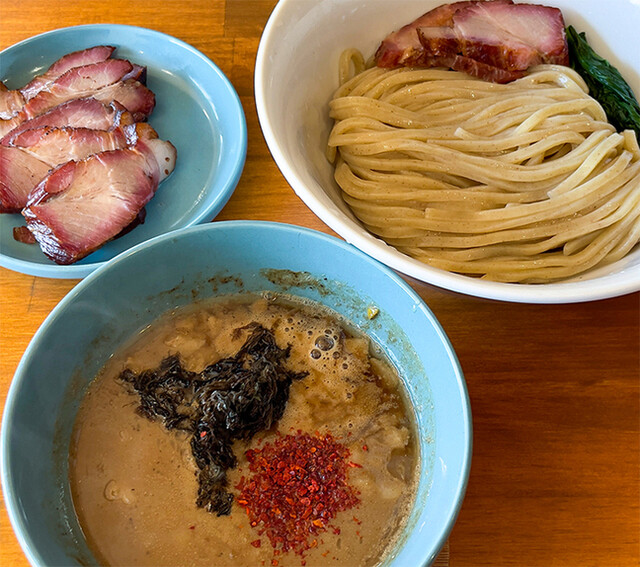
Approaching Tokushige, Nagoya feels less like the dense restaurant districts around Sakae or Nagoya Station than the city’s domestic edge: wider roads, residential rhythms, and a dining room where the counter is the point, not a flourish. Here, ramen is compact, audible, physical: tickets or orders move quickly, bowls land close, and the energy comes from turnover, steam, and solo diners’ quiet concentration.
That frames Ramen mellow. This is not luxury Japanese dining, and it is stronger for that. Nagoya ramen culture rewards shops with loyal local followings over hotel concierges, English-language menus, or central-city spectacle. The evidence points to a small counter-led format, ramen and tsukemen as core categories, and an everyday Japanese price tier rather than the tasting-menu economy. The 2025 Tabelog 100 Ramen Aichi selection matters because it places the shop inside a prefectural noodle conversation, not because it turns ramen into ceremony.
Counter ramen in Nagoya's residential east
Nagoya’s central dining identity is often reduced to miso katsu, hitsumabushi, kishimen, and tebasaki, but ramen in Aichi has its own quieter map. Many serious shops sit outside the visitor-heavy core, trading footfall for neighbourhood regularity and short, disciplined service windows. Ramen mellow fits that suburban pattern: small, counter-focused, and built around the speed and intimacy of a strong ramen room.
The counter format changes expectations. With 11 seats, the experience feels closer to a working kitchen than a conventional restaurant floor; the diner sits near production, and the meal is measured in minutes rather than courses. That compactness is part of the pleasure. Ramen and tsukemen depend on timing, temperature, noodle texture, and broth concentration, and a small counter gives the kitchen fewer variables. In ramen, capacity is not just logistical; it shapes the food.
Within Nagoya, the price band tells a story. Ramen Burai appears in a lower sub-¥1,000 bracket, while Banrai Tei crosses between sub-¥1,000 and JPY 1,000–1,999. Shurakutei Kuan sits in the same JPY 1,000–1,999 range as Ramen mellow, placing both in the affordable but selective tier where diners pay for a more considered bowl without leaving the casual category. That comparison is more useful than treating every ramen shop as interchangeable. The city’s noodle scene is stratified by broth style, queue tolerance, neighbourhood, and price, even when the bill stays modest.
Why the Tabelog 100 Aichi signal matters here
Japan’s ramen recognition culture is unusually granular. Michelin stars matter less in everyday ramen decisions than platforms and lists tracking category specialists by region. A Tabelog 100 Ramen Aichi selection in 2025 is therefore a relevant trust signal: it identifies the shop among ramen specialists within the prefecture, alongside central Nagoya addresses and suburban counters with deep local support.
The Tabelog score of 3.66 needs Japanese context. On Tabelog, scores tend to compress; numbers that may look modest internationally can indicate meaningful approval when tied to a narrow category and local list selection. For a ramen shop, that combination carries more weight than broad lifestyle praise. It says the venue has enough consistency and category credibility to stand out in Aichi’s crowded ramen field.
The categories are instructive. Ramen and tsukemen are related but distinct. Ramen privileges the harmony of broth, noodles, fat, tare, and aroma in one bowl, while tsukemen separates noodles and dipping broth, putting texture and concentration under greater scrutiny. A shop working across both must manage the integrated heat of soup noodles and the more deliberate rhythm of dipping noodles. Without inventing a house style, the pairing signals a kitchen operating inside a technically demanding part of ramen tradition.
For travellers, leaving central Nagoya for a residential ramen counter depends on appetite for local specificity. Visitors seeking a broad first taste of Nagoya may get more cultural range from classic regional dishes. Diners already invested in ramen, or mapping Aichi beyond station-area convenience, have the stronger case: a compact counter, recognized prefectural ramen listing, and low-risk price tier.
How to place it within a Nagoya food day
Think of this meal as a focused stop, not a long evening plan. Ramen shops reward decisiveness: arrive knowing the format is narrow, the counter small, and the experience about the bowl rather than lingering. It suits exploration of Nagoya’s eastern side, or a deliberate detour for diners who prefer neighbourhood food rooms to department-store restaurant floors.
Its location near Tokushige separates it from the typical visitor circuit. Much Nagoya restaurant coverage clusters around central transport nodes, while many serious casual specialists sit where residents live. Ramen mellow is useful not only as a ramen address but as a corrective to a narrow view of Nagoya dining. The city’s strongest everyday meals are not always arranged for tourists.
Compared with broader Japanese dining, the value proposition is clear. A JPY 1,000–1,999 ramen or tsukemen meal with Tabelog 100 Aichi recognition occupies a rare intersection: low financial commitment, high category specificity, and a room small enough to preserve the counter’s immediacy. There is no need to inflate it into fine-dining language. The appeal is sharper plainly: a recognized Aichi ramen counter in residential Nagoya, operating where Japan’s casual dining culture does some of its strongest work.
For broader planning, EP Club’s city coverage can separate noodle detours from other dining priorities. Start with Our full Nagoya restaurants guide, then place the meal against nearby and category-adjacent pages such as 1022, 451, Aaron, Alan., and All Day Dining Montmartre. Travellers building a wider itinerary can also use Our full Nagoya hotels guide, Our full Nagoya bars guide, Our full Nagoya wineries guide, and Our full Nagoya experiences guide.
For comparison beyond Nagoya, the national directory shows how casual Japanese formats travel across regions and cities: -Grilled beef Sukiyaki- KAMAKURA TANUKIAN 鎌倉 たぬき庵 in Kamakura. 鮪と炭火焼き うお炭 秋葉原店 in Tokyo.cafe in Osaka.know in Kumamoto, (Shoku) Vietnam in Kawasaki, [Curry Senmon Ten] Maruyama Kyoju. in Sapporo, Jōdo Saké Bar in Los Angeles, and Onigiri Time in Pasadena. The through-line is not sameness; it is how small-format Japanese dining depends on focus, speed, and a clear reason for the counter to exist.
Comparison Snapshot
Comparable venues by cuisine and price in the same metro.
| Venue | Cuisine | Price | Notes |
|---|---|---|---|
| Ramen mellowThis venue — the venue you are viewing | Ramen shop | $ | Not listed |
| Tsutsui Shogetsu | Japanese Traditional Sweets | $ | Higashi |
| Suzume Odori Sohonten | Traditional Japanese Wagashi & Sweet Café | $ | Naka |
| Kanmiya Sawada Shoten | Japanese Kakigori & Sweets Café | $ | Naka |
| Tsukesoba Jinguji | Tsukemen & Ramen Specialist | $ | Kita |
| Kourai Dojo | Nagoya Kourai-kei ramen | $ | Chikusa |
Recognition history
Dated appearances from independent guides and award organizations, with the underlying list record or original source where available.
Tabelog 100 #3 · No. 3
Tabelog · Tabelog 100 - Ramen - AICHI - 2025
Continue exploring
More in Nagoya
Restaurants in Nagoya
Browse all →


At a Glance
- Solo
- Casual Hangout
- After Work
- Standalone
Current opening hours
- Monday
- 11 AM–2 PM, 6–9 PM
- Tuesday
- Closed
- Wednesday
- 11 AM–2 PM, 6–9 PM
- Thursday
- 11 AM–2 PM, 6–9 PM
- Friday
- 11 AM–2 PM, 6–9 PM
- Saturday
- 11 AM–2 PM, 6–9 PM
- Sunday
- 11 AM–2 PM, 6–9 PM
Hours can change for holidays and private events. Last verified .
Casual, utilitarian ramen-ya atmosphere with counter-focused seating in a small space, oriented to quick meals rather than lingering.