
Tabelog 100 #59
Our verdict
Rahi Punjabi Kitchen belongs to Tokyo’s small-format South Asian and curry scene, where neighborhood scale can carry serious critical weight. Its Tabelog 100 selections for Asian and ethnic cuisine in Tokyo, plus earlier curry recognition, put it in a category where restraint, spice work, and repeatable execution matter more than spectacle.

Pearl is the En Primeur Club membership app, where members save venues, book tables and use the concierge.
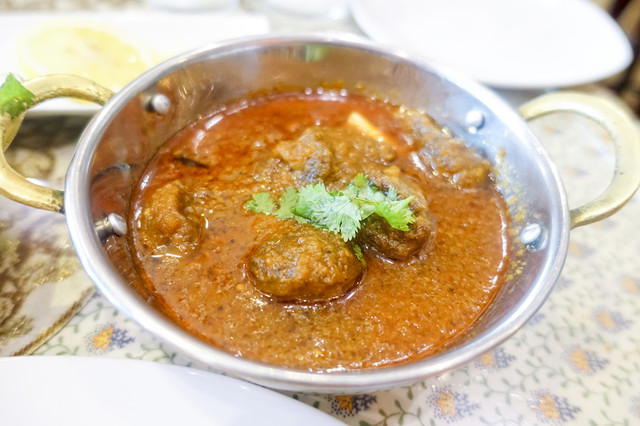
Approach Rahi Punjabi Kitchen in Tokyo and the mood shifts from the city’s headline dining circuits to a more everyday rhythm: modest restaurants, regular diners, and meals judged less by theatre than by return visits. That setting matters for South Asian cooking in Tokyo. The city’s curry culture runs from Japanese-style counters to specialist kitchens, but its serious end is often found where spice, rice, bread, and heat receive the discipline Tokyo gives other tightly defined food forms.
Rahi Punjabi Kitchen belongs in that demanding bracket. Read it not as an “ethnic” side note, but as part of a mature curry culture that judges South Asian food on structure: fat, acidity, spice layering, portion size, and the balance between comfort and precision. Tabelog recognition in 2024 places it within a documented Tokyo conversation around South Asian and curry cooking. In a city where diner scoring is unforgiving, that signal carries more weight than a passing burst of attention.
Small-room South Asian cooking in a city that takes curry seriously
Tokyo’s serious curry scene is not one scene. It splits between Japanese curry specialists, South Asian meals, and other regional kitchens adapted to local dining habits. South Asian cooking has its own place in that range: depth, pulses, breads, rice, and a spice grammar distinct from more generic curry formats. A Tokyo kitchen in that register must avoid flattening everything into a single category, or overloading the plate until the cooking loses focus.
The distinction is clear against citywide points of comparison in the curry conversation. Tsushima Ryu South Indian Kei Karakuchi Ryori Ten Tarikaro, Ooiwa Shokudo, and FRENCH CURRY SPOON show how Tokyo diners separate curry by format as much as by category. Rahi Punjabi Kitchen’s reputation sits in a specialist tier, where repeat visits and consistency make the case.
There is a sustainability angle, though not the slogan-heavy kind. Restaurants with tightly focused menus often have a natural route to lower waste: fewer moving parts, prepared bases, controlled batches, and careful replenishment. That is not a certification claim, but the format rewards discipline. In curry kitchens, waste control can be embedded in stock management, spice storage, legume cooking, and everyday restaurant economics.
Recognition without the luxury costume
Tokyo’s premium dining conversation can overvalue ceremony: counters, course counts, rare ingredients, access games. South Asian and curry specialists demand another reading of value. The question is whether a meal has enough clarity to hold attention without luxury scaffolding. Tabelog’s Hyakumeiten framework matters because it captures restaurants Japanese diners return to, discuss, and compare within genre, not only places shaped for international awards tourism.
Rahi Punjabi Kitchen’s Tabelog score of 3.65 places it in the serious local conversation, and its 2024 recognition is more useful than the number alone. Being read through South Asian and curry categories mirrors Tokyo’s broader shift: diners now parse regional cooking with more confidence than a decade ago, and judge restaurants less by novelty than by command of form.
The scale of the meal sharpens the point. This is not best understood through a luxury-restaurant lens or as a volume-driven group occasion. It belongs to Tokyo’s focused dining tradition, where the margin for inconsistency is thin. The audience is close to the food, the pace matters, and the experience depends on whether the cooking can repeat itself across service. For a cuisine often misread abroad as casual by default, that brings more scrutiny, not less.
For readers mapping the wider city, place this restaurant against Tokyo’s other moods. Casual grill circuits read differently from late-night dining density, and controlled hospitality rooms have another rhythm again. Visual cafés tell a different story about Tokyo’s appetite for format. For curry context, other Tokyo dining rooms can be useful counterpoints, but Rahi Punjabi Kitchen is best read on its own terms: as a focused South Asian and curry address with documented local recognition.
How to read it against a wider Tokyo itinerary
The reason to prioritize this kind of restaurant is not scarcity itself. It is how a South Asian kitchen corrects the usual Tokyo itinerary, often too weighted toward sushi, ramen, tempura, and tasting-menu French. Those categories matter, but they do not describe how Tokyo eats across a week. Curry is part of the city’s daily dining intelligence, and specialist South Asian kitchens show how international foodways become local without losing their grammar.
Rahi Punjabi Kitchen is strongest as a Tokyo anchor rather than a grand destination meal. That is a compliment. Tokyo’s best food days often work by contrast: one tightly focused specialist meal, one bar with a defined point of view, one hotel chosen for location rather than spectacle, and enough schedule space for trains to set the pace. Readers building that plan can use Our full Tokyo restaurants guide alongside Our full Tokyo hotels guide, Our full Tokyo bars guide, Our full Tokyo wineries guide, and Our full Tokyo experiences guide.
For broader Japan comparisons, the same editorial question applies: how does a focused format express place without leaning on spectacle? Other dining rooms in Japan each show a different relationship between category and locality. Abroad, the question can invert, tracing Japanese forms through another city’s dining habits. The useful comparison is not fame or decoration, but whether a narrow format has enough conviction to feel rooted.
The verdict is simple: a serious South Asian and curry restaurant in a city that knows how to judge curry. Its argument is cumulative rather than theatrical: Tabelog Hyakumeiten recognition, a focused category, and a grounded Tokyo setting. In Tokyo, that combination often says more than a louder address.
Booking and Cost Snapshot
Side-by-side context: comparable cuisine and price.
| Venue | Cuisine | Price | Awards | Notes |
|---|---|---|---|---|
| Rahi Punjabi KitchenThis venue (the venue you are viewing) | Traditional Pakistani & North Indian Curry House | $20–30 | Tabelog 100 #59 | Not listed |
| COCHIN NIVAS | South Indian curry house | $10–20 | Tabelog 100 #26 | Shinjuku, South Indian curry house |
| Spicy Curry House Hangetsu | Indian Curry | Not listed | Tabelog 100 #63 | Shinjuku, Indian Curry |
| ERICK SOUTH Toranomon hiruzu ten | South Indian curry & biryani | $20–30 | Tabelog 100 #80 | Minato, South Indian curry & biryani |
| Curry no Mise Pusan | Casual Indian‑style Curry House | $10–20 | Tabelog 100 #57 | Musashi-Koganei, Casual Indian‑style Curry House |
| Halima kebab biryani | Halal Indian–Pakistani curry and biryani | $20–30 | Tabelog 100 #63 | Taitō, Halal Indian–Pakistani curry and biryani |
Recognition history
Dated appearances from independent guides and award organizations, with the underlying list record or original source where available.
Tabelog 100 #59 · No. 59
Tabelog · Tabelog 100 - Asian cuisine / Ethnic cuisine - TOKYO - 2024
Continue exploring
More in Tokyo
Restaurants in Tokyo
All restaurants in Tokyo →




Bars in Tokyo
All bars in Tokyo →




Details
- Cozy
- Classic
- Casual Hangout
- Group Dining
- Solo
- Family
- Standalone
- A La Carte
- Halal
- Vegetarian Friendly
Current opening hours
- Monday
- Closed
- Tuesday
- 12–3 PM, 5:30–10:30 PM
- Wednesday
- 12–3 PM, 5:30–10:30 PM
- Thursday
- Closed
- Friday
- 12–3 PM, 5:30–10:30 PM
- Saturday
- 12–3 PM, 5:30–10:30 PM
- Sunday
- 12–3 PM, 5:30–10:30 PM
Hours can change for holidays and private events. Hours as of .
Small, cozy second-floor curry house with soft, warm lighting and a relaxed, lived-in feel; guests describe it as a hidden neighborhood spot where the focus is on richly spiced, homestyle Pakistani food rather than design flourishes.