Tabelog 100 #63
Our verdict
Halima kebab biryani puts Higashiueno’s South Asian dining into a practical Tokyo frame: generous cooking, repeat custom, and a price tier that keeps it useful beyond special-occasion eating. Its Tabelog 100 selections for Asian and ethnic cuisine in Tokyo give the room a credentialed place in a category often judged by regulars before critics.

Pearl is the En Primeur Club membership app, where members save venues, book tables and use the concierge.
The menu
What to order
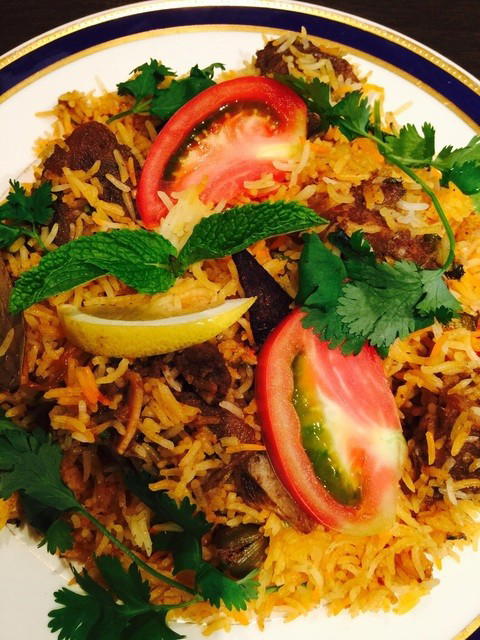
- Biryani set
- Nihari set
- Paya set
- Butter chicken set
- Tandoori chicken with curry
Tokyo changes register quickly: office blocks, hotel traffic, rail-side errands, and the quieter pull of everyday eating streets. In that setting, restaurants like this do a different job from Ginza counters or hotel dining rooms. They feed regulars, families, solo diners, and groups that want spice, rice, curry, and value without the theatre of a formal tasting menu. Halima kebab biryani belongs to that practical Tokyo category, where the measure of the room is not ceremony but return visits.
The useful context is Tokyo’s broad Asian and ethnic dining field. Serious attention often goes to sushi, tempura, kaiseki, and French-Japanese tasting rooms, yet the city’s curry and South Asian circuits have their own hierarchy, built through repeat custom and specialist lists. Selection for Tabelog Hyakumeiten in 2024 places this address in a visible bracket within that field. Its listed categories, Indian, Indian curry, and Pakistani, reinforce the point: this is not a novelty stop, but part of Tokyo’s sustained conversation around curry-led and South Asian cooking.
Tokyo regulars want breadth, not ceremony
Tokyo’s South Asian dining scene is strongest when it refuses to behave like a luxury format. The appeal is range: curry, rice, flexible ordering, and the kind of meal structure that makes the room useful for groups rather than only counter diners. Halima kebab biryani fits that pattern through its Indian, Indian curry, and Pakistani categories, with a Tabelog score listed at 3.56 and a budget that stays in an accessible bracket. Those details matter because they explain the repeat audience better than any chef-origin story would.
Regulars in this tier tend to read menus tactically. Lunch is for speed and low friction; dinner supports fuller ordering and group sharing. The venue’s listed lunch budget runs to JPY 999, while dinner is listed at JPY 2,000–JPY 2,999, making it easier to fold into an ordinary Tokyo day. For travelers, that flexibility is useful in Tokyo, where some prized dining rooms demand advance planning, rigid seating times, or a high spend before the food has even started to speak.
The comparison set also matters. A Tokyo diner looking at Chugoku Ikkyosai Bai En is entering a different Chinese bracket, while raffles curry sits closer to the everyday curry lane. Takahashi and The Auditorium point toward different Japanese and contemporary dining expectations entirely. Against that spread, Halima kebab biryani reads as a Tokyo anchor with award-list recognition rather than a formal destination restaurant. It is a room for appetite, repetition, and breadth.
Award recognition in a category built on habit
Tabelog’s Hyakumeiten selections carry particular weight in Japan because they often surface category specialists outside the international fine-dining circuit. For curry and Asian-ethnic cooking, that matters. These restaurants are rarely assessed by linen, pacing, or sommelier architecture; they are judged through consistency, queue memory, lunch utility, and whether diners return when they are not chasing a reservation trophy. Halima kebab biryani’s 2024 Tabelog Hyakumeiten recognition puts it inside that more democratic form of credibility.
The regulars’ perspective is also the more honest one for this kind of restaurant. Tokyo has many places where a single course or a named chef defines the story; here the story is the city’s appetite for reliable, accessible food in its listed Indian, Indian curry, and Pakistani categories. The listed price band says something about the format: this is not built around seclusion or spectacle. It is built around substance, shared appetite, and the kind of ordering where the table decides collectively rather than performs a fixed sequence.
That makes it a useful counterweight to other Tokyo itineraries. A day of errands, travel, or casual exploration does not always need another long meal. It may need a place with substance, range, and enough recognition to justify choosing it over a random curry shop. For broader planning, Our full Tokyo restaurants guide maps the city’s dining spread, while Our full Tokyo hotels guide, Our full Tokyo bars guide, Our full Tokyo wineries guide, and Our full Tokyo experiences guide place the meal within a fuller Tokyo stay.
How to place it in a Tokyo eating day
The smartest use is as a grounded meal rather than a trophy booking. Tokyo works well for travelers who want an easy food stop between other plans, and the venue’s price position keeps it accessible compared with much of the city’s reservation-driven dining. That is also why it works for mixed groups: diners can share the same table without forcing the meal into a narrow format. The published budget adds another layer of ease for visitors, while the broader Tokyo setting suits the rail-first logic of the city.
For a broader Tokyo food route, the contrast is instructive. Other Tokyo dining rooms point toward different everyday and specialist formats, from casual counters to nightlife meals, visual cafés, and additional curry references. Beyond that, Japan’s national dining map stretches across many regional styles, from casual specialist counters to destination rooms, while Japanese food culture abroad shows how different the same appetite becomes once it leaves Japan.
The verdict is simple: come for a Tokyo meal that behaves like part of the city rather than a staged event. The award history gives confidence, but the stronger signal is functional: a broad format within its listed categories, accessible pricing, and a place in Tokyo that makes sense as part of a wider day rather than only as a standalone pilgrimage.
Frequently asked questions
Does Halima kebab biryani work for a family meal?
Yes. The restaurant’s accessible price range makes it practical for a straightforward Tokyo meal. Dinner is listed at JPY 2,000–JPY 2,999, while lunch is listed up to JPY 999.
What kind of setting is Halima kebab biryani?
It is a casual Tokyo restaurant rather than a formal fine-dining room. Tabelog lists it in Indian, Indian curry, and Pakistani categories, with 2024 Hyakumeiten recognition and a score of 3.56.
What's the price range at Halima kebab biryani?
Pricing at Halima kebab biryani is listed as dinner JPY 2,000 - JPY 2,999 and lunch up to JPY 999.
What is Halima kebab biryani known for?
Halima kebab biryani is known as a Tokyo restaurant in the Indian, Indian curry, and Pakistani categories, with 2024 Tabelog Hyakumeiten recognition.
City Peers
Comparable venues for cuisine and category context.
| Venue | Cuisine | Price | Awards | Notes |
|---|---|---|---|---|
| Halima kebab biryaniThis venue (the venue you are viewing) | Halal Indian–Pakistani curry and biryani | $20–30 | Tabelog 100 #63 | Not listed |
| Chugoku Ikkyosai Bai En | Authentic Chinese course restaurant | $50–100 | Tabelog 100 #23 | JPY 10,000 - JPY 14,999 JPY 1,000 - JPY 1,999 |
| Takahashi | Kaiseki Japanese Cuisine | $150–200 | Michelin Plate | Japanese |
| The Auditorium | Japanese Whisky & Cocktail Bar | $20–30 | Not listed | Not listed |
| raffles curry | Indian Curry | $10–20 | Tabelog 100 #37 | JPY 1,000 - JPY 1,999 JPY 1,000 - JPY 1,999 View spending breakdown |
| Daitoryo | Traditional Izakaya - Grilled Offal & Yakitori | $10–20 | Not listed | Not listed |
Recognition history
Dated appearances from independent guides and award organizations, with the underlying list record or original source where available.
Tabelog 100 #63 · No. 63
Tabelog · Tabelog 100 - Asian cuisine / Ethnic cuisine - TOKYO - 2024