
A compact ramen counter with Tabelog 100 recognition, Raa Menya Shio Soba Shizuku belongs to Japan’s serious regional ramen circuit rather than the tourist-heavy dining route. The draw is the format: a small counter-led room, ramen alongside abura-soba and maze-soba, and a reputation built through repeated selection rather than spectacle.
Pearl is the En Primeur Club membership app — saves, bookings, and concierge access live there. Same editors, same standards.
- Address
- 愛知県名古屋市瑞穂区下坂町4-15 スターリア1F
- Website
- tabelog.com
 Saves & bookings on Pearl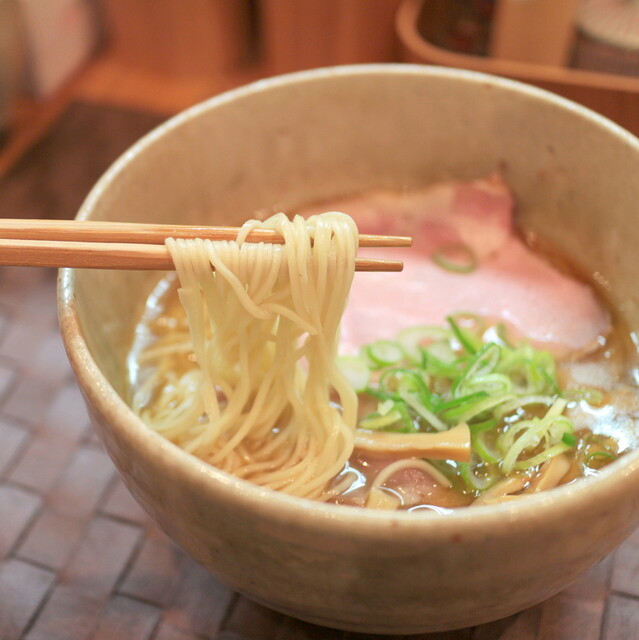
Small ramen rooms in Japan announce themselves through discipline before décor: a short counter, a clipped service rhythm, and a queue culture built around diners who know that lunch can be the whole event. Raa Menya Shio Soba Shizuku fits that grammar. The room is compact, with counter seating at its centre, and the experience belongs to the modern ramen counter tradition where speed, concentration, and repeat local approval matter more than ceremony.
That matters because ramen has changed. The older image of ramen as a late-night utility food has not disappeared, but Japan’s more serious regional shops now compete in a different register: broth clarity, noodle texture, oil balance, and restraint are judged with the same intensity that sushi diners apply to rice temperature. The presence of shio soba in the name points to a salt-led lane of ramen, a style that leaves less room for heavy seasoning to conceal flaws. The menu also sits beside abura-soba and maze-soba, dry or mixed noodle formats that have become part of the broader ramen conversation rather than side acts.
A regional ramen counter shaped by the post-2010s ramen boom
The opening date, 2013, places the shop inside a useful moment in Japanese ramen culture. By the 2010s, ramen had already moved beyond the simple tonkotsu-versus-shoyu shorthand familiar to many visitors. Specialist counters were narrowing their identity, using lighter broths, clearer tare, house noodle choices, and limited service windows to create a more exacting kind of casual dining. In that context, Raa Menya Shio Soba Shizuku reads as part of the regional specialist wave: modest in format, serious in execution, and validated through repeat attention rather than luxury codes.
The strongest trust signal is its selection for Tabelog 100 Ramen AICHI 2025, with earlier Tabelog 100 Ramen EAST selections listed across multiple years. Tabelog’s ramen lists are not Michelin-style fine dining awards; they are more useful as a map of where Japanese diners have concentrated their approval in a category defined by turnover, repetition, and local comparison. A score of 3.75 in that ecosystem carries weight because ramen shops are judged against a dense field of low-priced, high-frequency competitors.
Comparison is the point. In Japan, a serious ramen counter can sit in the same daily budget band as casual specialists such as Komugi to Yakiago Sugure or Ebi Soba Hiiro, while still drawing a more committed audience than a convenience meal. Compared with Osaka’s everyday comfort-food institutions, including 551 Horai (551蓬莱) or Dote no Shinagawa, this is a narrower proposition: fewer seats, more focus, less tolerance for wandering in as a large group. The appeal is not breadth. It is the confidence of a shop that can keep its scope tight.
Why the format matters more than the checklist
Ramen rewards repetition, and the category is unforgiving to restaurants that rely on atmosphere alone. A ten-seat setup changes the stakes. It compresses the room into a sequence of arrivals, orders, bowls, and exits; it also makes the kitchen visible as part of the experience, even when photography rules restrict what can be captured. That kind of format suits solo diners and small parties because it removes the social sprawl of a longer restaurant meal. The counter becomes the unit of attention.
The categories listed here are useful signals. Ramen gives the shop its centre of gravity, while abura-soba and maze-soba show how contemporary noodle culture has widened beyond soup. Abura-soba, often built around seasoned oil and tare rather than broth, asks diners to read texture and coating. Maze-soba, mixed before eating, shifts attention toward balance across noodles, seasoning, aromatics, and toppings. Without naming specific bowls, the menu framework alone tells experienced ramen travelers what kind of decision is being offered: broth-led clarity or mixed-noodle intensity.
The counter-first format also explains why this belongs in a Japan dining itinerary differently from a reservation-led restaurant. It is not competing with a long tasting menu, a sommelier-led dining room, or an Osaka night out built around drinks. It sits closer to the high-conviction lunch stop: a precise, low-friction meal that can anchor a day of rail travel or regional eating. For broader Osaka planning, pair that mindset with Our full Osaka restaurants guide, then separate food decisions from sleep and drinking routes through Our full Osaka hotels guide and Our full Osaka bars guide.
How it fits into a wider Japan dining circuit
Japan’s useful dining map is not limited to capital-city prestige. Strong meals often sit in specialist categories across regional stations, covered arcades, suburban strips, and residential pockets. That is why a ramen counter with repeat Tabelog recognition deserves attention from travelers who normally chase sushi counters or kaiseki rooms. It shows a different form of culinary seriousness: affordable, fast-moving, local, and highly comparative.
Within EP Club’s wider Japan coverage, this kind of stop sits alongside casual and specialist addresses rather than grand dining rooms. Osaka readers moving across categories might use .cafe, 52CHO-ME BAKERY, 99 Pizza Napoletana Gourmet, and a canto (Italian) to understand how the city’s everyday and specialist registers sit side by side. Beyond Osaka, the same logic connects formats as different as -Grilled beef Sukiyaki- KAMAKURA TANUKIAN 鎌倉 たぬき庵 in Kamakura. 鮪と炭火焼き うお炭 秋葉原店 in Tokyo.know in Kumamoto, (Shoku) Vietnam in Kawasaki, [Curry Senmon Ten] Maruyama Kyoju. in Sapporo, and [ki:] in Kyoto.
For travelers building a longer route, the useful distinction is category discipline. Ramen asks for timing, patience, and cash-minded planning; bars, wineries, and experiences require different pacing. Keep those lanes separate with Our full Osaka wineries guide and Our full Osaka experiences guide. Outside Japan, the comparison becomes even clearer: a sake-led room such as Jōdo Saké Bar in Los Angeles or a rice-focused specialist like Onigiri Time in Pasadena translates Japanese food culture through another city’s dining habits. Raa Menya Shio Soba Shizuku belongs to the original, counter-led side of that equation: compact, specific, and judged bowl by bowl.
Snapshot
Comparable venues in the metro at similar price points.
| Venue | Cuisine | Price | Notes |
|---|---|---|---|
| Raa Menya Shio Soba ShizukuThis venue — the venue you are viewing | Specialty Shio Ramen Shop | $ | Not listed |
| Chitose Udon | Osaka Nikusui Udon | $ | Namba |
| Human beings everybody noodles (人類みな麺類) | Traditional Shoyu Ramen | $ | Nishinakajima, Yodogawa-ku |
| ラーメン チョンマゲ 大阪天六店 | Traditional Japanese Soy Sauce Ramen | $ | Tenjinbashi |
| DINING | Japanese Kaiseki and Teppanyaki | Not listed | Osaka |
| Lamp wakazou | Japanese Udon | $ | Neyagawa |
Recognition history
Dated appearances from independent guides and award organizations, with the underlying list record or original source where available.
Tabelog 100 #72 · No. 72
Tabelog · Tabelog 100 - Ramen - AICHI - 2025
Continue exploring
More in Osaka
Restaurants in Osaka
Browse all →
At a Glance
- Cozy
- Intimate
- Solo
- Family
- Casual Hangout
- After Work
- Group Dining
- Chefs Counter
- Standalone
A tiny, counter-centric neighborhood ramen shop with about ten seats, non-smoking and quietly bustling at lunch, giving a relaxed hideout feel that works for solo diners, families, and friends.