
Tabelog 100 #60
Our verdict
Raa Men Sora puts Nagoya’s suburban ramen culture in sharp focus: compact, counter-led, inexpensive, and serious enough to earn selection in Tabelog’s Ramen AICHI 100 for 2025. In Tenpaku-ku near Hara, it belongs to the city’s everyday noodle tier rather than the luxury dining circuit, with a small room that suits solo diners, families, and ramen-focused detours.

Pearl is the En Primeur Club membership app, where members save venues, book tables and use the concierge.
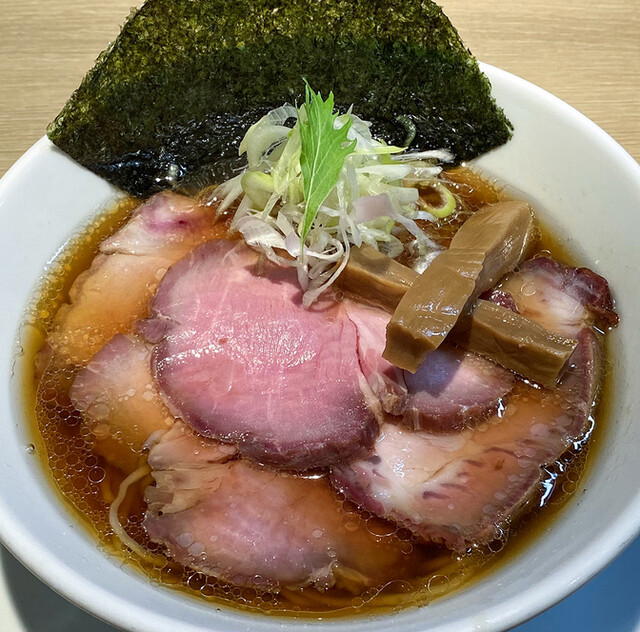
Approaching ramen in Nagoya often means leaving the hotel-district shorthand behind. The city’s noodle rooms are frequently practical and local in feel, closer to daily habit than destination theatre. Raa Men Sora sits in that register in Nagoya: a focused ramen shop that works best as a purposeful detour rather than an all-evening production.
That scale of experience matters. In Japan, ramen excellence is not measured by linen, tasting menus, or cellar depth; it is measured by repetition, turnover, and a kitchen’s ability to keep a narrow format disciplined across service. Nagoya’s broader dining identity can be loud with regional comfort food, but its ramen culture rewards a quieter kind of precision. The 2025 Tabelog Hyakumeiten recognition places Raa Men Sora inside that local conversation, where regularity and specialist reputation carry more weight than imported luxury signals.
Nagoya ramen without the downtown performance
Nagoya can be easy for visitors to reduce to station dining, department-store restaurants, and late-night izakaya clusters. A ramen run to Raa Men Sora gives a different reading of the city: less polished for tourists, and better aligned with the kind of shop that survives on repeat custom. The appeal is not novelty for its own sake, but the steadier promise of a specialist format judged by consistency.
The pricing bracket keeps the experience grounded in the everyday ramen economy. Tabelog lists the budget at Dinner: - JPY 999; Lunch: - JPY 999, with a price range of - JPY 999 - JPY 999. That separates it from premium omakase and from fashionable Japanese dining aimed at overseas itineraries. In this lane, the serious question is not luxury; it is whether the bowl is compelling enough to justify crossing town. Selection in a ramen list suggests the answer is yes for diners who care about the local noodle scene rather than only Nagoya’s headline dishes.
For broader city planning, Our full Nagoya restaurants guide is the useful anchor, while Our full Nagoya hotels guide, Our full Nagoya bars guide, Our full Nagoya wineries guide, and Our full Nagoya experiences guide help place a Raa Men Sora ramen run against the rest of the trip.
Local appetite, specialist technique
The assigned frame here is the meeting of local appetite and specialist technique, but ramen complicates that phrase in a productive way. Modern ramen is already a hybrid form: Chinese-style wheat noodles absorbed into Japanese regional food culture, then refined through soup extraction, tare calibration, fat management, and noodle texture. In Nagoya, the point is not to force a luxury narrative onto the bowl; it is to notice how a modest shop can participate in a technical tradition that has become deeply Japanese while remaining open to outside method.
Raa Men Sora’s public details do not require a chef mythology to make the case. The stronger editorial signal is the shop’s category discipline. Ramen rooms in this tier compete through repeatable craft, not menu sprawl. The rhythm is part of the point: orders move through a focused specialist setting, solo diners can eat without ceremony, and the meal remains direct rather than inflated into a general restaurant experience.
Compared with Nagoya peers such as Boulangerie Papi-Pain, Fujisawa, Ichiyoken, Patisserie Avalon, and Heritage, the distinction is category rather than price alone. The city has low-cost specialist eating across bread, sweets, and noodles; ramen simply demands a different kind of attention, because timing and heat are part of the product. That is why a focused ramen address can be more revealing than a polished dining room. It shows how Nagoya eats when the meal is functional, inexpensive, and still subject to serious local recognition.
How to read the room before you go
This is not a place to approach like a long-form tasting counter. The smarter expectation is a concise ramen meal where the format does much of the talking. Ramen is often best when treated as a quick, concentrated stop rather than a lingering appointment. Planning should stay practical: check current opening information, arrive with flexible timing, and expect the experience to be built around the bowl rather than extended hospitality rituals.
Temporary changes and daily operating details can be especially important among independent ramen specialists in Japan. That habit reflects the way the category operates: updates move quickly, regulars pay attention, and visitors benefit from checking current notices before crossing town. For travelers, the useful move is to keep the plan simple and avoid overloading the meal with expectations borrowed from high-end restaurants.
Travelers building a Japan dining route can use Nagoya as a counterweight to heavier Tokyo and Kyoto scheduling. For nearby EP Club restaurant references, compare Raa Men Sora with allowed Nagoya peers such as Boulangerie Papi-Pain, Fujisawa, Heritage, Ichiyoken, and Patisserie Avalon, or with other dining in Nagoya more generally. Wider comparisons across Japan and beyond are best kept generic here: casual specialist rooms, noodle counters, and small-format everyday dining can often explain a city as clearly as more formal restaurants.
The editorial case for Raa Men Sora is precise: it offers a focused view of Nagoya ramen with enough recognition to justify attention, including a 2025 Tabelog Hyakumeiten listing and a Tabelog score of 3.67, but without the choreography of a destination restaurant. For travelers who already understand that Japan’s serious food culture often lives in narrow categories, this is the kind of address that explains a city through one disciplined bowl.
Frequently asked questions
Is Raa Men Sora okay with children?
Raa Men Sora is best understood as a focused ramen stop in Nagoya. Check the venue's official channels for the latest details before visiting with children or a group.
What is the atmosphere like at Raa Men Sora?
It is a focused ramen shop in Nagoya, suited to a concise meal rather than a long sit-down. Its 2025 Tabelog Hyakumeiten recognition gives it clear local standing.
Is Raa Men Sora more mid-range or high-end?
Pricing at Raa Men Sora is listed as - JPY 999 - JPY 999, with Tabelog budget guidance of Dinner: - JPY 999; Lunch: - JPY 999.
What's Raa Men Sora's location?
Nagoya.
Pricing, Compared
Comparable venues to calibrate price, style, and recognition.
| Venue | Cuisine | Price | Awards | Notes |
|---|---|---|---|---|
| Raa Men SoraThis venue (the venue you are viewing) | Ramen shop | Not listed | Tabelog 100 #60 | Not listed |
| Takumi Mitsukoshi ten | Japanese Curry Counter by Nagoya Takumi | $10–20 | Tabelog 100 #70 | Naka, Japanese Curry Counter by Nagoya Takumi |
| Ramen Aoba | Japanese Ramen | $1–10 | Tabelog 100 #71 | Atsuta, Japanese Ramen |
| Kanmiya Sawada Shoten | Japanese Kakigori & Sweets Café | $10–20 | Tabelog 100 #38 | Naka, Japanese Kakigori & Sweets Café |
| Ramen Daruma Shokudo | Ramen and Japanese curry diner | $10–20 | Tabelog 100 #74 | Nakagawa, Ramen and Japanese curry diner |
| Chuka Soba Shirakabe Aoi | Traditional Japanese Ramen & Maze-soba | $1–10 | Tabelog 100 #20 | Higashi, Traditional Japanese Ramen & Maze-soba |
Recognition history
Dated appearances from independent guides and award organizations, with the underlying list record or original source where available.
Tabelog 100 #60 · No. 60
Tabelog · Tabelog 100 - Ramen - AICHI - 2025
Continue exploring
More in Nagoya
Restaurants in Nagoya
All restaurants in Nagoya →




Details
- Solo
- Casual Hangout
- After Work
- Standalone
- A La Carte
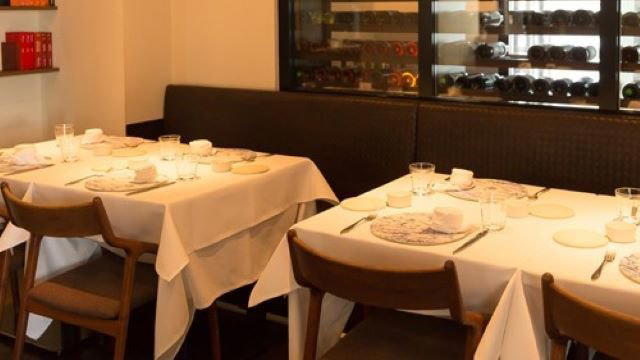
Based on its Tabelog listing and pricing, the restaurant appears to be a casual, no-smoking neighborhood ramen shop with a direct, functional atmosphere focused on quick, affordable meals rather than elaborate decor.