Quellenhof Gourmetstube 1897



1 Michelin Star · Star Wine List · Falstaff Restaurant - 94 Falstaff Points
Our verdict
Inside the Quellenhof resort in South Tyrol's Passeier Valley, the Gourmetstube 1897 operates as the property's serious dining room: a Michelin Plate-recognised kitchen where local lamb, hand-foraged mushrooms, and reinterpreted Alpine dumplings anchor a four-to-six course menu. A two-decade wine collection across three cellars adds considerable depth to an evening that reads as one of the valley's more considered fine-dining options.

Pearl is the En Primeur Club membership app — saves, bookings, and concierge access live there. Same editors, same standards.
- Address
- Via Passiria, 47, 39010 San Martino in Passiria BZ, Italy
- Phone
- +39 0473 645474
- Hours
- Mon ClosedTue–Sat 6 PM–12 AMSun Closed
- Directions
- Get directions
The menu
What to order
- Beuscherl
- Beetroot ravioli
Where the Passeier Valley Sets the Table
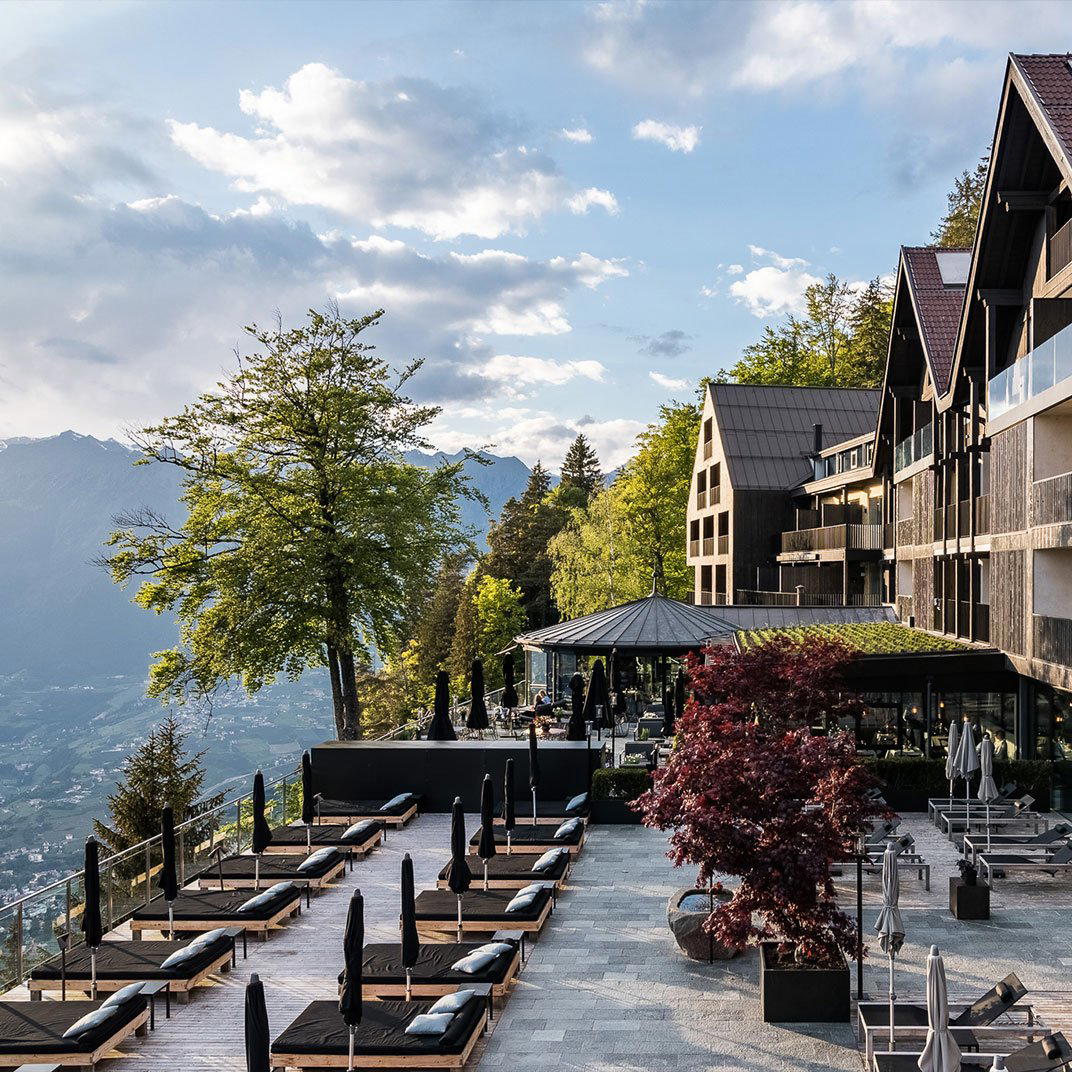
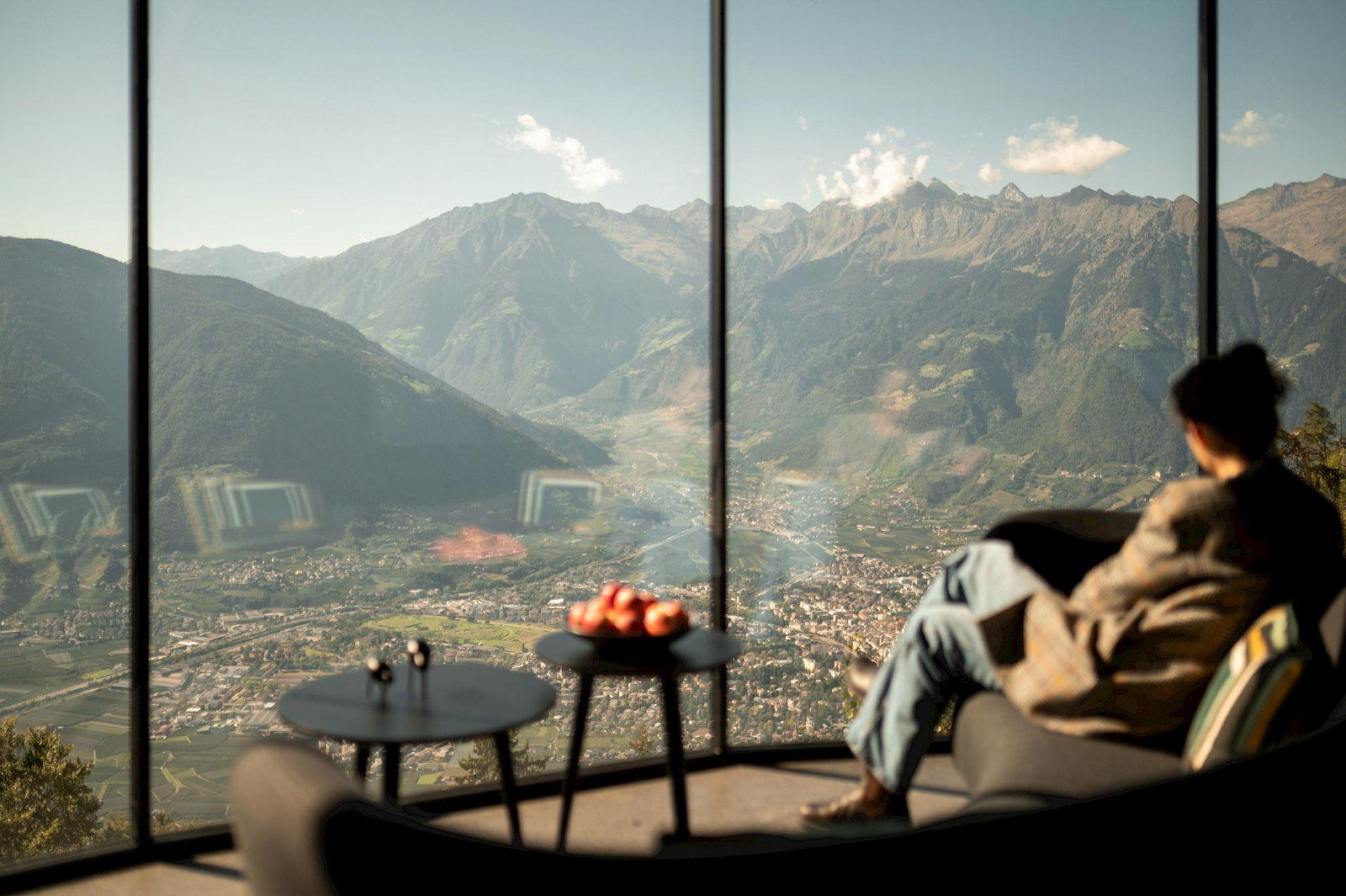
South Tyrol's fine dining conversation tends to centre on Bolzano and the Bressanone corridor, but the Passeier Valley has quietly built its own case. The valley floor sits at roughly 600 metres, flanked by pasture land that supplies lamb and dairy to kitchens like this one, and the altitude and Alpine microclimate produce ingredients with a specificity that lowland suppliers cannot replicate. The Gourmetstube 1897, the dedicated fine-dining room within the Quellenhof resort in Saint Martin in Passeier, draws directly on that geography. This is not a kitchen that gestures vaguely toward regionality; the sourcing is demonstrably local, from lamb raised on a farm in the immediate vicinity to mountain herbs and seasonal fungi that track the valley's growing calendar.
That emphasis on provenance places Gourmetstube 1897 within a broader movement reshaping Italian fine dining at altitude. Across South Tyrol, the past decade has seen kitchens move away from generic European fine dining formats toward something that insists on the specific character of its terrain. Atelier Moessmer Norbert Niederkofler in Brunico represents the most-discussed version of that philosophy, but it is not the only expression of it. The Gourmetstube operates at a different scale and without the same constellation of awards, yet the underlying commitment to what the land around the kitchen actually produces is consistent with the regional direction of travel.
What the Kitchen Builds From
The menu runs four to six courses and changes to reflect what is available from nearby farms and the valley's seasonal rhythm. The Michelin recognition, a Plate in both 2024 and 2025, signals cooking that meets a recognised standard of quality without yet reaching the starred tier, which in South Tyrol is a competitive bracket that includes some of Italy's most closely watched kitchens. Within its own frame of reference, the Gourmetstube's approach is coherent: local lamb appears with parsnips and a refined jus, a preparation that lets the quality of the primary ingredient carry the dish without elaborate intervention. Reinterpreted dumplings served with morel mushrooms and spring peas are a direct translation of Alpine tradition through a contemporary technique lens, the kind of move that works when the base ingredient is genuinely good. Morels foraged in spring at this elevation carry a depth that bought-in alternatives do not match, and the menu's credibility rests on that difference.
The bread and dessert programmes receive specific mention in Michelin's assessment, which is a detail worth noting: in kitchens where sourcing defines the identity, the non-protein courses often reveal whether the kitchen's philosophy extends to every station or only to the headline proteins. Here, the consistency appears to hold.
The Dining Room and How an Evening Unfolds
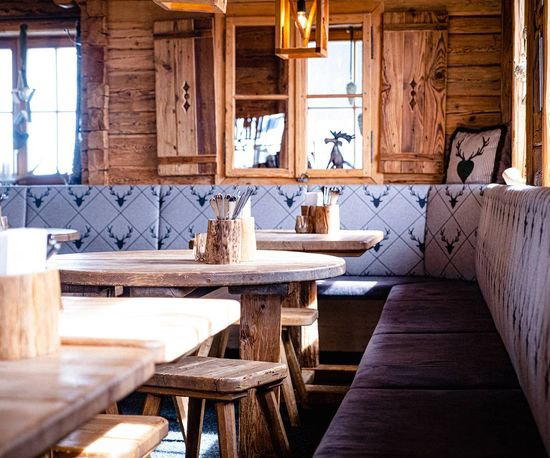
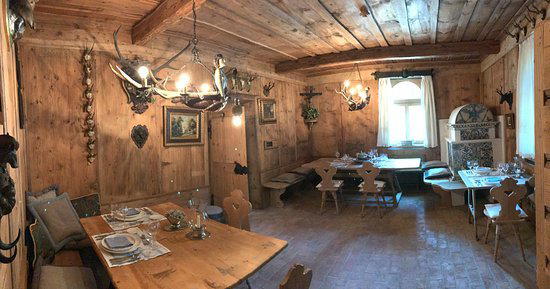
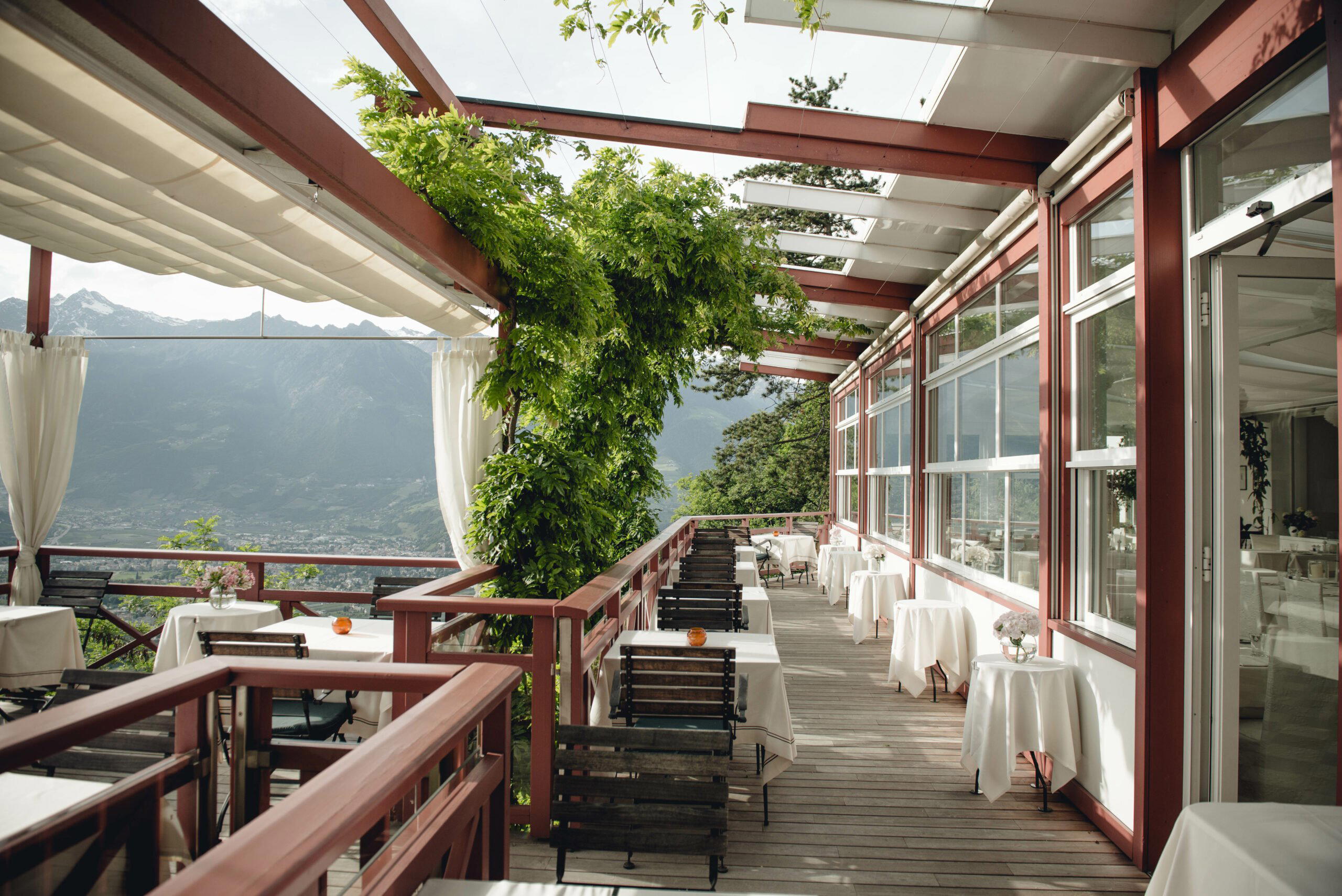
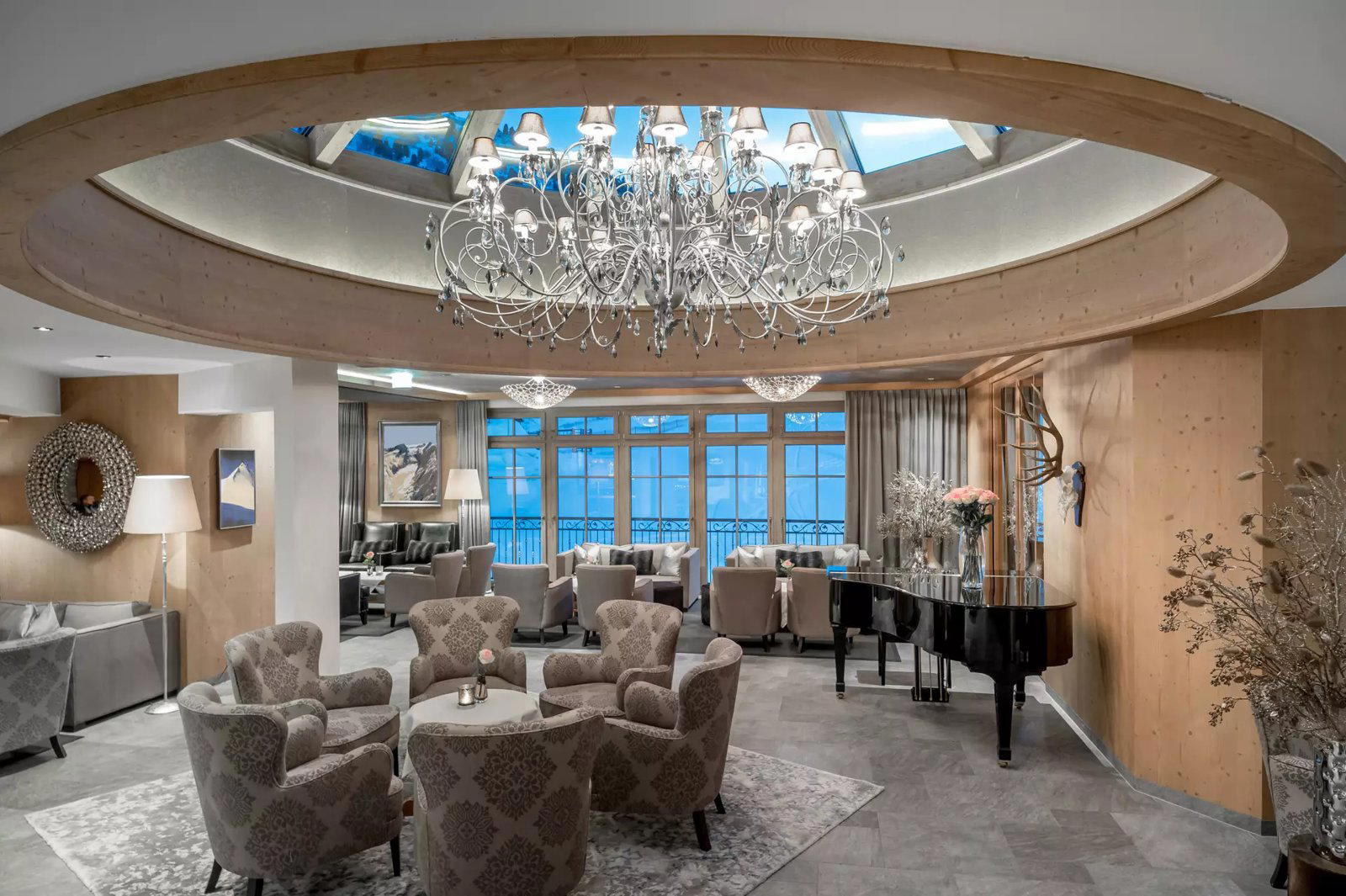
Physical setting is that of a resort fine-dining room in the Alpine tradition: warm materials, considered proportions, and the kind of quiet that comes from a property where guests are staying rather than visiting solely for dinner. The atmosphere is formal without being austere, which is a register that suits a multi-course tasting format in a valley where the dominant mood is restorative rather than theatrical. For guests not staying at the Quellenhof, the room operates as a destination in its own right, though the experience of dining here is different from the destination-restaurant model of a standalone address.
Service structure involves a young chef and a maître-d' working in close coordination, and the front-of-house role in particular shapes the wine dimension of the meal. Matteo oversees a list that has been assembled across twenty years, spanning Italian and international labels with an emphasis on delivering value relative to quality. That framing matters: wine lists in resort fine-dining rooms frequently carry resort-level margins; this one is described as offering genuine value, which is either a curatorial decision or a commercial one, and in practice the effect is the same.
Three Cellars and a Wine List Worth the Attention
Wine programme extends beyond the list itself. Three cellars are open for guest visits, and the collection includes historic vintages from Tuscany and Bordeaux alongside Italian regional labels. For context, the calibre of Tuscan and Bordeaux cellars at this level maps onto a collecting logic that begins two decades back, which means vintages from years now trading at significant premiums on the secondary market. Whether those bottles are accessible at dining prices or reserved for special request, the presence of the collection signals a seriousness about wine that many resort restaurants at this price point do not match.
For comparison, the wine ambition here sits in a different register from the cellar depth at Enoteca Pinchiorri in Florence, which operates one of Italy's most significant wine archives, but the Gourmetstube's collection is meaningfully curated rather than decorative. Guests with a specific interest in Italian fine wine would find the cellar visit alone a reason to book.
Where This Sits in the Italian Fine Dining Map
Italy's serious fine-dining tier is heavily concentrated in a handful of cities and regions. Osteria Francescana in Modena, Piazza Duomo in Alba, and Le Calandre in Rubano define the upper end of the spectrum. Further south, Uliassi in Senigallia, Reale in Castel di Sangro, and Quattro Passi in Marina del Cantone represent serious regional cooking at starred level. The Gourmetstube 1897 does not compete in that bracket on award terms, but it occupies a specific position: fine dining rooted in Alpine ingredient sourcing, inside a resort setting, in a valley that most Italian dining itineraries overlook. That combination is relatively rare. Guests travelling through South Tyrol who also want reference points for creative Italian cooking in urban settings might consider Enrico Bartolini in Milan or Casa Perbellini 12 Apostoli in Verona, both of which operate at starred level with a similarly contemporary sensibility. For creative fine dining outside Italy, Alléno Paris au Pavillon Ledoyen and JAN in Munich offer points of comparison within the broader European creative-cuisine tier. Dal Pescatore in Runate is worth noting as a parallel case: a destination restaurant inside a family property in an unlikely location that has sustained serious recognition over decades.
Planning a Visit
The Gourmetstube sits within the Quellenhof resort at Via Passiria 47, San Martino in Passiria, in the Bolzano province of South Tyrol. The price range falls at the top tier for the region (€€€€), consistent with a tasting menu format at a recognised fine-dining address. Given the resort context, guests staying at the Quellenhof will find booking direct through the property; external guests should confirm reservation availability in advance, particularly during the summer and winter peak seasons when the valley draws visitors for outdoor activity. The menu's four-to-six course structure means an evening here runs two to three hours at a measured pace. For those exploring the full range of what Saint Martin in Passeier offers, the hotels guide, bars guide, wineries guide, and experiences guide for the area cover the broader picture.
Frequently asked questions
Is Quellenhof Gourmetstube 1897 child-friendly?
The Gourmetstube is a Michelin-recognised fine-dining room within the Quellenhof resort, operating at the €€€€ price tier with a four-to-six course format. That structure, along with the focused, composed atmosphere of an Alpine resort restaurant, makes it better suited to older diners than to young children. Families staying at the resort may find the broader Quellenhof facilities more appropriate for younger guests.
What's the overall feel of Quellenhof Gourmetstube 1897?
The restaurant operates as a resort fine-dining room in the Alpine tradition, with warm materials and the kind of quiet that comes from a dedicated dining space rather than a standalone city venue. The combination of a character-driven kitchen, a maître-d' who actively guides the wine experience across three visitable cellars, and a menu anchored to nearby farms gives the evening a focused, regional coherence. Michelin awarded it a Plate in both 2024 and 2025.
What distinctions does Quellenhof Gourmetstube 1897 have?
Quellenhof Gourmetstube 1897 has received recognition including: A young chef and a brilliant maître-d’ work together at this restaurant, where the cuisine is full of character and has its roots firmly anchored in the region. The menu allows guests to choose from four to six courses, all prepared using l….
What's the signature dish at Quellenhof Gourmetstube 1897?
No single dish is fixed as a permanent signature, since the menu shifts with local availability and seasonal rhythms. Michelin's own recognition of the kitchen highlights lamb raised on a nearby farm served with parsnips and a refined jus, and reinterpreted dumplings with morel mushrooms and spring peas as representative of the approach: regional ingredients handled with clear technique rather than decoration.
How It Stacks Up
| Venue | Cuisine | Price | Awards | Notes |
|---|---|---|---|---|
| Quellenhof Gourmetstube 1897This venue — the venue you are viewing | Modern South Tyrolean Fine Dining | Not listed | 1 Michelin Star · Star Wine List | Not listed |
| Atelier Moessmer Norbert Niederkofler | Italian, Creative | Not listed | Michelin 3 Star | Not listed |
| Dal Pescatore | Italian, Italian Contemporary | Not listed | Michelin 3 Star | Not listed |
| Enoteca Pinchiorri | Contemporary Italian Fine Dining | $200–300 | 3 Michelin Stars · World's 50 Best #32 | Italian - French, Italian Contemporary |
| Enrico Bartolini | Creative | Not listed | Michelin 3 Star | Not listed |
| Osteria Francescana | Avant-Garde Italian Contemporary | $300–500 | 3 Michelin Stars · World's 50 Best #1 | Progressive Italian, Creative |
Recognition history
Dated appearances from independent guides and award organizations, with the underlying list record or original source where available.
Michelin 1 Star
Michelin
Star Wine List
Star Wine List
Falstaff Restaurant - 94 Falstaff Points
Falstaff
Full recognition history (5 entries)
Michelin Plate
Michelin
Michelin Plate
Michelin
Continue exploring
More in Saint Martin in Passeier
Restaurants in Saint Martin in Passeier
Browse all →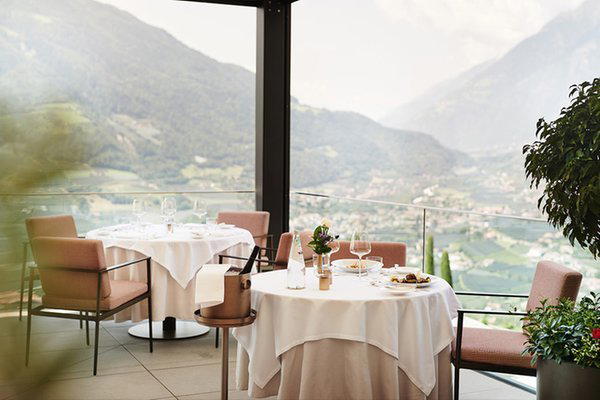
Bars in Saint Martin in Passeier
Browse all →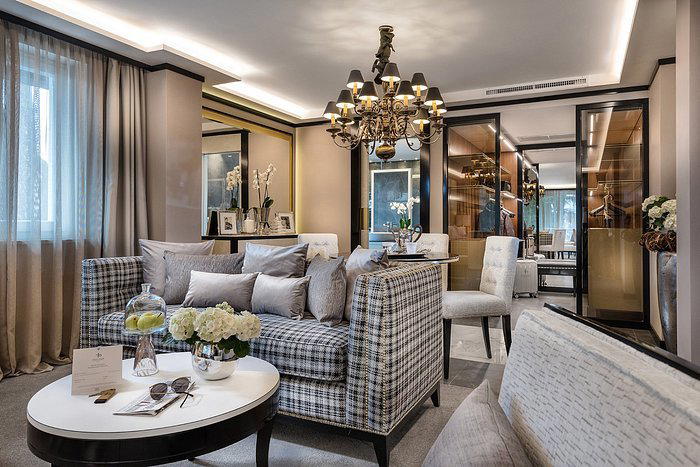

Hotels in Saint Martin in Passeier
Browse all →
Wineries in Saint Martin in Passeier
Browse all →
Details
- Elegant
- Sophisticated
- Intimate
- Classic
- Special Occasion
- Date Night
- Hotel Restaurant
- Historic Building
- Extensive Wine List
- Sommelier Led
- Local Sourcing
- Farm To Table
- Mountain
- Tasting Menu
Current opening hours
- Monday
- Closed
- Tuesday
- 6 PM–12 AM
- Wednesday
- 6 PM–12 AM
- Thursday
- 6 PM–12 AM
- Friday
- 6 PM–12 AM
- Saturday
- 6 PM–12 AM
- Sunday
- Closed
Hours can change for holidays and private events. Last verified .
Elegant and refined atmosphere in a historic stube setting with precise, artistic presentation and sensory indulgence.