
Holding consecutive Michelin Bib Gourmand recognition for 2024 and 2025, Quatre Vins on Philipstockstraat operates at the sharper, more accessible end of Bruges dining. Chef Toshimasa Sano runs a sharing-format kitchen priced at €€, placing it in a different register from the city's fine-dining tier. The format rewards tables willing to order broadly and eat communally.
Pearl is the En Primeur Club membership app — saves, bookings, and concierge access live there. Same editors, same standards.
- Address
- Philipstockstraat 8, 8000 Brugge, Belgium
- Phone
- +32 50 33 56 50
- Website
- quatre-vins.be
- Directions
- Get directions
 Saves & bookings on Pearl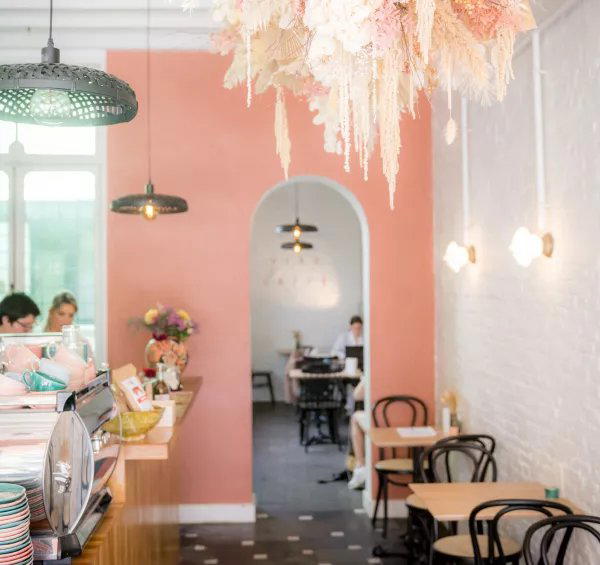
A Street-Level Case for Sharing Culture in Bruges
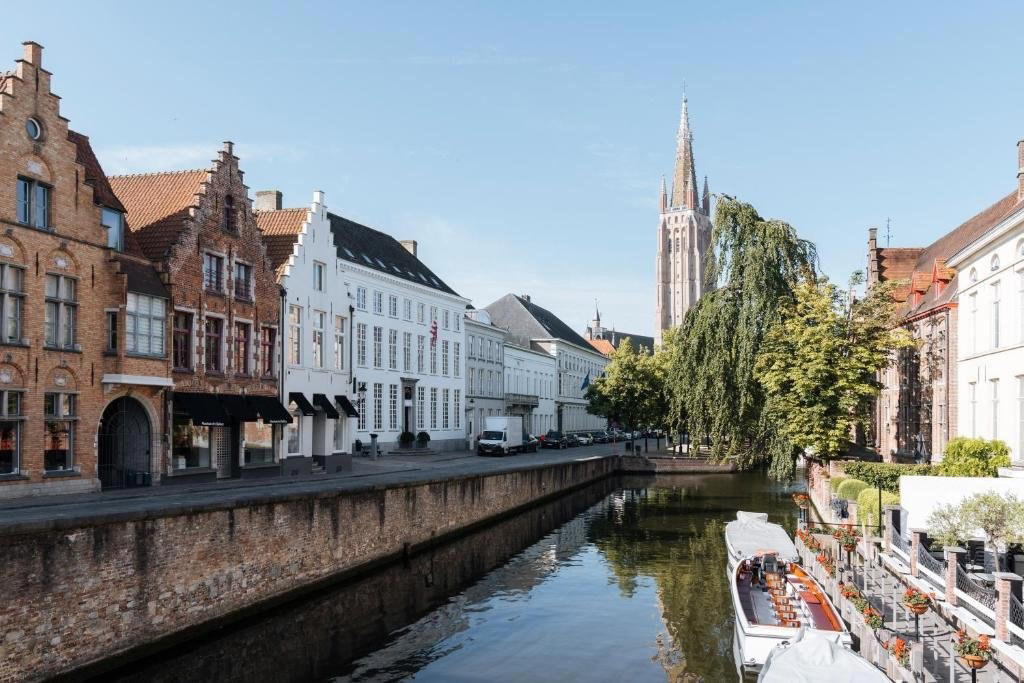
Philipstockstraat sits within the dense medieval grid that defines central Bruges, a city whose canal-threaded streets tend to funnel visitors toward tourist-facing brasseries and heritage-heavy dining rooms. Quatre Vins reads differently from that backdrop. The room operates on the logic of the modern European sharing format: dishes arrive in sequence and rotation rather than by individual cover, the table becomes a collective surface rather than a set of parallel solo experiences, and the price point stays deliberately accessible. That combination of Michelin recognition at the Bib Gourmand level and a €€ pricing bracket is relatively unusual in a city where serious cooking more often sits behind €€€€ menus. See our full Bruges restaurants guide for how Quatre Vins fits the broader picture.
The Sharing Format as an Ethical Proposition
The sharing model is worth examining beyond its social appeal. Across European restaurants that have moved toward multi-dish sharing formats, one consistent operational benefit is a measurable reduction in plate waste. When diners order communally and dishes arrive in smaller, rotational increments, portions calibrate more closely to actual appetite. There is less of the structural over-ordering that accompanies prix-fixe tasting menus, where a set number of courses arrives regardless of pace or hunger. The format also gives kitchens finer control over sourcing volumes: smaller-batch procurement from local suppliers becomes more viable when the menu can flex in real time rather than committing to fixed quantities per cover. In the West Flanders context, where proximity to coastal and agricultural producers gives restaurants genuine access to short-supply-chain ingredients, this matters more than it might elsewhere.
Chef Toshimasa Sano's presence behind this kind of format is itself a signal about where the sharing model has travelled. What began in the early 2010s as a predominantly southern European and Middle Eastern restaurant idiom has since been absorbed into mainstream European fine-casual cooking, with Japanese-trained and Japanese-born chefs often bringing a particular fluency with ingredient-led, small-plate discipline. The emphasis on precision and restraint that characterises Japanese culinary training translates naturally into a sharing format where each dish needs to carry individual weight. For broader comparison with how sharing formats operate at the premium end of the Swiss market, IGNIV Zürich by Andreas Caminada offers a useful reference point. Closer to home, Agnes in Sint-Martens-Bodegem applies a comparable ethos within the Belgian context.
Bib Gourmand Recognition and What It Signals
Michelin's Bib Gourmand designation, awarded consecutively in 2024 and 2025, marks restaurants that deliver notable quality at moderate prices rather than rewarding technical complexity or luxury ingredient deployment. For Quatre Vins, holding the Bib Gourmand across two consecutive years in a city with a competitive mid-tier restaurant field confirms a consistency of execution that single-year recognition would not. The award also implicitly positions the restaurant within a different comparable set from Bruges's fine-dining operations. Venues like Mémoire, Sans Cravate, and Zet'Joe by Geert Van Hecke operate at the €€€€ tier and compete on different terms entirely. De Karmeliet and Assiette Blanche represent the city's more formal register further still. Quatre Vins sits below all of them on price and competes on value density rather than prestige signalling.
That positioning matters for how you plan a visit. The €€ bracket in Bruges, where much of the mid-range accommodation and dining serves a day-trip and short-break visitor market, can mean a generic experience delivered efficiently. Bib Gourmand recognition is Michelin's explicit counter-argument to that pattern: a claim that thoughtful cooking is happening here at a price that does not require a special occasion.6 across 354 reviews adds a separate layer of confirmation, independent of the guide's editorial judgment, that the experience is landing consistently with a range of diners rather than only with food-specialist visitors.
West Flanders in a Wider Belgian Frame
Bruges sits at the western edge of Flemish culinary territory, geographically closer to the North Sea coast than to Ghent or Brussels. That position gives restaurants genuine access to North Sea fish, coastal vegetables, and West Flemish agricultural produce, though proximity to suppliers does not automatically translate into sourcing discipline. Across Belgium's more considered mid-market kitchens, the trend toward shorter supply chains has been consistent since the mid-2010s, with restaurants at the Bib Gourmand level often leading that shift more visibly than their starred counterparts, where luxury imports remain a prestige marker.
For context on how Bruges fits into the wider Belgian restaurant picture, the Flemish interior and coast together host some of the country's most discussed addresses: Hof van Cleve in Kruishoutem and Boury in Roeselare operate at a different altitude entirely, while Willem Hiele in Oudenburg and Bartholomeus in Heist have built distinct identities around coastal and terroir-led cooking. In Brussels, Bozar Restaurant represents a different mode of accessible-but-serious dining within the capital. Zilte in Antwerp anchors the country's northern port city at the three-star level. Against that map, the restaurant occupies a specific and defensible position: serious intent, moderate price, and a format that suits Bruges's social dining culture without reaching for formal register.
Planning a Visit
The restaurant is at Philipstockstraat 8 in central Bruges, within walking distance of the Markt and the main canal circuit. The €€ price range makes it viable for a weeknight or early-trip dinner rather than a single-occasion splurge. Because the sharing format rewards groups of three or four who can order across the menu, it suits travel companions with different appetite levels better than a fixed-course structure would. The restaurant's address on Philipstockstraat places it in a part of the old city that draws fewer large tour groups than the immediate Markt perimeter, which affects the surrounding street atmosphere without requiring any particular navigation effort.
What Regulars Order at Quatre Vins
What do regulars order at Quatre Vins?
What the Bib Gourmand recognition across 2024 and 2025 does confirm, alongside, is that the kitchen's output is landing consistently well across a broad range of visitors. In a sharing format run by a chef with Japanese culinary training, the general pattern tends toward ingredient-focused preparations where individual components carry clear identity rather than being absorbed into composite sauces or heavy reductions. The cuisine type is listed as Sharing, and the format is the starting point for how to approach ordering: come with enough people to cover ground across the menu rather than anchoring on one or two dishes per person.
In Context: Similar Options
Comparable venues nearby, for context on price, style, and recognition.
| Venue | Cuisine | Price | Awards | Notes |
|---|---|---|---|---|
| Quatre VinsThis venue — the venue you are viewing | Fusion Neo-Bistro Sharing Plates | $$ | Bib Gourmand | Not listed |
| L.E.S.S. | Modern Asian-Influenced Fusion | $$$ | Michelin Plate | Steenstraat Quarter |
| Tom's Diner | Belgian Fusion Tapas | $$ | Not listed | centrum |
| Tou. Gou | Creative French Farm-to-Table | $$ | Bib Gourmand | centrum Brugge |
| Bruut | Modern French Fine Dining | $$$ | Michelin Plate | St-anna |
| Brasserie Grand Cru | Dining | Not listed | Michelin Plate | Bruges |
Recognition history
Dated appearances from independent guides and award organizations, with the underlying list record or original source where available.
Michelin Bib Gourmand
Michelin
Michelin Bib Gourmand
Michelin
Michelin Bib Gourmand
Michelin
At a Glance
- Cozy
- Lively
- Intimate
- Elegant
- Date Night
- Casual Hangout
- Special Occasion
- Terrace
- Natural Wine
- Extensive Wine List
- Local Sourcing
- Natural Wine
- Biodynamic
Current opening hours
- Monday
- Closed
- Tuesday
- 5–9 PM
- Wednesday
- 5–9 PM
- Thursday
- 5–9 PM
- Friday
- 12–1:30 PM, 5–9 PM
- Saturday
- 12–3 PM, 5–9 PM
- Sunday
- Closed
Hours can change for holidays and private events. Last verified .
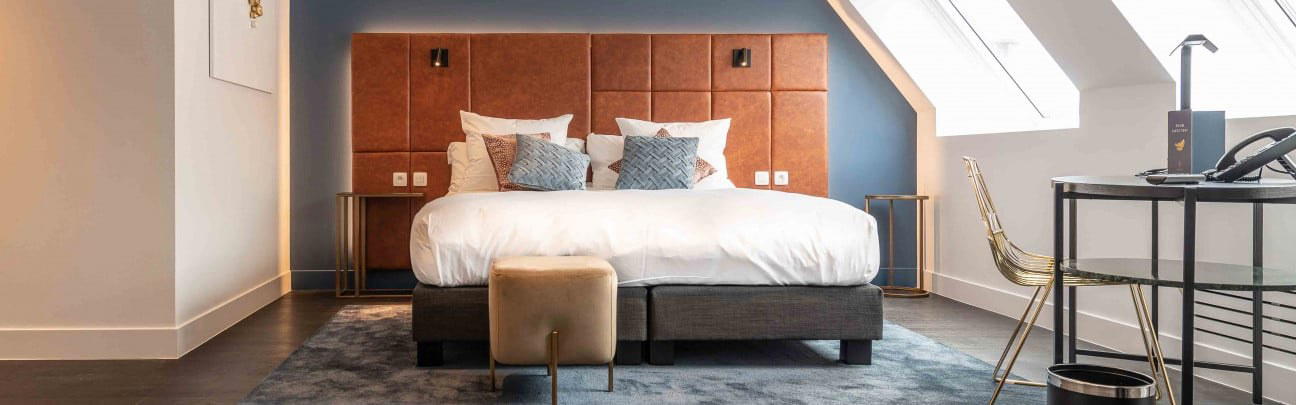
Warm and snug interior with powdery walls, mismatched chairs, soft practical lighting, and intimate table spacing creating a friendly buzz.