Pye Boat Noodle
Pye Boat Noodle on Broadway in Astoria, Queens, brings the boat noodle tradition of Thailand's floating markets to New York City. The format centers on small, intensely flavored bowls built for sequential ordering rather than a single sitting. For diners familiar with the Thai noodle canon, it represents one of the borough's more serious commitments to the form.
Pearl is the En Primeur Club membership app — saves, bookings, and concierge access live there. Same editors, same standards.
- Address
- 35-13 Broadway, Astoria, NY 11106
- Phone
- +17186852329
- Website
- pyeboatnoodle.com
- Directions
- Get directions
 Saves & bookings on Pearl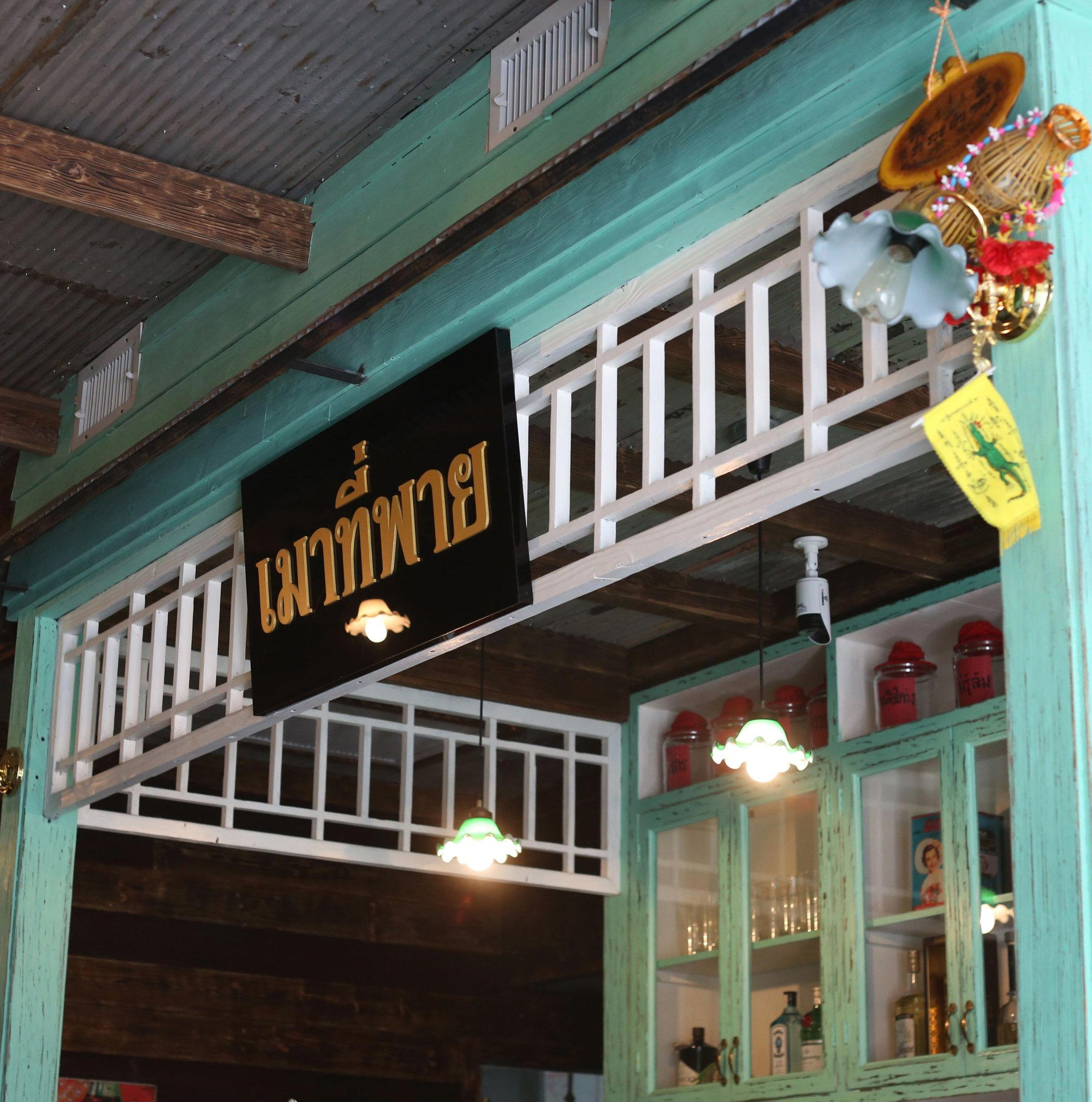
The Floating Market Tradition, Translated to Astoria
Thailand's boat noodle culture has a specific origin: vendors on narrow wooden craft moving through Bangkok's canal system, ladling out small, blood-thickened broth bowls to customers leaning over from the bank. The servings were intentionally small, priced for volume, and built for repeat ordering over a single sitting. That ritual, more than any individual ingredient, is what defines the format. When the canals were drained and the floating markets largely relocated to land-based versions in the mid-twentieth century, the tradition didn't disappear so much as it migrated, eventually finding its way into Thai diaspora communities worldwide. Astoria, one of New York City's most layered immigrant neighborhoods, is a reasonable place for it to land.
Pye Boat Noodle is a Thai restaurant at 35-13 Broadway in Astoria, Queens.
The Ritual of the Small Bowl
Understanding boat noodle dining requires accepting that the bowl is not the unit of measurement in the way it would be at a standard noodle shop. The portion is deliberately modest, typically a few mouthfuls of noodles submerged in a deeply reduced broth that carries the weight of long-cooked bone and, in traditional preparations, a small addition of pork or beef blood that thickens the liquid and rounds out its iron-forward depth. The ritual is to order several bowls in sequence, building toward satiation incrementally rather than arriving at it in a single serving.
This format rewards patience and attentiveness. Diners who approach it like a standard bowl of ramen or pho will consistently underorder on the first round and overcorrect on the second. The correct cadence involves ordering two or three bowls to start, assessing broth intensity and noodle type, then adjusting. Condiment management matters here too: the table typically holds sugar, fish sauce, dried chili, and vinegar-soaked chili, and the expectation is that diners calibrate their own bowls across rounds, shifting the flavor register as they go. This is not a passive eating experience.
In New York City's broader noodle scene, this format occupies a specific and underserved position. The city has accumulated serious Vietnamese pho destinations, Japanese ramen shops with multi-hour queues, and a growing number of Shanghainese and Fujianese hand-pulled noodle counters. Thai noodles have historically been underpinned by pad thai as the entry point, which has distorted what most diners expect from the cuisine at a structural level. Boat noodles operate at the opposite end of that spectrum: technically demanding to produce in terms of broth depth, priced accessibly, and designed for a dining rhythm that differs from almost every other noodle tradition practiced at scale in the five boroughs.
Astoria as Context
The neighborhood matters. Astoria's dining character has historically been shaped by its Greek community, which established a density of tavernas and seafood restaurants along Ditmars Boulevard and the surrounding blocks that remains largely intact. Over the past two decades, that original character has been joined by a significant expansion of South Asian, Southeast Asian, and Middle Eastern operators, many of them serving communities that relocated from more expensive parts of the city as rents in Manhattan and parts of Brooklyn climbed. The result is a neighborhood where the audience for technically serious, non-westernized versions of their own cuisines is embedded in the local population rather than composed primarily of destination diners.
That dynamic produces a different kind of accountability than what operates in, say, the blocks around Atomix or Jungsik New York in Manhattan, where the audience skews toward adventurous fine-dining regulars. In Astoria, a Thai restaurant serving a Thai community has to hold to the template. Shortcuts in broth construction or condiment presentation register immediately with one knowledgeable part of the room.
This stands in clear contrast to the upper tier of New York dining, where venues like Le Bernardin, Per Se, Masa, and Atomix operate within a fine-dining register where multi-course tasting menus and extended service rituals define the experience. Boat noodle dining is structurally the inverse: low price point, high turnover, self-directed pacing, and a format where the kitchen's skill shows in broth construction rather than plating architecture. Both traditions have their own rigors. They are simply measuring different things.
Placing It in the National Picture
The gap between boat noodle culture and the dominant American Thai dining template is not distinctive to New York. Across the country, Thai restaurants have historically calibrated their menus toward American expectations, concentrating on curries, stir-fries, and noodle dishes that translate without requiring much explanation. The restaurants that have pushed back against that compression, insisting on formats that require the diner to do some work, remain a smaller cohort. Compared to the investment required for destinations like The French Laundry, Alinea, Blue Hill at Stone Barns, Single Thread Farm, or Providence, the barrier to entry at a boat noodle counter is minimal in financial terms. The investment is in understanding the format before you sit down.
Other serious regional operators, from Emeril's in New Orleans to Bacchanalia in Atlanta to Addison in San Diego and The Inn at Little Washington, occupy a completely different price tier and register. So do international reference points like 8 1/2 Otto e Mezzo Bombana in Hong Kong or Alain Ducasse at Louis XV in Monte Carlo. The point of the comparison is not hierarchy but category: boat noodle dining belongs to a tradition where access is the point, and where the knowledge to appreciate the product is the only real prerequisite. And Lazy Bear in San Francisco has shown how even communal, format-driven dining can develop serious critical recognition when the execution is there.
Planning Your Visit
Pye Boat Noodle is located at 35-13 Broadway, Astoria, Queens. Reservations are not required, and the restaurant is walk-in friendly. Dress is casual, and the price tier is moderate, with meals averaging about $20 per person. Hours are Monday through Thursday and Sunday, 11:30 AM to 10:15 PM, and Friday and Saturday, 11:30 AM to 10:30 PM.
Cuisine-First Comparison
Comparable venues nearby, for context on price, style, and recognition.
| Venue | Cuisine | Price | Notes |
|---|---|---|---|
| Pye Boat NoodleThis venue — the venue you are viewing | Thai Boat Noodles & Hawker Food | $$ | Not listed |
| Thai Cafe | Thai | $$ | Greenpoint |
| Lemongrass | Halal Thai & Asian Fusion | $$ | Carroll Gardens-Cobble Hill-Gowanus-Red Hook |
| Kitchen 79 | Southern Thai | $$ | Jackson Heights |
| Dagg Thai | Authentic Thai | $$ | Midtown-Times Square |
| Sala Thai | Authentic Thai | $$ | Upper West Side (Central) |
Continue exploring
More in New York City
Restaurants in New York City
Browse all →
Bars in New York City
Browse all →
Hotels in New York City
Browse all →




At a Glance
- Rustic
- Cozy
- Trendy
- Casual Hangout
- Group Dining
- Family
- Open Kitchen
- Sake Program
Current opening hours
- Monday
- 11:30 AM–10:15 PM
- Tuesday
- 11:30 AM–10:15 PM
- Wednesday
- 11:30 AM–10:15 PM
- Thursday
- 11:30 AM–10:15 PM
- Friday
- 11:30 AM–10:30 PM
- Saturday
- 11:30 AM–10:30 PM
- Sunday
- 11:30 AM–10:15 PM
Hours can change for holidays and private events. Last verified .
Pleasantly rustic with a nautical theme, light blue doors, and a beautiful backyard outdoor space.