Public Kitchen
On Chrystie Street in the Lower East Side, Public Kitchen occupies a stretch of downtown Manhattan where neighbourhood restaurants earn their reputation one regular at a time. The address, 215 Chrystie St, places it within walking distance of some of New York's more characterful dining blocks, and the kitchen draws a returning crowd that treats the room as a reliable fixture rather than a destination occasion.
Pearl is the En Primeur Club membership app — saves, bookings, and concierge access live there. Same editors, same standards.
- Address
- 215 Chrystie St, New York, NY 10002
- Phone
- +1 212 273 9403
- Directions
- Get directions
 Saves & bookings on Pearl
Chrystie Street and the Case for Neighbourhood Loyalty
Public Kitchen is a restaurant in New York City serving Global Market-Driven Cuisine at a mid-range price point. Where Midtown corridors house the formal tasting-menu institutions, Le Bernardin, Per Se, Masa, and Flatiron supports conceptual formats like Eleven Madison Park and Atomix, the Lower East Side tends to produce a different kind of dining relationship: one built on proximity, repetition, and the gradual accumulation of trust between kitchen and customer. Public Kitchen, at 215 Chrystie Street, sits inside that tradition.
Chrystie Street itself runs along the western edge of the Lower East Side, bordering Sara D. Roosevelt Park and connecting the neighbourhood to SoHo and NoHo to the south. It is a corridor that rewards regular use over one-time discovery, a street where restaurants earn standing through consistency rather than opening-week noise. The regulars who form a dining room's backbone in this part of Manhattan are not primarily chasing novelty; they are looking for a place that holds its level.
What Keeps the Regulars Returning
In any dining neighbourhood, the restaurants that develop a loyal clientele share certain qualities that rarely appear on a menu. Predictable quality matters more than occasional brilliance. The staff knowing your preference, a corner table, a particular pour, an aversion to one ingredient, signals that the room has moved past the transactional. These are the unwritten contracts that separate a neighbourhood fixture from a destination address.
For the regulars who return to Public Kitchen, the draw appears to function precisely on this level. The address on Chrystie puts it in a part of downtown where foot traffic is genuinely local rather than tourist-adjacent, and where a dining room fills because the neighbourhood has decided it should, not because a press cycle told it to. That is a harder reputation to build than a Michelin citation, and a more durable one. Across the United States, restaurants that sustain this kind of repeat-customer loyalty, from Smyth in Chicago to Frasca Food and Wine in Boulder, tend to share an emphasis on consistency and hospitality depth over spectacle.
The unwritten menu at a place like this is the one that regulars construct over time: the dishes they always order, the ones they steer friends toward, the off-menu accommodations that happen without being asked. It is a form of institutional knowledge that a restaurant earns only through sustained performance, and it is what turns a good room into a neighbourhood anchor.
The Lower East Side Dining Context
Placing the restaurant within its neighbourhood means understanding what the Lower East Side has become as a dining area over the past two decades. The corridor around Chrystie, Bowery, and Orchard Streets has absorbed successive waves of openings, from the late-2000s cocktail-bar era to the contemporary natural-wine and small-plates moment, without losing the density of independent, operator-driven spaces that defines its character.
The neighbourhood sits in meaningful contrast to the farm-to-table destination formats that have defined prestige dining further afield. Properties like Blue Hill at Stone Barns in Tarrytown or Single Thread Farm in Healdsburg operate as event destinations, where the journey and the setting are as much the proposition as the plate. The Lower East Side operates on the opposite logic: the restaurant has to justify itself entirely through what happens inside the room, on a Tuesday, to someone who lives ten blocks away and has eaten there thirty times.
That is a different test, and it is one that neighbourhood restaurants in dense urban markets across the country either pass or fail relatively quickly. Lazy Bear in San Francisco and Providence in Los Angeles have each built versions of deep local loyalty alongside broader recognition. In New York, the Lower East Side has produced its own version of this, where the measure of a restaurant is less often an award citation and more often whether the same faces appear week after week.
comparable set and Price Position
The restaurant sits in the $40 per person range. What the address implies, though, is positioning within the independent, neighbourhood-scale tier rather than the formal destination bracket. That bracket, in New York, runs from the four-figure omakase counters and tasting-menu rooms of Midtown down through the mid-range neighbourhood trattoria and wine-bar formats that define much of downtown dining. Chrystie Street restaurants have historically operated in the mid-to-upper end of that neighbourhood tier, accessible enough to sustain repeat visits, serious enough to hold the attention of a dining public with significant options.
For comparison, the formal tasting-menu tier in New York, Per Se, Le Bernardin, Masa, operates at price points that restrict frequency for most diners. Neighbourhood restaurants like Public Kitchen fill a different function: they are the places where a regular dining life is actually lived, where the relationship between kitchen and customer is built over months rather than a single occasion. See our full New York City restaurants guide for a broader map of the city's dining tiers.
Planning Your Visit
The restaurant sits at 215 Chrystie Street in the Lower East Side, accessible from the B and D trains at Grand Street and the F train at Second Avenue, both within a short walk. The neighbourhood is most active in the evening, and the surrounding blocks offer a natural extension of any meal through the area's well-established bar and wine-bar scene.
For readers building a broader New York itinerary, the city's dining scene spans formats from neighbourhood independents like Public Kitchen through to the formal destination tier at Eleven Madison Park and internationally recognised rooms like Atomix. Further afield, comparable neighbourhood-loyalty formats can be found at Emeril's in New Orleans, Addison in San Diego, and The Inn at Little Washington for a more formal counterpoint. European readers may find useful parallels in the regional-loyalty model at Dal Pescatore in Runate or the producer-focused approach of Atelier Moessmer Norbert Niederkofler in Brunico.
Quick reference: 215 Chrystie St, New York, NY 10002.
Fast Comparison
Comparable venues nearby, for context on price, style, and recognition.
| Venue | Cuisine | Price | Notes |
|---|---|---|---|
| Public KitchenThis venue — the venue you are viewing | Global Market-Driven Cuisine | $$$ | Not listed |
| Love Thy Neighbor | Japanese-inspired cocktail bar & small plates | $$$ | West Village |
| Lola's | Southern-Asian Fusion | $$$ | Midtown South-Flatiron-Union Square |
| Bistrot Ha | French-Vietnamese Bistro | $$$$ | Lower East Side |
| Sen Sakana | Kosher Nikkei (Japanese-Peruvian Fusion) | $$$$ | Midtown-Times Square |
| Frida Midtown | Mexican-Peruvian Fusion | $$$ | East Midtown-Turtle Bay |
Continue exploring
More in New York City
Restaurants in New York City
Browse all →
Bars in New York City
Browse all →
Hotels in New York City
Browse all →






At a Glance
- Romantic
- Elegant
- Modern
- Energetic
- Date Night
- Special Occasion
- Business Dinner
- Group Dining
- Hotel Restaurant
- Open Kitchen
- Craft Cocktails
- Farm To Table
- Organic
- Sustainable Seafood
- Local Sourcing
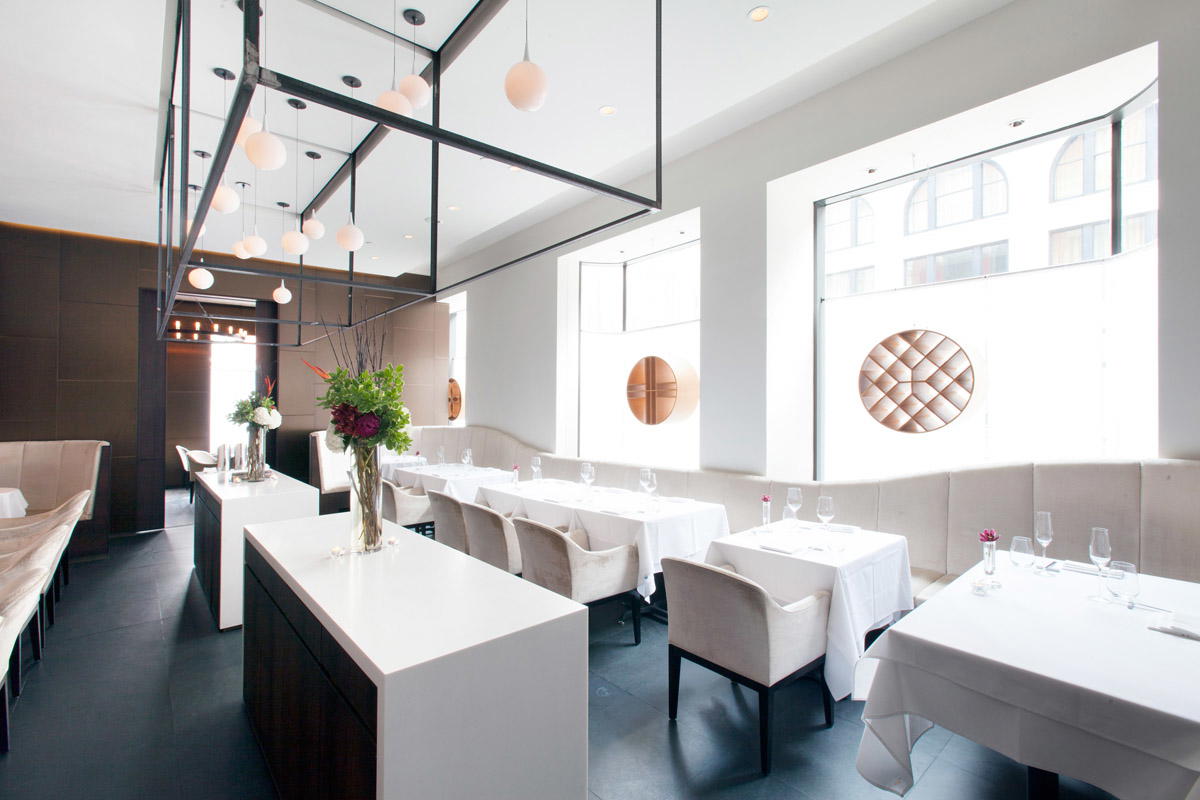
Energetic and sophisticated with a modern aesthetic; described as a lively dining environment with an upscale casual atmosphere.