Primola
A fixture on the Upper East Side since the 1980s, Primola at 1226 Second Avenue occupies the kind of position that New York's Italian dining scene rarely manufactures twice: a neighborhood room with the staying power of a genuine institution. The cooking draws from the northern Italian tradition, and the room has long served as an anchor for the Lenox Hill dining corridor, pulling a loyal, repeat clientele that prefers consistency over spectacle.
Pearl is the En Primeur Club membership app — saves, bookings, and concierge access live there. Same editors, same standards.
- Address
- 1226 2nd Ave, New York, NY 10065
- Phone
- +12127581775
- Website
- primolarestaurant.com
- Directions
- Get directions
 Saves & bookings on Pearl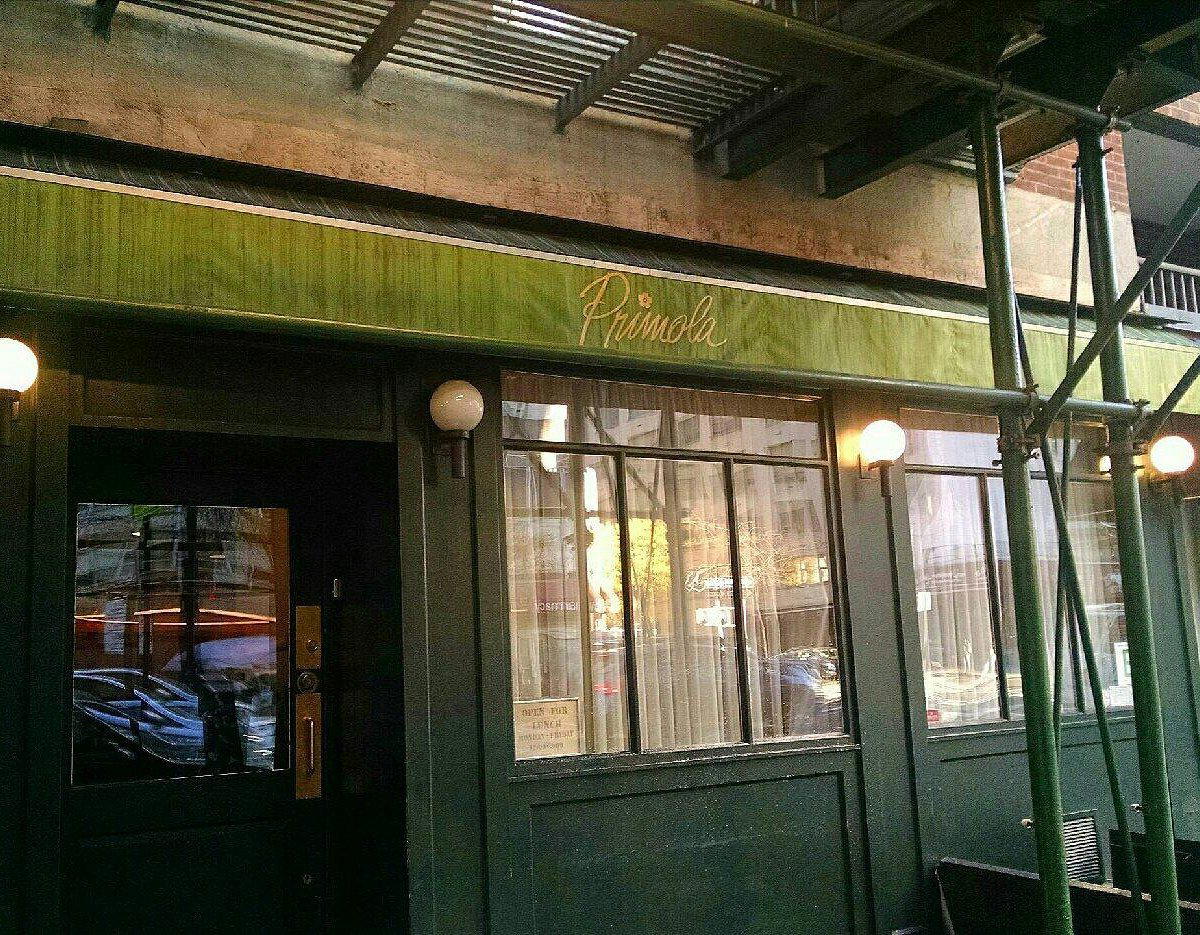
The Upper East Side's Italian Anchor
New York's restaurant scene tends to reward novelty above almost everything else, which makes the decades-long persistence of a neighborhood Italian restaurant on the Upper East Side something worth examining. Primola, at 1226 Second Avenue in Lenox Hill, is a traditional Tuscan and Central Italian restaurant in New York City.
The Second Avenue corridor between 60th and 80th Streets has historically functioned as a quieter counterweight to the Midtown dining circuit. It draws a residential clientele rather than a tourist one, and the restaurants that survive there long-term do so by serving the same tables year after year. Primola belongs to that pattern.
Northern Italian Cooking and the Question of Sourcing
The northern Italian tradition, which emphasizes restraint in seasoning, quality of primary ingredients, and seasonal discipline, maps naturally onto the contemporary conversation around ethical sourcing. Where some cuisines can absorb lower-grade ingredients through technique, the Piedmontese and Venetian-influenced cooking that defines this part of the Italian canon depends on produce and protein that hold up under minimal intervention. That structural demand has always pushed serious Italian kitchens toward direct supplier relationships and seasonal rotation, even before those practices acquired the branding language of sustainability.
Across the broader American restaurant scene, the venues most associated with ethical sourcing have tended to be either high-concept tasting-menu operations or explicitly farm-driven destinations. Blue Hill at Stone Barns in Tarrytown is the clearest New York-area example of the latter: a restaurant whose entire identity is built around a working farm and whose sourcing practices are the primary editorial subject. Single Thread Farm in Healdsburg performs a similar function on the West Coast. The neighborhood Italian room operates on a different register entirely, its sourcing choices are embedded in the kitchen rather than narrated to the guest, but the underlying discipline is not categorically different. Consistency of supply, minimal waste, and ingredient-led cooking are practical requirements of the format, not marketing positions.
For diners tracking the sustainability credentials of restaurants they visit, the practical question is less about which venues have formal environmental certifications and more about which kitchens are structured in ways that produce less waste by default. A room that has run a fixed, rotating menu for decades, adjusting to seasonal availability and maintaining relationships with a stable set of suppliers, operates with a lower structural waste profile than a high-turnover concept chasing trend cycles. Primola fits the former description.
Placing Primola in New York's Italian Tier
New York's Italian dining spectrum runs from the counter-service red-sauce institutions of the outer boroughs to the white-tablecloth northern Italian rooms of the Upper East Side and Midtown, with a growing tier of modern Italian concepts positioned somewhere between the two. Primola occupies the white-tablecloth northern Italian segment, which puts it in a comparable set defined by longevity, service formality, and a clientele that values reliability over discovery.
The city's highest-profile fine dining rooms, Le Bernardin, Per Se, Masa, operate at price points and formality levels that place them in a separate competitive category. Primola is priced at about $60 per person. Primola's comparable set is more accurately the established neighborhood rooms that have served the same Upper East Side clientele across administrations. Atomix and Jungsik New York represent the tasting-menu precision end of New York fine dining, a different format and a different dining intention. Primola is for the guest who wants a proper Italian dinner at a table they have eaten at before, with food that does not require explanation.
Across the country, the restaurants that have held comparable positions in their local dining cultures, Bacchanalia in Atlanta, Emeril's in New Orleans, The Inn at Little Washington, have managed longevity through a combination of culinary consistency and an earned sense of place. Alinea in Chicago and Lazy Bear in San Francisco operate at the opposite end of the spectrum, where the format itself is the primary proposition. Primola sits in the comfort and consistency camp, which is not a lesser category, it is a different one, serving a function that experimental formats cannot replicate.
Planning Your Visit
Primola is located at 1226 Second Avenue, at the corner of 64th Street in Lenox Hill. The address places it in a walkable section of the Upper East Side, accessible from the Lexington Avenue subway lines and convenient to the residential blocks east of Park Avenue. For those arriving from other boroughs or from Midtown, the venue is a short cab or rideshare ride from Grand Central.
| Venue | Cuisine | Price Tier | Format | Location |
|---|---|---|---|---|
| Primola | Italian (Northern) | $$-$$$ | Neighborhood room, à la carte | Upper East Side, 2nd Ave |
| Le Bernardin | French, Seafood | $$$$ | Tasting menu / prix fixe | Midtown West |
| Per Se | French, Contemporary | $$$$ | Tasting menu only | Columbus Circle |
| Masa | Sushi, Japanese | $$$$ | Omakase counter | Columbus Circle |
| Atomix | Modern Korean | $$$$ | Tasting menu, counter | Flatiron |
For international context on the northern Italian tradition at its most formal, the work being done at 8 1/2 Otto e Mezzo Bombana in Hong Kong and Alain Ducasse at Louis XV in Monte Carlo represents the European fine dining standard against which Upper East Side Italian rooms are often implicitly measured. Domestically, the farm-driven sourcing model pursued by Providence in Los Angeles and Addison in San Diego reflects where the ethical sourcing conversation has moved at the tasting-menu tier, context that clarifies why a long-running neighborhood Italian room's quieter, embedded approach to seasonal cooking deserves its own form of recognition.
Where the Accolades Land
Comparable venues nearby, for context on price, style, and recognition.
| Venue | Cuisine | Price | Notes |
|---|---|---|---|
| PrimolaThis venue — the venue you are viewing | Traditional Tuscan and Central Italian | $$$ | Not listed |
| Cafe Ginori at Bergdorf Goodman | Contemporary Italian | $$$ | Midtown-Times Square |
| Serafina - 777 Third Ave | Classic Italian Trattoria | $$$ | East Midtown-Turtle Bay |
| Osteria Laguna | Modern Northern Italian Osteria | $$$ | Murray Hill-Kips Bay |
| Spes | Italian Natural Wine Bar | $$$ | East Village |
| Alaluna | New Italian Seafood | $$$ | West Village |
Continue exploring
More in New York City
Restaurants in New York City
Browse all →
Bars in New York City
Browse all →
Hotels in New York City
Browse all →





At a Glance
- Lively
- Classic
- Cozy
- Business Dinner
- Special Occasion
- Group Dining
- Private Dining
- Extensive Wine List
Current opening hours
- Monday
- 12–3 PM, 5–11 PM
- Tuesday
- 12–3 PM, 5–11 PM
- Wednesday
- 12–3 PM, 5–11 PM
- Thursday
- 12–3 PM, 5–11 PM
- Friday
- 12–3 PM, 5–11 PM
- Saturday
- 5–11 PM
- Sunday
- 5–11 PM
Hours can change for holidays and private events. Last verified .