Potluck Club


On Chrystie Street in Manhattan's Lower East Side, Potluck Club holds a 2024 Michelin Bib Gourmand and a Hong Kong cinema-themed room that sets an immediate tone: this is Cantonese cooking treated seriously without ceremony. Chef Maurizio Ferrarese applies quality sourcing to familiar formats, from Berkshire pork pot stickers to salt and pepper fried chicken served with scallion biscuits and chili-plum jam.
Pearl is the En Primeur Club membership app — saves, bookings, and concierge access live there. Same editors, same standards.
- Address
- 133 Chrystie St, New York, NY 10002
- Website
- thepotluckclubny.com
- Directions
- Get directions
 Saves & bookings on Pearl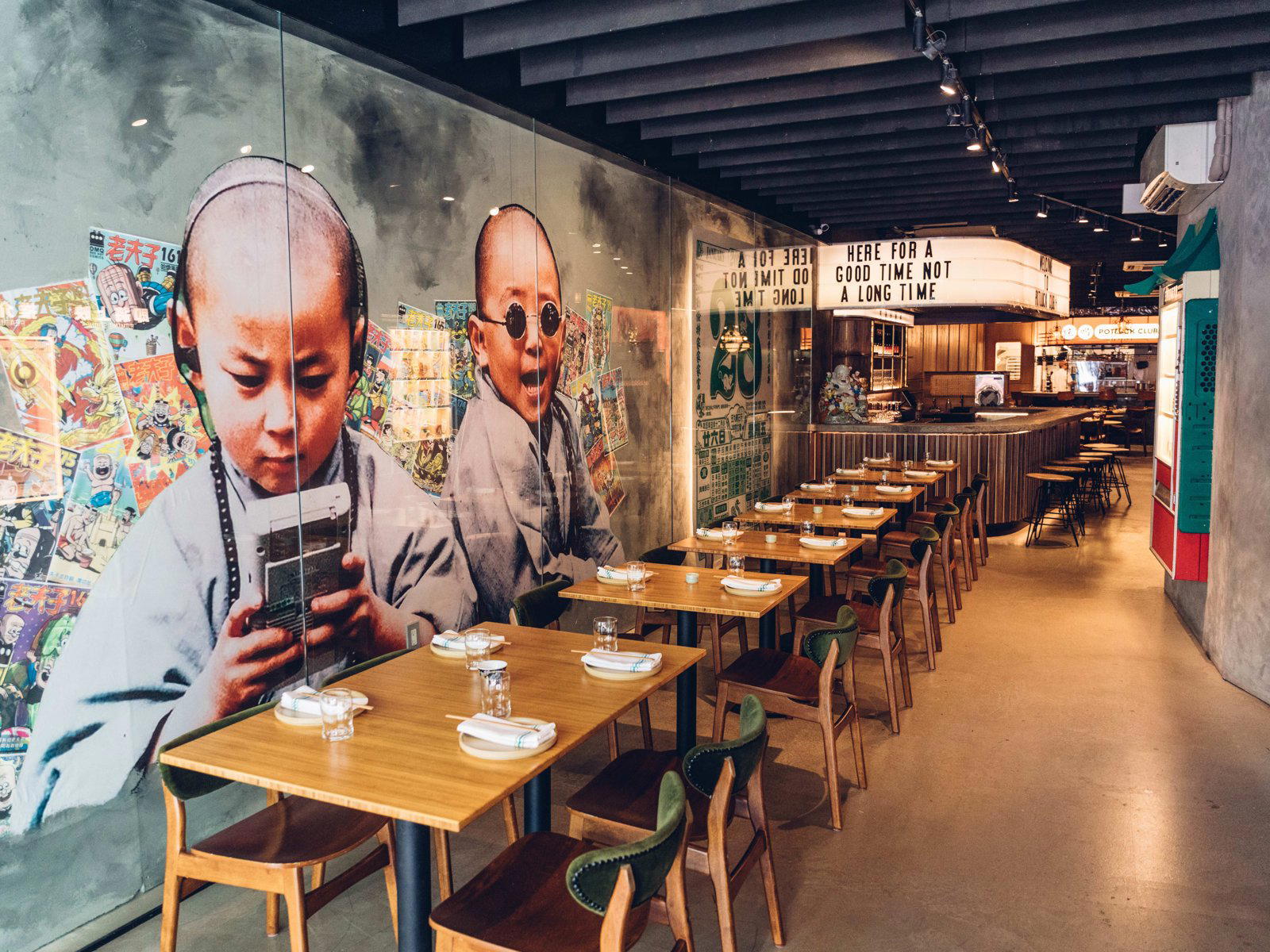
Where Chrystie Street Meets the Canton
Cantonese food in New York occupies a peculiar position. The cuisine has been present in the city for well over a century, arriving with the earliest waves of Chinese immigration and taking root in the blocks that became Chinatown. Yet for much of that history, Cantonese cooking in Manhattan operated outside the circuits of formal critical recognition: too quotidian for fine-dining reviewers, too family-style for the tasting-menu era. What has shifted in the past decade is the willingness of a younger generation of chefs and operators to reclaim those formats, apply serious sourcing, and serve the results in rooms that signal ambition without abandoning the high-energy communal spirit that makes Cantonese dining worth the effort. Potluck Club is a Cantonese-American restaurant at 133 Chrystie St, New York, NY 10002, in the Lower East Side. Its 2024 Michelin Bib Gourmand is as much a recognition of the trend as it is of the specific address.
The Hong Kong Cinema Motif and What It Says About the Room
Design choices in restaurants carry editorial weight. The Hong Kong cinema references at Potluck Club, carried through film posters, stills from well-known productions, and a movie marquee positioned above the chef's counter, do something specific: they anchor the cooking in a particular cultural moment rather than the generalised nostalgia that tends to flatten Chinese restaurant interiors into red lacquer and lantern clichés. Hong Kong cinema from the 1980s and 1990s carries connotations of stylish irreverence, kinetic energy, and a particular urban swagger. The kitchen operates under those references. The room communicates that the cooking here aspires to be similarly dynamic, without taking itself so seriously that the fun drains out.
That distinction matters in a city where the high-end Chinese dining conversation has largely been dominated by elaborate Shanghainese formats and premium Peking duck houses. The mid-price bracket, where the Bib Gourmand operates by definition, has fewer entries that manage this combination of cultural clarity and cooking precision. Potluck Club's closest peers on that register are not necessarily the Cantonese seafood specialists of Flushing, like Asian Jewel Seafood Restaurant, nor the heritage Cantonese stalwarts of Mott Street such as Big Wong, but a newer cohort that treats the cuisine as a living practice rather than a fixed archive.
The Cooking: Cantonese Foundations, Premium Inputs
The Bib Gourmand designation signals value at a meaningful quality level, and the dishes documented at Potluck Club illustrate the logic behind that award. The pot stickers here use Berkshire pork, a heritage breed with a higher fat-to-lean ratio than commodity pork and a corresponding depth of flavour. Pot stickers are among the more executed-to-death items on any Chinese menu in New York, which makes the sourcing decision a deliberate one: the gap between a Berkshire pork dumpling and a generic filling is wide enough that the difference registers immediately on the plate. Pan-searing is the delivery method, producing the lacquered underside crust that distinguishes the technique from steaming.
The fried tiger shrimp finished in mayonnaise is a format with deep roots in Cantonese-American cooking, particularly in Hong Kong-style restaurants where the combination of fresh shellfish and a light creamy coating became a signature of the late twentieth century. The version here has received specific notice for how it reframes a preparation that can easily read as dated. The salt and pepper fried chicken, another Cantonese classic, arrives with fluffy scallion biscuits and a chili-plum jam. That jam in particular has drawn repeated comment: chili-plum is a condiment tradition with regional Chinese precedent, and applying it as a counterpoint to the richness of fried chicken is a choice that reflects both knowledge of the source material and confidence in how to extend it.
Chef Maurizio Ferrarese operates this menu, an unusual pairing of an Italian name with Cantonese cooking that reflects the increasingly cross-cultural make-up of serious restaurant kitchens in New York. The cooking, regardless of biographical background, reads as technically disciplined and culturally specific rather than fusion. For comparison, the approach bears some resemblance to what Brandon Jew achieves at Mister Jiu's in San Francisco, where Cantonese tradition is treated as a living reference rather than a static template, and to the more European-inflected Chinese cooking that Restaurant Tim Raue in Berlin has built around Southeast and East Asian flavour logic. These are different expressions from different cities, but they share the premise that Cantonese and broader Chinese culinary traditions can absorb rigour and premium sourcing without losing their essential character.
Chrystie Street and Its Place in Lower East Side Dining
The Lower East Side has been absorbing restaurant openings in waves since the mid-2000s, with each cycle shifting the neighbourhood's dining profile. Chrystie Street, running along the edge of Sara D. Roosevelt Park and connecting the LES to SoHo, occupies a transitional zone: accessible from the subway without being a tourist corridor, with enough foot traffic from adjacent neighbourhoods to sustain the kind of high-energy room that restaurant operates. The address at 133 Chrystie places it in proximity to other serious cooking without the density of, say, the blocks around Canal Street where the Chinese restaurant competition runs differently. Alley 41 and Blue Willow represent the broader Chinese dining spectrum across Manhattan; Chongqing Lao Zao covers the Sichuan end of the city's Chinese repertoire. The restaurant's Cantonese focus occupies a distinct lane within that wider picture.
Bib Gourmand recognition in 2024 corroborates it from a separate evaluative source. At the price range indicated, $$, the restaurant operates in a bracket where value is the primary test, and it appears to be passing that test with consistent margins.
For reference points at the other end of New York's price spectrum, Alinea in Chicago, The French Laundry in Napa, Lazy Bear in San Francisco, Single Thread Farm in Healdsburg, Providence in Los Angeles, and Emeril's in New Orleans illustrate how the Bib Gourmand tier sits relative to the tasting-menu best of the American dining market.
Know Before You Go
Address: 133 Chrystie St, New York, NY 10002
Cuisine: Cantonese / Chinese
Price range: $$ (mid-range)
Awards: Michelin Bib Gourmand 2024
6 (734 reviews)
Chef: Maurizio Ferrarese
Booking: Reservations recommended
Hours: Wed to Sun, 5:30 to 9:15 PM; Mon and Tue closed
A Quick Peer Check
Comparable venues nearby, for context on price, style, and recognition.
| Venue | Cuisine | Price | Awards | Notes |
|---|---|---|---|---|
| Potluck ClubThis venue — the venue you are viewing | Cantonese-American | $$ | Bib Gourmand | Not listed |
| Hupo | Modern Sichuan Chinese | $$ | Bib Gourmand | Long Island City-Hunters Point |
| Dim Sum Go Go | Cantonese Dim Sum | $$ | Bib Gourmand | Chinatown-Two Bridges |
| China Cafe | Stylish Szechuan | $$ | Not listed | Midtown-Times Square |
| 8282 | Modern Korean Anju & Banju | $$ | Bib Gourmand | Lower East Side |
| Han Dynasty | Authentic Szechuan Chinese | $$ | Not listed | East Village |
Recognition history
Dated appearances from independent guides and award organizations, with the underlying list record or original source where available.
Opinionated About Dining Casual in North America Recommended
Opinionated About Dining
Michelin Bib Gourmand
Michelin
Michelin Bib Gourmand
Michelin
Continue exploring
More in New York City
Restaurants in New York City
Browse all →
Bars in New York City
Browse all →
Hotels in New York City
Browse all →






At a Glance
- Lively
- Trendy
- Whimsical
- Energetic
- Group Dining
- Date Night
- Casual Hangout
- Chefs Counter
- Open Kitchen
- Design Destination
- Beer Program
- Natural Wine
- Local Sourcing
Current opening hours
- Monday
- Closed
- Tuesday
- Closed
- Wednesday
- 5:30–9:15 PM
- Thursday
- 5:30–9:15 PM
- Friday
- 5:30–9:15 PM
- Saturday
- 5:30–9:15 PM
- Sunday
- 5:30–9:15 PM
Hours can change for holidays and private events. Last verified .
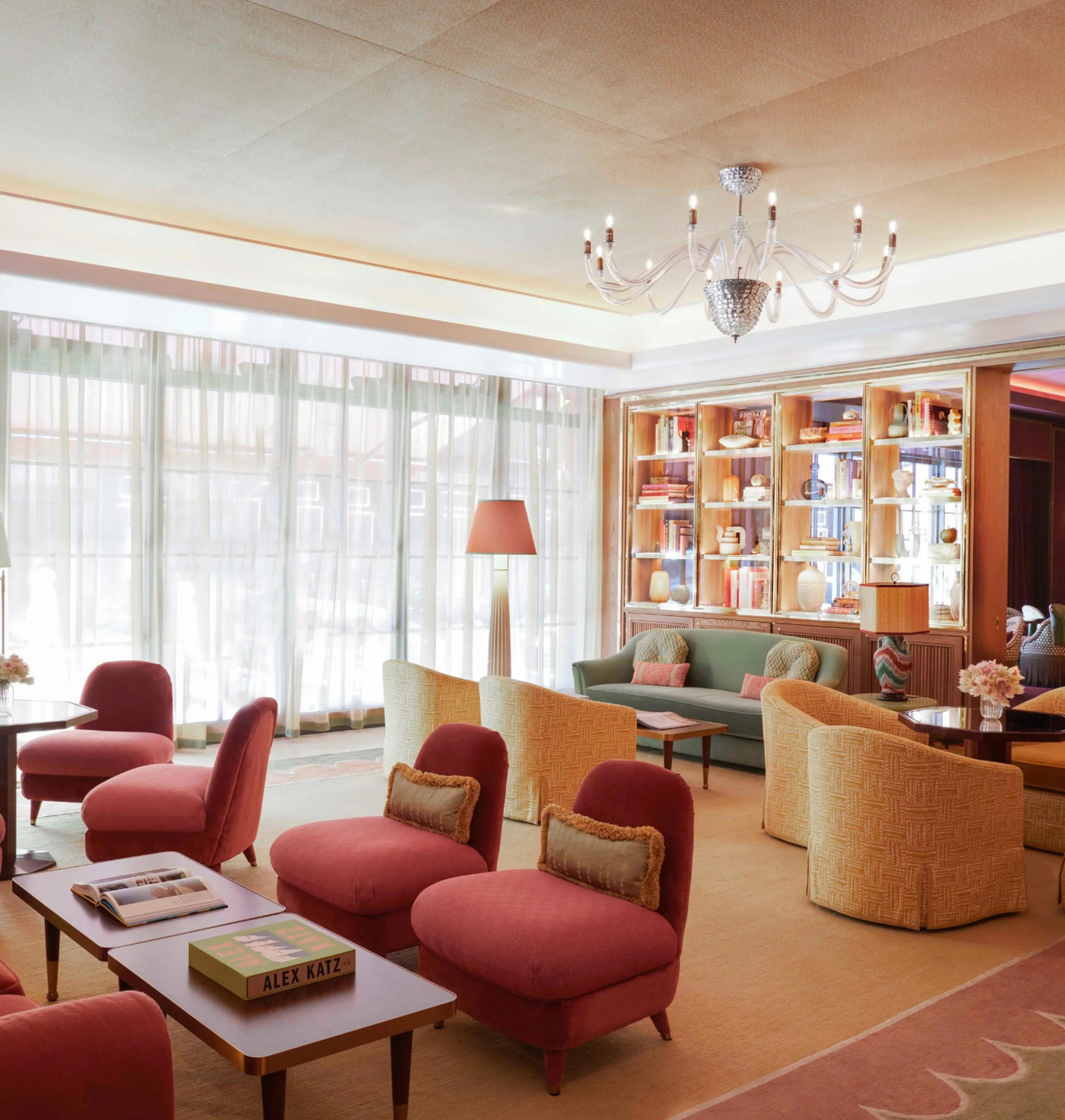
Large, pleasantly noisy dining room filled with eye-catching decor including movie posters, a marquee reading 'HERE FOR A GOOD TIME NOT A LONG TIME,' high-gloss finishes, and flattering lighting in sea and coral tones; feels like a fun, energetic movie theater concession meets upscale casual restaurant.