
Star Wine List
Our verdict
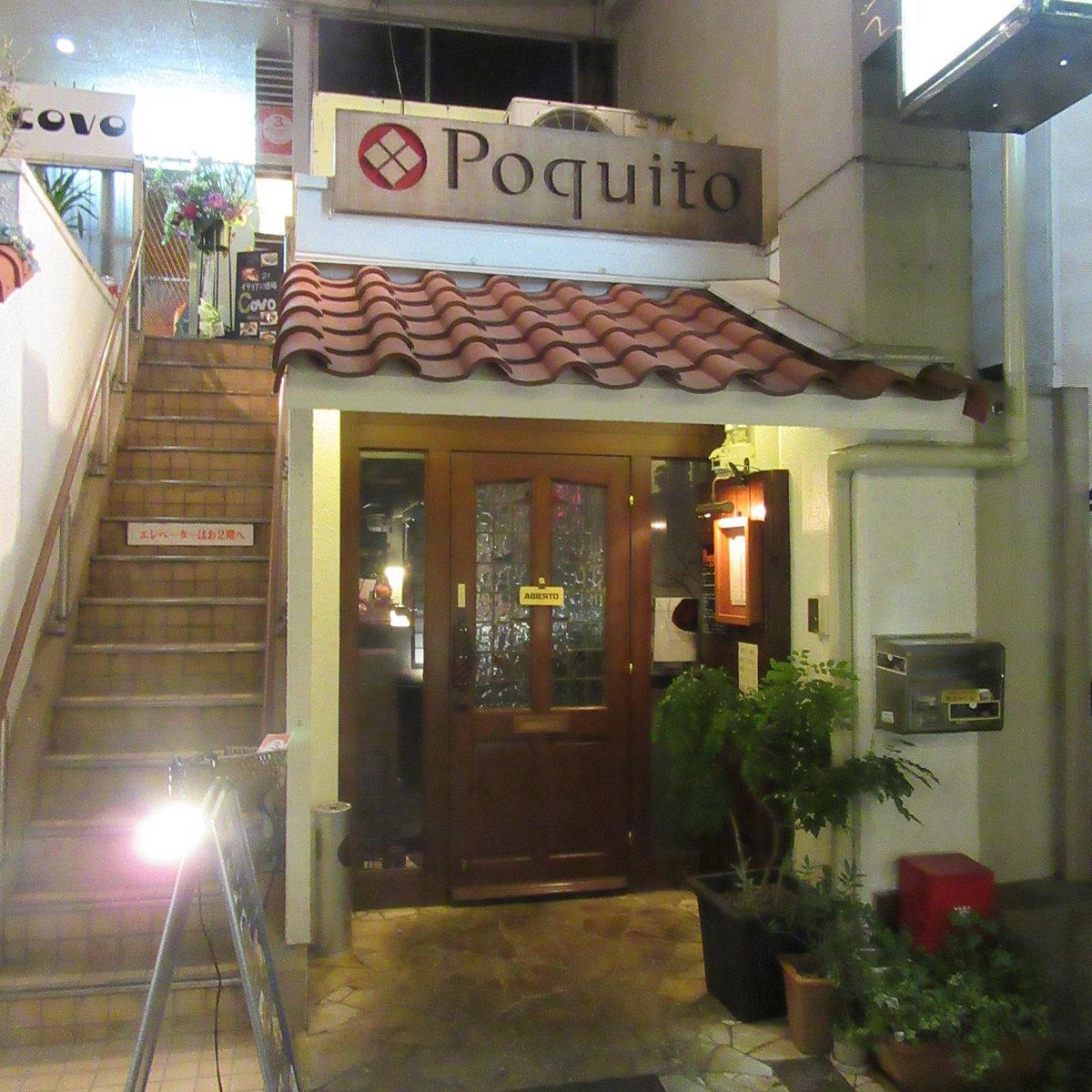
A Spanish wine bar in Kyoto's Kawaramachi-Sanjo district, Poquito brings Iberian drinking culture to one of Japan's most tradition-dense cities. Pinchos, ajillo, and paella share the menu alongside a focused Spanish wine selection, an unusual format in a city where kaiseki and sake dominate the hospitality conversation.

Pearl is the En Primeur Club membership app, where members save venues, book tables and use the concierge.
The menu
What to order
- Tapas Platter
- Patatas Bravas
- Gambas al Ajillo
- Chorizo al Vino
- Tortilla Española
Iberian Drinking Culture in the Heart of Kyoto
Kawaramachi-Sanjo sits at the commercial and social centre of Kyoto, where covered arcades, riverside promenades, and a high density of restaurants make it one of the city's most active evening districts. The area draws a mix of locals, students from nearby universities, and visitors crossing over from the traditional machiya neighbourhoods to the east. Within that context, a Spanish wine bar is an atypical proposition, not because European-concept bars are rare in Japan, but because Kyoto's dining identity runs so decisively toward washoku tradition. Kaiseki houses like Gion Sasaki, Hyotei, and Kikunoi Honten shape how the city is understood internationally, which means anything operating outside that register occupies a deliberately contrarian position.
Poquito is that contrarian position: a Spanish wine bar in 〒604-8006 Kyoto, Nakagyo Ward, running a menu of pinchos, ajillo, and paella in a city where the dominant drinking format is sake alongside small seasonal plates. The format has clear precedents in Japan's larger urban centres, Spanish-influenced wine bars have maintained a durable foothold in Tokyo and Osaka for decades, but transplanting that model to Kyoto requires a certain conviction about the local appetite for it.
The Wine List as the Central Argument
In a Spanish wine bar, the cellar is not a supporting detail, it is the thesis. Spain's wine geography is genuinely broad: Rioja and Ribera del Duero anchor the red-wine conversation, but Albariño from Galicia's Rías Baixas, the structured whites and reds of Rueda, the textural complexity of Priorat, and the long-aged oxidative styles of Jerez all belong to a serious Spanish program. A bar that engages with this range is making a different argument than one that stocks a handful of Tempranillo-dominant labels and calls the job done.
In Kyoto, there is no peer bar running the same format against which Poquito's selection can be compared. That gives the program considerable latitude, and considerable responsibility.
What the format does well structurally is align with how Spanish drinking culture actually operates: wine is ordered by the glass or bottle alongside food, the pace is social rather than ceremonial, and the menu is designed for grazing rather than a single composed sequence. That is a fundamentally different rhythm from the kaiseki counters at Mizai or Isshisoden Nakamura, where the kitchen controls the tempo entirely. Poquito hands that control back to the table.
The Menu Format and Its Logic
Pinchos, the small Basque-influenced bar snacks typically served on bread or skewers, are the entry point on the menu, shareable, low-commitment, and designed to be ordered in multiples. Ajillo, the garlic-forward oil-based preparation most commonly applied to prawns or mushrooms, sits in the hot-plates category that occupies the middle of the eating arc. Paella anchors the format as the centrepiece dish, though in a bar setting it typically serves a narrower function than in a dedicated rice restaurant: it provides substance and a shared format that slows the meal down and justifies a second bottle.
This menu architecture is standard for Spanish wine bars operating in Japan, and it works because the dishes are legible to a Japanese audience with relatively little background in Iberian cooking. Ajillo in particular has an established foothold in Japanese izakaya culture, having crossed over into mainstream domestic cooking over the past two decades. Paella has similarly high recognition. The format does not require its audience to take interpretive risks, which matters in a market where the Spanish wine bar is still a niche rather than a default category.
For a broader map of how European-influenced restaurant formats sit alongside traditional Japanese dining in the Kansai region, the contrast with Osaka's HAJIME or Nara's akordu, both operating in European registers with Japanese produce, is instructive. Those restaurants are in a different price tier and format category entirely, but they reflect the same broader trend: European culinary frameworks finding durable homes in cities where Japanese tradition would seem to leave no space for them.
Where Poquito Sits in Kyoto's Broader Scene
Kyoto's restaurant scene is top-heavy with high-commitment dining: long tasting menus, counter-only formats, advance booking requirements measured in weeks or months. That density creates genuine demand for something looser, a place where you can arrive without a reservation, order incrementally, and stay for a second glass without restructuring your evening. Spanish wine bars occupy exactly that gap. Their format is inherently low-friction, which is an advantage in a city where the alternative is often a formal kaiseki sequence or a traditional izakaya. For visitors already working through Kyoto's kaiseki roster, or simply not in the mood for one, Poquito offers a different kind of evening.
The Kawaramachi-Sanjo location is practical: central by Kyoto standards, well-connected by the city's transit grid, and within walking distance of the Kamo River and the Gion district's eastern edge. Evenings in the area tend to run later than in more residential neighbourhoods, and the concentration of bars and restaurants within a few blocks makes it a natural anchor for a longer night out. For a full picture of what surrounds it, our full Kyoto restaurants guide, our full Kyoto bars guide, and our full Kyoto experiences guide provide the wider context. Those planning a longer stay will also find our full Kyoto hotels guide and our full Kyoto wineries guide useful for rounding out an itinerary.
Beyond Kansai, the pattern of European-format wine bars establishing themselves in tradition-dense Japanese cities is visible in other regions: Harutaka in Tokyo, Goh in Fukuoka, Bleston Court Yukawatan in Nagano, and giueme in Akita each illustrate how non-Japanese culinary formats have found footing across the country in different configurations. Internationally, the same question of how a specific regional wine culture travels appears at venues like Le Bernardin in New York City and Emeril's in New Orleans, both of which built lasting identities in cities with strong pre-existing culinary characters.
Planning Your Visit
Poquito is located at 三条上ル下丸屋町401-10, Nakagyo Ward, Kyoto, a short walk from the Kawaramachi-Sanjo intersection. Given its central location and the general profile of Spanish wine bars in Japan, walk-in access is likely available on most evenings, but weekend demand at a well-regarded neighbourhood bar in this district can compress available space quickly.
Frequently asked questions
What's the address for Poquito?
Poquito is located at Japan, 〒604-8006 Kyoto, Nakagyo Ward, 三条上ル下丸屋町401-10, Kyoto.
Has Poquito won any awards?
Poquito has received recognition including: Poquito is a Spanish Wine Bar located in one of the busiest areas in Kyoto City, Kawaramachi-Sanjyo. Here you can enjoy very nice qualified Spanish dishes from Pinchos and Ajillo, to Paellla with Sher....
What's the best thing to order at Poquito?
Pinchos and ajillo are the format's natural starting points, small, shareable preparations designed to pair with wine by the glass. Paella anchors the menu as a more substantial centrepiece and warrants ordering if you're staying for a full session. The Spanish wine bar structure rewards ordering across multiple formats rather than committing to a single dish.
Should I book Poquito in advance?
Poquito sits in Kawaramachi-Sanjo, one of Kyoto's most active evening districts, where foot traffic is high and neighbourhood bars fill quickly on weekends. Contacting the venue directly ahead of a weekend or holiday visit is advisable.
What's Poquito best at?
The Spanish wine bar format at Poquito is built for flexibility: no fixed tasting menu, no extended time commitment, and a wine list structured around Spanish regions that gives the food context rather than the other way around. In a Kyoto dining scene dominated by high-commitment counter formats, that accessibility is a genuine functional difference.
Can Poquito accommodate dietary restrictions?
Spanish wine bar menus in this format, pinchos, ajillo, paella, are typically seafood-forward and often include cured meats, so guests with fish, shellfish, or pork restrictions should confirm options directly with the venue before visiting.
Price and Positioning
Comparable venues nearby, for context on price, style, and recognition.
| Venue | Cuisine | Price | Awards | Notes |
|---|---|---|---|---|
| PoquitoThis venue (the venue you are viewing) | Authentic Spanish Tapas & Wine Bar | $30–50 | Star Wine List | Not listed |
| Wabiya Korekidou (侘家古暦堂 祇園花見小路本店) | Traditional Yakitori & Oyakodon | $30–50 | Tabelog 100 #4 | Gion, Traditional Japanese Yakitori & Chicken Specialties |
| Aca1 | Nakagyo-ku, Modern Spanish Omakase | Not listed | Not listed | Not listed |
| STEAK OTSUKA | Japanese Wagyu Steakhouse | $50–100 | Not listed | Ukyō, Japanese Wagyu Steakhouse |
| ラ ブッシュ | Wood-Fired French with Ohara Terroir | $100–150 | 1 Michelin Star · Tabelog 100 #92 | Ohara, 薪焼き自然派フレンチ |
| En Boca (エンボカ 京都) | Italian-Japanese wood-fired pizza & vegetables | $50–100 | Tabelog 100 #53 | Nakagyo-ku, Modern Italian-Japanese Pizza |
Recognition history
Dated appearances from independent guides and award organizations, with the underlying list record or original source where available.
Star Wine List
Star Wine List
Continue exploring
More in Kyoto
Restaurants in Kyoto
All restaurants in Kyoto →
Bars in Kyoto
All bars in Kyoto →
Hotels in Kyoto
All hotels in Kyoto →


Wineries in Kyoto
Browse all →
Poquito
The wine
- Wine program
- Deep wine list
- Extensive wine list
- Sake program
- Craft cocktails
Details
- Cozy
- Intimate
- Trendy
- Date Night
- Casual Hangout
- Extensive Wine List
- Sake Program
- Craft Cocktails
- Local Sourcing
- Small Plates
- A La Carte
- Wine
- Cocktails
- Vegetarian Friendly
- Gluten Free Options
- Allergy Accommodating
Current opening hours
- Monday
- 5–11 PM
- Tuesday
- 5–11 PM
- Wednesday
- Closed
- Thursday
- 5–11 PM
- Friday
- 5–11 PM
- Saturday
- 5–11 PM
- Sunday
- 5–11 PM
Hours can change for holidays and private events. Hours as of .
Cozy, stylish space with counter seating and warm, welcoming atmosphere in a charming back-alley location.