

A seven-seat counter in Toyonaka that earned the Tabelog Bronze Award in every year from 2022 to 2026 and a Michelin star in 2024, Point sits in Osaka's smaller, more concentrated tier of French dining. The counter-only format, wine-focused service with a sommelier on hand, and a dinner spend that Tabelog reviewers place at JPY 30,000 to 39,999 position it among the region's most closely watched French tables.
Pearl is the En Primeur Club membership app — saves, bookings, and concierge access live there. Same editors, same standards.
- Address
- Japan, 〒553-0003 Osaka, Fukushima Ward, Fukushima, 3 Chome−12−20 ツインコート 1F
- Phone
- +81 6-6152-8989
- Website
- point-accueillir.com
- Directions
- Get directions
 Saves & bookings on Pearl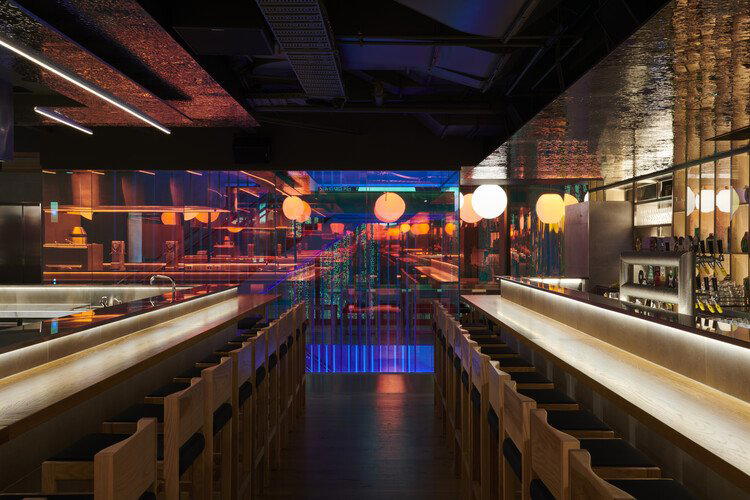
A Counter in Osaka's French Scene
Osaka's French dining scene has long operated in the shadow of its kaiseki heritage, yet the city has produced a tier of small, counter-led French restaurants that hold their own against any in the country. That tier is defined by restraint in format and precision in execution: seven or eight seats, no private rooms, a sommelier who also functions as the room's entire service team, and a price point that signals serious intent without reaching the four-figure-per-person territory of the city's leading Japanese tables. Point is a Michelin-starred modern French restaurant in Osaka's Fukushima Ward, priced at the ¥¥¥¥ tier.
The Tabelog platform, Japan's most widely used restaurant review system, has recognised Point with a Bronze Award in each consecutive year from 2022 through 2026, alongside three selections for the Tabelog French WEST 'Tabelog 100' list in 2021, 2023, and 2025. A Michelin star followed in 2024. That combination of crowd-sourced consistency and guide recognition across six years places Point in a small group of Osaka French restaurants that have maintained their standing through a period of considerable change in the city's dining map, including post-pandemic consolidation and the absorption of several notable French addresses into the hotel sector.
The Setting and What It Signals
The seven-seat counter format is not incidental in Osaka's French scene. It is a deliberate structural choice that shapes everything from the cooking pace to the interaction between kitchen and guest. Counters of this scale allow a single chef to address every plate personally, and they concentrate the room's attention in a way that a ten-table dining room cannot replicate. Point operates this format in what Tabelog describes as a house restaurant, which in the Osaka context typically means a converted residential or light-commercial ground floor rather than a purpose-built hospitality space. The effect is an interior that reads more like a private atelier than a licensed restaurant, an increasingly common format among the city's French counter specialists.
Room is described as stylish and relaxing, with counter seating and spacious placement between covers. There are no private rooms. For a seven-seat counter, private use of the entire space is available, which makes it suitable for small group bookings where exclusivity matters more than capacity. The dress code prohibits casual dress, and children under ten are not permitted except under reserved-party conditions, both of which signal clearly where Point positions itself on the formality spectrum.
Wine program merits attention as a category signal. Tabelog notes the restaurant as 'particular about wine,' with a sommelier on service. At this price tier and seat count, a dedicated sommelier is not a given, it requires the operator to commit a significant share of the revenue to a role that does not cook. The presence of one at Point suggests the wine pairing is treated as an equal pillar to the food, rather than an ancillary offering. Credit cards including VISA, Mastercard, JCB, American Express, and Diners Club are accepted. Electronic payments and QR codes are not.
Price, Tier, and the Osaka French comparable set
Point's listed dinner range of JPY 20,000 to 29,999 places it at the upper-middle bracket of Osaka's French tier, and Tabelog's reviewer-derived average of JPY 30,000 to 39,999 for dinner suggests the actual spend frequently exceeds the headline figure once wine is factored in. A 10% service charge applies. That positions Point below the JPY 40,000-plus territory occupied by HAJIME and La Cime, both of which sit at the ¥¥¥¥ tier with significantly larger international profiles, but above the casual French bistro segment that operates in the JPY 5,000 to 10,000 range.
Within the ¥¥¥ bracket, Point competes with a different reference set. Différence, La Bécasse, LE PONT DE CIEL, and nent all occupy overlapping territory in terms of price and format. What distinguishes Point from that group is the unbroken run of Tabelog Bronze Awards across five consecutive years, a record of sustained peer recognition that few French addresses in western Japan can match at this tier. For context, Tabelog Bronze represents the top 3 to 5% of reviewed restaurants nationally, and the French WEST 100 selection further filters that down to particularly consistently rated French tables across the Kansai and western Japan region.
Across Japan more broadly, the counter-led French model that Point exemplifies is visible in comparable addresses: Sézanne in Tokyo operates at a higher price and international profile, while akordu in Nara and Goh in Fukuoka demonstrate how the format functions in smaller cities. Further afield, the benchmarks for the French counter tradition include Hotel de Ville Crissier in Switzerland, where the counter-to-kitchen intimacy that Japanese French restaurants have adopted originated in a different but recognisable philosophy of directness.
Sustainability and the Small-Counter Model
The editorial angle of environmental consciousness is rarely applied to French fine dining in Japan, but the counter model itself carries structural implications for waste and resource use that are worth examining. A seven-seat counter operating four days of dinner service per week with lunch available only on Thursdays and Fridays represents a significantly lower volume throughput than a twenty-seat dining room. At this scale, purchasing is tightly calibrated: there is no buffer inventory for dishes that may or may not sell, because the menu is designed around what arrives and in what quantity. The result is a procurement discipline that, by necessity, tends toward daily-market sourcing and minimal buffer stock.
Japan's premium French counter tier has broadly aligned with the seasonal sourcing principles that kaiseki codified centuries earlier, and Point's format is consistent with that alignment. The Toyonaka location, situated in the residential belt north of Osaka proper, placed it closer to the Kansai agricultural hinterland than most city-centre French addresses. The relocation to Shin-Fukushima, closer to Osaka's central Fukushima dining corridor, changes that proximity, though the small-counter model's purchasing logic remains the same regardless of address.
Non-smoking throughout and operating from a ground-floor residential conversion, Point's physical footprint is minimal by any hospitality measure.
Relocation and What It Changes
The move from Toyonaka to Shin-Fukushima, completed in late November 2025, shifts Point into one of Osaka's most active dining neighbourhoods. Fukushima Ward has become a concentration point for independent French and contemporary Japanese restaurants, and Point's new address at 3-12-20 Fukushima places it within walking distance of the ward's main dining strip. The former Toyonaka location was, by the restaurant's own Tabelog description, closer to a suburban house-restaurant format, a bus or car journey from the nearest rail station. The Shin-Fukushima location trades that residential quietness for the operational advantages of a denser hospitality neighbourhood: easier access for guests, proximity to specialist suppliers, and higher walk-past recognition.
Planning Your Visit
| Detail | Point | La Cime | Différence |
|---|---|---|---|
| Cuisine | French | French | French |
| Price tier | ¥¥¥ (dinner JPY 20 to 29k listed; ~30 to 39k actual) | ¥¥¥¥ | ¥¥¥ |
| Seats | 7, counter only | Not specified | Not specified |
| Michelin | 1 Star (2024) | 2 Stars | Not specified |
| Tabelog Award | Bronze 2022 to 2026 | Gold | Bronze |
| Location | Fukushima (from Nov 2025) | Chūō-ku | Osaka central |
| Lunch | Thu–Fri only (JPY 10 to 14k) | Available | Available |
| Sommelier | Yes | Yes | Not confirmed |
Point is closed on Mondays. Dinner runs Tuesday, Wednesday, Saturday, and Sunday from 18:00. Lunch is available Thursday and Friday only, from 12:00 to 14:30. Two parking spaces are available if requested at booking. The website is point-accueillir.com. Always confirm current hours with the restaurant directly following the relocation.
Comparable Japanese fine dining is tracked at Harutaka in Tokyo, Gion Sasaki in Kyoto, 1000 in Yokohama, and 6 in Okinawa.
A Minimal comparable set
Comparable venues nearby, for context on price, style, and recognition.
| Venue | Cuisine | Price |
|---|---|---|
| PointThis venue — the venue you are viewing | Fukushima, Modern French Fine Dining | $$$$ |
| La Baie | Kita, Michelin-Starred French Seafood | $$$$ |
| Différence | Nishi, French with a Sense of Japan | $$$$ |
| IDÉAL bistro | Chūō, Michelin-Starred French Bistro | $$$$ |
| Yoshiko | Kita, Fugu Fine Dining | $$$$ |
| milpa | Nishi, Modern Mexican | $$$$ |
Recognition history
Dated appearances from independent guides and award organizations, with the underlying list record or original source where available.
Michelin 1 Star
Michelin
Tabelog Bronze #348
Tabelog
Tabelog 100 #90 · No. 90
Tabelog · Tabelog 100 - French - WEST - 2025
Tabelog Bronze
Tabelog
Michelin 1 Star
Michelin
Continue exploring
More in Osaka
Restaurants in Osaka
Browse all →




Bars in Osaka
Browse all →



Hotels in Osaka
Browse all →




Wineries in Osaka
Browse all →
At a Glance
- Modern
- Elegant
- Sophisticated
- Intimate
- Date Night
- Special Occasion
- Business Dinner
- Standalone
- Sake Program
Current opening hours
- Monday
- Closed
- Tuesday
- 6–9 p.m.
- Wednesday
- 6–9 p.m.
- Thursday
- 12–2 p.m., 6–9 p.m.
- Friday
- 12–2 p.m., 6–9 p.m.
- Saturday
- 6–9 p.m.
- Sunday
- Closed
Hours can change for holidays and private events. Last verified .
Simple and modern space in a quiet residential area, offering a refined and elegant atmosphere for quality dining.