Our verdict
On St. Clair Avenue West, La Bruschetta occupies a stretch of Toronto that has long anchored the city's Italian-Canadian dining tradition. For readers who want to understand how Italian cooking took root in Toronto, this address is a useful reference point.

Pearl is the En Primeur Club membership app, where members save venues, book tables and use the concierge.

The menu
What to order
- Vitello Alla Bruschetta
- Bruschetta
- Pappardelle Tartufate
St. Clair West and the Ritual of the Italian Dining Room
There is a particular grammar to the Italian-Canadian dining room that St. Clair Avenue West has preserved better than almost anywhere else in Toronto. The approach along that stretch of the avenue, past espresso bars, salumerias, and the remnants of what was once called Little Italy's northern corridor, sets an expectation before you reach the door. The room you enter at La Bruschetta carries that accumulated context: tablecloths, the low hum of a neighbourhood at dinner, and a pacing that assumes you are not in a hurry. That pacing is itself the first signal about what kind of meal this will be.
In a city where the premium end of the dining spectrum has shifted decisively toward tasting-menu formats, Alo and Aburi Hana both operate on the seated-and-surrendered model, where the kitchen controls pace entirely, the à la carte Italian dining room represents a structurally different relationship between diner and kitchen. Here, the guest sets the tempo. Antipasto arrives when you order it. The secondi waits until you are ready. That autonomy is not incidental; it is the defining ritual of this category of restaurant, and St. Clair West remains one of its more reliable homes in Toronto.
Where La Bruschetta Sits in the Toronto Italian Conversation
Toronto's Italian dining spectrum runs from neighbourhood trattorie to the contemporary Italian end represented by DaNico and the Michelin-recognised formality of Don Alfonso 1890, which brings Southern Italian technique into a $$$$ price tier anchored by a multi-generational brand. La Bruschetta at 1317 St. Clair Ave W does not compete in that register.
That positioning is worth understanding clearly. The restaurant is not trying to occupy the same critical space as Sushi Masaki Saito or the ambitious contemporary Canadian kitchens that draw attention from out-of-city visitors. It operates in a category where the metrics of success are different: return rates, neighbourhood loyalty, and whether the cooking holds up over years rather than whether it earns a season of press. Across Canada, a handful of addresses have built this kind of durational credibility, Aux Anciens Canadiens in Quebec City and Eigensinn Farm in Singhampton represent different but comparable versions of the same durability logic.
The Customs of the Meal
The bruschetta reference in the name is an editorial note about what kind of cooking this is: olive oil, bread, simplicity used as a starting point rather than a terminus. Italian cuisine at this register is built on the idea that the ritual of the meal, the sequence, the conversation, the sharing, matters as much as individual dish execution. A starter of bruschetta or cured meats is not a course to be dispatched before the main event; it is the opening movement of a longer social occasion.
This stands in contrast to the omakase and kaiseki formats that dominate critical conversation in Toronto right now, where the diner's role is largely receptive. At a neighbourhood Italian room like this, the diner is an active participant in constructing the meal. Choosing between a pasta and a risotto, deciding whether to add a salad, determining whether the table wants to share a secondi or order individually, these are decisions that shape the evening's character. The kitchen's job is to execute reliably within that framework, not to impose a sequence.
For context on how this format plays out at higher price tiers, the contemporary Italian approach at Don Alfonso 1890 and the Canadian fine dining seen at Tanière³ in Quebec City or AnnaLena in Vancouver all move toward more prescribed sequences. The neighbourhood Italian room is, in that sense, a deliberate counterpoint to the direction the premium end of the market has taken.
The St. Clair West Address and What It Signals
The address itself carries meaning. St. Clair Avenue West between Dufferin and Caledonia has historically been a working node of Toronto's Italian-Canadian community, and restaurants along this stretch have tended to survive or fail based on neighbourhood embeddedness rather than critical attention. That is a different selection pressure than what operates in the King West or Ossington corridors, where concepts cycle faster and press coverage drives more of the traffic.
A restaurant that has maintained a presence on this stretch has done so by being useful to its immediate community in a sustained way. That is not a guarantee of cooking quality, longevity and excellence are different things, but it is evidence of a functional relationship between a kitchen and its regulars. Comparable neighbourhood-anchored longevity can be found at addresses like Barra Fion in Burlington or Jérôme Ferrer - Europea in Montréal, each operating in a community-first rather than press-first mode.
For the visitor rather than the neighbourhood regular, the relevant question is whether the cooking and the room offer something that the more destination-oriented Italian options in Toronto do not. The answer is probably yes, but for specific reasons: the pacing is slower, the expectation of a formal dining event is lower, and the cost of entry is almost certainly more accessible than the $$$$ tier represented by Don Alfonso 1890 or the omakase counters of Sushi Masaki Saito. For a broader view of where La Bruschetta fits within Toronto's dining options, see our full Toronto restaurants guide.
Planning Your Visit
La Bruschetta is located at 1317 St. Clair Ave W, accessible via the St. Clair West subway station on Line 1, with the restaurant a short walk west along the avenue. Given the neighbourhood positioning and the format of the room, this is not a venue where weeks-ahead booking is typically required, though weekend evenings along this stretch do see consistent local demand, and contacting the restaurant directly before arriving on a Friday or Saturday is the practical move. Dress code expectations align with the neighbourhood Italian register: tidy casual is the norm, and anything more formal would be overcorrection. The meal structure invites a two-to-three-hour table without pressure, which is part of the point.
Frequently asked questions
What should I order at La Bruschetta?
As a general principle, neighbourhood Italian rooms in Toronto at this address tend to anchor their menus around house-made pasta, regional Italian meat preparations, and direct antipasto. The name itself foregrounds bruschetta as a reference point for the kitchen's orientation toward simplicity and olive-oil-led technique. Ask the front-of-house what has been on the menu longest, in this category, longevity on the menu is often the most reliable indicator of what the kitchen does consistently well. For comparison on how Italian cuisine operates at a higher price point in Toronto, Don Alfonso 1890 offers a calibration point.
Should I book La Bruschetta in advance?
For a neighbourhood Italian room on St. Clair West, walk-ins are generally more feasible than at Toronto's award-recognised fine dining addresses, venues like Alo, which operates at the $$$$ tier with tasting-menu formats and significant advance booking demand. That said, weekend evenings in established neighbourhood corridors do fill, and a same-day call is a reasonable precaution. The venue's positioning in a community-oriented rather than destination-dining category means the booking pressure is structurally lower than at press-driven addresses.
What's the signature at La Bruschetta?
What the name signals, and what the address on St. Clair West reinforces, is a kitchen anchored in Italian-Canadian trattoria tradition rather than contemporary reinterpretation. That tradition, executed at a neighbourhood scale, is itself the signature register. For a version of Italian cooking that has been formally recognised at the award level in Toronto, Don Alfonso 1890 and DaNico provide direct comparison points.
How does La Bruschetta compare to other Italian restaurants in Toronto?
La Bruschetta occupies the neighbourhood trattoria register of Toronto's Italian dining spectrum, a category defined by community longevity, accessible pricing, and à la carte structure rather than tasting-menu ambition. At the contemporary Italian end, DaNico and Don Alfonso 1890 operate at the $$$$ price tier with more formal service codes and award-level credentials. For readers mapping the full range, the Toronto restaurants guide places it alongside other addresses across price tiers and cuisine categories.
Comparison Snapshot
Comparable venues nearby, for context on price, style, and recognition.
| Venue | Cuisine | Price | Notes |
|---|---|---|---|
| La BruschettaThis venue (the venue you are viewing) | Authentic Umbrian Italian | $30–50 | Not listed |
| Birroteca-Eataly Yorkville | Italian Birroteca with Craft Beer | $30–50 | Yorkville |
| Zia's Place | Southern Italian Handmade Pasta | Not listed | Little Portugal |
| Little Anthony's | Italian Osteria | $50–100 | Bay Street Corridor |
| Trio Ristorante Pizzeria | Authentic Italian Pizza & Pasta | $20–30 | Lawrence Park North |
| Cantina Mercatto | Modern Italian with Pizza and Pasta | $30–50 | Church-Yonge Corridor |
Continue exploring
More in Toronto
Restaurants in Toronto
All restaurants in Toronto →
Bars in Toronto
All bars in Toronto →


Details
- Rustic
- Cozy
- Classic
- Date Night
- Family
- Casual Hangout
- Standalone
- A La Carte
- Gluten Free Options
Current opening hours
- Monday
- Closed
- Tuesday
- Closed
- Wednesday
- 6–9:30 PM
- Thursday
- 6–9:30 PM
- Friday
- 6–10 PM
- Saturday
- 5:30–10 PM
- Sunday
- Closed
Hours can change for holidays and private events. Hours as of .
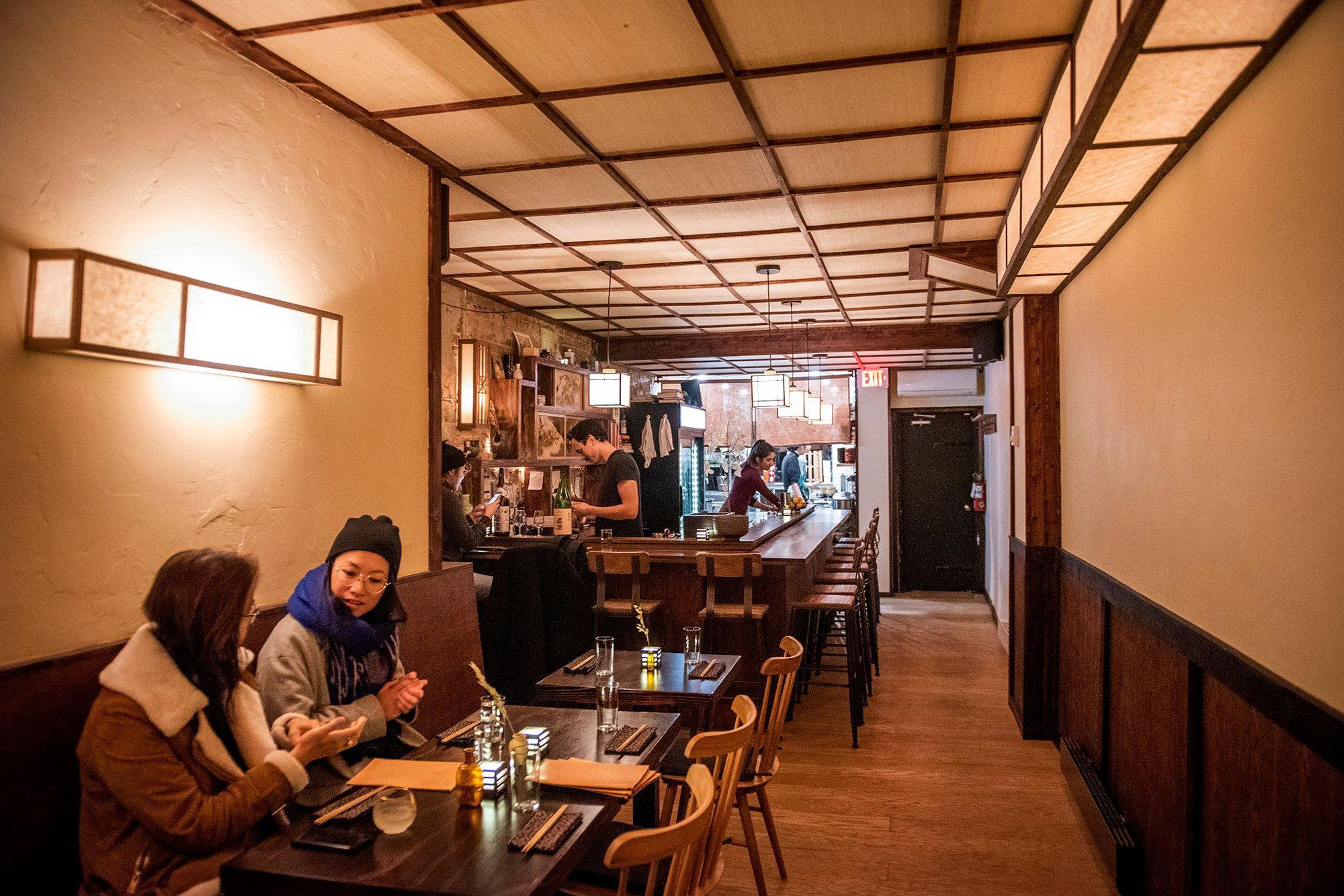
Warm, cozy rustic atmosphere with family-driven service evoking home-cooked Italian traditions.