Our verdict
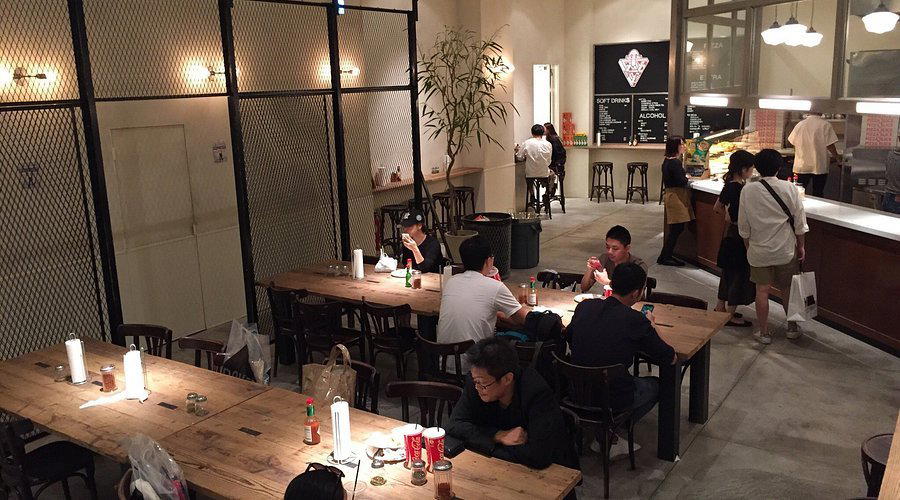
A by-the-slice pizzeria operating out of Daikanyama's Sarugakucho neighbourhood, PIZZA SLICE brings a format rare in Tokyo's dining scene to one of the city's most design-conscious postcodes. The counter-service, casual-eat approach sits in deliberate contrast to the omakase and kaiseki counters that dominate Tokyo's premium dining conversation, offering a different kind of ritual entirely.

Pearl is the En Primeur Club membership app, where members save venues, book tables and use the concierge.
The menu
What to order
- Cheese Slice
- Pepperoni Slice
- Homemade Meatball Slice
That inversion is worth sitting with. Venues like RyuGin ask the diner to surrender an evening, to follow a sequence set entirely by the kitchen, to observe quiet etiquette at a counter where the pace is the chef's. The by-the-slice counter asks nothing comparable. The ritual here is self-directed: you look, you point, you eat.
Slice Culture in a City That Doesn't Have One
New York built the sidewalk slice into municipal identity over decades. Rome and Naples codified their own standing-and-eating formats around pizza al taglio and street-facing counters long before either city's food scenes attracted international scrutiny. The by-the-slice format exists here only at the margin, which means that where it does appear, it tends to attract visitors and residents who are specifically looking for that informal register rather than stumbling into it.
Daikanyama's position in this makes sense. The neighbourhood draws an international-minded, design-literate cohort that has often lived or travelled abroad and carries a reference set that includes New York bodegas, London market stalls, and Milanese bakeries. A slice counter here lands differently than it would in, say, the izakaya-dense alleys around Yurakucho. The surrounding context frames it as knowing rather than incidental. That positioning shapes the crowd and the pace. Foot traffic here is more local and purposeful than it is tourist-heavy or office-lunch driven.enprimeurclub. That contrast is instructive.enprimeurclub. There is no reservation window to track, no dress code implied by the room, no sequence to follow. The decision-making happens in front of a display case, and the meal is finished before most kaiseki courses have left the kitchen. That speed is the point. The format is not a shortcut to something more elaborate; it is its own complete thing, with its own satisfactions. The slice as a format is as much a cultural reference as a culinary one. Both traditions are legitimate; they are simply different arguments about what pizza is for.enprimeurclub.com/restaurants/hajime-osaka-restaurant">HAJIME in Osaka, Gion Sasaki in Kyoto, and Goh in Fukuoka, Abon in Ashiya, affetto akita in Akita, Aji Arai in Oita, Ajidocoro in Yubari District, Akakichi in Imabari, and Le Bernardin in New York City and Lazy Bear in San Francisco represent the opposite end of the ceremony-and-pacing spectrum in American dining, which sharpens the contrast when thinking about what the casual counter format is and is not trying to do. Current hours, any seasonal adjustments, and specific slice availability are best confirmed directly on arrival or through current local listings, as precise operational details are not published centrally.enprimeurclub.enprimeurclub.
Frequently asked questions
Where exactly is PIZZA SLICE?
PIZZA SLICE is located at Japan, 〒150-0033 Tokyo, Shibuya, Sarugakucho, 1−3 代官山上新ビル 1F, Tokyo.
Is PIZZA SLICE in Daikanyama suitable for a quick solo meal between Shibuya and Nakameguro?
The ground-floor counter at 1-3 Sarugakucho sits within a short walk of Daikanyama Station on the Tokyu Toyoko Line, which places it between Shibuya and Nakameguro on a natural route. The by-the-slice format is built for exactly this kind of in-between eating, no table, no set time, no commitment. Tokyo has very few venues running this format in a neighbourhood that otherwise skews toward sit-down dining.
What do people recommend at PIZZA SLICE?
Because PIZZA SLICE operates a by-the-slice counter format at its Sarugakucho address in Daikanyama, the approach is to order what's freshest out of the oven at the time of your visit rather than working from a fixed menu. The slice-counter format itself makes this straightforward: you see what's available, you point, you eat. Regulars in this part of Shibuya tend to treat the selection as circumstantial rather than planned.
What's the best way to book PIZZA SLICE?
PIZZA SLICE operates as a walk-up counter at 1-3 Sarugakucho, Daikanyama, the by-the-slice format runs on the logic of no reservations and no waiting list. Arrive, assess what's on the counter, and order. This is the defining operational difference between a slice counter and Tokyo's more formal dining formats.
Cost Snapshot
Comparable venues nearby, for context on price, style, and recognition.
| Venue | Cuisine | Price | Awards | Notes |
|---|---|---|---|---|
| PIZZA SLICEThis venue (the venue you are viewing) | New York-Style Pizza by the Slice | $10–20 | Not listed | Not listed |
| THE GREAT BURGER | Southern California–style American Burger Diner | $20–30 | Tabelog 100 #92 | Shibuya, Southern California–style American Burger Diner |
| fummy's grill | California Cuisine with Asian-Western Fusion | $30–50 | Not listed | Shibuya, California Cuisine with Asian-Western Fusion |
| Eagle | Classic Western-style bar & grill | $30–50 | Tabelog 100 #74 | Shinjuku, Classic Western-style bar & grill |
| No.18 | Gourmet Hamburger Shop | $20–30 | Tabelog 100 #62 | Toshima, Gourmet Hamburger Shop |
| Burger Mania Shirokane ten | American-style Burger Cafe | $20–30 | Tabelog 100 #25 | Minato, American-style Burger Cafe |