Pitiona

Pitiona holds a place among La Liste's Top Restaurants for 2026, earning 76 points in a city whose markets and milpa farms supply some of Mexico's most distinctive raw ingredients. Sitting on Ignacio Allende in Oaxaca's historic centro, it represents the serious end of a dining scene built on mezcal, black clay pottery, and heirloom corn. For anyone exploring Oaxaca's restaurants at depth, it belongs in the conversation.
Pearl is the En Primeur Club membership app — saves, bookings, and concierge access live there. Same editors, same standards.
- Address
- Ignacio Allende 114, RUTA INDEPENDENCIA, Centro, 68000 Oaxaca de Juárez, Oax., Mexico
- Phone
- +52 951 514 0690
- Directions
- Get directions
 Saves & bookings on Pearl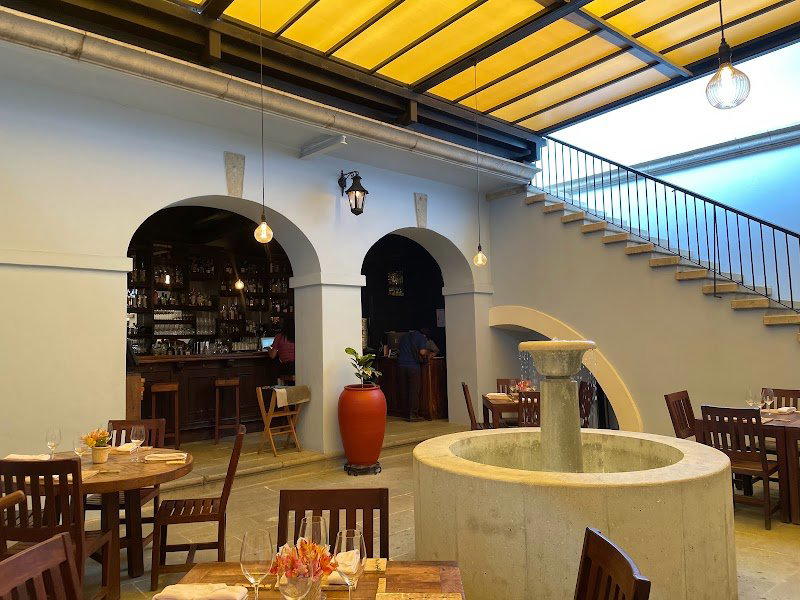
Where Oaxaca's Ingredients Do the Talking
Approach Calle Ignacio Allende from the zócalo and you enter a part of Oaxaca's centro that has been feeding people in one form or another for centuries. The colonial streetscape here is familiar enough, but step inside the address at number 114 and the scene shifts registers. The air carries the particular warmth of a kitchen that has been working since morning, a kitchen whose supply chain runs not through a distribution warehouse but through the Mercado Benito Juárez two blocks east and the milpa plots of the Central Valleys beyond. That sourcing logic is not incidental. In Oaxaca, it is the whole argument.
Pitiona earned 76 points in La Liste's 2026 ranking of leading restaurants globally, a recognition that places it inside a selective tier of Mexican addresses being assessed against international fine-dining benchmarks. La Liste draws on hundreds of global guides and review sources to produce its composite score, which means a 76-point result reflects sustained critical consensus rather than a single publication's enthusiasm. In Mexico, the restaurants sharing that recognition level include addresses like Pujol in Mexico City and Le Chique in Puerto Morelos, both operating in the contemporary Mexican register that treats indigenous ingredients as the foundation rather than the garnish.
The Oaxacan Sourcing Tradition and Why It Sets the Table
Oaxaca's reputation as one of Mexico's most ingredient-rich states is not rhetorical. The state produces seven distinct varieties of mole, more cultivated corn landraces than most countries maintain in their entirety, and a wild herb repertoire, including hierba santa, pitiona, chepiche, and verdolaga, that most serious Mexican kitchens have to import. The restaurant takes its name from Lippia graveolens, the aromatic Oaxacan herb used in everything from tamales to mezcal infusions. That naming choice signals something direct about what the kitchen prioritises: the edible flora of this specific valley, rather than a European template applied to local produce.
This is the pattern that distinguishes the serious end of Oaxacan dining from mere local colour. Restaurants in this tier treat the Tuesday market in Tlacolula, the Wednesday market in Etla, and the permanent stalls of the Mercado 20 de Noviembre not as atmosphere but as procurement infrastructure. The Central Valleys supply chiles negros, coloraditos, and chipotles that carry flavour profiles shaped by altitude and soil type in ways that commercially dried equivalents do not replicate. Heirloom corn from Calpulalpan or San Marcos Tlapazola produces masa with a different texture and sweetness than commodity nixtamal, and tortillas made from it behave differently on the comal. These are not small distinctions to a kitchen paying attention.
This sourcing specificity is what separates Pitiona's operating context from most fine-dining addresses elsewhere in Mexico. Compare it to the farm-integration model at Animalón in Valle de Guadalupe, where Baja's wine-country agriculture shapes the ingredient story, or the northern Mexican focus at KOLI Cocina de Origen in Monterrey. Each reflects a regional sourcing argument; Pitiona's argument is grounded in one of the world's most complex indigenous food systems.
Oaxaca's Dining Scene in Context
The city's restaurant tier has expanded considerably over the past decade, and Pitiona sits at the more considered, research-led end of that expansion. Oaxaca now draws international visitors with the same gravitational pull as San Sebastián or Chiang Mai, cities where the density of quality producers creates conditions for serious kitchens rather than just serious chefs. Across Mexico's broader fine-dining map, addresses like Pangea in San Pedro Garza García, HA' in Playa del Carmen, and Arca in Tulum operate within the same broader movement toward ingredient provenance as the primary editorial statement of a menu.
Internationally, the closest structural comparison is not European fine dining but places like Atomix in New York City, where a non-Western culinary tradition is presented through a technically rigorous format that neither exoticises the source culture nor erases it for external palatability. The difference is that Pitiona operates inside the tradition rather than interpreting it from a distance.
Planning a Visit
Oaxaca de Juárez is reachable by direct flights from Mexico City in under an hour, and the centro historic district is compact enough that most of the city's serious dining and mezcal addresses are walkable from any of the better hotels. The address at Ignacio Allende 114 is within a few minutes of the Santo Domingo church and the main market circuit. For broader orientation, our full Oaxaca de Juárez restaurants guide maps the dining scene by tier and neighbourhood. Complementary guides cover hotels, bars and mezcalerías, wineries and producers, and experiences across the city and valleys.
Given the La Liste recognition and the city's growing international profile, booking ahead is advisable. Oaxaca's high season runs from late October through the Día de Muertos period in early November, and again around Guelaguetza in July, when the city's accommodation fills weeks in advance and restaurant tables at the serious end of the market follow suit. Arriving outside those windows, particularly in January or February, tends to give the visitor more room to plan with shorter lead times, though the kitchen's sourcing calendar shifts accordingly toward dry-season produce.
For reference on how Oaxacan cuisine at this tier compares internationally, restaurants like Le Bernardin in New York City and Huniik in Mérida illustrate different expressions of the same underlying principle: that sourcing specificity, applied with technical discipline, produces a menu that cannot be replicated anywhere else. In Oaxaca's case, the flora of the Sierra Juárez and the Central Valleys is the irreplaceable variable. At Pitiona, it is also the point. For additional inspiration from Mexico's wine country, the sourcing model at Olivea Farm to Table in Ensenada and the open-kitchen approach at Lunario in El Porvenir offer instructive parallels from Baja.
How Pitiona Oaxaca De Juarez compares with similar nearby venues.
| Venue | Cuisine | Price | Awards |
|---|---|---|---|
| Pitiona | Not listed | Not listed | La Liste Top Restaurants (2026): 76pts |
| Zandunga | Mexican | $$ | Not listed |
| Cobarde | Contemporary | $$ | Not listed |
| Los Danzantes Oaxaca | Mexican | $$$ | Not listed |
| Tacos Del Carmen | Taqueria | Not listed | Not listed |
Recognition history
Dated appearances from independent guides and award organizations, with the underlying list record or original source where available.
La Liste Top Restaurants
La Liste
Continue exploring
More in Oaxaca De Juarez
Restaurants in Oaxaca De Juarez
Browse all →
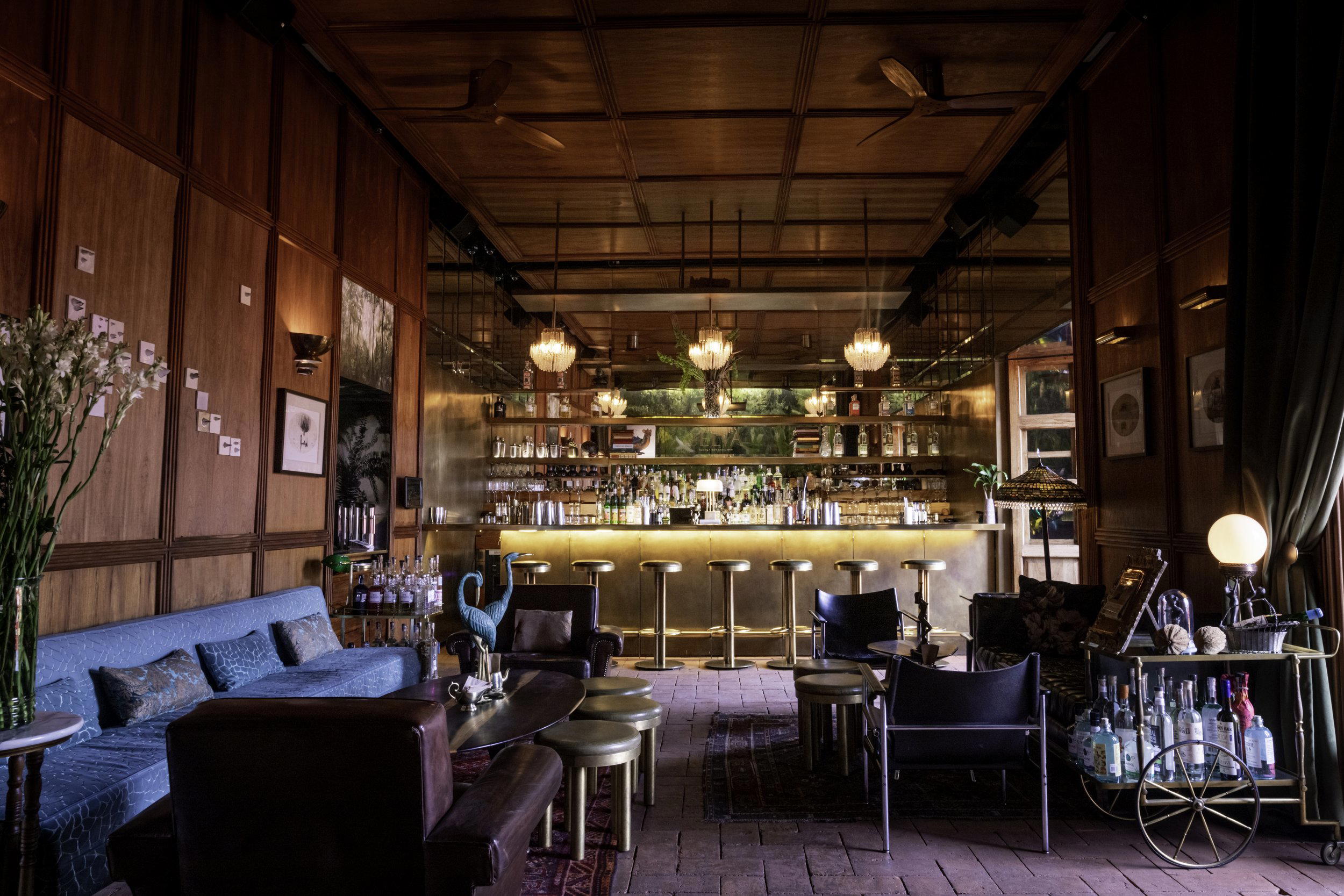
Bars in Oaxaca De Juarez
Browse all →
Hotels in Oaxaca De Juarez
Browse all →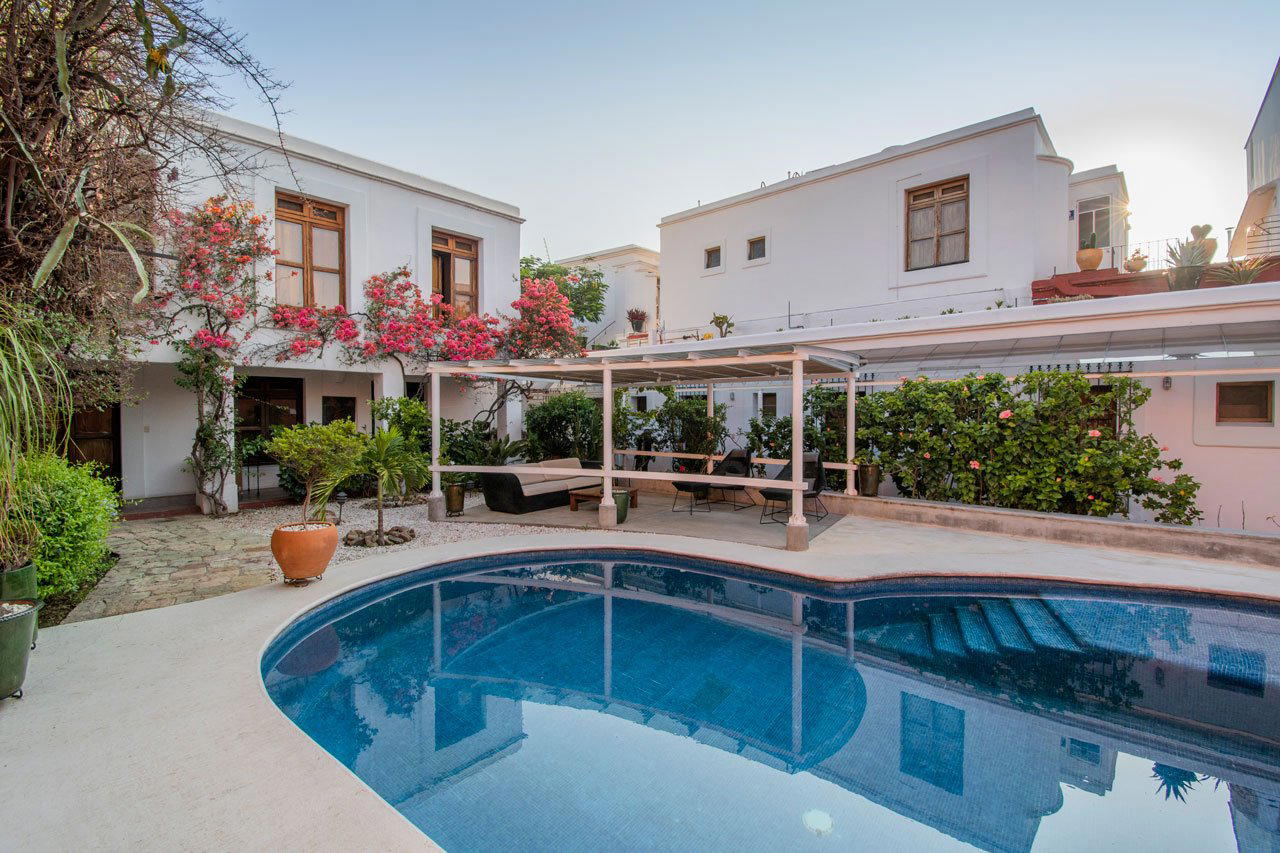
At a Glance
- Modern
- Elegant
- Sophisticated
- Scenic
- Date Night
- Special Occasion
- Rooftop
- Open Kitchen
- Terrace
- Craft Cocktails
- Local Sourcing
- Mountain
- Street Scene
Current opening hours
- Monday
- 1–11 PM
- Tuesday
- 1–11 PM
- Wednesday
- 1–11 PM
- Thursday
- 1–11 PM
- Friday
- 1–11 PM
- Saturday
- 1–11 PM
- Sunday
- 1–9 PM
Hours can change for holidays and private events. Last verified .
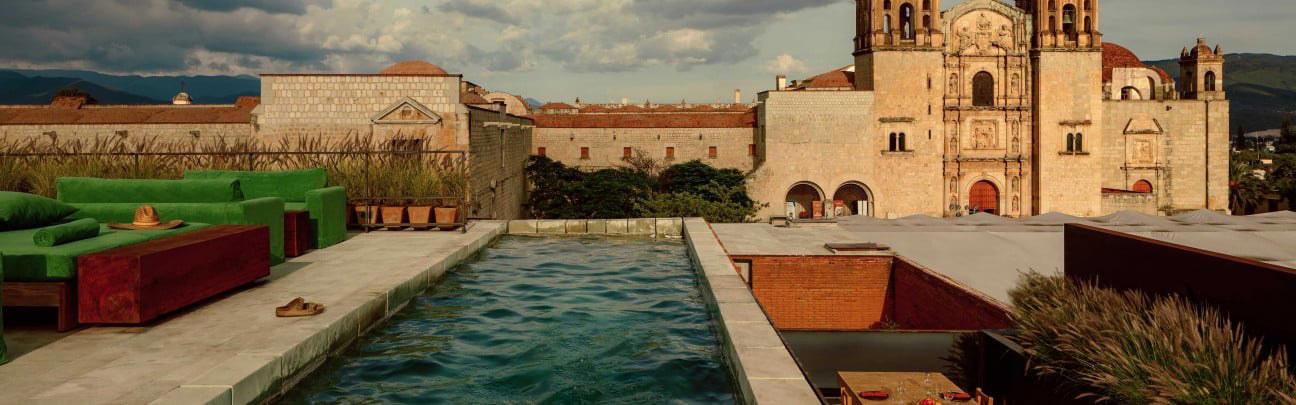
Dramatic rooftop terrace with far-reaching views of Santo Domingo Cathedral and mountains, offering a distinguished and welcoming atmosphere.
Know Before You Go
- Getting there
- Ignacio Allende 114, RUTA INDEPENDENCIA, Centro, 68000 Oaxaca de Juárez, Oax., Mexico