Pignut & The Hare

Pignut & The Hare occupies the Hare Inn at Scawton, a village pub setting on the edge of the North York Moors that has become a talking point in North Yorkshire dining for its grounding in local and foraged ingredients. The cooking here follows a tradition increasingly rare in rural England: named sourcing, seasonal constraint, and a menu shaped by what the surrounding landscape actually produces rather than what a supplier catalogue offers.
Pearl is the En Primeur Club membership app — saves, bookings, and concierge access live there. Same editors, same standards.
- Address
- Hare inn, Scawton, York YO7 2HG, United Kingdom
- Phone
- +441845597769
- Website
- pignutandthehare.co.uk
- Directions
- Get directions
 Saves & bookings on Pearl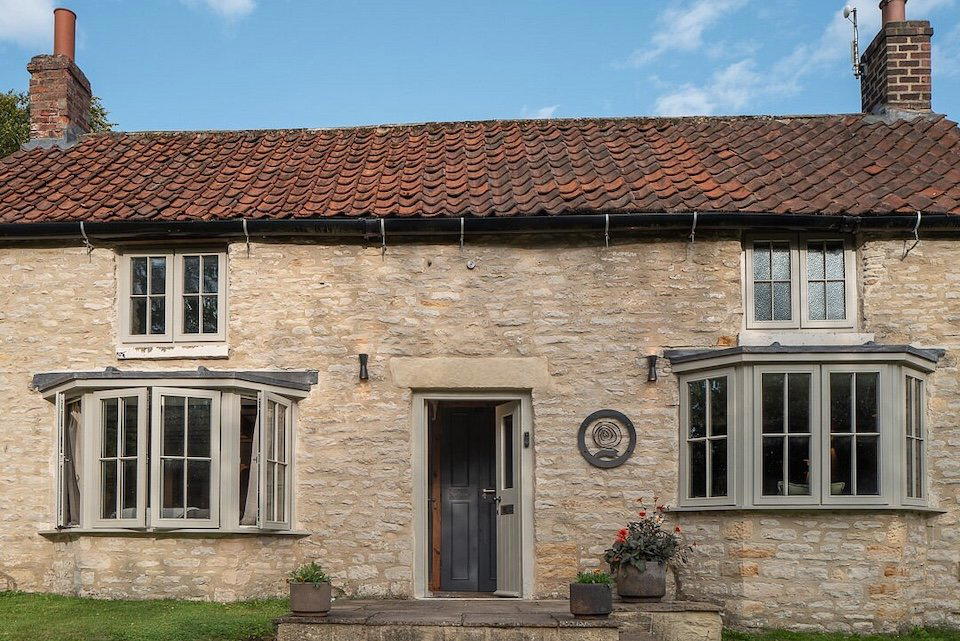
A North Yorkshire Village and What It Still Produces
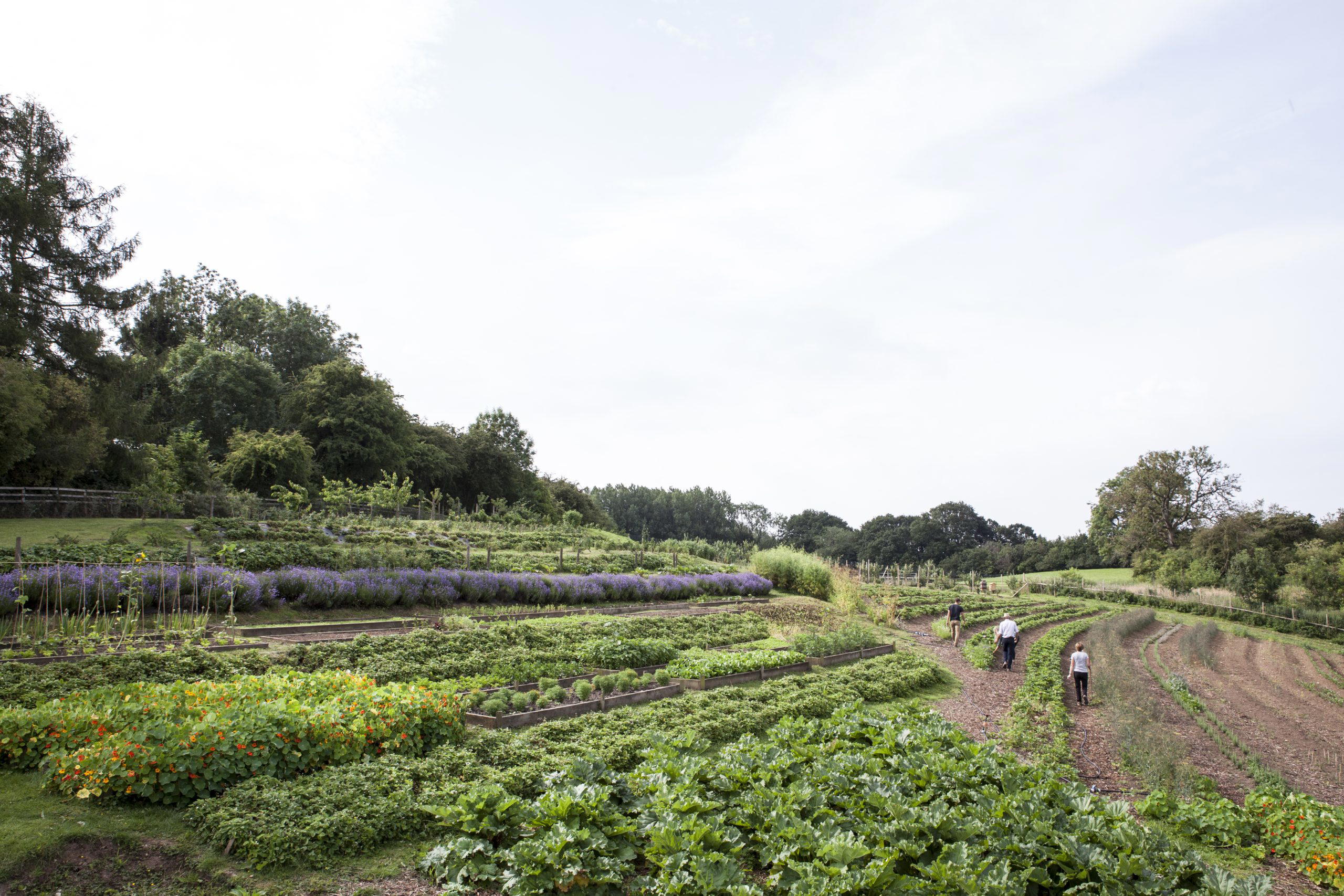
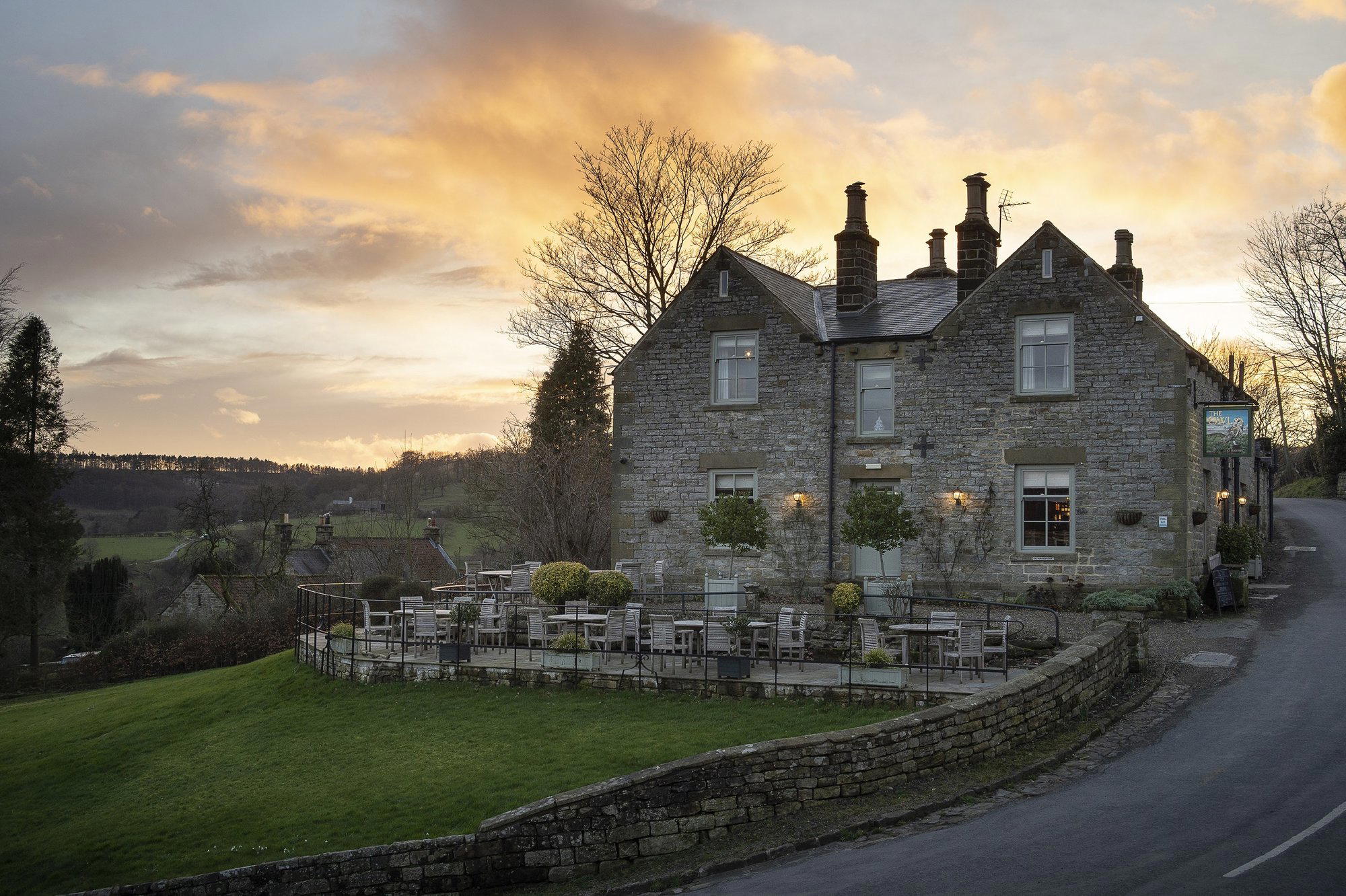
The North York Moors sit above the Vale of York in a way that feels deliberately apart from the rest of England's dining conversation. Villages like Scawton, just outside Thirsk, are not places you pass through; you go to them with intention. That intention, in the case of Pignut & The Hare at the Hare Inn, is increasingly about the food rather than merely the setting. Across rural Britain, the old country pub has split into two distinct categories: those that survive on proximity to a market town and those that build a reason to travel. Pignut & The Hare belongs to the second group, operating from a stone-built inn surrounded by farmland and moorland that is not decorative backdrop but active larder.
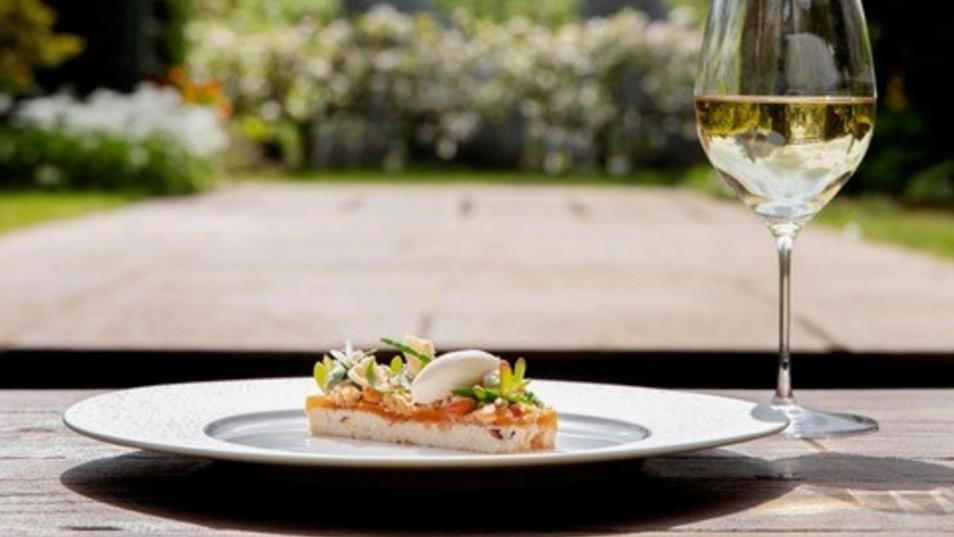
The name itself signals the editorial position. Pignut is a wild plant, Conopodium majus, common in the meadows and hedgerows of northern England and largely absent from any supermarket shelf. Naming a restaurant after it is a declaration of method: the kitchen is oriented toward what grows here, not what is available everywhere. That orientation places Pignut & The Hare in a small but growing cohort of British restaurants where the sourcing brief comes before the menu, and the menu changes because the land changes. For context on how that approach plays out at higher price tiers and with greater kitchen resources, L'Enclume in Cartmel and Moor Hall in Aughton both operate on similar sourcing philosophies in the wider Northern England region. What Pignut & The Hare offers is access to that same ingredient-first thinking at a village pub format.
Foraging, Farming, and the North York Moors Supply Chain
Ingredient-led cooking in Britain has a longer history than the current generation of chefs tends to acknowledge. The movement toward named farms, seasonal menus, and foraged additions did not originate with the restaurant boom of the 2010s; it describes how rural kitchens operated before industrial supply chains made consistency more commercially attractive than locality. What has changed is that restaurants like Pignut & The Hare are recovering that method deliberately, treating it as a defining quality signal rather than a practical constraint.
The North York Moors and the surrounding Hambleton district offer a particularly credible sourcing territory. The moorland carries wild herbs, fungi, and plants through the growing season that are specific to that altitude and soil type. The lower farmland around Thirsk and the Vale of York produces lamb, beef, and root vegetables tied to long-established agricultural patterns. A kitchen working this geography has access to ingredients that London's leading tasting menus import or simulate, available locally as a matter of course. The comparison is worth making: CORE by Clare Smyth in London has built considerable critical recognition around British produce at the summit of the market; Pignut & The Hare operates in the place where much of that produce originates, without the intermediary.
Across Britain, rural dining has developed two identifiable formats for this approach. The first is the destination restaurant that happens to occupy a rural building, with the countryside as atmosphere and the sourcing as concept. The second is the genuinely embedded kitchen, where the supply relationships predate the menu and the cooking reflects what is available this week rather than what was planned last month. Particularly instructive rural comparisons elsewhere in Britain include Ynyshir Hall in Machynlleth in Wales and Gidleigh Park in Chagford on Dartmoor, both of which demonstrate the range of ambition this category can sustain. Other reference points include Hand and Flowers in Marlow, hide and fox in Saltwood, Midsummer House in Cambridge, 33 The Homend in Ledbury, and Restaurant Sat Bains in Nottingham for the range of ways British kitchens are approaching regional identity through produce.
What the Setting Tells You Before You Eat
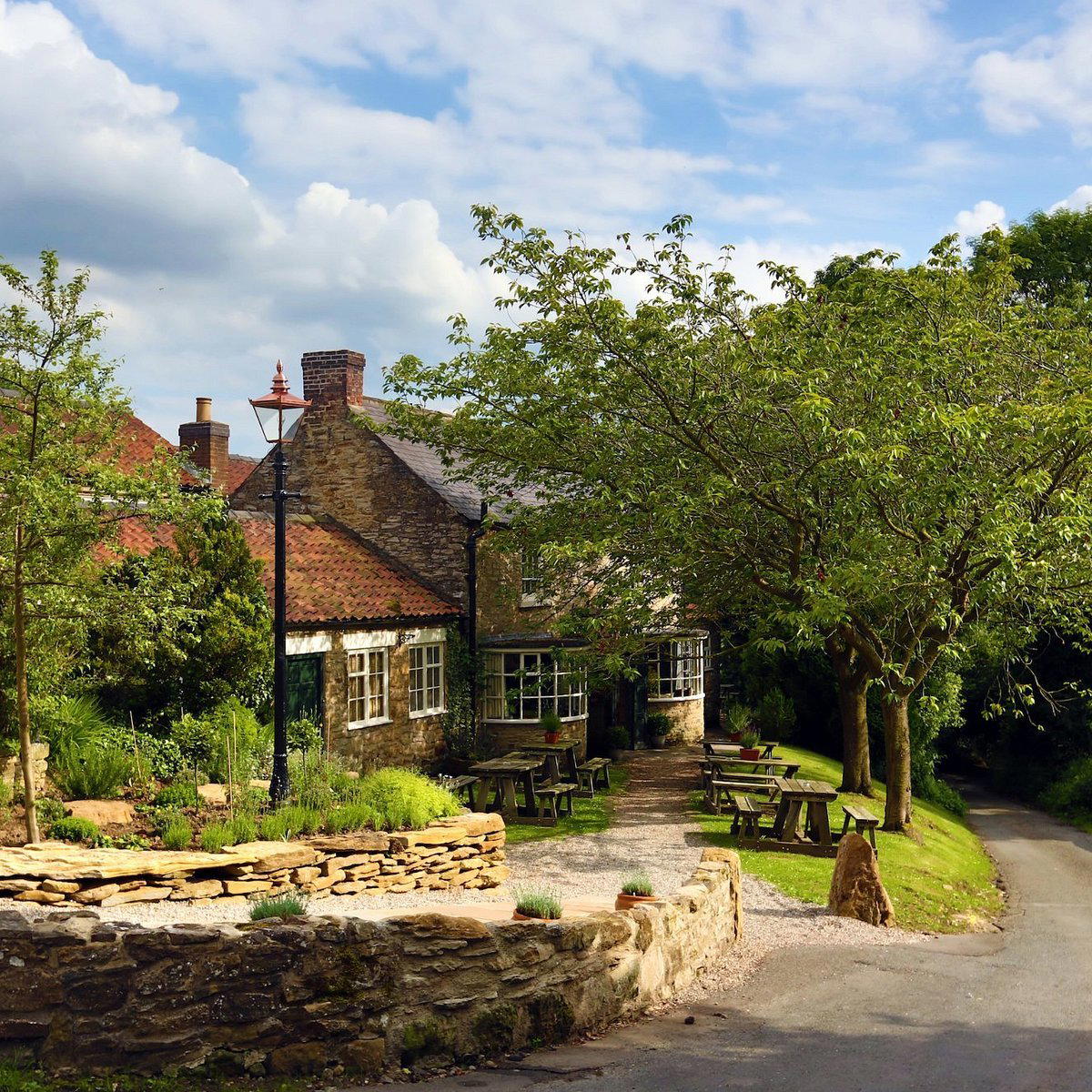
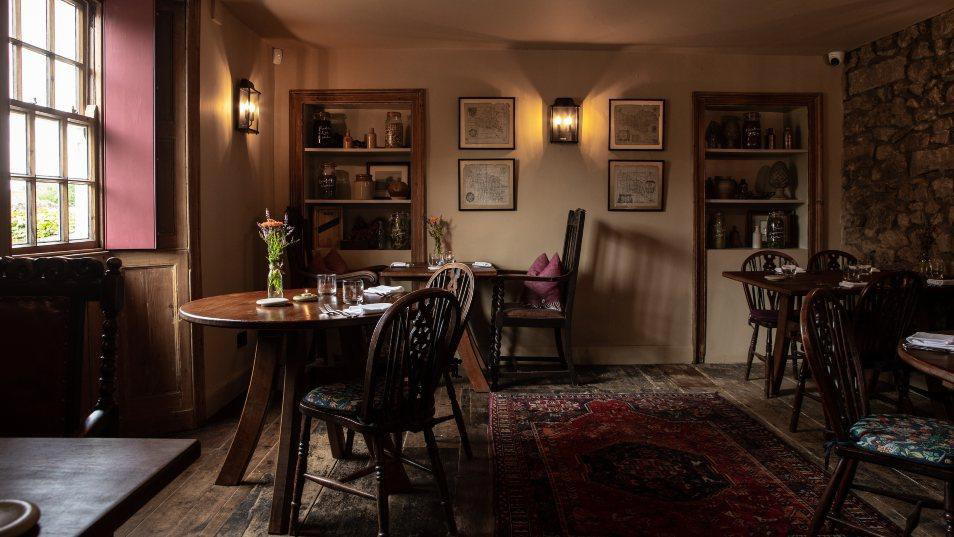
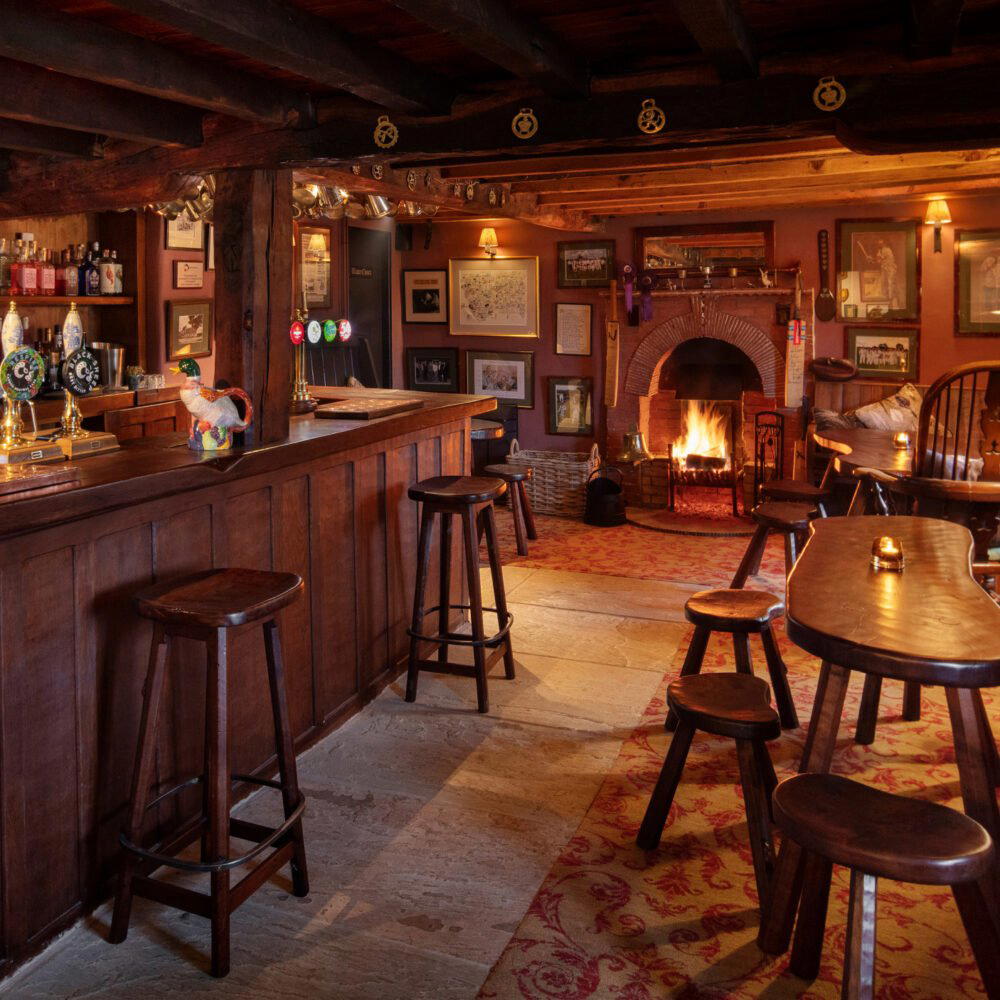
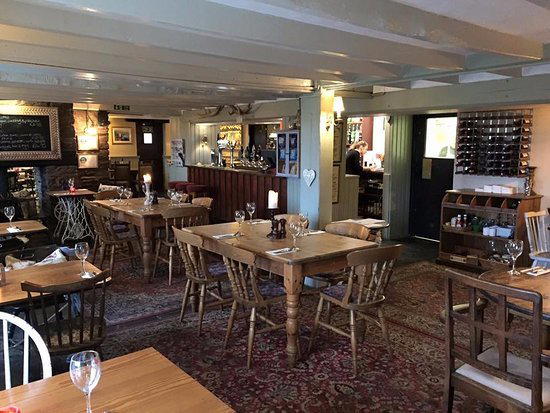
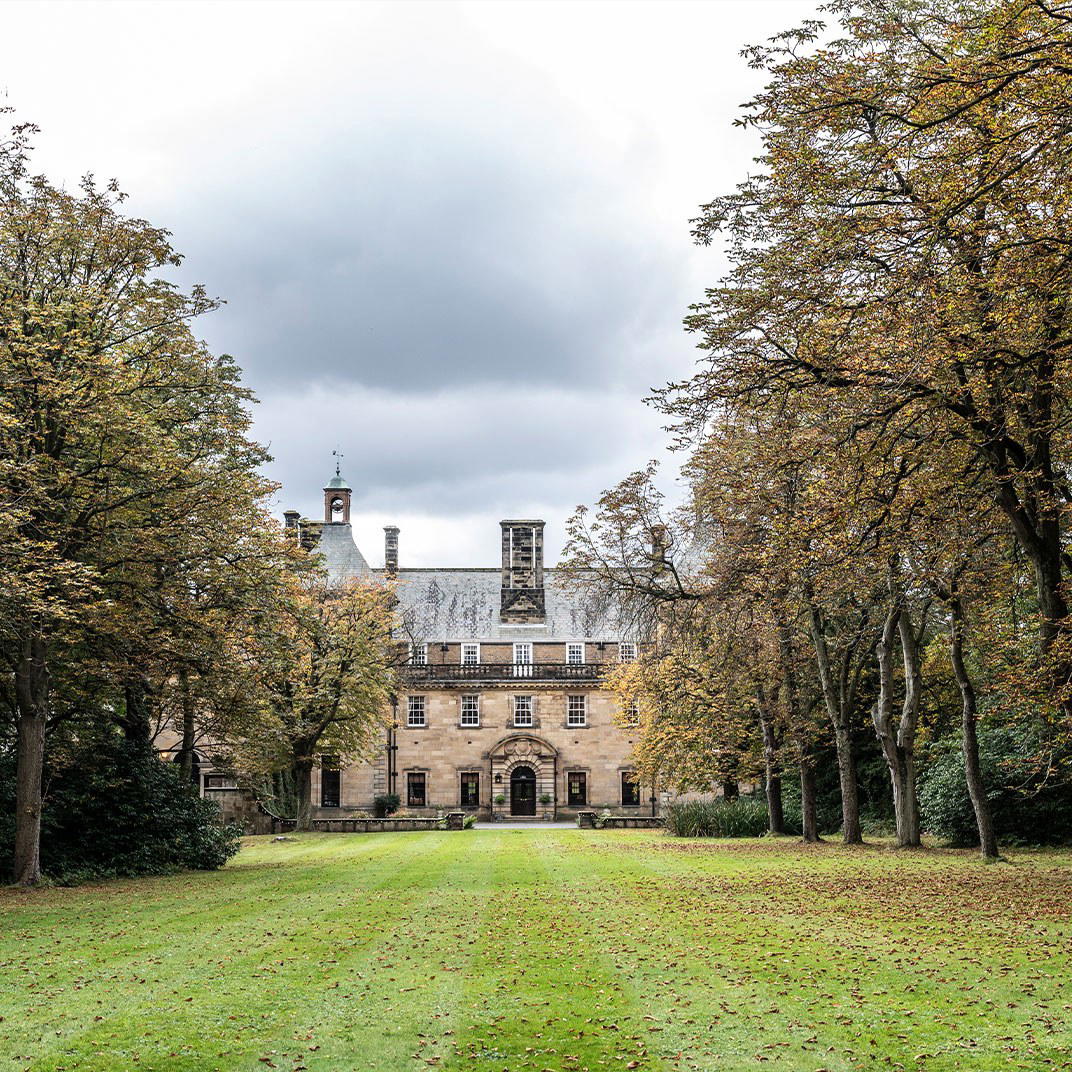
The Hare Inn at Scawton is a low-ceilinged, stone-walled building of the kind that survives because it was built to last rather than to impress. Arriving here from Thirsk, you follow a series of narrowing roads through open farmland before the village appears with the kind of abruptness common to the Moors. The pub's physical character is not curated rusticity; it is the actual result of a building that has served this community across different eras. That distinction matters in a period when the aesthetic of rural cosiness is easily reproduced. The experience of eating in a room that has genuinely aged, in a village that functions as a village rather than a dining destination, carries a different weight.
For those travelling from further afield, Thirsk sits on the A19 corridor between York and Teesside, with rail access to Thirsk station on the York to Middlesbrough line. Scawton is a short drive from Thirsk town centre, and the inn's location rewards combining a visit with wider exploration of the Hambleton Hills and the Moors. Booking ahead is advisable, particularly on weekends and through the spring and summer growing season.
Planning Your Visit
The Hare Inn at Scawton is not set up for passing trade, and that is the point. Pignut & The Hare is open Wednesday, Thursday, Friday, Saturday, and closed Monday, Tuesday, and Sunday. Reaching it requires a deliberate decision to leave Thirsk and drive into the Moors, which filters the clientele toward those who have sought it out. Reservations are the practical starting point; walk-in availability at weekends is unlikely given the scale of the premises. Seasonal timing matters: the foraging-led elements of the menu are most pronounced in spring through early autumn, when the Moors and surrounding farmland are productive. Winter visits offer a different register, with the stone interior and hearth-adjacent warmth of a pub that was built for exactly this kind of weather.
Quick Comparison
Comparable venues nearby, for context on price, style, and recognition.
| Venue | Cuisine | Price | Notes |
|---|---|---|---|
| Pignut & The HareThis venue — the venue you are viewing | Modern British Fine Dining | $$$ | Not listed |
| The Yellow Bittern | Irish-influenced British set-menu lunch | $$$ | King's Cross |
| Bread Street Kitchen & Bar | Modern British restaurant & bar by Gordon Ramsay | $$$ | City of London |
| 99 Station Street | Modern British Brasserie | $$$ | Burton upon Trent town centre |
| The Terrace | Modern British Small Plates | $$$ | Masham |
| Hispi | Modern British Bistro | $$$ | Didsbury East |
Recognition history
Dated appearances from independent guides and award organizations, with the underlying list record or original source where available.
AA Rosettes 3 Rosettes
AA Rosettes
Michelin Plate
Michelin
At a Glance
- Cozy
- Rustic
- Elegant
- Intimate
- Special Occasion
- Date Night
- Historic Building
- Natural Wine
- Local Sourcing
- Farm To Table
Current opening hours
- Monday
- Closed
- Tuesday
- Closed
- Wednesday
- 6–10 PM
- Thursday
- 6–10 PM
- Friday
- 1–10 PM
- Saturday
- 1–3:30 PM, 6–10 PM
- Sunday
- Closed
Hours can change for holidays and private events. Last verified .
Historical charm with warm, age-embodying atmosphere and quiet confidence.