Piccolo Nido
On North Street in Boston's North End, Piccolo Nido occupies the kind of address where the neighbourhood does half the storytelling. The street-level dining room sits inside one of America's most concentrated Italian corridors, where the menu architecture, rather than the room's scale, tends to be the deciding factor for returning guests. For visitors cross-referencing the city's Italian options, it belongs in the same conversation as the neighbourhood's longer-established names.
Pearl is the En Primeur Club membership app — saves, bookings, and concierge access live there. Same editors, same standards.
- Address
- 257 North St, Boston, MA 02113
- Phone
- +16177424272
- Website
- opentable.com
- Directions
- Get directions
 Saves & bookings on Pearl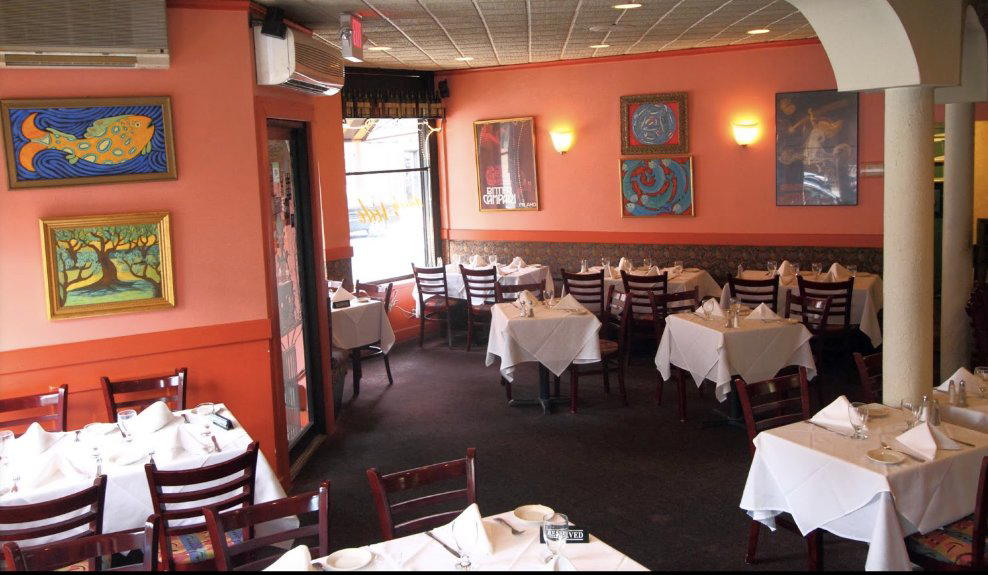
North End, North Street, and What the Address Already Tells You
Piccolo Nido is an Authentic Southern Italian restaurant at 257 North St, Boston, MA 02113. Within a few blocks of the Paul Revere House and the Old North Church, more than sixty Italian restaurants occupy a footprint that would struggle to accommodate half that number elsewhere. Rents are high, foot traffic is dense, and the turnover of weaker concepts has been consistent enough that survival past a decade functions as a form of peer review. On North Street, where Piccolo Nido sits at 257 North St, that context applies immediately. The street connects the interior of the neighbourhood to the waterfront, meaning the crowd is a mix of deliberate diners and people walking from the Greenway who decide mid-stride to stop. For a restaurant operating in that corridor, menu legibility, how quickly a guest can read what a kitchen does and for whom it does it, matters as much as execution.
The North End's Italian-American tradition is not monolithic. At one end of the spectrum sit the red-sauce trattorie that have operated on the same recipes since the mid-twentieth century, drawing multigenerational locals and tourists in roughly equal measure. At the other end, a smaller cohort of operators has imported more contemporary regional Italian references: sharper acid, less cream, shorter pasta cooking times, and wine lists that venture past Chianti Classico. These two camps coexist on the same blocks, which means a prospective guest's first task is identifying which tradition a given room is working within before committing to a table. The menu architecture at any North End restaurant is the fastest way to make that read.
Reading the Menu as an Argument
In Italian dining, the sequence of a menu, antipasti, primi, secondi, contorni, dolci, is not merely structural. It is an implicit statement about what the kitchen believes a meal should be. Restaurants that compress this into a single-page hybrid (pasta dishes running alongside proteins, with appetizers folded into the same column) are usually signalling a preference for accessibility over tradition. Those that maintain the full sequence, with meaningful depth at each stage, are making a different argument: that the arc of the meal, from light acidity in the opener through to the weight of a braised secondo, is itself the product. The distinction shapes every decision a kitchen makes, from ingredient sourcing to plate timing.
At Piccolo Nido, the address on North Street places it within a neighbourhood where both approaches are in play simultaneously. Across the block from similar-vintage Italian rooms, and a short walk from spots that have already moved toward a more contemporary framework, its position in that spectrum is the operative question for anyone who has eaten their way through the street's options. Italian-American cooking at its most assured in this neighbourhood tends to treat pasta as the center of gravity, with the antipasti section functioning as a holding pattern and the secondi as an optional supplement for larger appetites. A menu that inverts that weighting, or that treats the secondi with the same seriousness as the primi, is making a different case about what dinner in the North End can be.
The North End in a Wider American Italian Frame
Boston's Italian-American dining tradition sits in an interesting position nationally. It predates the fine-dining Italian wave that reshaped perceptions in major coastal cities during the 2000s and 2010s, when chefs with stagière experience in northern Italy began insisting on regional specificity, house-milled semolina, and protein sourcing that matched what a Piedmontese trattoria might actually serve. That wave influenced New York's Italian scene significantly, produced a smaller number of adherents in Los Angeles and San Francisco, and reached Boston in a more muted form. The result is a neighbourhood where traditional Italian-American cooking and more regionally inflected Italian cooking coexist without a clear winner, which makes the North End more interesting than its reputation as a red-sauce corridor would suggest.
For context on what that more technically demanding Italian tradition looks like when it reaches the highest tier, 8 1/2 Otto e Mezzo Bombana (Hong Kong) in Hong Kong provides a useful reference point: Italian fine dining built on classical French structure, operating in a non-Italian city with ingredient sourcing as its primary credential. Closer to home, Agosto in Boston represents the tasting-menu chef's counter format that has emerged as an alternative to the à la carte Italian room. Neither of those formats describes the North End's dominant mode, which remains the convivial room with a full à la carte sequence and a wine list weighted toward accessible Italian producers.
For readers comparing Boston's Italian options against the full spectrum of American fine dining, The French Laundry in Napa, Alinea in Chicago, and Le Bernardin in New York City represent the multi-course, structured-tasting format at its most demanding. Addison in San Diego, Providence in Los Angeles, and Blue Hill at Stone Barns in Tarrytown reflect how regionally rooted sourcing has shaped the upper tier elsewhere. The North End operates in a different register entirely, one where neighbourhood continuity and the confidence of a familiar menu often matter as much as innovation.
Within Boston, the seafood-forward rooms on or near the waterfront take a different approach to the city's dining identity. 1928 Rowes Wharf and 75 on Liberty Wharf both sit closer to the harbour, while Ostra addresses a premium seafood-grill format that competes on sourcing rather than tradition. The Italian room on North Street is answering a different question than any of those. It is asking what the meal looks like when the structure is inherited rather than invented.
Know Before You Go
- Address: 257 North St, Boston, MA 02113
- Neighbourhood: North End, Boston
- Reservations: Contact details not confirmed at time of publication; walk-in availability varies by season
- Leading approach: Nearest MBTA stop is Haymarket (Green and Orange Lines), approximately a 5-minute walk through the neighbourhood
- Context: North Street is a primary corridor connecting the North End interior to the waterfront; the room is one of several Italian options within a short block radius
Fast Comparison
Comparable venues nearby, for context on price, style, and recognition.
| Venue | Cuisine | Price | Notes |
|---|---|---|---|
| Piccolo NidoThis venue — the venue you are viewing | Authentic Southern Italian | $$ | Not listed |
| Ciao Roma | Southern Italian with Roman influences | $$ | North End |
| Panza | Traditional Italian | $$ | North End |
| Assaggio | Positano Italian | $$ | North End |
| Al Dente Ristorante | Traditional Italian Trattoria | $$ | North End |
| Artu | Italian Rosticceria & Trattoria | $$ | North End |
Continue exploring
More in Boston
Restaurants in Boston
Browse all →
Bars in Boston
Browse all →
Hotels in Boston
Browse all →

Wineries in Boston
Browse all →
At a Glance
- Cozy
- Intimate
- Date Night
- Family
- Special Occasion
- Standalone
Current opening hours
- Monday
- 5–10 PM
- Tuesday
- 5–10 PM
- Wednesday
- 5–10 PM
- Thursday
- 5–10 PM
- Friday
- 5–10:30 PM
- Saturday
- 5–10:30 PM
- Sunday
- Closed
Hours can change for holidays and private events. Last verified .
Cozy and welcoming family atmosphere with a peaceful escape feel.