On the lower stretch of Saint-Laurent, Pho Bang New York occupies a well-worn address in Montreal's downtown Vietnamese corridor, where the draw is broth depth and portion scale rather than restaurant theatre. The room skews functional, the menu runs long, and the pricing sits at the accessible end of the boulevard's dining spectrum. It is a reference point for Vietnamese comfort eating in a city that takes its immigrant food traditions seriously.
Pearl is the En Primeur Club membership app — saves, bookings, and concierge access live there. Same editors, same standards.
- Address
- 1001 Boul. Saint-Laurent, Montréal, QC H2Z 1J4, Canada
- Phone
- +1 514 954 2032
- Website
- phobangnewyork.com
- Directions
- Get directions
 Saves & bookings on Pearl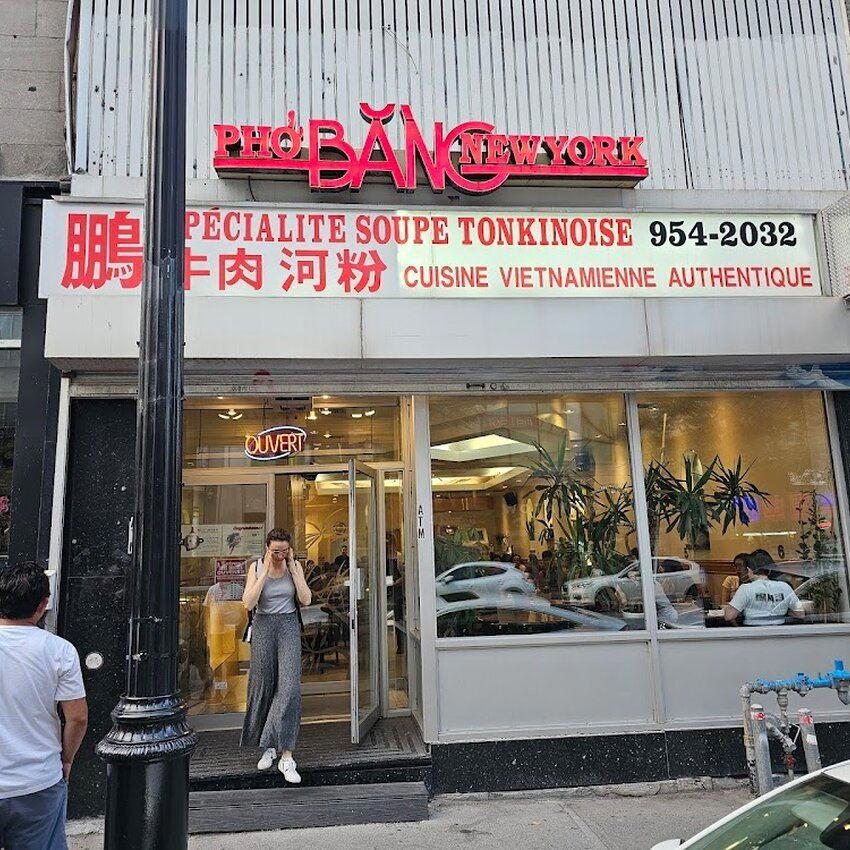
Saint-Laurent's Vietnamese Corridor and What It Tells You About Montreal
Boulevard Saint-Laurent has functioned as Montreal's primary immigrant dining artery for over a century. The logic of the street has always been density and overlap: Portuguese rotisseries beside Greek tavernas beside Jewish delis beside Vietnamese soup counters, each format shaped by the community that carried it here. The Vietnamese stretch of the lower boulevard emerged in the 1970s and 1980s as Southeast Asian immigration reshaped the city's demographic map, and the restaurants that took root there were built on the economics of community feeding: large pots, long hours, accessible prices, and menus that assumed the customer understood what they were ordering.
Pho Bang New York is a casual, walk-in-friendly Vietnamese restaurant at 1001 Boul. Saint-Laurent, Montréal, QC H2Z 1J4, Canada, serving authentic Vietnamese pho at about US$12 per person. It sits inside that tradition. The name itself is a piece of culinary geography, referencing the New York Vietnamese restaurant culture that influenced so many of the cooks and owners who eventually settled in Montreal. The address has been a soup destination for decades, and the surrounding blocks carry the same institutional weight that makes this stretch feel less like a restaurant district and more like an archive of Montreal's migration history.
The Room and the Rhythm of the Meal
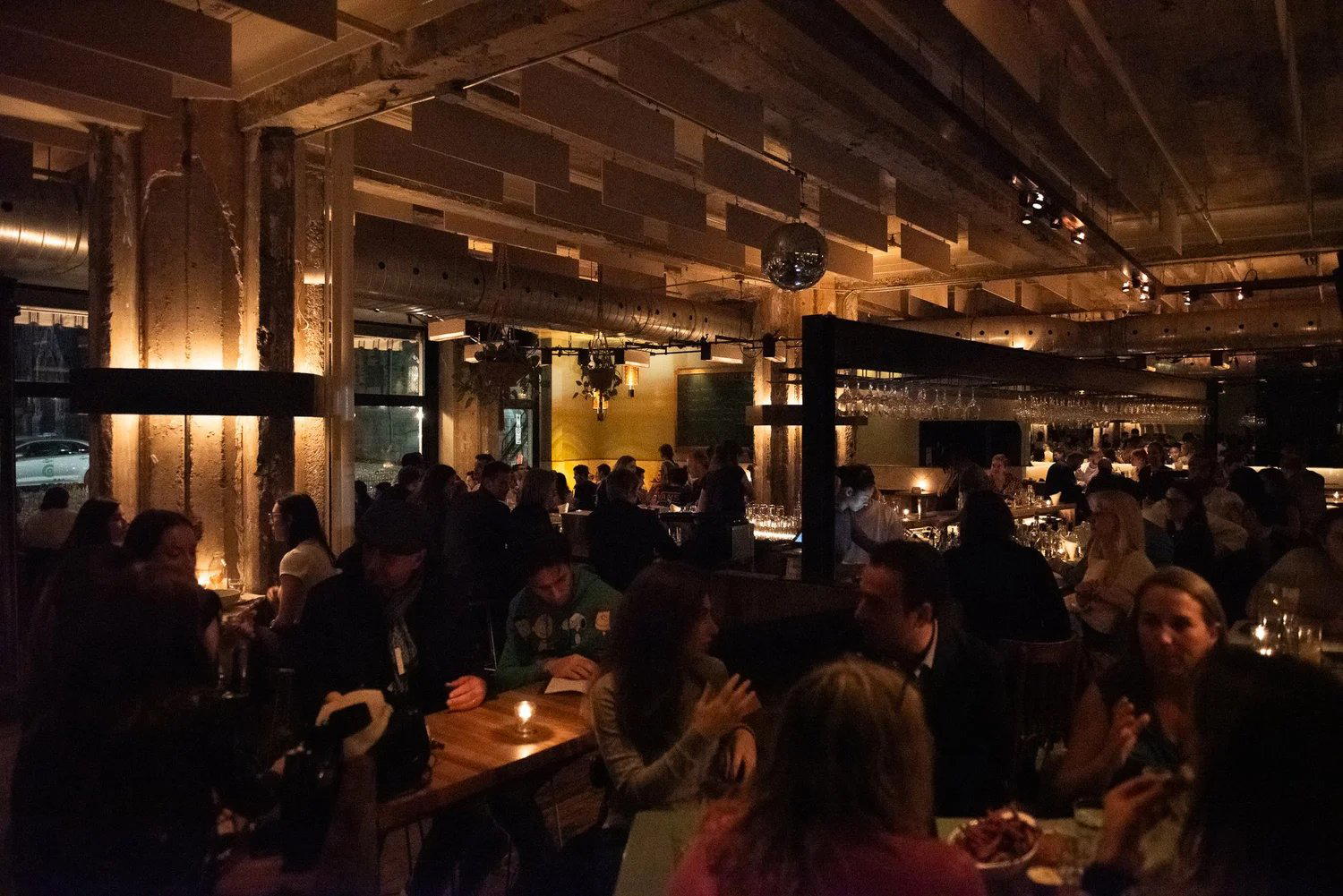
The interior at Pho Bang New York follows the template that defines this category across North America: fluorescent lighting, laminated menus, and tables configured for fast turnaround. The broth arrives quickly. The portions are scaled for appetite rather than presentation. The room is loud in the way that working restaurants are loud, not because anyone is performing conviviality, but because people are actually there to eat.
That atmosphere is, in its own way, a sustainability signal. High-turnover, low-margin Vietnamese soup restaurants operate with a resource efficiency that the fine-dining world has spent the last decade trying to approximate. Broth is built from bones that would otherwise be discarded; the menu is designed around whole-animal and whole-vegetable utilization; waste is structurally minimized because the economics demand it. This is practical kitchen logic, the same logic that has governed pho production in Vietnam for generations and that travelled with the diaspora to cities like Montreal, New York, and Toronto.
Across Canada, a growing number of restaurants are formalizing these instincts. Narval in Rimouski works with hyper-local sourcing as a defining constraint. Eigensinn Farm in Singhampton runs an almost entirely closed-loop kitchen. Fogo Island Inn in Joe Batt's Arm has built its identity around community-embedded sourcing. What the Vietnamese soup counter does differently is achieve the same structural outcome without the formal framework, because the tradition predates the conversation.
What the Menu Represents in the Vietnamese Diaspora Tradition
Vietnamese restaurant menus in the diaspora tend to run wide rather than deep, covering pho in multiple configurations alongside vermicelli bowls, spring rolls, grilled proteins, and clay pot preparations. The breadth reflects a practical calculation: immigrant restaurant owners know that a single-format menu risks alienating customers who want choice, particularly in cities where Vietnamese food is still being discovered by newer audiences.
The pho itself, in this tradition, is the anchor. Broth quality is what separates a serious counter from a perfunctory one. The Vietnamese approach to stock-making, hours of simmering with star anise, cinnamon, cloves, and charred aromatics, produces a liquid that carries more information about craft than most dishes served at twice the price in more decorated rooms. The condiment spread, fish sauce, hoisin, fresh herbs, bean sprouts, chillies, functions as a personalisation layer that gives the diner control over the final flavour profile, something that high-end tasting menus almost never do.
The Vietnamese counter's interactive condiment logic is, in food-culture terms, a democratising format.
Where Pho Bang New York Sits in Montreal's Dining Ecosystem
Montreal's dining reputation internationally rests on its French-inflected fine dining and its smoked meat delis. Schwartz's on Saint-Laurent is one cited example of the latter. But the Vietnamese corridor a few blocks south represents a chapter of the city's food identity that gets less coverage in the international press and more use from the people who actually live here. That gap between critical attention and daily utility is where places like Pho Bang New York operate.
The boulevard also houses 3 Pierres 1 Feu and Abu el zulof, each representing a different strand of the street's ethnic diversity.
Elsewhere in Canada, restaurants at different price points are working through related questions about identity and place. Alo in Toronto and Tanière³ in Quebec City represent the formal, terroir-led answer. Restaurant Pearl Morissette in Lincoln and AnnaLena in Vancouver work in the mid-formal register. The Pine in Creemore and Cafe Brio in Victoria occupy their own regional niches. The Vietnamese counter on Saint-Laurent answers none of these questions in the same language, but it is part of the same national conversation about what Canadian dining is and where its authority comes from.
Internationally, when thinking about the broader context of broth-centred counter dining, the comparison set includes everything from the ramen bars of Tokyo to the pho shops of Hanoi's Old Quarter. The North American diaspora version is not a pale imitation; it has evolved its own conventions and its own regulars. Le Bernardin in New York City and Lazy Bear in San Francisco sit at one end of the dining spectrum; the Vietnamese counter sits at the other. Both ends are necessary for understanding how a city actually eats.
Planning Your Visit
The restaurant is located at 1001 Boulevard Saint-Laurent, within walking distance of the Saint-Laurent metro station and at the edge of the neighbourhood where the boulevard transitions from the Quartier des Spectacles toward Chinatown. The format is casual and walk-in friendly; no reservation infrastructure is in place for a room of this type. The practical advice is to arrive before the lunch and dinner peaks if you want immediate seating, as the room fills quickly with regulars who know the timing. Pricing sits at the accessible end of the Montreal dining spectrum, consistent with what the Vietnamese counter format has always offered: maximum broth for minimum spend.
Cuisine and Awards Snapshot
Comparable venues nearby, for context on price, style, and recognition.
| Venue | Cuisine | Price | Notes |
|---|---|---|---|
| Pho Bang New YorkThis venue — the venue you are viewing | Authentic Vietnamese Pho | $ | Not listed |
| HÀ Vieux-Montréal | Vietnamese & Laotian Street Food | $$ | Vieux Montréal |
| Pho Ly Quoc Su | Authentic Vietnamese Pho | $$ | Quartier des Spectacles |
| Sandwicherie Sue - Duluth | Vietnamese Banh Mi & Asian Sandwiches | $ | La Fontaine Park |
| Restaurant Jade Chinatown | Traditional Chinese Buffet | $ | Quartier Chinois |
| Foodchain | Health-Conscious Vegetarian Fast Casual | $ | Golden Square Mile |
At a Glance
- Lively
- Energetic
- Casual Hangout
- Solo
- Group Dining
- Standalone
Current opening hours
- Monday
- 10 AM–9:30 PM
- Tuesday
- 10 AM–9:30 PM
- Wednesday
- 10 AM–9:30 PM
- Thursday
- 10 AM–9:30 PM
- Friday
- 10 AM–9:30 PM
- Saturday
- 10 AM–9:30 PM
- Sunday
- 10 AM–9:30 PM
Hours can change for holidays and private events. Last verified .
Warm and lively with a busy, crowded environment; wobbly tables and hints of chaos create an authentic, unpretentious atmosphere where diners sit close to neighbors, evoking a genuine Chinatown experience rather than a sanitized chain.