



A 14-seat tasting counter in Montreal's Saint-Henri neighbourhood, Sabayon earned a Michelin star in 2025 under chef Federico Michieletto. The wine program spans 1,150 bottles across Bordeaux, Burgundy, Italy, Australia, and California, with three sommeliers guiding a list that prices at moderate markup. Two sittings serve lunch and dinner, with a weekend afternoon tea format.
Pearl is the En Primeur Club membership app — saves, bookings, and concierge access live there. Same editors, same standards.
- Address
- 2194 Rue Centre, Montréal, QC H3K 1J4, Canada
- Phone
- +1 514-503-1883
- Website
- sabayon.ca
- Directions
- Get directions
 Saves & bookings on Pearl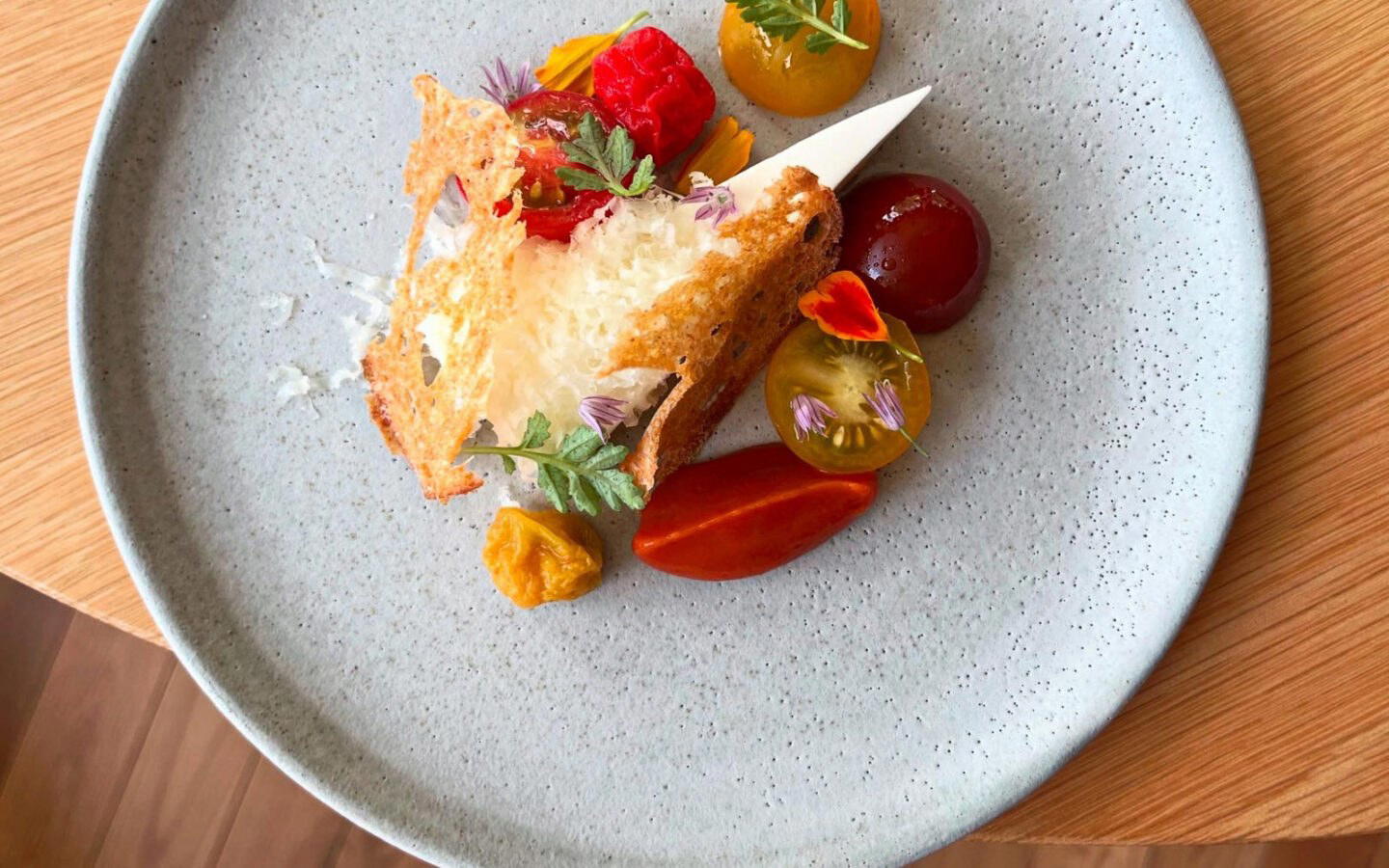
A Counter Defined by Its Constraints
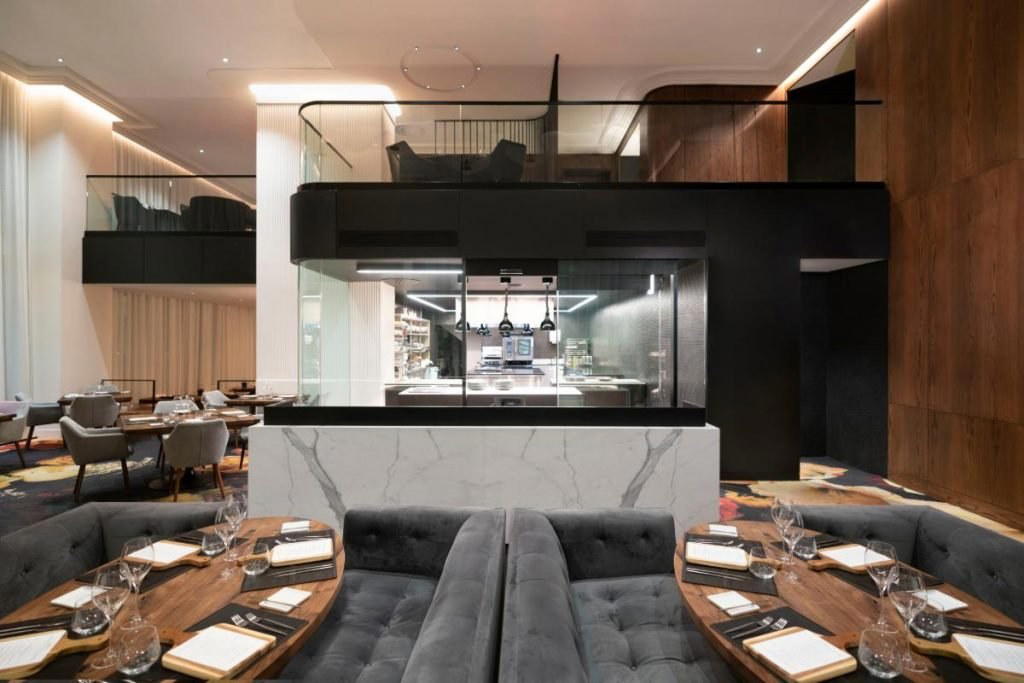
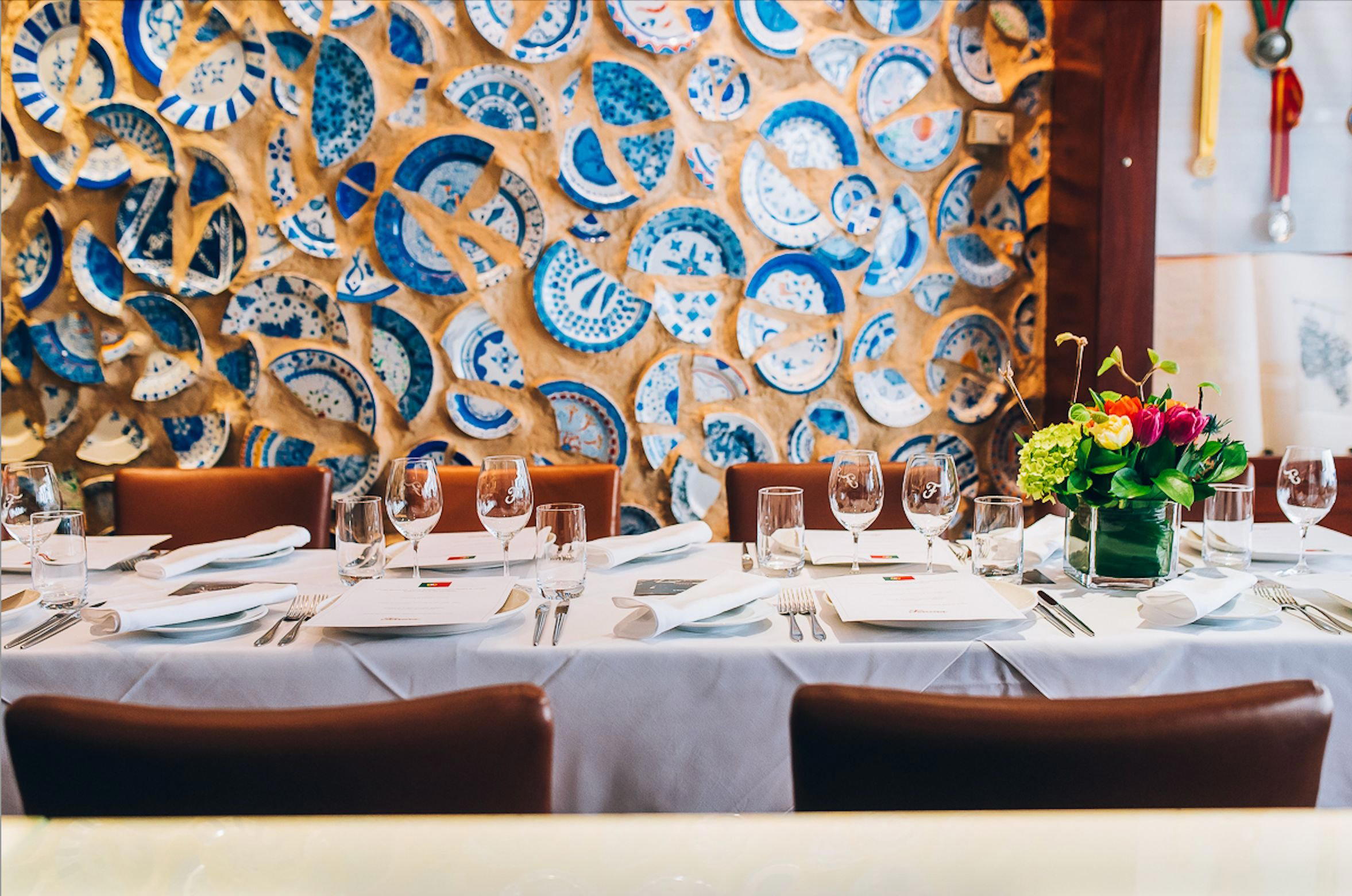
Montreal's tasting-menu tier has long favored low seat counts, personal service, and seasonal menus, a working model closer to what you find in Lyon's bouchons or Copenhagen's cook-at-counter format than anything resembling the grand-room tradition of French fine dining. Sabayon, on Rue Centre in Saint-Henri, fits squarely inside that lineage. At 14 seats, the room imposes a discipline that shapes everything: how the kitchen times its courses, how the sommeliers communicate across the counter, how the whole experience reads as intimate rather than theatrical.
This format is now formally recognised in Montreal's 2025 Michelin Guide. A one-star award for Sabayon places it in a cohort of Montreal restaurants where the cuisine is European in its roots and technique but sourced and inflected locally, a category that also includes Jérôme Ferrer - Europea and Mastard, though Sabayon's format sits at a more intimate scale than either.
The Cultural Thread Behind the Menu
European modern cuisine at this price and format tier in Montreal is not a neutral category. It tends to carry a specific set of assumptions: classical French technique as the base grammar, with seasonal Quebec produce as the primary vocabulary. That tension, between imported culinary tradition and local sourcing, is where kitchens at this level make their most interesting decisions. Do you lean into the French register and let the terroir appear as accent, or do you let local ingredients set the agenda and use classical technique as a quiet support structure?
Sabayon's menu, under chef Federico Michieletto, navigates that question through a cuisine that features local fish including char and eel, market produce from small local growers, and occasional meat preparations such as braised beef cheek with turnip and radicchio. Imported ingredients appear primarily in the pastry component, chocolate, coffee, and sesame, keeping the savoury courses rooted in what Quebec's seasons make available. The result is a six-course tasting menu that reads as European in architecture but sourced with the same regional discipline you find in places like Tanière³ in Québec City or Narval in Rimouski.
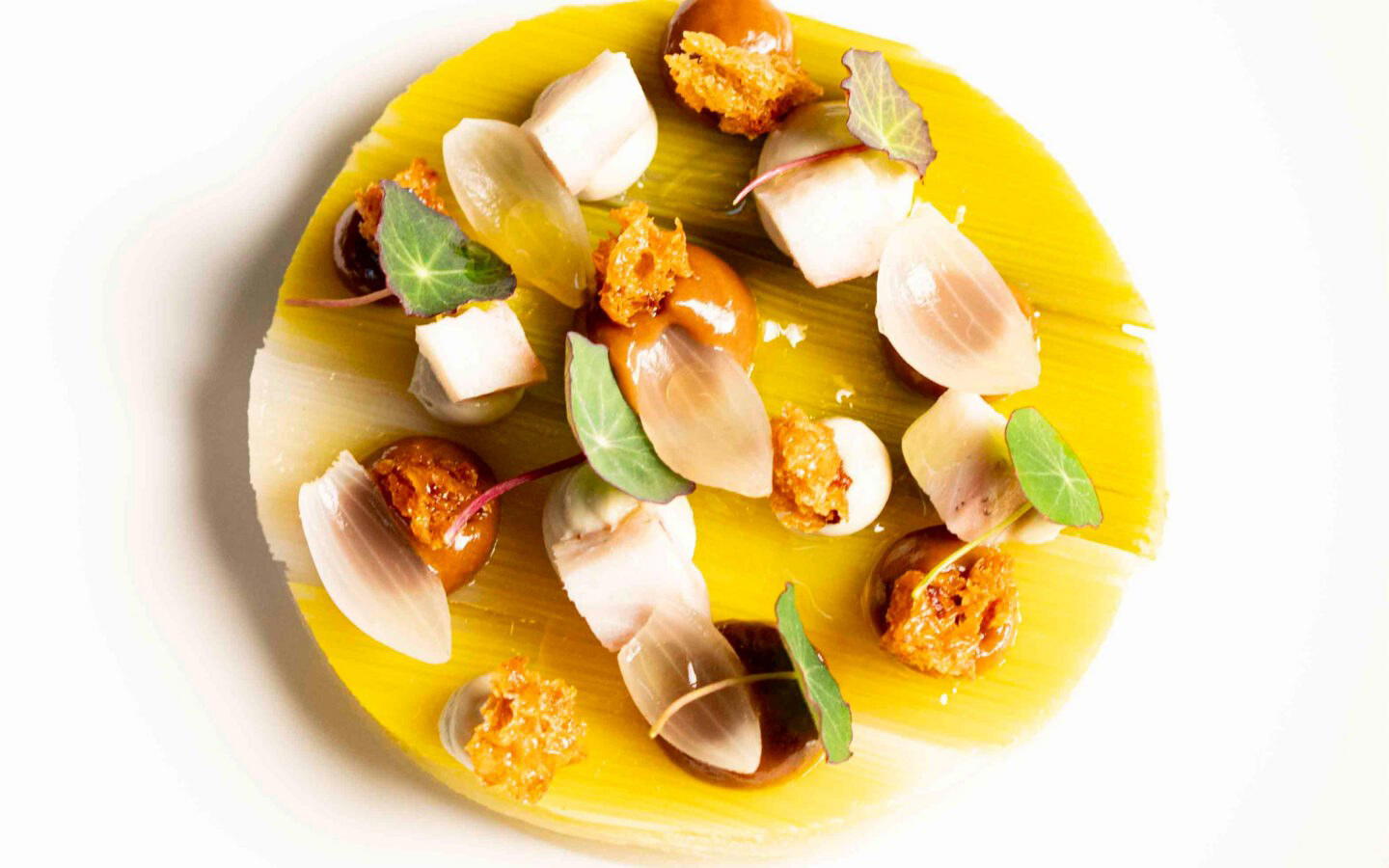
The dish that has come to define Sabayon's identity sits at exactly this intersection of technique and locality: grilled oyster mushrooms on pommes purée, finished with a caramelized arlette tuile and sabayon. A French preparation, the tuile, the pommes purée, built around a Quebec ingredient and completed with a classical sauce that names the restaurant itself. It is the kind of dish that works as a thesis statement: the cooking here is not trying to resolve the tension between European tradition and Canadian sourcing, it is using that tension as the point.
Where Sabayon Sits in the Montreal Restaurant Tier
Montreal's fine-dining market rewards clarity of format. At the leading end, restaurants like Mastard and Toqué operate with full kitchen brigades and larger rooms. At the lower end of the tasting-menu bracket, wine bars with small plates, among them Annette bar à vin, Cadet, and Foxy, offer more flexible, drop-in dining with a natural-wine focus. Sabayon occupies a deliberate middle position: tasting-menu commitment and Michelin-level cuisine pricing, but with a seat count and staffing model that keeps the room feeling more like a private dinner than a restaurant service.
Cuisine pricing sits at the $$$ tier (a typical two-course meal above $66, excluding beverages), which places it below the $$$$ ceiling of Montreal's most expensive rooms but above the wine-bar bracket. That positioning matters. It signals that Sabayon is competing on culinary rigour rather than spectacle, and that the value proposition is the cooking and wine program rather than the room or the production.
Internationally, the format has parallels. Low-capacity tasting counters with strong wine programs and two-person or minimal-staff operations have emerged as a distinct restaurant type in cities from Stockholm, see Frantzén, to Vancouver, where AnnaLena and Alo in Toronto operate in adjacent territory. The format tends to perform well precisely because the constraints are legible: guests know what they are committing to, and the kitchen can deliver consistent quality because scale is controlled from the outset.
The Wine Program at This Seat Count
A 1,150-bottle inventory with 620 selections is a serious list for any restaurant; at 14 seats, it is unusual. Wine programs at this scale typically require dedicated storage, a committed buying strategy, and staff capable of working across a broad range of regions without relying on a short, safe list. Sabayon deploys three sommeliers, Kingsley Tee, Joslynn Choi, and Tito Amrikh Amsyar, to manage a list that draws on Bordeaux, France broadly, Australia, Italy, California, and Chile.
Wine pricing sits at the $$ tier, indicating a range across price points rather than a list weighted toward high-margin bottles. The corkage fee is $35, which suggests the room is open to guests bringing bottles, a practical signal that the wine program is designed to engage serious collectors rather than restrict them. For context, $35 corkage in Montreal's tasting-menu tier is competitive, and at a room this size, the sommelier interaction per guest is correspondingly higher than in a 60-seat room with a single wine director.
The program's breadth, spanning Old World classics and New World regions including Australia and Chile, is in the same ambit as what you'd find at Restaurant Pearl Morissette in Lincoln or The Pine in Creemore in terms of ambition, though the regional spread here is wider than either. The inclusion of vintage selections from estates such as López de Heredia indicates that the list extends into aged and collectible territory, not merely current-vintage accessible drinking.
Saint-Henri as Dining Context
Rue Centre is not where Montreal's legacy fine-dining establishments operate. The traditional addresses cluster around Vieux-Montréal, the Plateau, and Westmount. Saint-Henri's emergence as a serious dining neighbourhood is a more recent development, driven partly by chefs seeking lower rents and partly by a shift in where the city's food-focused population actually lives and moves. Sabayon's address on Rue Centre places it in a neighbourhood that reads as residential and deliberately un-touristy, which reinforces the counter-format's intimacy rather than working against it.
Guests arriving expecting a formal dining room in a grand space will need to recalibrate. The experience at 14 seats is necessarily a collective one: pacing, conversation, and the rhythm of the kitchen are all visible and audible in ways that a larger room would obscure. That transparency is a feature of this format, not a concession to limited space. For a fuller picture of where Saint-Henri fits in Montreal's broader food geography, our full Montreal restaurants guide maps the city's dining neighbourhoods in detail.
For comparison with international modern-cuisine formats at this scale, FZN by Björn Frantzén in Dubai represents what this format looks like in a high-visibility luxury market. Sabayon's Saint-Henri address is the opposite of that impulse, and intentionally so.
Know Before You Go
- Address: 2194 Rue Centre, Montréal, QC H3K 1J4
- Cuisine: Modern European, six-course tasting menu
- Chef: Federico Michieletto
- Sommeliers: Kingsley Tee, Joslynn Choi, Tito Amrikh Amsyar
- General Manager: David Schnurr
- Seat Count: 14
- Meals Served: Lunch and dinner; weekend afternoon tea
- Cuisine Pricing: $$$ (two-course equivalent above $66, excluding beverages)
- Wine List: 620 selections, 1,150 bottles; strengths in Bordeaux, France, Italy, Australia, California, Chile
- Wine Pricing: $$ (range across price points)
- Corkage Fee: $35
- Awards: Michelin One Star (2025) 9 (71 reviews)
Where It Fits
Comparable venues nearby, for context on price, style, and recognition.
| Venue | Cuisine | Price | Awards | Notes |
|---|---|---|---|---|
| SabayonThis venue — the venue you are viewing | Modern French Tasting Menu | $$$$ | Michelin 1 Star | Not listed |
| Mastard | Modern Quebec Terroir Fine Dining | $$$ | Michelin 1 Star | Gabriel-Sagard |
| Monarque | Modern French Brasserie | $$$$ | Michelin Plate | Quartier international de Montreal |
| Toqué | Modern Quebecois Fine Dining | $$$$ | Michelin Plate | Quartier international de Montreal |
| Maison Boulud | Modern French Fine Dining | $$$$ | Michelin Plate | Golden Square Mile |
| Jérôme Ferrer - Europea | Modern French Fine Dining with Quebec Influences | $$$$ | Michelin 1 Star | Centre-Ville |
Recognition history
Dated appearances from independent guides and award organizations, with the underlying list record or original source where available.
Canada's 100 Best Restaurants #44
Canada's 100 Best
Michelin 1 Star
Michelin
World's 50 Best North America's Best Restaurants #34
World's 50 Best
Canada's 100 Best Restaurants #48
Canada's 100 Best
Michelin 1 Star
Michelin
Wine Spectator Best of Award of Excellence
Wine Spectator
At a Glance
- Intimate
- Elegant
- Cozy
- Sophisticated
- Date Night
- Special Occasion
- Chefs Counter
- Open Kitchen
- Sommelier Led
- Local Sourcing
Current opening hours
- Monday
- Closed
- Tuesday
- Closed
- Wednesday
- Closed
- Thursday
- 7–10:30 PM
- Friday
- 2–4 PM, 7–10:30 PM
- Saturday
- 2–4 PM, 7–10:30 PM
- Sunday
- Closed
Hours can change for holidays and private events. Last verified .
Intimate and convivial home-like atmosphere with warm, attentive service in a small 14-16 seat space.