Our verdict
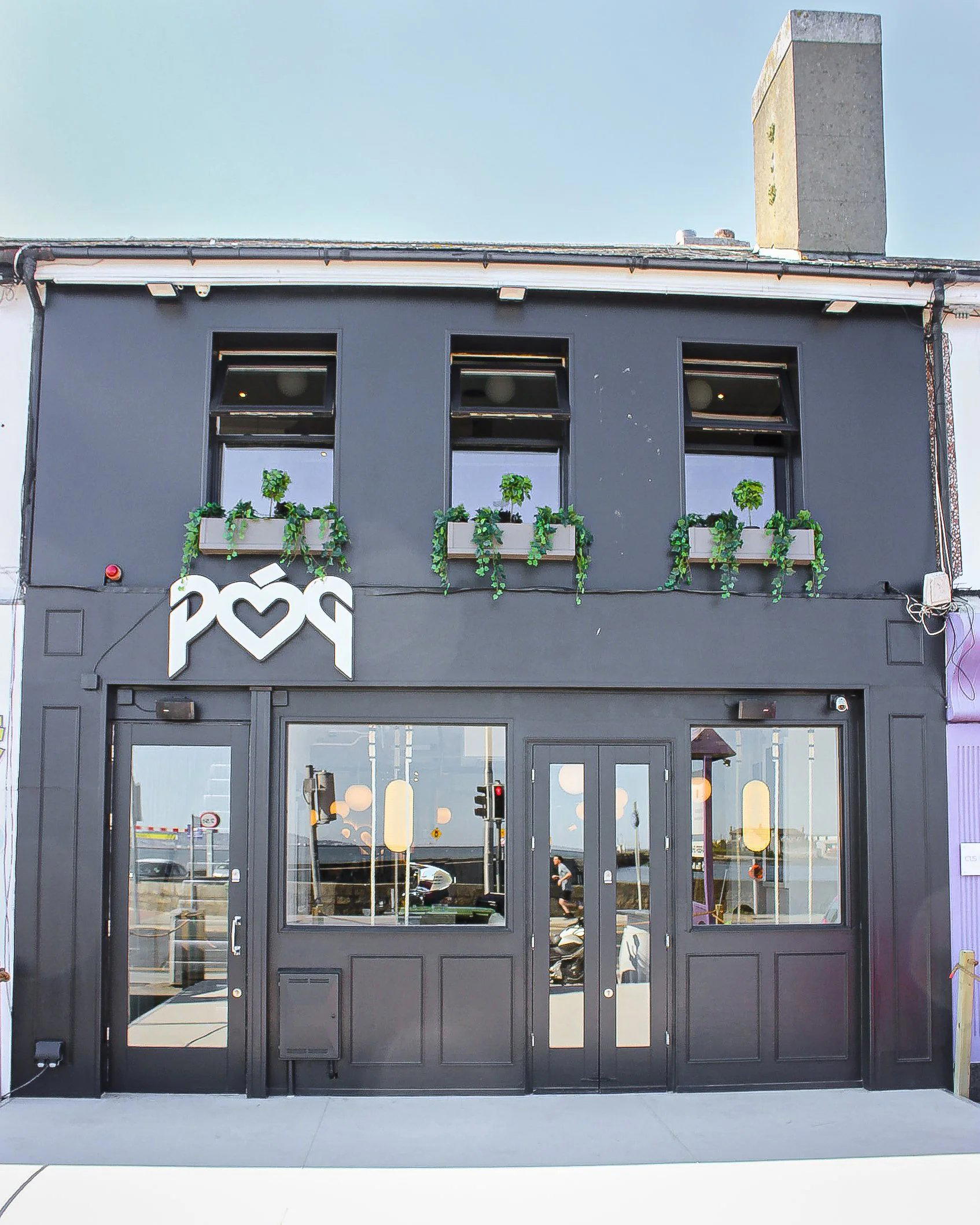
Póg Clontarf sits on the seafront stretch of Clontarf Road, where Dublin's coastal dining scene has quietly matured into something worth crossing the city for. The venue occupies a neighbourhood that increasingly draws serious kitchen talent away from the city centre, placing it in a growing cohort of destination dining beyond the canals.

Pearl is the En Primeur Club membership app — saves, bookings, and concierge access live there. Same editors, same standards.
- Address
- 324 Clontarf Rd, Clontarf East, Dublin, D03 AF30, Ireland
- Phone
- +35315387325
- Hours
- Mon–Fri 9:30 AM–4 PMSat 9:30 AM–5 PMSun 10 AM–5 PM
- Website
- ifancyapog.ie
- Directions
- Get directions
- Booking
- Book on OpenTable
The menu
What to order
- Protein Pancake Stack
- Yogurt Pancakes
- Acai Bowl
Clontarf's Seafront Dining and Where Póg Sits in It
The stretch of road running along Dublin Bay between Fairview and Dollymount has changed considerably as a dining address over the past decade. What was once a corridor of neighbourhood cafes and pub lunches now draws residents from across the city who treat Clontarf as a destination rather than a convenience. That shift reflects something broader happening in Dublin's hospitality geography: serious cooking has been decoupling from the city centre, moving into the coastal suburbs where rent pressures are lower and loyal local clientele makes the economics of a quality-led kitchen more viable.
Póg Clontarf, at 324 Clontarf Road, sits within that migration. The address places it on the bay-facing stretch, where the dining room dynamic is shaped as much by the surrounding neighbourhood character as by what arrives on the plate. Clontarf as a setting tends to attract operators who are building for the long term rather than chasing passing trade, and the venues that have established themselves here generally reflect that patience in format and tone.
The Evolution of a Coastal Neighbourhood Kitchen
Understanding what Póg Clontarf represents now requires some sense of how this part of Dublin has evolved as a dining address. Clontarf Road kitchens that have endured the cycles of recession, pandemic disruption, and the post-2022 cost-of-hospitality squeeze have had to reinvent their propositions more than once. The venues that held on through those periods typically did so by sharpening their identity rather than broadening it: tighter menus, cleaner sourcing stories, stronger relationships with a defined local audience.
This pattern is visible across Dublin's coastal and inner-suburb scene. Liath in Blackrock occupies a comparable position south of the bay, a kitchen that built serious culinary credibility outside the central postcode. Similarly, dede in Baltimore demonstrates how Ireland's most compelling cooking is increasingly anchored in communities rather than tourist-facing city centres. Póg Clontarf's Clontarf Road address positions it within that same argument about where good food actually happens in contemporary Ireland.
Within the city, the contrast with the centre is instructive. Dublin's highest-profile dining rooms, including Patrick Guilbaud and Chapter One by Mickael Viljanen, operate in a different register entirely: formal, occasion-driven, with Michelin credentials that anchor them to an international audience. Bastible and Glovers Alley sit at a different tier of the centre's modern Irish canon. D'Olier Street operates closer to the casual-premium category. Clontarf venues like Póg exist in a separate conversation from all of these: more embedded in neighbourhood rhythm, less pressured by the performance expectations that come with central Dublin visibility.
What the Clontarf Setting Means for the Experience
Approaching Clontarf Road from the city, the bay opens up before the dining rooms do. The physical setting matters here in ways that interior-only venues in the city centre cannot replicate: the light off Dublin Bay in the late afternoon, the relative quiet of a residential stretch compared to the density of Temple Bar or the Liberties. Venues along this stretch tend to draw tables who are choosing the experience of being in Clontarf as much as choosing a specific kitchen, which shapes the pace and character of service.
That setting has historically favoured a certain kind of hospitality: relaxed without being casual, attentive without being performative. The Póg name itself, Irish for a kiss, signals an approach that is rooted in something local and affectionate rather than aspirational or internationally branded. Whether that warmth of concept has translated consistently into the current dining format is something leading confirmed through direct contact with the venue, given the limited publicly available data on its current operation.
Ireland's Broader Dining Context
Situating Póg Clontarf within the wider Irish dining picture requires acknowledging how much the country's restaurant culture has shifted since the mid-2010s. The Michelin-starred tier has expanded beyond Dublin significantly: Aniar in Galway, Bastion in Kinsale, Campagne in Kilkenny, Chestnut in Ballydehob, Homestead Cottage in Doolin, House in Ardmore, Lady Helen in Thomastown, and Terre in Castlemartyr are among the kitchens that have pulled serious dining attention into the regions. That dispersal has changed Dublin's position: the capital is no longer automatically the first call for the leading Irish cooking, which puts pressure on Dublin restaurants at every tier to justify the trip on their own terms.
In that context, a Clontarf Road address is neither a disadvantage nor a selling point in itself. What matters is whether the kitchen can hold its proposition through the cost pressures and staffing challenges that have reshaped every tier of Irish hospitality since 2020. The venues that have managed it across Ireland share a tendency toward clarity of purpose: they know what they are and who they are cooking for, and they do not attempt to be everything at once.
For those building a Dublin dining itinerary, our full Dublin restaurants guide maps the city's current scene across price points and neighbourhoods, and provides the broader context for understanding where each address sits relative to its peers. Internationally minded readers comparing Irish cooking against global reference points might also consider Le Bernardin in New York City or Atomix in New York City as benchmarks for what sustained culinary ambition looks like at its most formalised.
Know Before You Go
| Address | 324 Clontarf Rd, Clontarf East, Dublin, D03 AF30, Ireland |
|---|---|
| Booking | |
| Price | Not currently published; confirm with venue |
| Hours | Not currently published; confirm with venue |
| Getting There | Clontarf Road is accessible by Dublin Bus routes serving the northside coastal corridor; the venue is on the bay-facing stretch of the road |
Frequently asked questions
Where exactly is Póg Clontarf?
Póg Clontarf is located at 324 Clontarf Rd, Clontarf East, Dublin, D03 AF30, Ireland, Dublin.
How does Póg Clontarf compare to other Dublin seafront dining options?
Póg Clontarf sits on Clontarf Road, one of the few dining addresses in Dublin where the bay is a literal presence rather than a marketing reference. While the southside coastal stretch around Dún Laoghaire carries the longer-established reputation for seafront restaurants, the Clontarf corridor on the northside has developed its own character over the past decade. Póg's position at 324 Clontarf Road places it within walking distance of Dublin Bay's North Bull Island causeway, which gives the setting a geographic specificity that most city-centre Dublin restaurants cannot claim.
What should I order at Póg Clontarf?
Given the restaurant's address on Clontarf Road, a coastal corridor where kitchens have historically leaned into local and seasonal produce, it is worth asking staff on arrival what the kitchen is currently running. Menu composition in Dublin's neighbourhood restaurant tier can shift frequently, and the most accurate picture comes from the venue itself.
What's the best way to book Póg Clontarf?
Arriving at 324 Clontarf Road directly or checking for updated contact details through local Dublin listings is the practical first step. Dublin's northside neighbourhood restaurants at this scale often manage reservations informally, so a walk-in inquiry may be as effective as any digital channel.
What is Póg Clontarf known for?
Póg Clontarf occupies 324 Clontarf Road, a stretch of Dublin's northside bay that has developed steadily as a dining address over the past decade, distinct from the city-centre concentration around Georges Street or Merrion Square. The venue operates as a neighbourhood-scale restaurant along the coastal corridor between Fairview and Dollymount, where proximity to the bay shapes both the setting and the character of the room. It represents the kind of embedded local dining that Clontarf Road has increasingly produced.
What if I have allergies at Póg Clontarf?
If you have allergies or intolerances, the appropriate step is to contact the venue at 324 Clontarf Road before visiting. Dublin's restaurant sector has broadly adopted allergen disclosure practices in line with EU food information regulations, but the specifics of how Póg handles individual requirements should be confirmed with staff directly.
Is Póg Clontarf worth the price?
Clontarf Road venues of this type generally position themselves as neighbourhood-priced rather than destination-dining, which tends to place them below the city-centre fine-dining tier.
Price Lens
Comparable venues nearby, for context on price, style, and recognition.
| Venue | Cuisine | Price | Notes |
|---|---|---|---|
| Póg ClontarfThis venue — the venue you are viewing | Modern Healthy Cafe Brunch | $20–30 | Not listed |
| 3fe Grand Canal Street | Specialty Coffee Cafe | $10–20 | South Dock, Specialty Coffee Cafe |
| Mackenzie's | Modern American | $20–30 | South Dock, Modern American |
| Juniors Deli & Cafe | New York-Style Deli & Cafe | $20–30 | Pembroke West A, New York-Style Deli & Cafe |
| Boeuf & Coq | French-Inspired Irish Steakhouse | $20–30 | Royal Exchange A, French-Inspired Irish Steakhouse |
| The Winding Stair | Modern Irish | $30–50 | North City, Modern Irish |
Continue exploring
More in Dublin
Restaurants in Dublin
Browse all →
Bars in Dublin
Browse all →
Hotels in Dublin
Browse all →
Wineries in Dublin
Browse all →
Details
- Cozy
- Lively
- Brunch
- Casual Hangout
- Waterfront
- Local Sourcing
- Waterfront
- A La Carte
- Vegetarian Friendly
- Gluten Free Options
Current opening hours
- Monday
- 9:30 AM–4 PM
- Tuesday
- 9:30 AM–4 PM
- Wednesday
- 9:30 AM–4 PM
- Thursday
- 9:30 AM–4 PM
- Friday
- 9:30 AM–4 PM
- Saturday
- 9:30 AM–5 PM
- Sunday
- 10 AM–5 PM
Hours can change for holidays and private events. Last verified .
Inviting and cozy atmosphere with great vibes, ideal for refueling after a beach walk.