
Tabelog 100 #63
Our verdict
Petit Restaurant Naitou belongs to Kyoto’s yoshoku tradition, where Western forms are filtered through Japanese sourcing and dining habits. Its 2025 Tabelog 100 Yoshoku WEST selection, focus on tonkatsu, hamburger steak and fish-led cooking, and compact 25-seat format place it in a local category that rewards technique over spectacle.

Pearl is the En Primeur Club membership app, where members save venues, book tables and use the concierge.
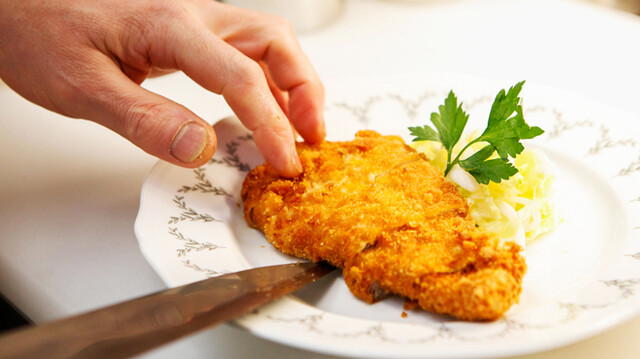
The menu
What to order
- Pork cutlet (tonkatsu)
- Loin pork cutlet
- Pork steak
- Fried shrimp
- Hamburger steak
The approach to Petit Restaurant Naitou is more Kyoto understatement than grand arrival: city life nearby, and a room framed around the meal rather than performance. That matters for yoshoku, a cuisine built on translation: cutlets, sauces and familiar Western-derived dishes brought into Japan, then adapted to rice, cabbage, frying oils and local service. In a city often reduced to kaiseki and temple-adjacent sweets, yoshoku reads Kyoto differently: urban, ingredient-conscious and quietly technical.
Petit Restaurant Naitou occupies that lane with unusual clarity. Its selection in Tabelog’s Hyakumeiten recognition for 2025 places it among restaurants noted specifically for Japanese-style Western cooking, not as a generic Western room. Its categories, yoshoku, tonkatsu and hamburger steak, are useful signals: a kitchen focused on the Japanese grammar of Western dishes, from frying, sauce work, meat texture and rice compatibility to plates that feel familiar without becoming careless.
Yoshoku in Kyoto, with frying as the technical test
Yoshoku can look simple because the names are plain. Tonkatsu and hamburger steak sound like everyday comfort food. In Japan, that familiarity makes the cooking exposed. A cutlet shows ambition through oil management, breading, thickness, rest time and sauce restraint. A hamburger steak depends on grind, fat, binding and the balance between softness and structure. Even when the menu reads plainly, a yoshoku setting asks for freshness and restraint, not the heavy masking of poorer Westernized cooking.
The restaurant’s public category signals place the kitchen in yoshoku’s disciplined branch, where Western technique is not decorative but a framework for Japanese ingredients and expectations. Kyoto’s dining culture tends to punish excess; even outside formal washoku, plates are expected to show control. That pressure suits serious yoshoku, especially when frying and sauce work are central tests rather than background comforts.
The 2025 Tabelog Hyakumeiten recognition matters because yoshoku is not usually the first category international travelers chase in Kyoto. Sushi, kaiseki, wagashi and ramen carry louder signals. A yoshoku address with that recognition sits in a quieter competitive set, where residents and domestic travelers often read value differently from visitors. The point is not novelty, but a tradition Japan has absorbed over time until its Western origins became secondary to local craft.
Yoshoku focus rather than ceremony
Format reinforces that reading. Rather than approaching the meal only as a ceremonial script, diners can think in terms of the core yoshoku vocabulary: tonkatsu, hamburger steak and the sauces, rice and accompaniments that make those dishes feel complete. In Kyoto, that changes the meal’s psychology. Formal dining can lock a restaurant into a chef’s sequence; yoshoku lets the table focus on execution, appetite and repeatable pleasure rather than narrative.
The listed budget also supports that role: dinner is indicated at JPY 8,000 - JPY 9,999, while lunch is listed at JPY 2,000 - JPY 2,999. That range places Petit Restaurant Naitou below luxury tasting-menu territory while still signaling a restaurant with serious intent. The useful clue is balance: the cooking can feel familiar, but the recognition, category focus and score of 3.70 suggest a room being judged on craft rather than mere nostalgia.
Kyoto has several small-format restaurants that reward a narrow reading of genre. Maeshiro and måne occupy different parts of the city’s small-room dining culture, while Fuyacho 103 shows how one Japanese format, oden, can carry an evening. Petit Restaurant Naitou belongs to the same Kyoto habit of specialization, with yoshoku vocabulary rather than counter kaiseki or oden. The useful comparison is scale, focus and the expectation that the room has a defined reason to exist.
Where it fits in a Kyoto dining week
For travelers, treat yoshoku as a counterweight to Kyoto’s formal meals. After a temple-heavy day or a long kaiseki dinner the night before, Japanese-style Western cooking can reset the palate without leaving local context. This is not a substitute for Kyoto’s seasonal haute cuisine. It explains another side of the city: local dining with imported technique, Japanese product logic and prices below luxury tasting menus.
Petit Restaurant Naitou is best understood simply as part of Kyoto’s compact dining landscape rather than as a restaurant defined by a precise street address. Kyoto has become one of Japan’s stronger cities for focused restaurants that do not need hotel lobbies or riverside views. The rhythm is practical: residents, destination diners and visitors moving between cultural stops, shopping, work and dinner.
Readers building a Kyoto itinerary should place this meal alongside, not beneath, the city’s better-known formats. Other Kyoto dining rooms, casual specialists, sweets shops and neighborhood restaurants show how broad Kyoto eating becomes once the lens moves beyond ceremonial dining. For a wider route, use Our full Kyoto restaurants guide, then balance meals with Our full Kyoto hotels guide, Our full Kyoto bars guide, Our full Kyoto wineries guide and Our full Kyoto experiences guide.
The broader Japan list helps frame how genre-specific restaurants travel across cities: across Japan, small restaurants built around a narrow specialty can be as revealing as grander destinations. Abroad, Japanese food culture often makes the same point from another angle: it is frequently clearest when a focused format is taken seriously, repeated carefully and allowed to stand on its own terms.
Frequently asked questions
Is Petit Restaurant Naitou open every day?
Current opening days and hours should be confirmed directly with Petit Restaurant Naitou before visiting, as the verified venue details here do not provide a full weekly schedule.
What does dinner at Petit Restaurant Naitou typically cost?
Pricing at Petit Restaurant Naitou is listed as dinner: JPY 8,000 - JPY 9,999; lunch: JPY 2,000 - JPY 2,999.
Where is Petit Restaurant Naitou located?
Kyoto.
What is Petit Restaurant Naitou known for?
It is known for yoshoku in Kyoto, with listed categories including tonkatsu and hamburger steak. The restaurant was included in Tabelog Hyakumeiten recognition for 2025, which gives it clear category standing.
Can Petit Restaurant Naitou adjust for dietary needs?
The venue accepts phone inquiries at +81-75-211-3900. For dietary requests, the practical route is to call ahead and confirm directly with the restaurant.
Cost and Credentials
Comparable venues for context, by category and price tier.
| Venue | Cuisine | Price | Awards | Notes |
|---|---|---|---|---|
| Petit Restaurant NaitouThis venue (the venue you are viewing) | Seasonal yoshoku and tonkatsu | $30–50 | Tabelog 100 #63 | Not listed |
| Chao Chao Gyoza (チャオチャオ餃子 三条木屋町店) | Japanese Gyoza Specialist | $10–20 | Not listed | Sanjo Kiyamachi, Japanese Gyoza Specialist |
| Zen Kasho In Kyoto muromachi honten | Traditional Japanese sweets & matcha cafe | $10–20 | Tabelog 100 #53 | Nakagyō, Traditional Japanese sweets & matcha cafe |
| ほしぞら | Korean-style Yakiniku | $20–30 | Not listed | Shimogyo-ku, Korean-style Yakiniku |
| Cafe Karirenge | Not listed | $10–20 | Tabelog 100 #61 | Nakagyō, Kyoto cafe with cakes and light meals |
| Umezono Cafe and Gallery | Not listed | $10–20 | Tabelog 100 #95 | Nakagyō, Kyoto wagashi café with matcha sweets and pancakes |
Recognition history
Dated appearances from independent guides and award organizations, with the underlying list record or original source where available.
Tabelog 100 #63 · No. 63
Tabelog · Tabelog 100 - Yoshoku - WEST - 2025
Continue exploring
More in Kyoto
Restaurants in Kyoto
All restaurants in Kyoto →
Bars in Kyoto
All bars in Kyoto →
Hotels in Kyoto
All hotels in Kyoto →
Wineries in Kyoto
Browse all →
Details
- Cozy
- Classic
- Intimate
- Solo
- Date Night
- Casual Hangout
- Special Occasion
- Chefs Counter
- Standalone
- A La Carte
- Set Menu
- Counter Dining
Current opening hours
- Monday
- Closed
- Tuesday
- 12–1:30 PM, 6–8:30 PM
- Wednesday
- 12–1:30 PM, 6–8:30 PM
- Thursday
- 12–1:30 PM, 6–8:30 PM
- Friday
- 12–1:30 PM, 6–8:30 PM
- Saturday
- 12–1:30 PM, 6–8:30 PM
- Sunday
- 12–1:30 PM, 6–8:30 PM
Hours can change for holidays and private events. Hours as of .
Warm, low-key neighborhood restaurant with counter and table seating, a classic yoshoku feel, and a relaxed, unpretentious atmosphere suited to quiet, lingering meals.